Skip to content
wheretotravel.info
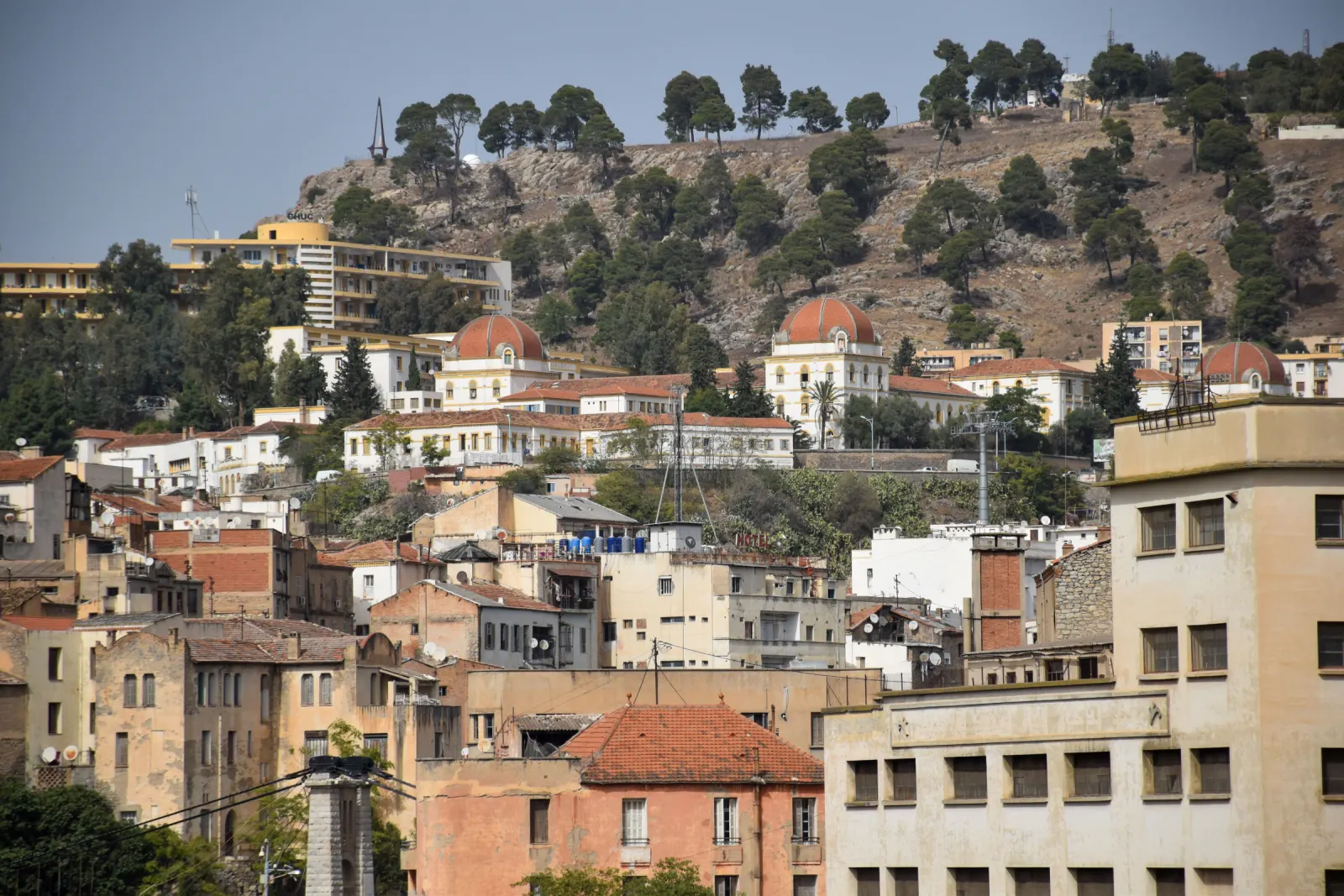
Hillside town with domed buildings and trees

Algeria travel guide

Coastal cities and far-off inland towns across one very large North African country

Best: Jan, Feb, Nov, Dec

Photo: DigitalByNADAS Photography / Pexels

Capital
Algiers
Language
Arabic
Currency
Algerian dinar
Time zone
UTC+01:00
Plugs
Type C, E, F · 230 V
Driving
On the right
Emergency
14 / 17 / 1548

Why visit Algeria

Algeria suits travellers who enjoy cities and long overland journeys. You can start on the coast in Algiers, Oran or Béjaïa. Then head inland to Constantine, Tlemcen or Ghardaia, and further still to Tamanrasset and Djanet. The best months to go are November to February. One honest limitation: the country covers 2,381,741 km², so distances between places are long. On a short trip you will need to pick one area rather than try to see it all.

  • A cool-season travel window

    The best months to visit Algeria are November, December, January and February. This makes it a good choice when you want a trip during the northern winter, and it is worth planning around these months.

  • Three cities on the coast

    Algiers, the capital and largest city, sits on the coast. So do Oran and Béjaïa. You can build a route along the sea and see very different cities without going far inland.

  • Inland cities with their own character

    Constantine and Tlemcen are two of the largest cities in the country, and neither is on the coast. They add an inland side to a trip that starts in Algiers or Oran.

  • Remote towns deep inland

    Ghardaia, Tamanrasset and Djanet are inland towns and much smaller than the coastal cities. Djanet has only 14655 people. These places suit travellers who want to go well beyond the capital.

  • Easy practical setup for Europeans

    Algeria uses UTC+01:00, so there is little or no jet lag from much of Europe. Cars drive on the right, and sockets are types C, E and F at 230 V, so many European plugs work without an adapter.

Is Algeria right for you?

Great for

  • Winter sun seekers: January brings highs of 19.3°C, 9.7 sun hours a day and no rain
  • Sahara trips to Tamanrasset or Djanet from November to February, with highs of 19–25°C
  • City trips that mix coastal Algiers, Oran and Béjaïa with inland Constantine and Tlemcen
  • Travellers who dislike rain: every month averages fewer than 1 rain day

Less ideal for

  • Summer visitors who struggle in heat: July highs reach 42.3°C and nights stay near 30°C
  • Short trips hoping to see it all: the country covers 2381741 km²
  • Travellers after green, rain-fed landscapes: no month averages more than 4 mm of rain

Algeria right now: October

7.0/10
Avg high
32°C
Avg low
20°C
Rain days
0

Averages for Algeria.

Weather by month

The chart shows 2015–2024 data for Algeria as a whole, with no city named, and November to March are best: highs of 19–26°C, lows of 7–13°C, almost no rain and about 10–11 hours of sun a day. May to September bring the toughest weather, with daytime highs of 36–42°C and nights that stay at 23–30°C.

Average highs and lows in Algeria by month January: high 19°C, low 7°C , 0 rain days . February: high 22°C, low 10°C , 1 rain days . March: high 26°C, low 13°C , 1 rain days . April: high 32°C, low 18°C , 0 rain days . May: high 36°C, low 23°C , 0 rain days . June: high 41°C, low 28°C , 0 rain days . July: high 42°C, low 30°C , 0 rain days . August: high 41°C, low 29°C , 0 rain days . September: high 39°C, low 27°C , 0 rain days . October: high 32°C, low 20°C , 0 rain days . November: high 25°C, low 13°C , 0 rain days . December: high 20°C, low 9°C , 0 rain days . 19°C 7°C JAN 0d 22°C 10°C FEB 1d 26°C 13°C MAR 1d 32°C 18°C APR 0d 36°C 23°C MAY 0d 41°C 28°C JUN 0d 42°C 30°C JUL 0d 41°C 29°C AUG 0d 39°C 27°C SEP 0d 32°C 20°C OCT 0d 25°C 13°C NOV 0d 20°C 9°C DEC 0d
Best months Other months (low–high) Nd = rain days

Algeria (country average) · averages 2015–2024

Best time to visit Algeria: month-by-month weather →

Sample itineraries

7 days

Algiers, the coast and the west

  1. Day 1–3

    Algiers

    Start in Algiers, the capital and largest city on this route. Take time to walk the coastal districts, visit museums and markets, and settle into local rhythms before moving on.

  2. Day 4–5

    Oran

    Head west to Oran, the second-largest city here and also on the coast. Walk the seafront, eat in local cafés and spend an evening in the city centre.

  3. Day 6–7

    Tlemcen

    Finish inland in Tlemcen, a smaller city away from the sea. Explore its older streets at a slower pace and compare its feel with the larger coastal cities.

10 days

Coast, east and inland Algeria

  1. Day 1–3

    Algiers

    Begin in the capital, Algiers. Use these days to explore its coastal neighbourhoods, museums and markets, and to get used to travelling in the country.

  2. Day 4–5

    Béjaïa

    Move east along the coast to Béjaïa, a much smaller city than Algiers. Spend time by the sea and walk the town at an easy pace.

  3. Day 6–7

    Constantine

    Go inland to Constantine, one of the larger cities on this list. Walk its central districts, visit local markets and try regional dishes in simple restaurants.

  4. Day 8–10

    Ghardaia

    End further inland in Ghardaia for a clear change from the coast. Give yourself 3 days to explore slowly, meet local guides and see daily life in a smaller city.

Food to try in Algeria

Couscous

Steamed semolina grains served with a stew of vegetables and often lamb or chicken. It is a staple across the country and a common dish for family meals and celebrations.

Chorba frik

A tomato-based soup made with cracked green wheat, meat and herbs. Many families serve it at the evening meal that breaks the fast during the Muslim holy month.

Chakhchoukha

Thin flatbread torn into small pieces and soaked in a spicy tomato and meat sauce. It is linked to the east of the country and is often made for special occasions.

Rechta

Thin fresh noodles served with chicken, chickpeas, turnips and a light white sauce. It is closely linked to Algiers and is a common dish for festive meals.

Karantika

A baked chickpea flour flan, usually sold in slices with cumin and harissa. It is a cheap street snack, especially associated with Oran and the west.

Mint tea

Green tea brewed with fresh mint and usually served sweet. People drink it through the day, at home and in cafés, often with pastries or after a meal.

Know before you go

  • Plugs and voltage: Algeria uses plug types C, E and F, with a supply of 230 V. Most European chargers fit. Travellers from the UK or North America will need an adapter, and possibly a converter for older devices.
  • Driving side: Traffic drives on the right in Algeria. If you are used to driving on the left, take extra care at roundabouts and when turning.
  • Emergency numbers: The emergency numbers in Algeria are 14, 17 and 1548. Save all 3 in your phone before you arrive, and ask your hotel which one to call for police, fire or ambulance.
  • Currency: The local currency is the Algerian dinar. Plan how you will get cash before you travel, and keep some dinars with you for small everyday purchases.
  • Language: Arabic is the official language. Learning a few basic Arabic greetings and phrases will make daily contact with people easier and is usually appreciated.
  • Time zone and calling code: Algeria is on UTC+01:00 all year in the fact data we hold. The international calling code is +213, so use it when you give your number to local contacts or call from abroad.

Algeria: frequently asked questions

When is the best time to visit Algeria?

The best months are November to March, with January scoring highest. Across the country, daytime highs sit around 19–26°C in these months, nights drop to about 7–13°C, and there are 9.7–11 hours of sun a day. Almost no rain falls. April and October also score well, but highs reach 32°C. These figures are a country-wide average, and Algeria covers 2381741 km², so conditions vary by region.

Is Algeria good to visit in August?

August is very hot and scores only 3.5 out of 10. The average high is 41.2°C and nights stay warm at 29.1°C. There is no rain and 11.6 hours of sun a day. June and July are similar, with July the hottest month at 42.3°C. Travellers who handle strong heat can still go, but plan outdoor time for early morning and evening.

Does it rain much in Algeria?

No, very little rain falls in Algeria in any month. The wettest month is December, with just 4 mm on average. Every month has less than 1 rain day. June, August and October average 0 rain days. The country-wide figures show sunshine of 9.7 to 12.1 hours a day all year.

How cold does Algeria get in winter?

Winter days are mild, but nights are cool. January is the coolest month, with an average high of 19.3°C and a low of 6.8°C. December is similar, with a high of 20.4°C and a low of 8.8°C. Pack a warm layer for evenings, even though days are sunny with about 9.7 hours of sun.

What plugs and voltage does Algeria use?

Algeria uses plug types C, E and F, and the voltage is 230 V. Travellers from countries with the same plugs and voltage will not need an adapter. Others should bring a travel adapter, and a converter if their devices do not support 230 V.

What currency and time zone does Algeria use?

Algeria uses the Algerian dinar and runs on UTC+01:00. The main language is Arabic, and the capital is Algiers. Cars drive on the right. The emergency numbers are 14, 17 and 1548. The international calling code is +213.

Similar destinations

Countries with a year of weather much like Algeria.