Skip to content
wheretotravel.info
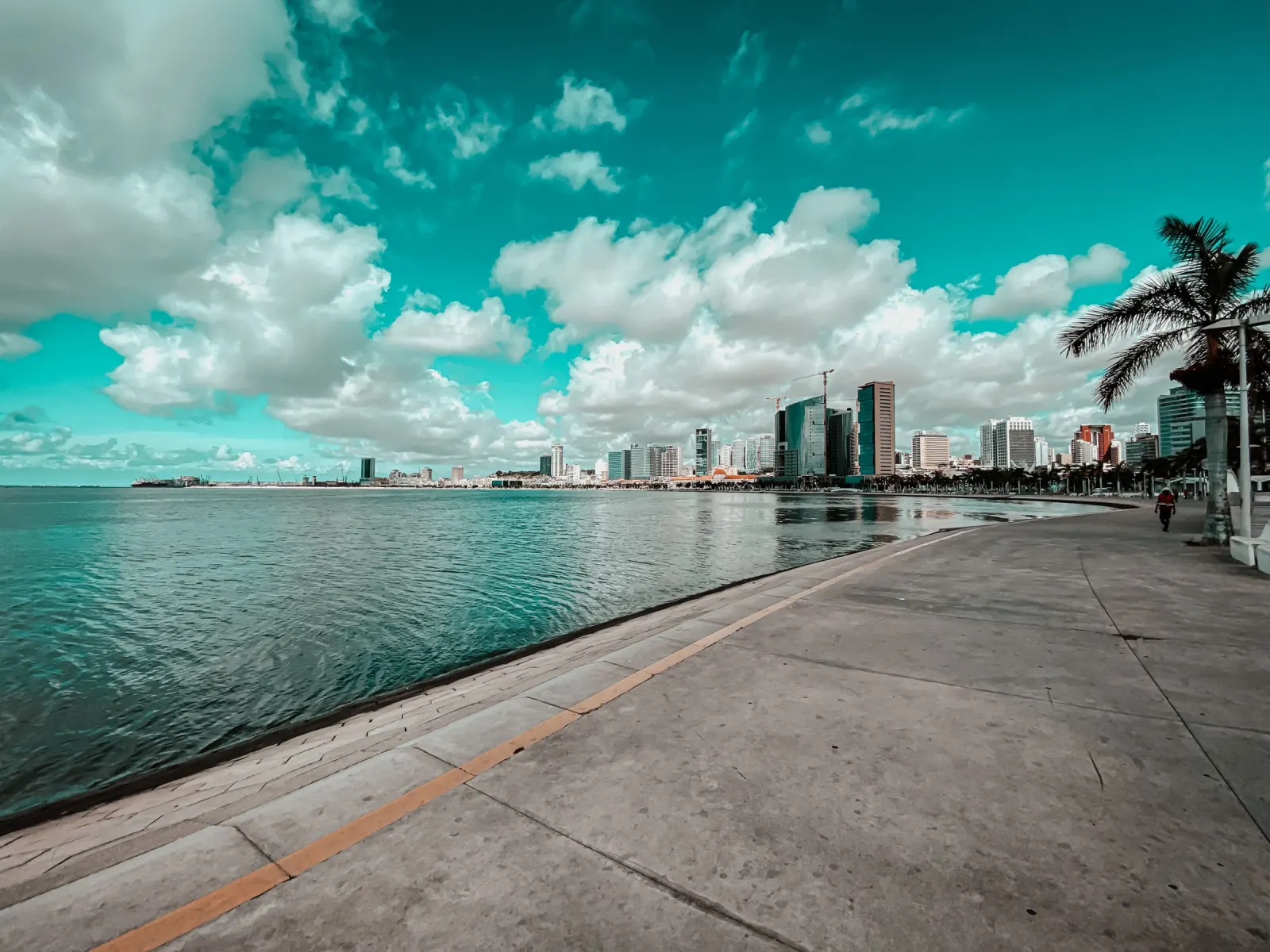
Waterfront promenade with city skyline

Angola travel guide

Coastal cities and long inland journeys, best from May to August

Best: May, Jun, Jul, Aug

Photo: TUBARONES PHOTOGRAPHY / Pexels

Capital
Luanda
Language
Portuguese
Currency
Angolan kwanza
Time zone
UTC+01:00
Plugs
Type C · 220 V
Driving
On the right
Emergency
115 / 116 / 113

Why visit Angola

Angola suits independent travellers who are happy to plan ahead and cover long distances. A trip can mix the coast, with Luanda, Benguela and Moçâmedes, with inland cities such as Lubango and Malanje. The best months are May to August. The honest limitation is size. At 1,246,700 km², Angola is a very large country, and the gaps between cities are long. It is not a good fit for a short, easy break. Portuguese is the main language, so a few phrases will help.

  • A clear best season

    Our data rates May, June, July and August as the best months to visit Angola. Aim for this window if you can. If your dates fall outside it, check local conditions carefully before you book.

  • Luanda, a capital on the coast

    Luanda is both the capital and a coastal city, with a population of 2487444. It is the largest city in our list, so most trips start here. Portuguese is the language you will hear and need.

  • More coast south of the capital

    Angola's coast does not end at Luanda. Benguela (population 561775) and Moçâmedes (population 255000) are also coastal cities. They are much smaller than the capital and give you a different view of the Atlantic side of the country.

  • Inland cities for contrast

    Lubango (population 903564) and Malanje (population 604215) are inland cities. Adding one of them to a coastal trip shows you a side of Angola away from the sea. Driving is on the right if you plan road travel.

  • A very large country

    Angola covers 1246700 km² and has a population of 38778554. There is a lot of ground to see, but distances between cities are long. Do not try to cover everything in a short trip; pick one region and give it time.

Is Angola right for you?

Great for

  • Dry-season trips from May to August, when June and July see 0 mm of rain
  • Sun seekers: June to September get about 11 hours of sunshine a day
  • Portuguese speakers, since Portuguese is the only listed language
  • City trips along the coast to Luanda, Benguela or Moçâmedes
  • Visitors from UTC+01:00 time zones who use type C plugs at 220 V

Less ideal for

  • Wet-season trips: December brings 216 mm of rain over 26.1 rain days
  • Heat-averse travellers in September and October, with highs of 31.9°C and 31.3°C
  • Campers who dislike cold nights: June and July lows drop to about 9°C
  • Travellers who speak no Portuguese at all

Angola right now: September

6.9/10
Avg high
32°C
Avg low
15°C
Rain days
1

Averages for Angola.

Weather by month

The data covers Angola as a whole for 2015–2024, not a named city, and May to August is best: almost no rain, about 11 hours of sun a day and highs of 26–30°C, with nights near 9°C in June and July. Avoid November to March if you dislike rain, as December brings 216 mm over about 26 days.

Average highs and lows in Angola by month January: high 26°C, low 17°C , 22 rain days . February: high 27°C, low 17°C , 21 rain days . March: high 27°C, low 16°C , 21 rain days . April: high 26°C, low 15°C , 12 rain days . May: high 27°C, low 12°C , 0 rain days . June: high 26°C, low 9°C , 0 rain days . July: high 27°C, low 9°C , 0 rain days . August: high 30°C, low 12°C , 0 rain days . September: high 32°C, low 15°C , 1 rain days . October: high 31°C, low 16°C , 11 rain days . November: high 28°C, low 16°C , 22 rain days . December: high 26°C, low 16°C , 26 rain days . 26°C 17°C JAN 22d 27°C 17°C FEB 21d 27°C 16°C MAR 21d 26°C 15°C APR 12d 27°C 12°C MAY 0d 26°C 9°C JUN 0d 27°C 9°C JUL 0d 30°C 12°C AUG 0d 32°C 15°C SEP 1d 31°C 16°C OCT 11d 28°C 16°C NOV 22d 26°C 16°C DEC 26d
Best months Other months (low–high) Nd = rain days

Angola (country average) · averages 2015–2024

Best time to visit Angola: month-by-month weather →

Sample itineraries

7 days

Luanda, Benguela and Lubango in one week

  1. Day 1–3

    Luanda

    Start in the coastal capital, the largest city on this route. Use the first days to get local kwanza, a SIM card and your bearings. Walk the seafront and plan the rest of the trip.

  2. Day 4–5

    Benguela

    Move down the coast to Benguela, a smaller coastal city. Slow down after the capital, spend time by the sea and explore the town on foot.

  3. Day 6–7

    Lubango

    Head inland to Lubango, the second-largest city on this list. It is a change from the coast. Use it as your last stop before you return to Luanda.

10 days

Ten days from the capital to the south coast

  1. Day 1–2

    Luanda

    Arrive in the capital, sort out money and a local SIM, and learn a few words of Portuguese. Keep this stop short, since you come back here at the end.

  2. Day 3–4

    Malanje

    Travel inland to Malanje for a look at Angola away from the sea. It is a quieter city than Luanda and a good contrast to the coastal stops.

  3. Day 5–6

    Benguela

    Go back to the coast at Benguela. Take it slow here, walk the town and enjoy the seafront before you head south.

  4. Day 7–8

    Lubango

    Continue inland to Lubango, the largest city in the south on this route. Spend 2 days exploring the city and resting before the final coastal leg.

  5. Day 9–10

    Moçâmedes

    End on the coast at Moçâmedes, the smallest city on this route. It suits a calm last stop by the sea before you travel back to Luanda.

Food to try in Angola

Muamba de galinha

Chicken stewed in red palm oil with okra, garlic and often squash. It is widely seen as Angola's national dish and is common at family meals and in local restaurants.

Funge

A thick, smooth porridge made from cassava flour, or from maize flour in some areas. It is the everyday side dish, eaten with stews such as muamba, usually by hand.

Mufete

Grilled fish served with beans cooked in palm oil, plus boiled cassava, sweet potato or plantain. Look for it at seaside eateries in Luanda, especially on weekends.

Calulu

A stew of dried and fresh fish with tomatoes, onions, okra, sweet potato leaves and palm oil. It is a coastal dish, usually served with funge or rice.

Kizaka

Cassava leaves pounded and slow-cooked, sometimes with peanuts or fish. It is a common home-style side dish across the country and pairs well with funge.

Kissangua

A lightly fermented, slightly sour drink made from maize, traditionally prepared at home in the south. It is low in alcohol or non-alcoholic, depending on how long it ferments.

Know before you go

  • Plugs and voltage: Angola uses Type C plugs and 220 V. If your devices have a different plug, bring an adapter. Check that chargers and appliances work at 220 V before you plug them in.
  • Driving side: Traffic in Angola drives on the right. If you come from a country that drives on the left, take extra care at junctions and roundabouts during your first days.
  • Emergency numbers: The emergency numbers in Angola are 115, 116 and 113. Save all 3 in your phone before you arrive, so you do not need to search for them in a hurry.
  • Currency: The local currency is the Angolan kwanza. Plan how you will get kwanza before you travel, and do not rely on only one way to pay.
  • Language: Portuguese is the language of Angola. Learning a few basic Portuguese phrases, or carrying a translation app that works offline, will make everyday tasks easier.
  • Time zone: Angola uses UTC+01:00 all year. Check the time difference from home so you can plan calls and connections.
  • Calling code: The country calling code for Angola is +244. Use it when you save local numbers or when people call you from abroad.

Angola: frequently asked questions

When is the best time to visit Angola?

May to August is the best time to visit Angola. These are the dry months. June and July average 0 rain days, and May and August only 0.3. You get about 11 hours of sun a day and highs of 26–30°C. June scores highest on our scale at 9.9 out of 10. These are averages for a very large country of 1,246,700 km², so local weather can differ.

Is Angola good to visit in December?

December is possible, but it is the wettest month of the year. It averages 26.1 rain days and 216 mm of rain, with 8.9 hours of sun a day. Highs stay mild at 26.1°C. It still scores 6.9 out of 10, so go if your dates are fixed, but expect rain on most days. If you can choose, June or July is far drier.

Is October a bad time to go to Angola?

October is the weakest month, with a score of 5.1 out of 10. It is hot, with average highs of 31.3°C, and the rains start again, with 11.2 rain days and 54 mm on average. September is just as hot at 31.9°C but almost dry, with 0.8 rain days. It is the better choice if you want to travel late in the year.

Does it get cold at night in Angola?

Yes, nights can feel cool in the dry season. Average lows drop to 9.2°C in June and 9.1°C in July, while daytime highs stay around 26–27°C. That is a big gap between day and night, so pack a warm layer. From November to March, average lows stay around 16–17°C.

What plugs and voltage does Angola use?

Angola uses type C plugs and 220 V. Bring an adapter if your devices use a different plug. Check that your chargers accept 220 V before you travel. Other basics: the currency is the Angolan kwanza, the language is Portuguese, and cars drive on the right.

What is the emergency number in Angola?

The emergency numbers in Angola are 115, 116 and 113. Save all three in your phone before you arrive. The country calling code is +244, and Angola is on UTC+01:00 time.

Similar destinations

Countries with a year of weather much like Angola.