Skip to content
wheretotravel.info
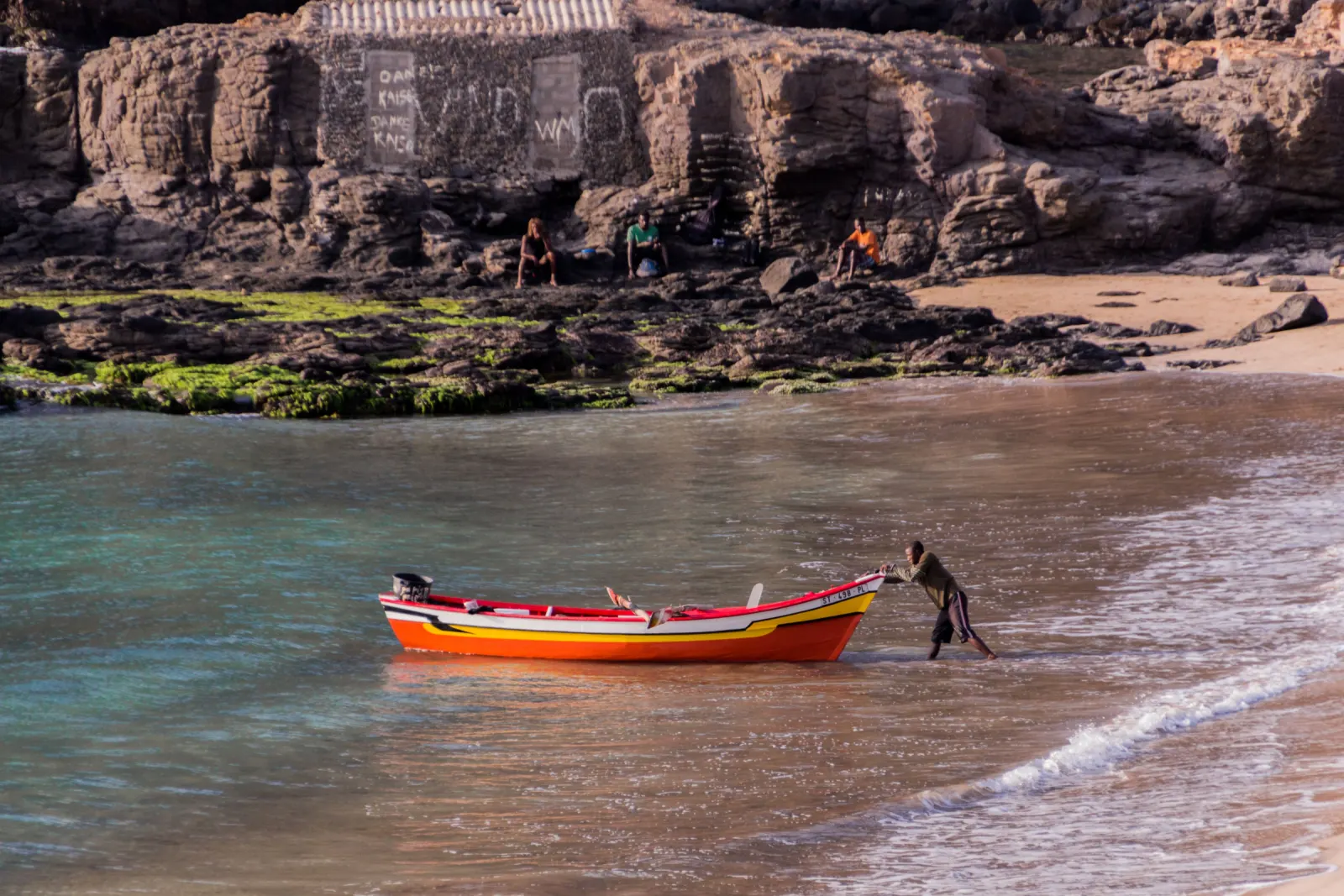
Orange fishing boat pulled onto rocky beach

Cape Verde travel guide

Small coastal towns, Portuguese spoken and a slow pace in Western Africa

Best: Jan, Mar, Apr, May

Photo: Thomas Schwaak / Pexels

Capital
Praia
Language
Portuguese
Currency
Cape Verdean escudo
Time zone
UTC-01:00
Plugs
Type C, F · 220 V
Driving
On the right
Emergency
130 / 131 / 132

Why visit Cape Verde

Cape Verde is a small Portuguese-speaking country in Western Africa. It covers 4033 km² and has about 491233 people. It suits slow coastal trips, because every main town sits on the coast, from the capital Praia to Mindelo, Santa Maria, São Filipe and Sal Rei. The best months to go are January, March, April and May. Expect a quiet pace. Praia is the largest town, with about 159050 people, and Sal Rei has only around 6357, so there are few big-city sights.

Is Cape Verde right for you?

Great for

  • Winter sun seekers: January has 0 rain days, 9.9 sun hours and highs of 23°C
  • Travellers who dislike extreme heat: highs stay between 22°C and 27.2°C all year
  • Dry spring beach trips: April and May have 0 rain days and over 11 sun hours
  • Coastal town fans: all five main towns, including Praia and Mindelo, are on the coast
  • Portuguese speakers, since Portuguese is the official language

Less ideal for

  • Those wanting cool evenings: January lows of 21.6°C sit close to highs of 23°C
  • Late-summer trips needing dry days: September brings 4.6 rain days and 36 mm
  • Big-city lovers: the capital, Praia, the largest city, has about 159050 people
  • Long road trips: the whole country covers only 4033 km²

Cape Verde right now: October

9.2/10
Avg high
27°C
Avg low
26°C
Rain days
1

Averages for Cape Verde.

Weather by month

Climate data for Cape Verde (2015–2024) shows January, March, April and May as the best months, with no rain, highs of 22–23°C and up to 11.7 hours of sun a day. The toughest weather comes in August and September, when it is warmer, up to 27°C, with the most rain: 36 mm over about 5 days in September, though sun still lasts over 10 hours.

Average highs and lows in Cape Verde by month January: high 23°C, low 22°C , 0 rain days . February: high 22°C, low 21°C , 1 rain days . March: high 22°C, low 21°C , 0 rain days . April: high 23°C, low 21°C , 0 rain days . May: high 23°C, low 22°C , 0 rain days . June: high 24°C, low 23°C , 0 rain days . July: high 25°C, low 24°C , 1 rain days . August: high 26°C, low 25°C , 3 rain days . September: high 27°C, low 26°C , 5 rain days . October: high 27°C, low 26°C , 1 rain days . November: high 26°C, low 25°C , 1 rain days . December: high 24°C, low 23°C , 1 rain days . 23°C 22°C JAN 0d 22°C 21°C FEB 1d 22°C 21°C MAR 0d 23°C 21°C APR 0d 23°C 22°C MAY 0d 24°C 23°C JUN 0d 25°C 24°C JUL 1d 26°C 25°C AUG 3d 27°C 26°C SEP 5d 27°C 26°C OCT 1d 26°C 25°C NOV 1d 24°C 23°C DEC 1d
Best months Other months (low–high) Nd = rain days

Cape Verde (country average) · averages 2015–2024

Best time to visit Cape Verde: month-by-month weather →

Sample itineraries

7 days

Capital, Mindelo and Santa Maria

  1. Day 1–3

    Praia

    Start in Praia, the capital and largest city, with about 159,050 people. Walk the seafront, change money into Cape Verdean escudos and learn a few words of Portuguese.

  2. Day 4–5

    Mindelo

    Move on to Mindelo, a coastal city of about 70,468 people. Spend your days on foot along the waterfront and in the town centre, and eat where locals eat.

  3. Day 6–7

    Santa Maria

    End in Santa Maria, a coastal town of about 25,779 people. Keep these last 2 days slow, with time by the sea before you fly home.

10 days

Five coastal towns across Cape Verde

  1. Day 1–2

    Praia

    Begin in Praia, the capital, home to about 159,050 people. Use your first 2 days to settle in, sort out escudos and explore the city by the sea.

  2. Day 3–4

    São Filipe

    Head to São Filipe, a small coastal town of about 8,122 people. Enjoy a quieter pace and slow walks through its streets and along the shore.

  3. Day 5–6

    Mindelo

    Continue to Mindelo, the second-largest city on this route, with about 70,468 people. Spend 2 days walking the waterfront and trying local food in the centre.

  4. Day 7–8

    Sal Rei

    Travel on to Sal Rei, the smallest stop, with about 6,357 people. It suits travellers who want calm days by the coast and very little to plan.

  5. Day 9–10

    Santa Maria

    Finish in Santa Maria, a coastal town of about 25,779 people. Spend your last 2 days relaxing by the sea before your trip ends.

Food to try in Cape Verde

Cachupa

Cape Verde's national dish is a slow-cooked stew of hominy corn and beans, often with cassava, sweet potato and pork, sausage or fish. It is served across all the islands, from home kitchens to local restaurants.

Cachupa refogada

This is leftover cachupa fried in a pan until crisp, usually topped with a fried egg and sausage. It is a common breakfast in cafés and homes.

Grogue

Grogue is a strong spirit distilled from sugarcane, often in small traditional presses called trapiches. Santo Antão and Santiago are the best-known islands for it. It is drunk in bars and at festivals.

Ponche

Ponche is grogue mixed with sugarcane molasses, which makes it sweet and thick. Locals sip it slowly after a meal or offer it to guests.

Pastel com diabo dentro

The name means 'pastry with the devil inside'. It is a fried pastry filled with tuna, onion and chilli. Street stalls, markets and snack bars sell it.

Goat cheese with papaya jam

Fresh local goat cheese, often from Fogo, is served with sweet papaya jam. It is a simple and popular dessert in restaurants and homes.

Know before you go

  • Plugs and voltage: Sockets take type C and type F plugs, the round two-pin plugs used in much of Europe. The supply is 220 V. Check that your chargers and devices work at this voltage before you plug them in.
  • Driving side: Traffic drives on the right in Cape Verde. If you come from a country that drives on the left, take extra care at junctions and roundabouts during your first days.
  • Emergency numbers: The emergency numbers are 130, 131 and 132. Save all three in your phone before you arrive, and ask your accommodation which one to call for each type of emergency.
  • Currency: The local currency is the Cape Verdean escudo. Plan how you will get local cash before you travel, and ask your bank about fees for using your card abroad.
  • Language: The official language is Portuguese. Learning a few basic Portuguese words and phrases, such as greetings and thank you, will help in shops, taxis and guesthouses.
  • Time zone: Cape Verde is on UTC-01:00 all year. Keep this in mind when you plan flight connections or calls home.
  • Calling code: The international calling code for Cape Verde is +238. Use it when you give your local number to people abroad or save local contacts in your phone.

Similar destinations

Countries with a year of weather much like Cape Verde.