Skip to content
wheretotravel.info
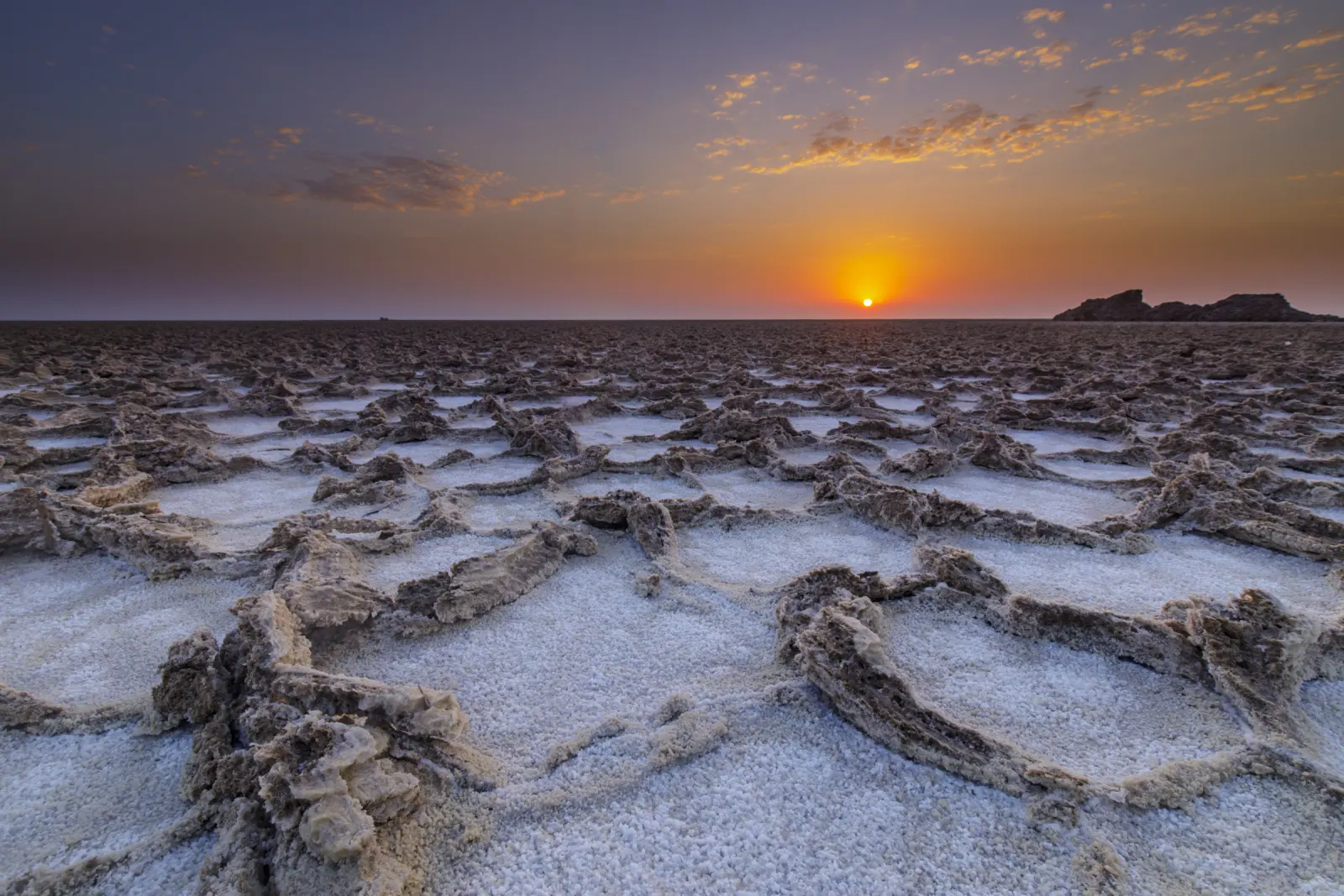
Sunrise over salt formations in Danakil desert

Ethiopia travel guide

Old towns and long overland routes in landlocked Eastern Africa

Best: Jan, Feb, Nov, Dec

Photo: Thomas Fuhrmann / Wikimedia Commons

Capital
Addis Ababa
Language
Amharic
Currency
Ethiopian birr (ETB)
Time zone
UTC+03:00
Plugs
Type C, E, F, J, L · 220 V
Driving
On the right
Emergency
911

Why visit Ethiopia

Ethiopia suits travellers who want a long overland trip. You can link the capital, Addis Ababa, with towns such as Gondar, Bahir Dar, Axum and Harar, then head south to Arba Minch and Jinka. The best months to go are November to February. One honest limitation: this is a large country and the main towns are far apart, so allow plenty of time. It also has no coast, so do not plan a beach holiday here.

  • Go in the dry months

    The best months to visit are November, December, January and February. Plan your trip around this window. Travelling outside it is possible, but these months give you the best conditions for moving between cities.

  • Addis Ababa as your base

    The capital, Addis Ababa, has a population of about 5704000. It is by far the largest city, so most trips start here. It is a practical base for planning onward travel.

  • A northern city circuit

    Gondar (323900 people), Bahir Dar (243300) and Axum (44647) are all inland cities. You can combine them in a single trip. The towns get smaller as you go, which gives you a mix of city and small-town travel.

  • Harar and the smaller towns

    Harar has about 157000 people, far fewer than the capital. It suits travellers who prefer a smaller city to a large one. Expect a slower pace than in Addis Ababa.

  • A big country to explore

    Ethiopia covers 1104300 km² and has around 111652998 people. Small towns such as Arba Minch (74879) and Jinka (20267) show a different side of the country. Distances are large, so do not try to see everything in one trip.

Is Ethiopia right for you?

Great for

  • Dry-season trips from December to February, with only about 6 to 9 rain days a month
  • Travellers who dislike heat: daytime highs stay between about 16 and 21°C all year
  • Sun seekers from October to January, with about 11 hours of sunshine a day
  • Overland trips linking Addis Ababa with Gondar, Bahir Dar, Harar, Axum and Jinka

Less ideal for

  • Beach holidays: none of the main cities listed is on the coast
  • Trips from June to September, when rain falls on 28 to 31 days a month
  • Travellers wanting warm evenings: nights drop to about 8 to 11°C all year

Ethiopia right now: September

6.5/10
Avg high
17°C
Avg low
9°C
Rain days
28

Averages for Ethiopia.

Weather by month

The climate data here covers Ethiopia as a whole, not one named city, and the best months are November to February, with 6 to 13 rain days, highs of 19 to 21°C and about 11 hours of sun a day. Avoid June to September if you can, when rain falls on 28 to 31 days a month and totals reach 321 to 377 mm.

Average highs and lows in Ethiopia by month January: high 20°C, low 9°C , 6 rain days . February: high 21°C, low 10°C , 9 rain days . March: high 21°C, low 11°C , 14 rain days . April: high 20°C, low 11°C , 22 rain days . May: high 19°C, low 10°C , 26 rain days . June: high 17°C, low 10°C , 29 rain days . July: high 16°C, low 10°C , 31 rain days . August: high 16°C, low 9°C , 31 rain days . September: high 17°C, low 9°C , 28 rain days . October: high 18°C, low 9°C , 18 rain days . November: high 19°C, low 8°C , 13 rain days . December: high 19°C, low 8°C , 6 rain days . 20°C 9°C JAN 6d 21°C 10°C FEB 9d 21°C 11°C MAR 14d 20°C 11°C APR 22d 19°C 10°C MAY 26d 17°C 10°C JUN 29d 16°C 10°C JUL 31d 16°C 9°C AUG 31d 17°C 9°C SEP 28d 18°C 9°C OCT 18d 19°C 8°C NOV 13d 19°C 8°C DEC 6d
Best months Other months (low–high) Nd = rain days

Ethiopia (country average) · averages 2015–2024

Best time to visit Ethiopia: month-by-month weather →

Sample itineraries

7 days

Addis Ababa and two northern cities

  1. Day 1–2

    Addis Ababa

    Arrive in the capital and rest after your flight. Get Ethiopian birr (ETB) and a local SIM, and note the emergency number, 911.

  2. Day 3–4

    Bahir Dar

    Head north to Bahir Dar, a calmer city than the capital. Spend 2 days walking around town at a slow pace.

  3. Day 5–7

    Gondar

    End in Gondar, the largest city on this route after Addis Ababa. Use 3 days to see the city without rushing, then travel back for your flight home.

10 days

Addis Ababa to Axum through the north

  1. Day 1–2

    Addis Ababa

    Start in the capital and get over your flight. Sort out Ethiopian birr (ETB), a SIM card and plug adapters. Local sockets use 220 V.

  2. Day 3–4

    Bahir Dar

    Move north to Bahir Dar for 2 days. It is a good place to slow down before the busier parts of the trip.

  3. Day 5–7

    Gondar

    Spend 3 days in Gondar. This gives you time to explore the city properly and take a rest day if you need one.

  4. Day 8–10

    Axum

    Finish in Axum, the smallest city on this route. Spend 3 unhurried days there, then travel back to Addis Ababa for your flight home.

Food to try in Ethiopia

Injera

A soft, spongy, slightly sour flatbread made from teff. It is the base of most Ethiopian meals. You tear off pieces and use them to pick up stews instead of cutlery.

Doro wat

A slow-cooked chicken stew with onions, spiced butter and berbere chilli mix, often served with a boiled egg. It is a festive dish, common at holidays and family gatherings.

Shiro

A thick, smooth stew made from ground chickpeas or other legumes. It is cheap, filling and eaten every day across the country. It is popular on religious fasting days, when many people avoid meat.

Kitfo

Minced raw beef mixed with spiced butter and chilli powder. You can ask for it lightly cooked. Be careful with raw meat if you have a sensitive stomach.

Tibs

Pieces of beef or lamb fried with onions, peppers and spices. It is often served sizzling in a clay dish. Many restaurants in Addis Ababa and other towns serve it.

Buna (coffee ceremony)

Ethiopia is often called the home of coffee. In a coffee ceremony, beans are roasted, ground and brewed in a clay pot, then served in small cups. Hosts often offer it to guests.

Know before you go

  • Plugs and voltage: Ethiopia uses plug types C, E, F, J and L, at 220 V. With so many types in use, a universal adapter is the simplest choice. Check that your chargers accept 220 V.
  • Driving side: Traffic drives on the right. If you come from a country that drives on the left, take extra care at junctions and when overtaking.
  • Emergency number: Our data lists 911 as the emergency number. Numbers can differ by service, such as police, ambulance or fire. Ask your accommodation to confirm the right number when you arrive.
  • Currency: The currency is the Ethiopian birr (ETB). Plan how you will get cash before you travel, especially if you are heading outside the capital, Addis Ababa.
  • Language: Amharic is the official language. Learning a few basic greetings in Amharic is polite and helps in everyday situations.
  • Tap water: Do not drink tap water. Use bottled, boiled or filtered water, and be careful with ice and raw food washed in tap water.
  • Time zone and calling: Ethiopia is on UTC+03:00 all year. The country calling code is +251, so use it when you save local numbers on your phone.

Ethiopia: frequently asked questions

When is the best time to visit Ethiopia?

December and January are the best months, and each scores 8.8 out of 10. They are the driest months, with about 6 rain days and 20–22 mm of rain. Days reach about 19–20°C with around 11 hours of sun. February (8.3) and November (7.5) are also good choices. Nights are cool, with lows near 8°C, so bring a warm layer.

Is Ethiopia good to visit in July or August?

July and August are the weakest months for most trips. July scores 5.8 and August 6.1. It rains on almost every day: about 31 rain days in each month, with 377 mm in July and 360 mm in August. July also has the least sun, at 7.5 hours a day. Only go then if the rain does not bother you.

When is the rainy season in Ethiopia?

The main rainy season runs from April to September. Rain builds in April, with 22.1 rain days and 228 mm. It peaks in July and August at around 31 rain days. September is still wet, with 354 mm. In October, rain drops to 17.6 days and 133 mm. By December it falls to 22 mm.

How hot does Ethiopia get?

Ethiopia is mild rather than hot, based on its country-wide averages. Daytime highs range from 15.9°C in July to 20.9°C in February. Lows stay between 8.1°C and 10.5°C all year. Nights are cool in every month, so pack a jacket or fleece, even in the dry season.

Is October a good time to visit Ethiopia?

October is a good month, with a score of 7 out of 10. The rain eases after September, down to 17.6 rain days and 133 mm. There are about 11 hours of sun a day, and highs are about 18°C. If you want drier weather, November is better, with 12.7 rain days and 75 mm.

What plugs, currency and time zone does Ethiopia use?

Ethiopia uses plug types C, E, F, J and L, at 220 V. The currency is the Ethiopian birr (ETB). The whole country is on UTC+03:00. Traffic drives on the right. The emergency number is 911, and the country calling code is +251.

Similar destinations

Countries with a year of weather much like Ethiopia.