Skip to content
wheretotravel.info
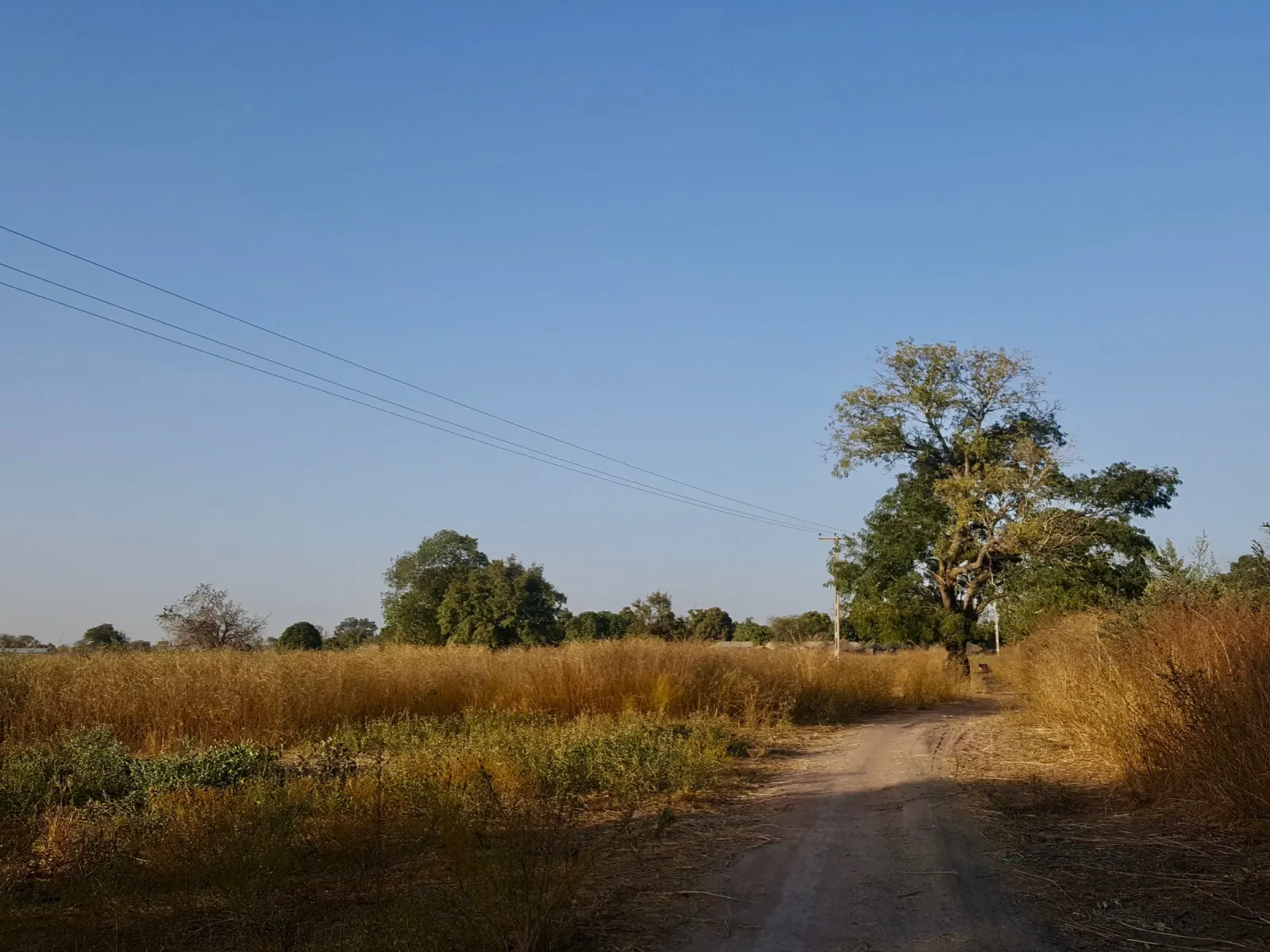
Dirt road through dry grassland with tree

Gambia travel guide

A small, English-speaking country in Western Africa, at its best from March to May

Best: Mar, Apr, May

Photo: Wmtribe2015 / Wikimedia Commons

Capital
Banjul
Language
English
Currency
Gambian dalasi (GMD)
Time zone
UTC+00:00
Plugs
Type G · 230 V
Driving
On the right
Emergency
112

Why visit Gambia

Gambia is a small country of 10,689 km² in Western Africa, so it suits a short, easy-paced trip where you don't spend days on the road. English is the language listed for the country, which makes independent travel simpler, and clocks run on UTC+00:00. The best months to go are March, April and May. One honest limitation: the coastal capital, Banjul, has only about 31,356 people, so don't expect big-city life.

  • A small country to explore

    Gambia covers about 10,689 km² and has around 2,422,712 people. Its small size makes it a practical choice for a first trip to Western Africa, and you can see more of the country in a short stay.

  • English is the language

    English is the official language of Gambia. For many independent travellers, this makes it easier to read signs, ask for directions and arrange transport without a translator.

  • Good months to go

    Our data shows March, April and May as the best months to visit Gambia. Plan around this window if you want the most favourable conditions for your trip.

  • A small coastal capital

    Banjul, the capital, sits on the coast and has about 31,356 people. It is a compact city to start from before you move on to other parts of the country.

  • Farafenni, an inland town

    Farafenni lies inland and has about 36,000 people, more than the capital. A stop here shows you a side of Gambia away from the coast.

Is Gambia right for you?

Great for

  • Winter sun seekers: dry season with highs of 31–32°C from November to February
  • Travellers who want dry days: 0 rain days on average from January to April
  • Sun lovers: 11–12 hours of sunshine a day in March, April and May
  • English speakers: English is the official language, which makes getting around simpler
  • Visitors from the UK: the UTC+00:00 time zone means no jet lag

Less ideal for

  • Travellers who dislike rain: August averages 23.3 rain days and 258 mm
  • People who sleep badly in heat: night lows stay at 25–26°C from July to November
  • Big-city lovers: the capital, Banjul, has only about 31356 people
  • Long overland trips: the whole country covers just 10689 km²

Gambia right now: October

5.1/10
Avg high
31°C
Avg low
26°C
Rain days
7

Averages for Gambia.

Weather by month

The climate data for Gambia (2015–2024) shows March to May as the best months, with 0 to 2 mm of rain, highs of 28 to 31°C and over 11 hours of sun a day. July to September are the wettest, with up to 258 mm of rain on 23.3 days in August, plus warm nights of about 26°C during the green season.

Average highs and lows in Gambia by month January: high 31°C, low 21°C , 0 rain days . February: high 32°C, low 22°C , 0 rain days . March: high 31°C, low 22°C , 0 rain days . April: high 30°C, low 22°C , 0 rain days . May: high 28°C, low 23°C , 0 rain days . June: high 29°C, low 25°C , 3 rain days . July: high 29°C, low 26°C , 17 rain days . August: high 29°C, low 26°C , 23 rain days . September: high 29°C, low 26°C , 21 rain days . October: high 31°C, low 26°C , 7 rain days . November: high 32°C, low 25°C , 1 rain days . December: high 32°C, low 22°C , 0 rain days . 31°C 21°C JAN 0d 32°C 22°C FEB 0d 31°C 22°C MAR 0d 30°C 22°C APR 0d 28°C 23°C MAY 0d 29°C 25°C JUN 3d 29°C 26°C JUL 17d 29°C 26°C AUG 23d 29°C 26°C SEP 21d 31°C 26°C OCT 7d 32°C 25°C NOV 1d 32°C 22°C DEC 0d
Best months Other months (low–high) Nd = rain days

Gambia (country average) · averages 2015–2024

Best time to visit Gambia: month-by-month weather →

Sample itineraries

7 days

Banjul and Farafenni in one week

  1. Day 1–3

    Banjul

    Start in the coastal capital, a small city of about 31356 people. Settle in, get some Gambian dalasi and explore the streets and the coast on foot at an easy pace.

  2. Day 4–5

    Farafenni

    Head inland to Farafenni, a town of about 36000 people. Spend two days walking around, watching daily life and getting a feel for the country away from the sea.

  3. Day 6–7

    Banjul

    Return to Banjul for your last two days. Revisit favourite spots, rest by the coast and leave time to sort out last purchases before you fly home.

10 days

A slower ten days, coast and inland

  1. Day 1–4

    Banjul

    Begin with four days in the capital on the coast. Take your time to arrive, change money into dalasi and explore the small city of about 31356 people without rushing.

  2. Day 5–8

    Farafenni

    Travel inland and stay four days in Farafenni, home to about 36000 people. The longer stay gives you time to wander, talk with locals and see everyday life at a relaxed pace.

  3. Day 9–10

    Banjul

    Go back to Banjul to end the trip. Use these two days for a final walk by the coast, some rest and a calm start to your journey home.

Food to try in Gambia

Domoda

A thick stew made with ground peanuts, tomato and usually meat or fish. It is often called the national dish and is served over white rice at home and in local eating places.

Benachin

A one-pot rice dish cooked in a tomato sauce with vegetables and fish or meat. The Wolof name means "one pot", and it is a common lunch across the country.

Yassa

Chicken or fish marinated in lime or lemon juice with lots of onion, then cooked until the onions are soft. It is sharp and tangy and comes with rice.

Superkanja

A stew of okra cooked with palm oil and fish or meat. It has a slippery texture that locals enjoy, and it is eaten with rice.

Attaya

Strong, sweet green tea brewed with mint and poured back and forth between small glasses to make foam. Friends share it slowly through the afternoon and evening, in several rounds.

Wonjo

A sweet, deep red drink made from dried hibiscus flowers. It is served cold, and street sellers often sell it in small plastic bags as a cheap way to cool down.

Know before you go

  • Plugs and voltage: Gambia uses type G plugs, the three rectangular pins also used in the UK. The supply is 230 V. Bring an adapter if your devices use another plug type, and check they accept 230 V.
  • Driving side: Traffic drives on the right. If you come from a country that drives on the left, take extra care at junctions and when overtaking during your first days.
  • Emergency number: The emergency number is 112. Save it in your phone before you arrive so you can reach help quickly.
  • Currency: The local currency is the Gambian dalasi (GMD). Check current exchange rates before you travel so you know what you are paying.
  • Language: English is the official language. This makes signs, official forms and basic conversations easier for English-speaking visitors.
  • Time zone: Gambia is on UTC+00:00. It is worth checking the time difference with home before you plan calls or connecting flights.
  • Calling code: The country calling code is +220. Use it when giving your accommodation's number to people at home or when calling local numbers from a foreign SIM.

Gambia: frequently asked questions

When is the best time to visit Gambia?

March to May is the best time to visit Gambia. April scores highest at 8 out of 10, with May at 7.8 and March at 7.6. These months are dry, with 0 rain days in March and April and only 0.4 in May. Days are warm, with highs of 28 to 31°C, and you get about 11 to 12 hours of sun a day.

Is Gambia good in August?

August is Gambia's wettest month, so expect rain on most days. It has about 23 rain days and 258 mm of rain, and it scores 4.6 out of 10. Sunshine drops to 8.3 hours a day. It stays warm, with highs near 29°C and lows around 26°C. It suits travellers who don't mind frequent showers.

When is the rainy season in Gambia?

The rainy season runs from July to September. July has 16.5 rain days and 159 mm, August 23.3 days and 258 mm, and September 20.6 days and 228 mm. Rain tails off in October, with about 7 rain days and 55 mm. From November to May it is almost completely dry.

Is Gambia warm in winter?

Yes, Gambia is warm and dry from December to February. Daytime highs are 31 to 32°C and nights drop to 21 or 22°C. There is almost no rain, with 0.2 rain days in December and none in January or February. You get about 10 to 11 hours of sun a day. These months score 7.2 to 7.3 out of 10.

Is November a good time to visit Gambia?

November is dry but very hot, and it scores 5.2 out of 10. It has the highest daytime temperatures of the year at about 32°C. Nights stay warm too, with lows of 25°C. Rain is rare, with only 0.6 rain days and 2 mm. Sunshine is about 10 hours a day.

What plugs, currency and emergency number does Gambia use?

Gambia uses type G plugs at 230 V. The currency is the Gambian dalasi (GMD). The emergency number is 112, and the country calling code is +220. Gambia is on UTC+00:00 and drives on the right. English is the official language.

Similar destinations

Countries with a year of weather much like Gambia.