Skip to content
wheretotravel.info
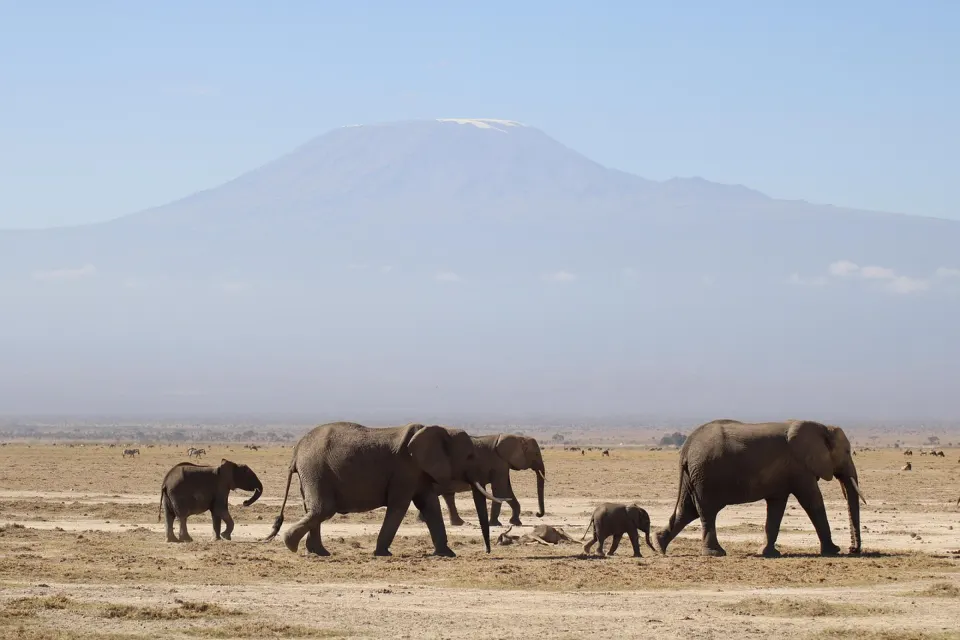
Elephant herd with Mount Kilimanjaro backdrop

Kenya travel guide

From Nairobi inland or out to the coast at Mombasa and Lamu, best in July and December

Best: Jul, Dec

Photo: Lucka1313 / Pixabay

Capital
Nairobi
Languages
English, Swahili
Currency
Kenyan shilling
Time zone
UTC+03:00
Plugs
Type G · 240 V
Driving
On the left
Emergency
112 / 999

Why visit Kenya

Kenya suits independent travellers who want to mix inland towns with time on the coast. Most trips start in Nairobi, the capital. From there you can head to Naivasha, Nanyuki or Narok, or to the coastal towns of Mombasa, Kilifi and Lamu. The best months to go are July and December. English and Swahili are both spoken. One honest limitation: the country covers 580,367 km², so getting between the interior and the coast takes time. Don't try to see everything on a short trip.

  • Two clear best months

    Our data points to December and July as the best months to visit Kenya. If your dates are flexible, plan around one of these. Outside them, check local conditions before you book, because the data does not rate other months as highly.

  • Three coastal towns to choose

    Kenya has coastal towns of different sizes. Mombasa is the big one, with 1208333 people. Kilifi is smaller, with 122899. Lamu is the quietest, with 18382. You can pick a busy city or a small town for your time on the coast.

  • Nairobi as an easy base

    Nairobi is the capital and by far the largest city, with about 5545000 people. For most independent travellers it is the natural first stop. From there you can plan onward trips to the coast or to inland towns.

  • Varied inland towns

    Kenya covers 580367 km², so there is a lot to see beyond the capital. Inland towns include Kisumu (397957 people), Narok (65430), Nanyuki (31577) and Naivasha (14563). Each makes a different base away from the coast.

  • Simple for English speakers

    English and Swahili are both official languages, so English speakers can usually get by. Traffic drives on the left, and sockets are type G at 240 V. The emergency numbers are 112 and 999.

Is Kenya right for you?

Great for

  • Dry-season trips from June to September, with under 1 rain day and 1–4 mm of rain a month
  • Travellers who want long sunny days, with about 10–11.5 sun hours in most months
  • Coastal trips that take in Mombasa, Kilifi and Lamu
  • English speakers, since English is an official language alongside Swahili
  • UK visitors, who will find familiar type G plugs, 240 V power and left-hand driving

Less ideal for

  • Travellers who dislike heat, as highs stay between 30.6°C and 33.8°C all year
  • Trips in April or November, with 13–15 rain days and 93–104 mm of rain
  • Anyone hoping for cool evenings, as lows stay around 21–23°C
  • Drivers used to the right side of the road, since Kenya drives on the left

Kenya right now: September

4.5/10
Avg high
34°C
Avg low
21°C
Rain days
1

Averages for Kenya.

Weather by month

The chart uses 2015–2024 data labelled for Kenya, not a named city; December and July score best, with July almost dry (3 mm of rain) and December a little cooler at 31°C highs. Avoid March, April and October; April brings 93 mm over 13 rain days, and November is even wetter at 104 mm.

Average highs and lows in Kenya by month January: high 32°C, low 21°C , 3 rain days . February: high 34°C, low 22°C , 2 rain days . March: high 34°C, low 23°C , 7 rain days . April: high 32°C, low 22°C , 13 rain days . May: high 33°C, low 22°C , 3 rain days . June: high 33°C, low 22°C , 1 rain days . July: high 32°C, low 21°C , 1 rain days . August: high 33°C, low 21°C , 1 rain days . September: high 34°C, low 21°C , 1 rain days . October: high 34°C, low 22°C , 6 rain days . November: high 31°C, low 21°C , 15 rain days . December: high 31°C, low 21°C , 8 rain days . 32°C 21°C JAN 3d 34°C 22°C FEB 2d 34°C 23°C MAR 7d 32°C 22°C APR 13d 33°C 22°C MAY 3d 33°C 22°C JUN 1d 32°C 21°C JUL 1d 33°C 21°C AUG 1d 34°C 21°C SEP 1d 34°C 22°C OCT 6d 31°C 21°C NOV 15d 31°C 21°C DEC 8d
Best months Other months (low–high) Nd = rain days

Kenya (country average) · averages 2015–2024

Best time to visit Kenya: month-by-month weather →

Sample itineraries

7 days

Capital and inland towns

  1. Day 1–2

    Nairobi

    Start in the capital and largest city. Change money into Kenyan shillings, buy a local SIM card and get used to the city before heading inland.

  2. Day 3–4

    Naivasha

    Move on to Naivasha, a small town and a quieter base after the capital. Spend your time outdoors and at a slower pace.

  3. Day 5–7

    Narok

    Finish in Narok, a small inland town. If you rent a car, remember that Kenya drives on the left. Allow time to return to Nairobi for your flight home.

10 days

From the highlands to the coast

  1. Day 1–2

    Nairobi

    Arrive in the capital and largest city. English and Swahili are both official languages, so getting around and arranging onward travel is usually straightforward.

  2. Day 3–4

    Nanyuki

    Head to Nanyuki, a small inland town that makes a calm base away from the city. Use it for day trips and rest.

  3. Day 5–6

    Mombasa

    Travel to Mombasa, the largest city on the coast. Explore the city itself before moving to smaller places along the shore.

  4. Day 7–8

    Kilifi

    Continue to Kilifi, a smaller coastal town. It suits travellers who want quieter days by the sea after a busy city.

  5. Day 9–10

    Lamu

    End in Lamu, the smallest coastal stop on this route. Plan your onward connection early, because getting back to Nairobi or Mombasa takes planning.

Food to try in Kenya

Ugali

A stiff porridge made from maize flour and water. It is the everyday staple across Kenya. People tear off pieces by hand and use them to scoop up stews and greens.

Nyama choma

Grilled meat, usually goat or beef. It is a social meal, often shared with friends at roadside grills and bars. It usually comes with ugali and kachumbari, a fresh tomato and onion salad.

Sukuma wiki

Collard greens fried with onion and tomato. The Swahili name means "stretch the week", because it is cheap and filling. It is a common side dish with ugali at home and in simple local eateries.

Chapati

A soft, layered flatbread fried in oil, brought to East Africa by Indian communities. It is popular at breakfast, in small cafés, and alongside bean or meat stews.

Pilau

Rice cooked with meat and spices such as cumin, cardamom and cloves. It comes from the Swahili coast around Mombasa. It is a favourite dish at weddings, holidays and other celebrations.

Chai

Kenyan tea is boiled together with milk and sugar, sometimes with ginger or other spices. People drink it throughout the day, often with chapati or mandazi, a lightly sweet fried dough.

Know before you go

  • Plugs: Kenya uses type G plugs, the three-pin plug with rectangular pins also used in the UK. Bring an adapter if your devices use a different plug.
  • Voltage: The supply is 240 V. Check the label on your charger or device before you plug in. If it does not cover 240 V, you will need a converter, not just an adapter.
  • Driving side: Traffic drives on the left. If you come from a country that drives on the right, take extra care at junctions and roundabouts, especially in your first days.
  • Emergency number: For emergencies, call 112 or 999. Save both numbers in your phone before you arrive.
  • Currency: The local currency is the Kenyan shilling. Plan how you will get shillings before you travel, and check with your bank about using your cards abroad.
  • Languages: English and Swahili are the official languages. You can get by in English, but learning a few basic Swahili greetings is a friendly gesture.
  • Time zone: Kenya is on UTC+03:00. Use this to plan calls home and to check flight times.
  • Calling code: The country calling code is +254. Use it when you save local numbers, such as your hotel or guide, in your phone.

Kenya: frequently asked questions

When is the best time to visit Kenya?

December and July are the best months, based on our scores. December scores 6 and is the only month rated good. July follows with 5.3. For the driest weather, choose June to September. Those months average 0.5 to 0.7 rain days and 1 to 4 mm of rain. December is wetter, with 7.7 rain days and 38 mm.

Is Kenya good to visit in August?

Yes, August is a good choice. It scores 5.1 and is rated ok. Rain is rare, with 0.7 rain days and only 2 mm on average. Days reach about 32.6°C, and nights drop to about 20.8°C. You can expect around 10.3 hours of sun a day.

Should I avoid Kenya in April?

Yes, April is the weakest month and we suggest avoiding it. It scores 2.8. It averages 13 rain days and 93 mm of rain. March (score 3.3) and October (score 3.6) are also rated avoid. If your dates are flexible, move your trip to June to September or to December.

How rainy is Kenya in November?

November is the wettest month, so pack for rain. It averages 15.4 rain days and 104 mm, which means rain on about half the days. It still scores 4.7 and is rated ok, and it has 10.8 hours of sun a day. Choose it only if a wet trip does not bother you.

How hot does Kenya get?

Kenya is hot all year. Average highs range from 30.6°C in November to 33.8°C in September. Lows stay between 20.8°C and 22.9°C. These figures are a single dataset for the whole country from 2015–2024, so conditions in each area will vary.

What plugs, currency and emergency number does Kenya use?

Kenya uses type G plugs at 240 V. The currency is the Kenyan shilling. For emergencies, call 112 / 999. Traffic drives on the left. The country is on UTC+03:00, and the calling code is +254. English and Swahili are the official languages.

Similar destinations

Countries with a year of weather much like Kenya.