Skip to content
wheretotravel.info
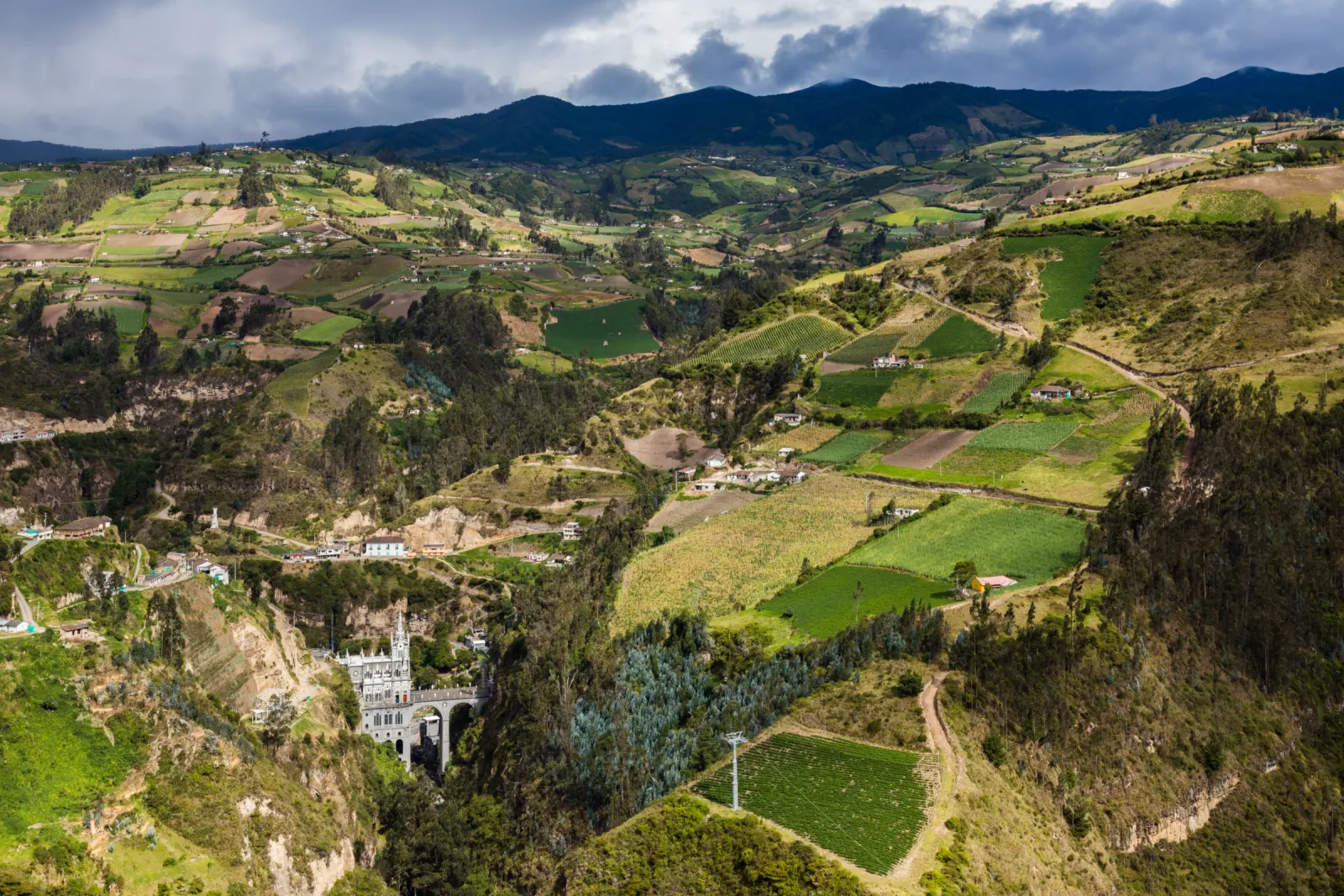
Aerial view of Las Lajas Sanctuary in canyon

Colombia travel guide

Mountains, coffee country and Caribbean coast in one long, varied trip

Best: Jan, Feb

Photo: Diego Delso / Wikimedia Commons

Capital
Bogotá
Language
Spanish
Currency
Colombian peso (COP)
Time zone
UTC-05:00
Plugs
Type A, B · 110 V
Driving
On the right
Emergency
123

Why visit Colombia

Colombia suits travellers who want cities, coast and mountains without long flights between them. Bogotá sits high in the Andes, Medellín and Cali bring spring-like weather, and Cartagena and Santa Marta give you Caribbean beaches. January and February are the best months countrywide, with clear skies in Bogotá, Cali, Cartagena and Santa Marta too. The honest limitation: Colombia is large, so moving between regions takes planning and time.

  • Three distinct climates close together

    Bogotá sits at altitude with a cool highland climate, while Cartagena and Santa Marta on the Caribbean coast stay warm and humid year-round. Leticia, deep in the Amazon, offers a different tropical rhythm again, so travellers can shift climates without crossing borders.

  • A capital of 8,034,649 people

    Bogotá is home to 8,034,649 residents, making it one of South America's largest capitals. Its best months for a visit are July, August, September and December, giving options outside the usual high season.

  • Caribbean coast cities with colonial history

    Cartagena, with 914,552 people, and Santa Marta, with 505,915, both sit on the Caribbean coast. Both share overlapping best months of January, February, March and December, so a coastal trip can cover both without conflicting timing.

  • San Andrés for island conditions

    San Andrés, a Caribbean island with 71,946 residents, has its best months spread across January, February, March and April, a longer window than most mainland cities on this list.

  • Leticia and the Amazon in a different season

    Leticia, with 55,691 people, lies in Colombia's Amazon region and has its own best months of May and June, separate from the rest of the country. This makes it a destination to plan on its own calendar rather than tacking it onto a coastal or highland trip.

Is Colombia right for you?

Great for

  • Travellers wanting city, coast and highlands in one trip: Bogotá, Medellín and coastal Cartagena all differ in climate
  • Beach trips to Cartagena, Santa Marta or San Andrés, all best from January to March
  • City breaks to Bogotá, where August and September bring more sun hours (11-11.2) and fewer rain days (7.5-7.6)
  • Visits timed for January-February, the best months across most cities including Medellín, Cali and Armenia
  • Amazon trips to Leticia, best in May and June

Less ideal for

  • Trips needing one weather window for the whole country, since each city has a different best season (Leticia in May-June vs coast in Jan-March)
  • Visits to Bogotá in March or November, when rain days hit 21-23 and rainfall reaches 119-131 mm
  • Travellers wanting hot beach weather alongside a Bogotá city stay, since the capital sits cool at 18-20°C highs year-round

Colombia right now: November

6.4/10
Avg high
19°C
Avg low
10°C
Rain days
21

Averages for Bogotá.

Weather by month

This data is for Bogotá, Colombia's high-altitude capital, where temperatures stay close to 18-20°C highs year-round but rainfall swings a lot. January and February are the driest and sunniest stretch, with just 58-78mm of rain and around 10-11 sun hours a day, making them the best bet. November and March are the toughest, each bringing over 120mm of rain across 21-23 rain days, so expect frequent showers if you visit then.

Average highs and lows in Bogotá by month January: high 19°C, low 9°C , 13 rain days . February: high 20°C, low 10°C , 16 rain days . March: high 19°C, low 10°C , 23 rain days . April: high 19°C, low 10°C , 19 rain days . May: high 18°C, low 10°C , 17 rain days . June: high 18°C, low 10°C , 14 rain days . July: high 18°C, low 9°C , 12 rain days . August: high 19°C, low 9°C , 8 rain days . September: high 20°C, low 9°C , 8 rain days . October: high 19°C, low 9°C , 15 rain days . November: high 19°C, low 10°C , 21 rain days . December: high 19°C, low 9°C , 12 rain days . 19°C 9°C JAN 13d 20°C 10°C FEB 16d 19°C 10°C MAR 23d 19°C 10°C APR 19d 18°C 10°C MAY 17d 18°C 10°C JUN 14d 18°C 9°C JUL 12d 19°C 9°C AUG 8d 20°C 9°C SEP 8d 19°C 9°C OCT 15d 19°C 10°C NOV 21d 19°C 9°C DEC 12d
Best months Other months (low–high) Nd = rain days

Bogotá · averages 2015–2024

Best time to visit Colombia: month-by-month weather →

Colombia's climate regions

The weather varies across the country; each region has its own best months.

  • Bogotá Highlands

    Bogotá

    Bogotá sits high and cool, with highs near 19°C in January and 18°C in July. Rain falls on about 178 days a year, so no month is dry, but July, August, September and December are the best bets.

    Best: Jul, Aug, Sep, Dec

  • Western & Caribbean Lowlands

    Medellín, Cali, San Andrés, Leticia

    Medellín, Cali, San Andrés and Leticia stay warm year-round, with highs around 27-28°C. Rain is frequent, about 277 days a year, but March and April offer the best chance of drier weather.

    Best: Mar, Apr

  • Caribbean Coast

    Cartagena, Santa Marta

    Cartagena and Santa Marta are hot all year, with highs around 30°C in both January and July. Rain days drop to about 172 a year, and the driest, most popular stretch runs from December to March.

    Best: Jan, Feb, Mar, Dec

  • Coffee Region

    Armenia

    Armenia has mild highs around 22-23°C year-round but is the wettest region in the country, with rain on about 346 days a year. January and February give the best shot at a dry spell.

    Best: Jan, Feb

Where to go in Colombia

City guides with their own best months and weather.

Sample itineraries

7 days

Capital, Coffee Region and Caribbean Coast

  1. Day 1–2

    Bogotá

    Explore Colombia's capital, set high in the Andes. Walk the historic La Candelaria district and visit a museum or two before heading onward.

  2. Day 3–4

    Armenia

    Spend two days in the coffee region around Armenia, Colombia's smallest major city on this route, with farm visits and green hills to explore.

  3. Day 5–7

    Cartagena

    End the trip on the Caribbean coast in Cartagena's walled colonial city, with beaches and seafood nearby. February, January, March and December are the city's best months.

10 days

Andes, Coffee, Coast and Amazon Loop

  1. Day 1–2

    Bogotá

    Start in Bogotá, the capital, exploring its colonial core and museums. August, September, July and December are listed as its best months.

  2. Day 3–4

    Medellín

    Continue to Medellín, a large Andean city known for its mild climate; January and March are its best months for a visit.

  3. Day 5–6

    Armenia

    Head to Armenia in the coffee region for farm tours and mountain scenery; January and February are the recommended months.

  4. Day 7–8

    Cartagena

    Travel to the Caribbean coast and explore Cartagena's walled city and beaches during its best months of February, January, March or December.

  5. Day 9–10

    Santa Marta

    Finish in Santa Marta, a coastal city near beaches and mountains, best visited in February, March, January or December.

Getting around Colombia

Typical journey times and fares between the main places.

Route By Time Price
Bogotá → San Andrés Avianca, LATAM and JetSMART fly direct. The 130 minutes is time in the air only (about 2h09–2h15), not door-to-door. I found no reliable one-way fare in COP. Google Flights showed COP 479,100 for the cheapest direct return trip (JetSMART). flight 2 h 10 min – ↗

Staying connected

If your phone plan doesn't include Colombia, an eSIM set up before you leave gives you data on arrival.

Where to stay

One good base in each main city and who it suits.

La Candelaria

Bogotá

Good for first-timers, history, short stays

Bogotá's colonial old town has cobbled streets, colourful houses, major museums and Plaza de Bolívar, all within walking distance. It is the easiest base for sightseeing and the start of the Monserrate trip. Streets empty out after dark, and some blocks feel unsafe at night, so many visitors take taxis or ride apps in the evening.

Laureles

Medellín

Good for longer stays, local feel, walkers

Laureles is a flat, residential area with tree-lined streets, small parks and a more local daily life than El Poblado. Walking and cycling are easy, and there are plenty of cafés and bars, especially around La 70 and La 33. It is further from the Poblado nightlife, and some parts lack direct metro access, so you may rely on taxis.

San Antonio

Cali

Good for first-timers, budget travellers, backpackers

This historic hillside barrio has low colonial houses, small cafés and a park on the hill with views over the city at sunset. It sits within walking distance of the old centre and has many hostels and guesthouses. The streets are steep, and some quiet corners feel empty late at night, so a taxi after dark is a good idea.

Centro Histórico

Cartagena

Good for first-timers, sightseeing, couples

The old walled city has colonial streets, balconies with flowers, plazas, churches and many restaurants, so most sights are a short walk away. It is the easiest base for a first visit. It is also the busiest and most touristy part of town, and street vendors can be persistent.

Centro Histórico

Santa Marta

Good for first-timers, food, nightlife

The old colonial centre has the cathedral, the seafront promenade and most of the city's restaurants and bars, all within walking distance. It is also the easiest base for buses and tours to Tayrona and Minca. Streets can be hot, crowded and noisy at night, and the city beach here is not the best for swimming.

Centro

Armenia

Good for first-timers, budget travellers, short stays

The city centre around Plaza de Bolívar and the pedestrian Calle Real has shops, cafés and easy bus links. Buses run from here to the coffee towns and the terminal. It is noisy and crowded by day, and many streets feel empty after shops close at night.

San Luis

San Andrés

Good for couples, beach lovers, quiet

San Luis runs along the east coast, with calmer beaches, clear water and traditional wooden Raizal houses. It feels more relaxed than El Centro and suits travellers who want to swim and snorkel near their room. You will need taxis, buses or a rented golf cart to reach the main restaurants and nightlife in town.

Centro

Leticia

Good for first-timers, short stays

The compact grid around Parque Santander holds most guesthouses, cafés, banks and tour offices, and at dusk huge flocks of parrots come to roost in the park's trees. It is easy to arrange river trips and walk everywhere from here. Motorbike traffic and evening music can make some streets noisy.

Food to try in Colombia

Bandeja paisa

A large plate from the Antioquia region with beans, rice, ground beef, chicharrón, fried egg, plantain and avocado. It began as a hearty meal for farm workers.

Ajiaco

A thick chicken and potato soup from Bogotá, made with three types of potato and the herb guascas. It is often served with corn, capers and cream.

Arepas

Grilled or fried corn cakes eaten across the country, often for breakfast. Styles differ by region, from plain and thin to stuffed with cheese.

Sancocho

A stew of meat, plantain, yuca and corn, cooked slowly in one pot. It is a common dish for family gatherings and varies by region depending on the meat used.

Lechona

Whole pig stuffed with rice, peas and spices, then roasted for hours. It comes from the Tolima region and is popular at festivals and large celebrations.

Tinto (Colombian coffee)

Colombia's small black coffee, drunk throughout the day on the street or at home. The country's coffee-growing region supplies beans used well beyond its borders.

Know before you go

  • Plugs and voltage: Colombia uses plug types A and B, the flat-pin plugs also used in North America. The supply is 110 V. Check that your chargers and devices accept 110 V before you plug them in, and bring an adapter if needed.
  • Driving side: Traffic drives on the right. There is no further driving information in our data, so check local rules and road conditions before you rent a car.
  • Emergency number: Dial 123 for emergencies. Save it in your phone before you arrive, and keep your accommodation address written down to give to responders.
  • Currency: The currency is the Colombian peso (COP). Prices often use the $ sign, so don't confuse it with US dollars. Check the current exchange rate before you pay.
  • Language: Spanish is the official language. Outside the main tourist areas, few people may speak English. Learn some basic phrases, or keep a translation app on your phone, preferably one that works offline.
  • Time and phone code: Colombia is on UTC-05:00. The country calling code is +57, which you need when calling a Colombian number from abroad.
  • Tap water: Tap water quality differs from place to place. Ask your accommodation whether it is safe to drink locally. If you are unsure, use bottled or filtered water.
  • Tipping: Restaurant bills often include an optional service charge, called a "propina voluntaria". The staff usually ask if you want it added. You may say no, but most people accept it when service is good.

Colombia: frequently asked questions

Is Colombia good to visit in August?

Yes, August is a good month, with a score of 6.7 out of 10. In Bogotá, August has only 7.6 rain days and 24 mm of rain, one of the driest spells of the year, plus 11.1 hours of sun. It's also listed among Bogotá city's own best months, alongside July, September and December.

What is the best time to visit Colombia?

January and February are the top-rated months, both scoring 7 out of 10. In Bogotá, January has 58 mm of rain over 13.4 days and February has 78 mm over 16.2 days, drier than the wettest months of March and November. These two months also appear as best-time picks for Medellín, Cali, Cartagena, Santa Marta and Armenia.

When is the rainy season in Bogotá?

The wettest months in Bogotá are March and November. March averages 122 mm of rain across 22.7 rain days, and November is even wetter with 131 mm over 21.2 days. By contrast, August and September are the driest, with just 24 mm and 29 mm of rain.

What is the weather like in Bogotá?

Bogotá stays cool year-round because of its altitude, with daytime highs between 17.7°C and 19.7°C in every month from 2015 to 2024. Nights are chilly too, with lows mostly between 9°C and 10.2°C. Rainfall varies more than temperature, ranging from 24 mm in August to 131 mm in November.

Is Cartagena or San Andrés better for a beach trip?

Both are coastal, so it depends on timing. Cartagena's best months are February, January, March and December, while San Andrés peaks a bit later, with April, March, February and January listed as its best months. If you want the widest window, January and February overlap for both destinations.

How do I get from Bogotá to San Andrés?

There is a direct flight from Bogotá to San Andrés taking 2 hours and 10 minutes. This makes San Andrés, a Caribbean island destination with its best months in January to April, an easy add-on to a Colombia trip that starts in the capital.

Similar destinations

Countries with a year of weather much like Colombia.