Skip to content
wheretotravel.info
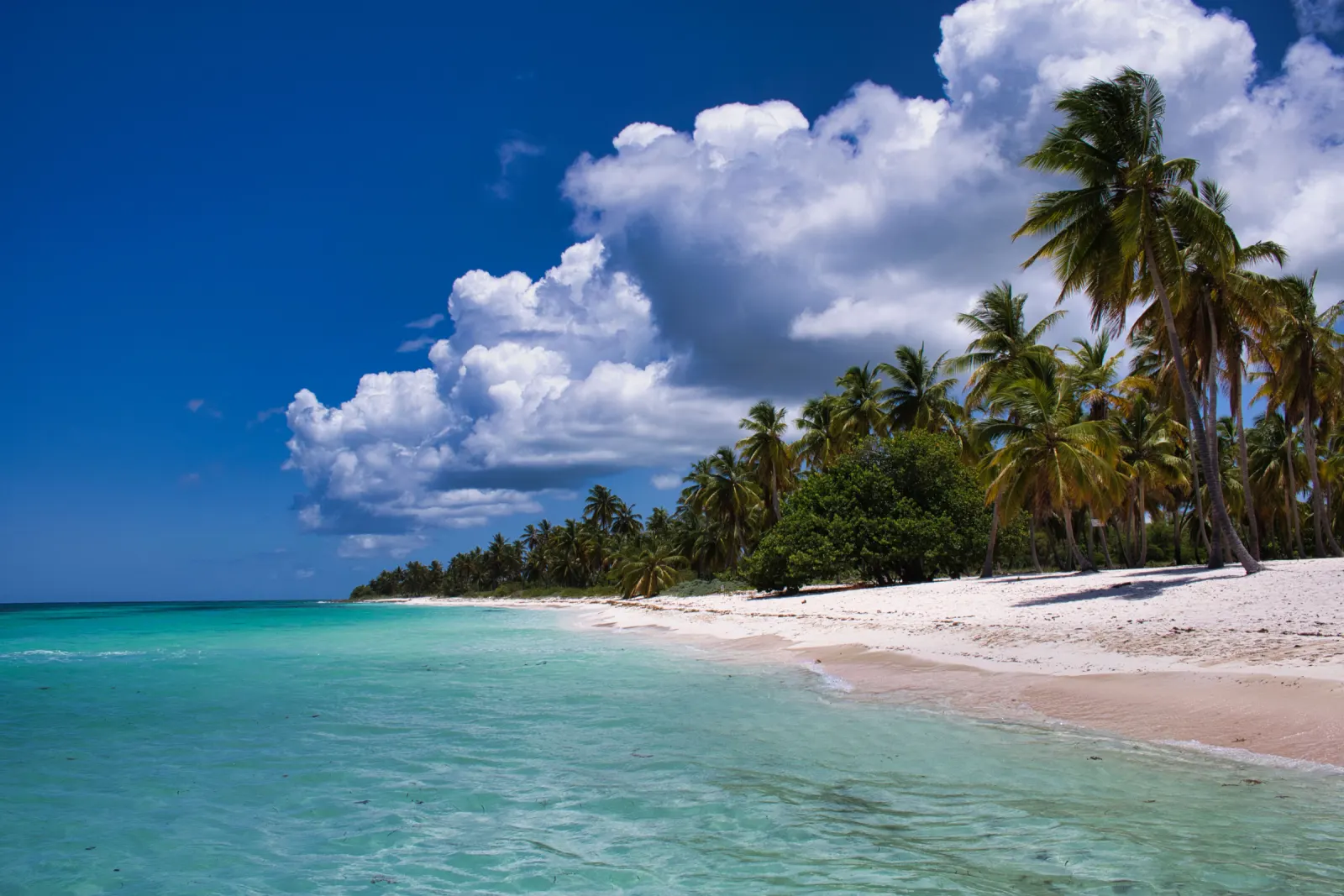
Turquoise beach with palm trees and clouds

Dominican Republic travel guide

Caribbean beaches and colonial streets on one island, best visited in January

Best: Jan

Photo: Mr Pixel / Pexels

Capital
Santo Domingo
Language
Spanish
Currency
Dominican peso (DOP)
Time zone
UTC-04:00
Plugs
Type A, B · 110 V
Driving
On the right
Emergency
911

Why visit Dominican Republic

The Dominican Republic suits travellers who want warm beaches, colonial history and lively towns within easy reach of each other. Santo Domingo, the capital, sits on the coast and mixes old streets with city life, while coastal towns like La Romana, Barahona and Pedernales offer quieter shores. January stands out as the best month to visit, with cooler, drier conditions. Outside that window, expect more heat and humidity, so plan accordingly.

Dominican Republic right now: November

7.0/10
Avg high
21°C
Avg low
14°C
Rain days
18

Averages for Dominican Republic.

Weather by month

This data, recorded for the Dominican Republic from 2015 to 2024, shows January as the top month, with highs around 20°C, just 82mm of rain and 9.9 hours of sun daily. September brings the toughest weather, with 21.6 rain days and highs of 23.4°C, while April and May also see heavy rainfall near 143-145mm.

Average highs and lows in Dominican Republic by month January: high 20°C, low 12°C , 12 rain days . February: high 19°C, low 12°C , 15 rain days . March: high 20°C, low 12°C , 16 rain days . April: high 21°C, low 13°C , 20 rain days . May: high 22°C, low 14°C , 19 rain days . June: high 23°C, low 15°C , 16 rain days . July: high 23°C, low 15°C , 17 rain days . August: high 24°C, low 15°C , 18 rain days . September: high 23°C, low 15°C , 22 rain days . October: high 23°C, low 15°C , 20 rain days . November: high 21°C, low 14°C , 18 rain days . December: high 20°C, low 13°C , 16 rain days . 20°C 12°C JAN 12d 19°C 12°C FEB 15d 20°C 12°C MAR 16d 21°C 13°C APR 20d 22°C 14°C MAY 19d 23°C 15°C JUN 16d 23°C 15°C JUL 17d 24°C 15°C AUG 18d 23°C 15°C SEP 22d 23°C 15°C OCT 20d 21°C 14°C NOV 18d 20°C 13°C DEC 16d
Best months Other months (low–high) Nd = rain days

Dominican Republic (country average) · averages 2015–2024

Best time to visit Dominican Republic: month-by-month weather →

Sample itineraries

7 days

Capital, Mountains and Caribbean Coast

  1. Day 1–2

    Santo Domingo

    Start in the capital, population 2,201,941, and walk the old colonial streets near the harbor before moving inland.

  2. Day 3

    La Vega

    Visit this inland city of 282,055 people, set among the central mountains, for a change from coastal scenery.

  3. Day 4

    Higüey

    Stop in Higüey, home to 251,243 residents, known as a pilgrimage center in the east of the country.

  4. Day 5–7

    La Romana

    Finish on the coast in La Romana, population 139,238, with beach time and boat trips along the shoreline.

10 days

Full Loop: Capital, Inland Towns and Southern Coast

  1. Day 1–2

    Santo Domingo

    Begin in the capital city of 2,201,941 people, exploring its historic center and waterfront before heading inland.

  2. Day 3

    La Vega

    Spend a day in La Vega, population 282,055, surrounded by the Cordillera Central mountains.

  3. Day 4

    Higüey

    Pass through Higüey, home to 251,243 people, a religious and agricultural hub in the east.

  4. Day 5–6

    La Romana

    Head to the coastal city of La Romana, population 139,238, for beaches and nearby marina areas.

  5. Day 7–8

    Santa Cruz de Barahona

    Travel south to Santa Cruz de Barahona, population 83,619, a coastal town near mountains and lakes.

  6. Day 9–10

    Pedernales

    End in Pedernales, population 24,291, a small coastal town near the border with Haiti.

Food to try in Dominican Republic

La Bandera

This is the typical lunch plate: white rice, red beans, stewed meat, and a side salad. Dominicans eat it most days at midday, often at a comedor.

Mangú

Mashed green plantains, usually served for breakfast. It often comes with fried eggs, salami, and cheese, a combo locals call 'los tres golpes'.

Sancocho

A thick stew with several meats, root vegetables, and plantains. Families often cook it on weekends or for gatherings.

Chicharrón

Fried pork belly or pork skin, crispy outside and juicy inside. It's sold as street food and also served as a side dish at home.

Tostones

Green plantains sliced, fried, flattened, then fried again until crisp. They're a common side dish with lunch or dinner, often with garlic sauce.

Mamajuana

A dark drink made from rum, red wine, and honey steeped with tree bark and herbs. It's often offered to guests and sold in bottles as a souvenir.

Know before you go

  • Plugs and voltage: Sockets take plug types A and B, with two flat pins, sometimes with a round earth pin. The supply is 110 V. Check that your chargers and devices work at 110 V before you plug them in.
  • Driving side: Traffic drives on the right. If you rent a car and usually drive on the left, take extra care at junctions and roundabouts for the first few days.
  • Emergency number: Call 911 for emergencies. Save it in your phone before you arrive so you can find it quickly if something happens.
  • Currency: The local currency is the Dominican peso (DOP). Check the current exchange rate before you travel so you can spot a poor rate when you change money.
  • Language: Spanish is the official language. Learning a few basic phrases for greetings, directions and ordering food will make daily life easier, especially away from the main resorts.
  • Time zone: The Dominican Republic uses UTC-04:00. Check the difference from your home time zone to plan calls and avoid surprises with flight and transfer times.
  • Calling code: The country calling code is +1. Check with your mobile provider about roaming charges before you go, or plan to buy a local SIM card on arrival.

Dominican Republic: frequently asked questions

Is the Dominican Republic good to visit in August?

Yes, August scores 7 out of 10, rated good. Daytime highs reach 23.5°C and nights stay near 15.3°C. It rains on about 18 days with 122 mm total, so showers are common but the island still gets 11.3 hours of sun a day.

What's the best month to visit the Dominican Republic?

January is rated the best month, scoring 7.5 out of 10. It's the driest month with only 82 mm of rain over 12.4 days, and sunshine runs about 9.9 hours a day. Highs reach 19.6°C and lows dip to 11.6°C.

Which month has the most rain in the Dominican Republic?

May brings the most rainfall, at 145 mm, closely followed by April with 143 mm. September has the most rainy days, around 21.6 days a month. By contrast, December is driest for rain totals at 74 mm.

Is the Dominican Republic warm in January?

Yes, January is mild rather than hot, with highs of 19.6°C and lows around 11.6°C. It's also the driest and sunniest-feeling month of the year, with just 12.4 rain days and 9.9 hours of sun daily, which helps its top score of 7.5.

What plug type and currency does the Dominican Republic use?

The Dominican Republic uses plug types A and B, running on 110 V. The currency is the Dominican peso (DOP). The emergency number is 911, and traffic drives on the right, the same as in the United States and Canada.

Similar destinations

Countries with a year of weather much like Dominican Republic.