Skip to content
wheretotravel.info
Quito

Quito travel guide

What to see, where to stay and the best time to visit Quito, Ecuador.

Best: Aug

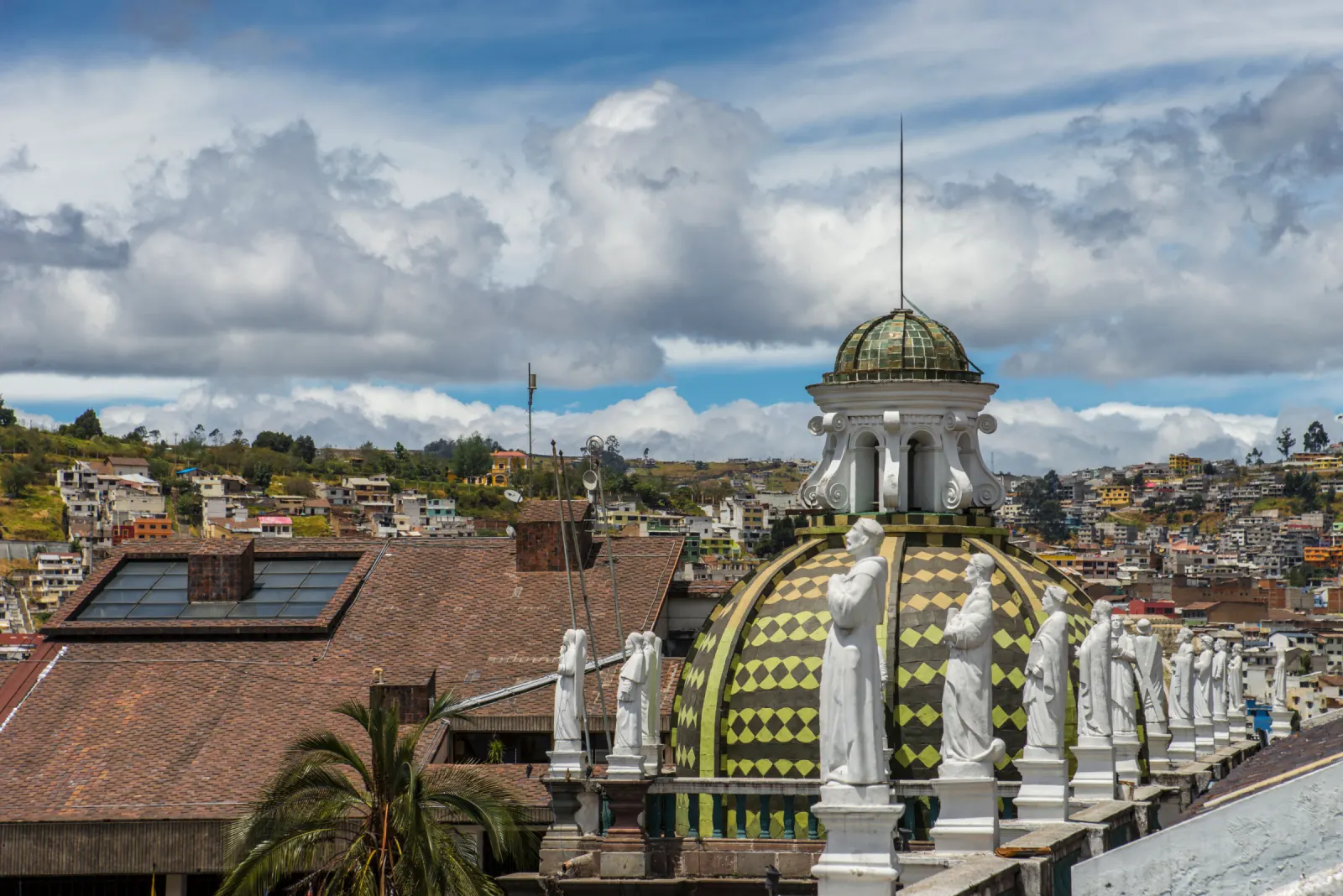
Photo: tommy picone / Pexels

Country
Ecuador
Currency
USD

About Quito

Quito sits high in the Andes, Ecuador's capital and one of the best-preserved colonial old towns in Latin America. Expect churches, plazas and museums packed close together in Centro Histórico, plus modern neighbourhoods like La Carolina and nightlife-focused La Mariscal. The city also gives easy access to the equator line and cable-car views of Pichincha volcano. August is the best month to visit.

How many days do you need in Quito?

Plan on 2 to 3 days. That covers the Old Town's churches and plazas, a half-day at TelefériQo, the Capilla del Hombre, and a trip out to Ciudad Mitad del Mundo.

Top attractions in Quito

  1. 1Historic Centre and Plaza Grande

    half a day

    Old Town (Centro Histórico)

    Quito's colonial old town is one of the largest and best-kept in the Americas and a UNESCO World Heritage Site. Plaza Grande, also called Independence Square, is the main square, with the Presidential Palace, the cathedral and the archbishop's palace around it. It is a good place to start a walk through the old streets.

  2. 2La Compañía de Jesús Church

    1 hour

    Old Town (Centro Histórico)

    This Jesuit church is famous for its interior, which is almost entirely covered in gold leaf. It is often called the finest baroque church in Ecuador, and the carved stone front is worth a look too.

  3. 3Basílica del Voto Nacional

    1–2 hours

    Old Town (Centro Histórico)

    This large neo-Gothic basilica has gargoyles shaped like Ecuadorian animals, such as tortoises and armadillos. You can climb up inside the towers for wide views over the old town. The final steps and ladders are steep and narrow.

  4. 4San Francisco Church and Convent

    1–2 hours

    Old Town (Centro Histórico)

    Founded soon after the Spanish arrived, this is one of the oldest church complexes in Quito. It faces a wide cobbled plaza. Inside the convent, a museum displays colonial religious art from the Quito School.

  5. 5La Ronda

    1–2 hours

    Old Town (Centro Histórico)

    La Ronda is a narrow, restored colonial street with balconies, small craft shops, cafés and bars. It is busiest in the evening, when locals come for snacks and canelazo, a hot spiced drink.

  6. 6El Panecillo

    1–2 hours

    Old Town (south side)

    This hill above the old town has a large aluminium statue of the winged Virgin of Quito. From the top you can see the whole city stretched along its valley, with the volcanoes behind it. Most visitors go up by taxi rather than walking.

  7. 7TelefériQo

    half a day

    Western slopes of Pichincha volcano

    This cable car runs from the edge of the city up the side of Pichincha volcano. On clear mornings you can see the snow-capped volcanoes around Quito. Fit, well-acclimatised walkers can hike on towards Rucu Pichincha, but the air at the top is thin and cold, and clouds often roll in after midday.

  8. 8Capilla del Hombre and Casa Museo Guayasamín

    2–3 hours

    Bellavista

    These are the museum and former home of Oswaldo Guayasamín, Ecuador's best-known painter. His large, powerful works deal with the suffering and dignity of Latin America's people. The house also holds his collection of pre-Columbian and colonial art.

  9. 9Ciudad Mitad del Mundo

    half a day

    San Antonio de Pichincha

    This park north of the city has a large monument marking the equator line, plus small museums and shops. The nearby Intiñan Museum is a separate, smaller site with hands-on equator demonstrations and displays on indigenous cultures. Many visitors see both on the same trip.

  10. 10Casa del Alabado Museum of Pre-Columbian Art

    1–2 hours

    Old Town (Centro Histórico)

    This museum sits in a restored colonial house near San Francisco. It displays a well-presented collection of pre-Columbian ceramics, stone carvings and gold work from Ecuador's ancient cultures. The displays are arranged by theme rather than date, which makes it easy to follow.
Quito by month

Average weather and our month score, from 10 years of climate data.

Weather by month and month scores for Quito
Month High / low Rain days Sunshine Score
January 16°C / 8°C 24 days (360 mm) 9.9 h/day 6.2/10
February 17°C / 9°C 26 days (384 mm) 9.6 h/day 6.3/10
March 16°C / 8°C 29 days (517 mm) 9.0 h/day 6.2/10
April 17°C / 8°C 28 days (439 mm) 9.5 h/day 6.3/10
May 17°C / 8°C 25 days (275 mm) 9.9 h/day 6.3/10
June 17°C / 7°C 19 days (147 mm) 10.5 h/day 6.3/10
July 17°C / 7°C 13 days (80 mm) 10.7 h/day 7.0/10
Best month: August 18°C / 7°C 12 days (72 mm) 10.9 h/day 7.5/10
September 19°C / 7°C 15 days (104 mm) 10.9 h/day 7.0/10
October 18°C / 8°C 26 days (280 mm) 10.2 h/day 6.8/10
November 17°C / 8°C 27 days (391 mm) 9.9 h/day 6.4/10
December 17°C / 8°C 27 days (377 mm) 10.1 h/day 6.3/10
  1. Jan

    Highs reach 16.3°C with rain on about 24 days. A good month overall, with score 6.2, though rain is frequent.

  2. Feb

    Expect a high of 16.5°C and 25.7 rain days, among the wettest of the year. Still rated good, scoring 6.3.

  3. Mar

    The wettest month: 28.9 rain days and 517mm of rain, with highs near 16.3°C. Score stays good at 6.2.

  4. Apr

    Highs of 16.5°C with 27.8 rain days and 439mm of rain. A good month, score 6.3, but pack rain gear.

  5. May

    Rain eases slightly to 25.4 days and 275mm, with a 16.6°C high. Good month, score 6.3.

  6. Jun

    Rain drops to 18.5 days and 147mm as sun hours rise to 10.5. Good conditions, score 6.3.

  7. Jul

    Drier weather continues: only 12.5 rain days, 80mm of rain, and a 17°C high. Scores rise to 7, good.

  8. Aug

    The driest and sunniest month, with 12.3 rain days, 72mm of rain, and a high of 18.4°C. Best-rated month, score 7.5.

  9. Sep

    Highs reach 18.9°C with rain picking up slightly to 15.3 days. Good month, score 7.

  10. Oct

    Rain returns with 25.5 days and 280mm, high near 17.5°C. Still a good month, score 6.8.

  11. Nov

    One of the wettest months: 27.4 rain days, 391mm of rain, high of 16.8°C. Good overall, score 6.4.

  12. Dec

    Highs of 16.6°C with 26.5 rain days and 377mm of rain. A good month to close the year, score 6.3.

Climate averages 2015–2024 · Best time to visit Ecuador →

Where to stay in Quito

The best areas to base yourself and who each one suits.

Centro Histórico

Good for first-timers, history, architecture

Quito's colonial old town has churches, plazas and restored houses within walking distance of each other. Staying here puts the main sights on your doorstep. Many streets go quiet after dark, and the steep hills feel hard at Quito's high altitude.

La Floresta

Good for couples, food lovers, creative types

A leafy residential area with street art, independent cafés, an arthouse cinema and some of the city's better restaurants. It feels local and calmer than nearby La Mariscal, and it sits between the old town and the newer north. Sights are a taxi or long walk away.

La Mariscal

Good for nightlife, backpackers, budget travellers

The traditional traveller district, often called Gringolandia, with bars, clubs, tour agencies and language schools around Plaza Foch. Transport links and services are good. It is noisy at night, especially at weekends, and some blocks feel uneasy after dark.

La Carolina

Good for business travellers, families, modern comforts

A modern district in the north around La Carolina Park, with shopping centres, office towers and international restaurants. It is practical, with open green space and easy taxi access. It lacks the character of the old town, which is a fair ride south.

Guápulo

Good for quiet, views, longer stays

A small, old village-like neighbourhood on a steep slope below La Floresta, built around a colonial church. It offers calm streets and wide valley views. The climb back up is very steep, so expect to use taxis.

San Marcos

Good for culture, slow travel, repeat visitors

A quiet corner of the historic centre with cobbled lanes, artisan workshops and small museums. You get old-town charm with fewer crowds. Food and evening options nearby are limited.

Getting to and around Quito

From the airport
No route data is given for Quito's airport (UIO), which sits well outside the centre. The usual options for a first-time visitor are an airport bus, a taxi, or a pre-booked transfer; ask your hotel which works best.
Public transport
Quito has no metro or tram listed here. Visitors mainly get around by city bus, including the Trolebús and Ecovía bus-rapid-transit lines, or by taxi. Taxis are a practical fallback since bus routes can be confusing for newcomers.
On foot
The Centro Histórico is compact and walkable, with the Historic Centre and Plaza Grande, La Compañía de Jesús Church, Basílica del Voto Nacional, San Francisco Church, La Ronda, and the Casa del Alabado Museum all within this one Old Town area.

Food to try in Quito

Locro de papa

This is a thick potato soup made with cheese and avocado on top. Locals eat it as a warming lunch, especially on cooler days in Quito's highland climate.

Hornado

Hornado is slow-roasted pork, often sold whole at markets with a crispy skin. It's a popular weekend dish, usually served with mote (hominy corn) and llapingachos.

Llapingachos

These are fried potato patties stuffed with cheese, often served alongside fried egg, sausage, and avocado. You'll find them as a common breakfast or lunch item across Quito.

Fritada

Fritada is chunks of pork fried in its own fat, traditionally served with mote, corn, and plantain. It's a hearty dish often eaten for a big family lunch.

Empanadas de viento

These are light, cheese-filled pastries that puff up when fried, dusted with sugar on top. They're a popular street snack, often eaten in the afternoon with coffee.

Canelazo

Canelazo is a hot drink made with cinnamon and a local sugarcane spirit, sometimes with fruit juice added. It's a common choice in the evenings, especially given Quito's cool nights at altitude.

More of Ecuador

Ecuador travel guide →

Quito: frequently asked questions

Is Quito good to visit in August?

Yes. August is Quito's best-scoring month, rated 7.5 out of 10. It has only 12.3 rain days and 72mm of rain, the lowest rainfall of the year. Sun hours reach 10.9, among the highest, and the high temperature averages 18.4°C, the warmest month on record.

What is the rainiest time to visit Quito?

March is the wettest month, with 517mm of rain spread over 28.9 rain days. November, December and February also see over 25 rain days each. By contrast, July and August drop to around 12 rain days, so the dry season runs roughly from June to September.

How many days do I need in Quito?

Plan for about 2 to 3 days. The Old Town alone needs half a day for the Historic Centre and Plaza Grande, plus 1–2 hours each for La Compañía church, the Basílica, San Francisco Church and La Ronda. Add half a day for the TelefériQo and another half day for Mitad del Mundo outside the center.

Does Quito have a real summer or winter?

Not in the usual sense. Quito sits near the equator, so temperatures barely change: highs stay between 16.3°C and 18.9°C all year, and lows stay between 6.9°C and 8.6°C. The real seasonal shift is rainfall, not temperature, with a drier spell from June through September.

Is Quito cold at night?

Nights are cool year-round rather than cold. Low temperatures range from 6.9°C in July to 8.6°C in February, so evenings stay in the single digits to low teens Celsius throughout the year, whatever month you visit.