Skip to content
wheretotravel.info
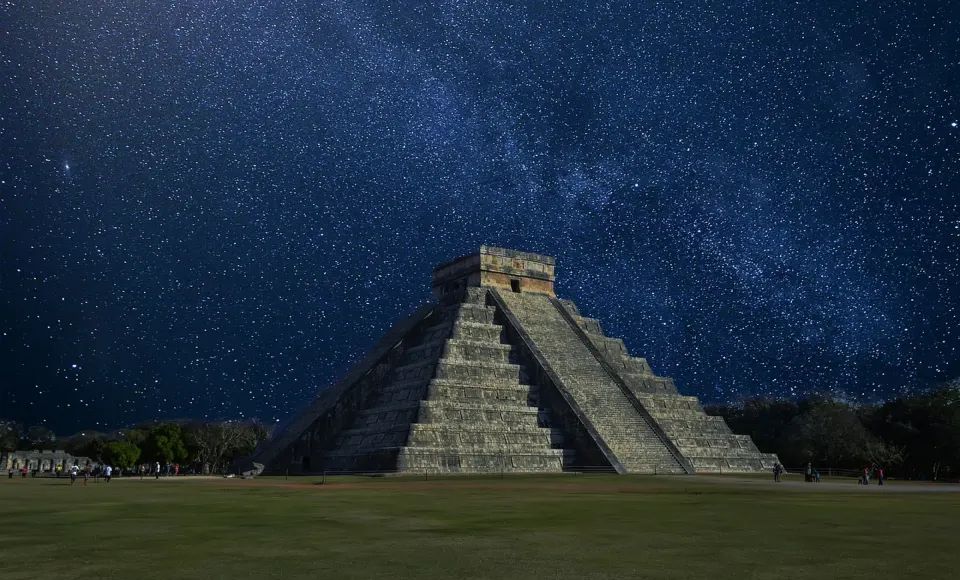
Chichen Itza pyramid under starry night sky

Mexico travel guide

Big cities inland and beach towns on the coast, best from December to March

Best: Jan, Feb, Mar, Dec

Photo: Walkerssk / Pixabay

Capital
Mexico City
Language
Spanish
Currency
Mexican peso (MXN)
Time zone
UTC-08:00, UTC-07:00 +1
Plugs
Type A, B · 127 V
Driving
On the right
Emergency
911

Why visit Mexico

Mexico suits travellers who want to mix city time with days by the sea. Inland, you can explore Mexico City, Guadalajara, Mérida and Guanajuato. On the coast, Cancun, Puerto Vallarta and La Paz are the main bases. The best months are December, January, February and March. The honest limitation is size. Mexico covers 1,964,375 km² and spans several time zones, so travel between regions takes time. Choose a few areas rather than trying to see everything.

  • Mexico City, the capital

    Mexico City is the capital and by far the largest city in our list. It is a big inland base for a first trip, and many travellers start or end their route here.

  • Dry-season winter months

    Our data rates December, January, February and March as the best months to visit Mexico. This winter window suits travellers who want to leave a cold northern season behind.

  • Beach cities on the coast

    Cancun, Puerto Vallarta and La Paz are all coastal cities. You can combine city sightseeing with time by the sea, and pick a coast that fits your route.

  • Inland cities beyond the capital

    Guadalajara, Mérida and Guanajuato are inland cities with very different characters. Guadalajara is the second largest city in our list, while Guanajuato is much smaller and easier to explore on foot.

  • Simple travel basics

    Spanish is the main language and the currency is the Mexican peso (MXN). Plugs are type A and B at 127 V, cars drive on the right, and the emergency number is 911.

Is Mexico right for you?

Great for

  • Winter sun seekers: December to March bring about 2 rain days a month and 9.5 to 11.3 sun hours a day
  • City lovers: Mexico City, Guadalajara, Mérida and Guanajuato are all inland city bases
  • Beach trips based in coastal cities like Cancun, La Paz and Puerto Vallarta
  • Spring travellers wanting heat: May highs reach 29.4°C with only 21 mm of rain
  • Spanish learners who want to practise in the country's only language

Less ideal for

  • Travellers wanting dry days in September, with 87 mm of rain over about 11 days
  • People expecting warm nights in January, when lows drop to 5.9°C
  • Short trips trying to cover a 1964375 km² country across 3 time zones
  • Summer visitors who dislike showers: June to September see 8 to 11 rain days a month

Mexico right now: October

8.9/10
Avg high
24°C
Avg low
12°C
Rain days
5

Averages for Mexico.

Weather by month

In the 2015–2024 climate data for Mexico, December to March score best, with highs of 21–26°C, about 2 rain days a month and only 8–13 mm of rain. May and June score lowest at 7.4, when highs reach 29°C and the rain starts to build, and September is the wettest month, with 87 mm over 11 days.

Average highs and lows in Mexico by month January: high 21°C, low 6°C , 3 rain days . February: high 23°C, low 8°C , 2 rain days . March: high 26°C, low 10°C , 2 rain days . April: high 28°C, low 12°C , 2 rain days . May: high 29°C, low 14°C , 4 rain days . June: high 28°C, low 15°C , 9 rain days . July: high 26°C, low 14°C , 10 rain days . August: high 27°C, low 15°C , 8 rain days . September: high 25°C, low 14°C , 11 rain days . October: high 24°C, low 12°C , 5 rain days . November: high 23°C, low 9°C , 3 rain days . December: high 21°C, low 7°C , 2 rain days . 21°C 6°C JAN 3d 23°C 8°C FEB 2d 26°C 10°C MAR 2d 28°C 12°C APR 2d 29°C 14°C MAY 4d 28°C 15°C JUN 9d 26°C 14°C JUL 10d 27°C 15°C AUG 8d 25°C 14°C SEP 11d 24°C 12°C OCT 5d 23°C 9°C NOV 3d 21°C 7°C DEC 2d
Best months Other months (low–high) Nd = rain days

Mexico (country average) · averages 2015–2024

Best time to visit Mexico: month-by-month weather →

Sample itineraries

7 days

Capital and inland cities of central Mexico

  1. Day 1–3

    Mexico City

    Start in the capital, the largest city on this route. Use the first days to settle in, walk different neighbourhoods and try the local food at your own pace.

  2. Day 4–5

    Guanajuato

    Move on to Guanajuato, a much smaller inland city. Its compact size suits slow days on foot, with time for streets, squares and cafés.

  3. Day 6–7

    Guadalajara

    End in Guadalajara, a large inland city. Spend your last days exploring its centre and markets before you fly home or continue your trip.

10 days

Mexico City to the Caribbean coast

  1. Day 1–3

    Mexico City

    Begin in the capital. Give yourself time to adjust, see the historic centre and explore a few neighbourhoods and markets.

  2. Day 4–6

    Mérida

    Head to Mérida, an inland city in the south-east. Walk the centre, sample regional dishes and use the city as a calm base before the coast.

  3. Day 7–10

    Cancun

    Finish in coastal Cancun. Spend the last days by the sea, swimming and resting, with time to unwind before your flight home.

Food to try in Mexico

Tacos al pastor

Thin slices of marinated pork cut from a vertical spit, served on small corn tortillas with pineapple, onion and coriander. They are a classic evening street food, especially in Mexico City.

Mole poblano

A dark, rich sauce made with dried chiles, spices and a little chocolate, usually served over chicken. It is linked to Puebla and often appears at weddings, festivals and family celebrations.

Tamales

Corn dough filled with meat, cheese or chile, then wrapped in a corn husk or banana leaf and steamed. People across the country eat them for breakfast, often from street carts.

Cochinita pibil

Pork marinated in achiote and bitter orange, then slow-cooked in banana leaves until soft. It comes from the Yucatán Peninsula, where it is often eaten in tacos or tortas in the morning.

Pozole

A hearty soup of large hominy corn kernels with pork or chicken, topped with lettuce or cabbage, radish, lime and chile. Families often make big pots of it for holidays and parties.

Mezcal

A spirit distilled from agave, often with a smoky taste from roasting the plant in earth pits. Oaxaca is the best-known region for it, and it is usually sipped slowly, not drunk as a shot.

Know before you go

  • Plugs and voltage: Mexico uses plug types A and B, with flat pins, and the supply is 127 V. Check that your chargers accept this voltage. Devices built only for higher-voltage grids need a converter, not just an adapter.
  • Driving side: Traffic in Mexico drives on the right side of the road. If you come from a country that drives on the left, take extra care at junctions and roundabouts during your first days.
  • Emergency number: Dial 911 for police, ambulance or fire services anywhere in Mexico. Save it in your phone before you arrive. The country calling code is +52 if someone abroad needs to call you.
  • Currency: The currency is the Mexican peso (MXN). Carry some cash in pesos for small shops, markets and local transport, and check prices in pesos rather than other currencies.
  • Language: Spanish is the main language. Outside the larger tourist areas, English may be limited. Learning a few basic Spanish phrases, or carrying a translation app, makes daily life much easier.
  • Time zones: Mexico spans several time zones: UTC-08:00, UTC-07:00 and UTC-06:00. Check the local time when you book flights, buses or tours between regions, so you do not miss a connection.
  • Tap water: Tap water is generally not considered safe to drink in Mexico. Most travellers and many locals use bottled or filtered water, including for brushing teeth. Be careful with ice in small places.

Mexico: frequently asked questions

When is the best time to visit Mexico?

December to March is the best time to visit Mexico. February, March and December score 9.6 out of 10, and January scores 9.5. These months are the driest, with about 2 rain days and 8–13 mm of rain. Daytime highs run from 21°C to 26°C. Nights are cool, though. January lows average 5.9°C, so pack a warm layer for evenings.

When is the rainy season in Mexico?

The rainy season in Mexico runs from June to September. These months have 8 to 11 rain days and 54–87 mm of rain. December to April has only about 2 rain days a month. September is the wettest month, with 10.9 rain days and 87 mm. Days stay sunny for many hours, though. June to September still gets 10.7 to 12.2 hours of sun a day.

Is Mexico good in September?

Yes, September is still a good month for Mexico, but expect rain. It scores 7.8 out of 10. It is also the wettest month of the year, with 10.9 rain days and 87 mm of rain. Temperatures are mild, with highs of 24.5°C and lows of 13.9°C. You also get 10.7 hours of sun a day between the showers.

What is the hottest month in Mexico?

May is the hottest month in Mexico, with average highs of 29.4°C. It also has the most sun, at 12.3 hours a day. Rain starts to increase, with 4.4 rain days. May and June have the lowest scores of the year, at 7.4 out of 10. That is still rated good. In June, rain rises to 8.6 days.

What plugs and voltage does Mexico use?

Mexico uses plug types A and B, with a 127 V supply. These are flat-pin plugs, and type B adds a round earth pin. If your devices use a different plug, bring an adapter. Check that your chargers and appliances work at 127 V before you plug them in.

What currency is used in Mexico, and what is the emergency number?

Mexico uses the Mexican peso (MXN), and the emergency number is 911. The main language is Spanish. The country calling code is +52. If you plan to hire a car, note that traffic drives on the right. Mexico has 3 time zones, from UTC-08:00 to UTC-06:00.

Similar destinations

Countries with a year of weather much like Mexico.