Skip to content
wheretotravel.info
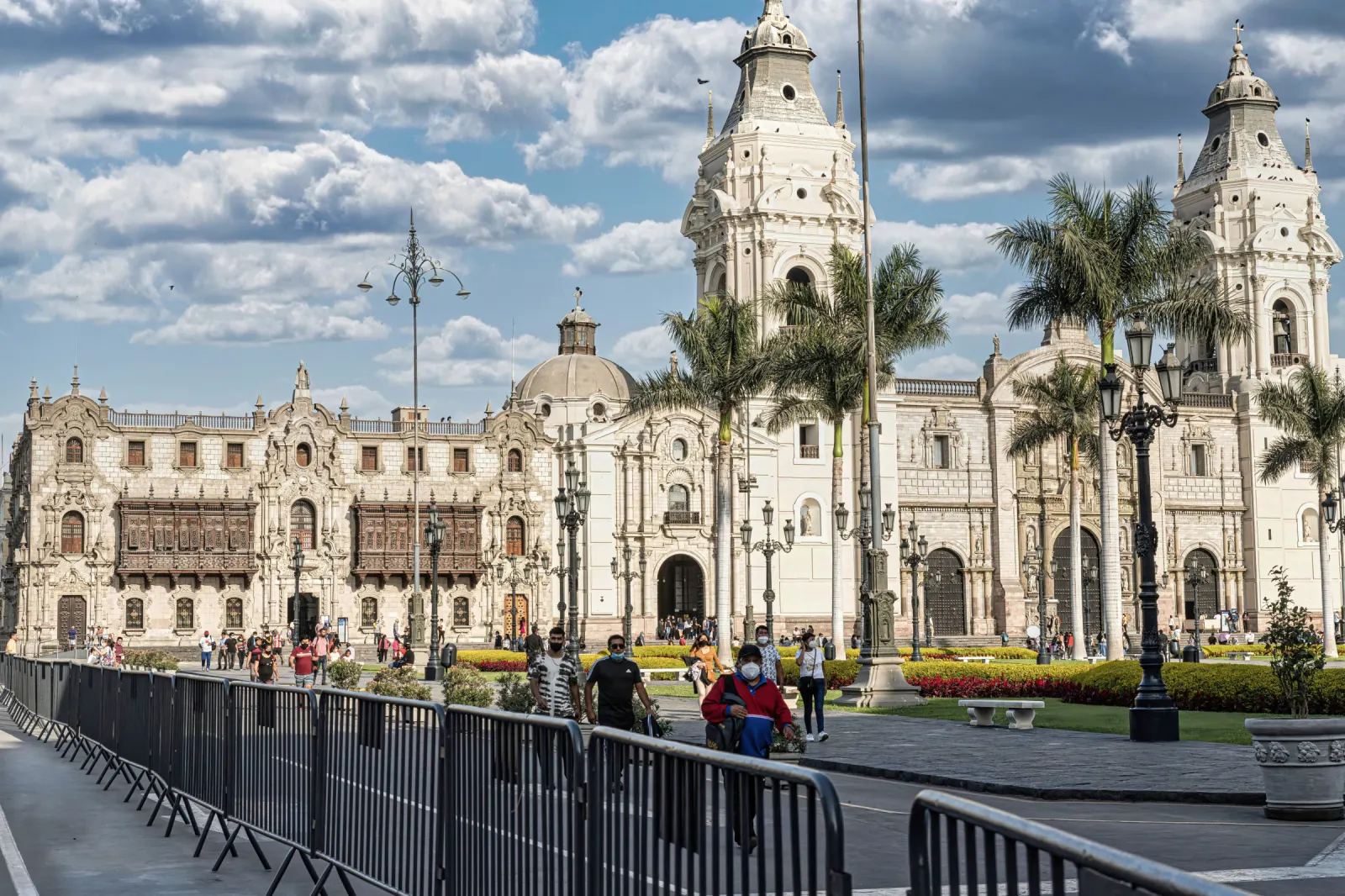
Historic cathedral and plaza in Lima

Peru travel guide

Coast, inland cities and long journeys, best from May to August

Best: May, Jun, Jul, Aug

Photo: Alberto Capparelli / Pexels

Capital
Lima
Languages
Aymara, Quechua, Spanish
Currency
Peruvian sol
Time zone
UTC-05:00
Plugs
Type A, B, C · 220 V
Driving
On the right
Emergency
911 / 111

Why visit Peru

Peru suits a long, varied trip. Lima and Trujillo sit on the coast. Inland cities such as Cusco, Arequipa, Puno and Huaraz each have their own character, and Iquitos adds a very different stop. The best months are May to August. Cusco, Arequipa, Trujillo and Ica also stay good into September. One honest limitation: Peru covers 1,285,216 km², so travel between cities takes real time. Iquitos also has a shorter window, with only May and June listed as best.

  • A coastal capital to start

    Lima is the capital and sits on the coast, with a population of 9943800. Its best months are May, June, July and August, the same window as the country as a whole. This makes it an easy first stop before you head inland.

  • Highland cities in one trip

    Cusco, Puno and Huaraz all share the same best months: June, July and August. You can plan one route through these inland cities and expect good conditions in all of them. Cusco, with 428450 people, also lists September among its best months.

  • September for southern cities

    If you travel after the main window, September is still among the best months for Arequipa, Trujillo, Ica and Cusco. Arequipa is the second-largest city on our list, with 1008290 people, and lies inland rather than on the coast.

  • Iquitos has its own timing

    Iquitos follows a different calendar from most of Peru. Its best months are only May and June, a shorter window than other cities. If Iquitos is on your list, plan the rest of your route around those 2 months.

  • Languages and simple logistics

    Spanish, Quechua and Aymara are all spoken in Peru. The whole country uses one time zone, UTC-05:00, and one currency, the Peruvian sol. Power is 220 V with plug types A, B and C, so many travellers need only one adapter.

Is Peru right for you?

Great for

  • Dry-weather city breaks in Lima: about 1 mm of rain a month from May to August
  • Andes trips to Cusco, Puno and Huaraz, all at their best from June to August
  • Coast, mountain and Amazon combos: Lima, Cusco and Iquitos all list June as a best month
  • Travellers who like mild weather: Lima highs stay between 18.6 and 25.4 °C all year
  • Spanish speakers, since Spanish is used alongside Quechua and Aymara

Less ideal for

  • Warm-sea swimmers: Lima's sea peaks at 21.6 °C in February and falls to 17.6 °C in October
  • Sun-and-heat seekers in Lima's winter, with highs near 19 °C in July and 18.6 °C in August
  • Trips only possible January to March, when no listed city has its best months

Peru right now: October

7.8/10
Avg high
20°C
Avg low
15°C
Rain days
1
Sea
18°C

Averages for Lima.

Weather by month

In Lima, the best months are May to August, when it almost never rains (about 1 mm a month and 0.1 rain days or fewer) and highs stay at a mild 19–21°C. March has the toughest weather, though it is still rated good: highs reach 25°C and it gets the most rain, 21 mm over about 6 days.

Average highs and lows in Lima by month January: high 24°C, low 20°C , 4 rain days . February: high 25°C, low 21°C , 4 rain days . March: high 25°C, low 21°C , 6 rain days . April: high 24°C, low 19°C , 2 rain days . May: high 21°C, low 17°C , 0 rain days . June: high 20°C, low 15°C , 0 rain days . July: high 19°C, low 15°C , 0 rain days . August: high 19°C, low 14°C , 0 rain days . September: high 19°C, low 14°C , 0 rain days . October: high 20°C, low 15°C , 1 rain days . November: high 21°C, low 16°C , 0 rain days . December: high 23°C, low 18°C , 2 rain days . 24°C 20°C JAN 4d 25°C 21°C FEB 4d 25°C 21°C MAR 6d 24°C 19°C APR 2d 21°C 17°C MAY 0d 20°C 15°C JUN 0d 19°C 15°C JUL 0d 19°C 14°C AUG 0d 19°C 14°C SEP 0d 20°C 15°C OCT 1d 21°C 16°C NOV 0d 23°C 18°C DEC 2d
Best months Other months (low–high) Nd = rain days

Lima · averages 2015–2024

Best time to visit Peru: month-by-month weather →

Peru's climate regions

The weather varies across the country; each region has its own best months.

  • Dry coast and Arequipa

    Lima, Arequipa, Trujillo

    Lima, Trujillo and Arequipa stay mild and dry. Highs are about 23°C in January and 21°C in July, with only about 41 rain days a year. The best months are May to August.

    Best: May, Jun, Jul, Aug

  • Andean highlands

    Cusco, Puno, Huaraz

    Cusco, Puno and Huaraz stay cool all year. Highs are near 17°C in January and 18°C in July. Rain falls on about 194 days a year, and the best months are June, July and August.

    Best: Jun, Jul, Aug

  • Amazon rainforest

    Iquitos

    Iquitos is hot and wet all year. Highs are about 30°C in January and 29°C in July. Rain falls on about 283 days a year, so showers are part of any trip. May and June are the best months.

    Best: May, Jun

  • Southern desert (Ica)

    Ica

    Ica is very dry desert, with only about 19 rain days a year. January highs reach about 31°C and July highs about 25°C. June to September is the most comfortable time to visit.

    Best: Jun, Jul, Aug, Sep

Where to go in Peru

City guides with their own best months and weather.

Sample itineraries

7 days

Lima, Arequipa and Cusco in one week

  1. Day 1–2

    Lima

    Start in the capital on the Pacific coast. Walk the city's neighbourhoods and get used to Peru before heading inland. Its best months are May to August.

  2. Day 3–4

    Arequipa

    Move inland to Peru's second-largest city on this list. Spend your time exploring the city centre at an easy pace. June, August, September and May are its best months.

  3. Day 5–7

    Cusco

    End in Cusco, the highlight of many first trips to Peru. Take the first day slowly, then spend the rest of your time in the city and nearby areas. July is the top month.

10 days

Coast, desert and highlands from Lima

  1. Day 1–2

    Lima

    Arrive in the capital, the largest city in Peru. Explore the coastal city and plan the trip south. May, June, July and August are the best months here.

  2. Day 3–4

    Ica

    Head inland to Ica for a change from the big city. Use these days for the town and its surroundings. June to September is the best time to visit.

  3. Day 5–6

    Arequipa

    Continue to Arequipa, a large inland city. Explore the centre and use the stop as a step towards higher ground. Its best months include June, August and September.

  4. Day 7–8

    Puno

    Go on to Puno, a smaller city in the highlands. Take it slowly and enjoy the quieter pace. June, August and July are its best months.

  5. Day 9–10

    Cusco

    Finish in Cusco. Spend your last days walking the city and nearby areas before you fly home. July, June, August and September are the best months.

Where to stay

One good base in each main city and who it suits.

Miraflores

Lima

Good for first-timers, walkers, coast lovers

A safe, well-kept district on the clifftops above the Pacific, with a long green park walk along the cliff edge and many restaurants and cafés. It is the easiest base for a first visit and a practical place to arrange tours. It feels polished and less local than other areas, and the main streets can be noisy with traffic.

San Lázaro

Arequipa

Good for couples, history lovers, quiet

This is the oldest quarter of the city, with narrow cobbled lanes and small squares just north-east of the centre. It feels calm and local but is still close enough to walk to the plaza. There are few places to eat inside the quarter, and some lanes are dark and empty late at night.

Centro Histórico

Trujillo

Good for first-timers, sightseeing, short stays

The colonial grid around the Plaza de Armas has painted mansions, churches and most museums within walking distance. Colectivos and taxis to Chan Chan, Huanchaco and the Moche temples leave from nearby. Daytime traffic is loud, and some side streets feel empty at night, so taxis after dark are wise.

San Cristóbal

Cusco

Good for views, quiet, repeat visitors

San Cristóbal sits on the slope above the Plaza de Armas, below the road up to Sacsayhuamán. It is quieter than the centre, and many places have wide views across the city. The drawback is the steep climb back up from the centre every day, which many people find tiring in the first days at altitude.

Plaza de Armas

Iquitos

Good for first-timers, short stays

This is the historic centre around the main square, with old rubber-boom buildings, tour agencies, banks and cafés all within walking distance. It is the easiest base for booking jungle trips and finding transport. The drawback is constant noise from motocarros, which runs from early morning into the night.

Huacachina

Ica

Good for first-timers, backpackers, dune sports

A small desert oasis built around a lagoon and ringed by tall sand dunes, just west of Ica city. Staying here puts you on the doorstep of dune buggy tours, sandboarding and sunset walks on the dunes. The drawback is that it gets crowded with day-trippers, and some hostels hold loud parties late into the night.

Barrio Mañazo

Puno

Good for culture, festival visitors

A traditional working neighbourhood close to the centre, known for its folk dance groups and strong role in local festivals such as the Candelaria. It gives a more local feel than the tourist streets around Jirón Lima. It has fewer services for visitors and gets loud and crowded during festival rehearsals and celebrations.

Centro

Huaraz

Good for first-timers, trekkers booking tours

The streets around the Plaza de Armas and Avenida Luzuriaga hold most of the tour agencies, gear rental shops, cafés and bus company offices. You can arrange treks and day trips on foot and eat well without going far. Traffic and car horns are loud from early morning, so ask for a room away from the street.

Food to try in Peru

Ceviche

Raw white fish cured in lime juice with chilli and red onion, often served with sweet potato and corn. It is most popular on the coast, especially in Lima, and usually eaten at lunch.

Lomo saltado

Strips of beef stir-fried with onion, tomato and soy sauce, served with chips and rice. It shows the Chinese influence on Peruvian cooking and appears on restaurant menus across the country.

Ají de gallina

Shredded chicken in a creamy sauce made with yellow chilli, bread and milk, served with rice, potato and olives. It is a common home-style dish, found in simple local restaurants.

Cuy (guinea pig)

Roast or fried guinea pig, a traditional food in the Andes, for example around Cusco. It is often served whole, which not every visitor finds easy to eat.

Pisco sour

Peru's best-known cocktail, made with pisco (a grape brandy), lime juice, sugar syrup and egg white. You can order it in bars and restaurants all over the country.

Chicha morada

A sweet, non-alcoholic drink made by boiling purple corn with fruit and spices such as cinnamon and cloves. It is widely sold and often comes with cheap set lunch menus.

Know before you go

  • Plugs and voltage: Peru uses plug types A, B and C at 220 V. Check that your chargers accept 220 V. Devices built only for lower voltage, like some from North America, need a converter, not just an adapter.
  • Driving side: Traffic in Peru drives on the right. If you come from a country that drives on the left, take extra care at junctions and roundabouts during your first days.
  • Emergency number: The emergency numbers are 911 and 111. Save both in your phone before you arrive, so you do not have to search for them in a stressful moment.
  • Currency: The local currency is the Peruvian sol. Tell your bank before you travel so your cards are not blocked when you use them abroad.
  • Language: Spanish is the main language. Quechua and Aymara are also official, mostly in the Andes. Outside tourist areas, few people speak English, so learn some basic Spanish phrases.
  • Time zone and calling: Peru is on UTC-05:00 all year, with one time zone for the whole country. The international calling code is +51.
  • Tap water: Do not drink tap water in Peru. Use bottled, filtered or boiled water. Be careful with ice and with raw salads washed in tap water, especially in cheaper places.

Peru: frequently asked questions

What is the best time to visit Peru?

May to August is the best time to visit Peru, with June and July scoring highest at 8.8 out of 10. These months are also among the best for every major city in our data, including Lima, Cusco, Arequipa, Puno and Huaraz. September to November still rate as best months, with scores from 7.8 to 8.1.

When is the best time to visit Cusco?

July is the top month for Cusco, followed by June, August and September. The nearby highland towns follow a similar pattern. Puno is best in June, August and July. Huaraz is best in July, June and August. If you plan to combine Cusco with other highland stops, June to August works for all three.

Is Lima good in August?

Yes, August is one of Lima's best months, with a score of 8.6. It is almost completely dry, with 0 rain days and about 1 mm of rain. It is the coolest month, though. Highs reach 18.6°C and lows drop to 14.1°C, so bring a light jacket for evenings.

Does it rain much in Lima?

No, Lima gets very little rain all year. The wettest month is March, with 5.8 rain days and 21 mm of rain. From May to November there is under 1 rain day per month. January to March is the warmest period, with highs around 24°C to 25°C.

Is the sea warm enough to swim in Lima?

The sea at Lima is cool but swimmable for many people, especially from February to April. Water temperatures then are about 21°C to 22°C. It is coldest in September and October, at around 18°C. That feels cold to most swimmers, and many people wear a wetsuit.

What plugs, voltage and currency does Peru use?

Peru uses plug types A, B and C, with 220 V electricity. Check that your devices work at 220 V before you plug them in. The currency is the Peruvian sol. Spanish, Quechua and Aymara are the official languages. The time zone is UTC-05:00. The emergency numbers are 911 and 111.

Similar destinations

Countries with a year of weather much like Peru.