Skip to content
wheretotravel.info
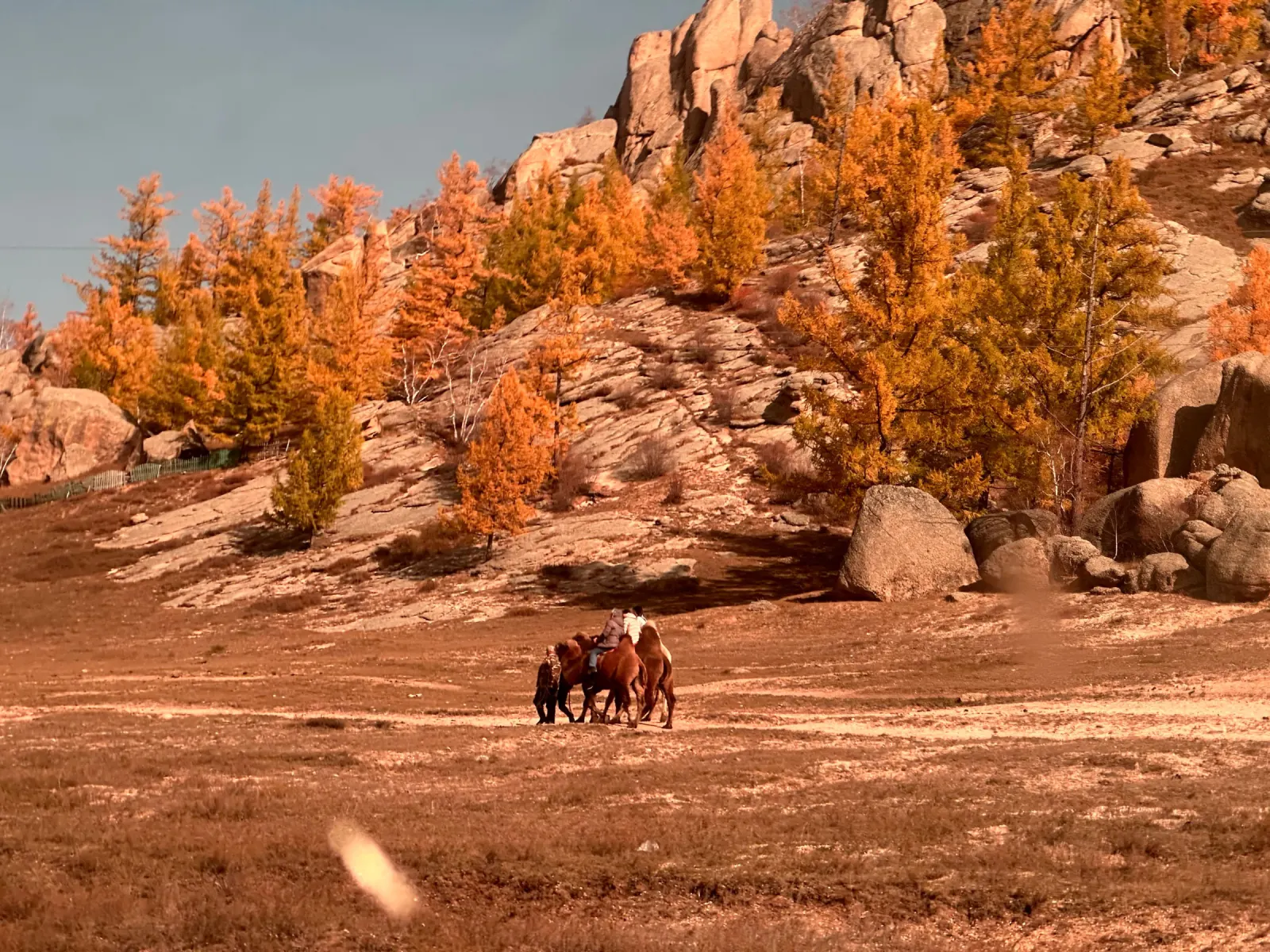
Horsemen near golden autumn trees and rocks

Mongolia travel guide

Wide open steppe, desert and mountains for travellers who like distance and few crowds

Best: May, Jun, Aug, Sep

Photo: Bükre Kay / Pexels

Capital
Ulan Bator
Language
Mongolian
Currency
Mongolian tögrög
Time zone
UTC+07:00, UTC+08:00
Plugs
Type C, E · 220 V
Driving
On the right
Emergency
101 / 102 / 105

Why visit Mongolia

Mongolia suits independent travellers drawn to open landscapes, nomadic culture and long overland routes rather than cities. Go between May and September, with May, June, August and September rated best for the country overall and for most regional hubs like Mörön and Ölgii. The honest limitation: with 1,564,110 km2 and a population of just 3,591,120, distances between towns are huge, so travel here demands time and tolerance for long, slow journeys.

  • A capital with over a million people

    Ulaanbaatar has a population of 1,396,288, making it by far the country's largest city. It's the natural base for starting or ending a trip across Mongolia, with best travel months of May, June and August.

  • Gateway towns to wild regions

    Ölgii, in the far west, has a population of 40,564 and is the jumping-off point for trips into remote mountain country. Its best months line up with the wider country: May, June, August and September.

  • A travel season with four strong months

    Mongolia's best months are May, June, August and September. This spread lets you plan either a late-spring or an early-autumn trip, avoiding the deep extremes of winter and the height of summer heat.

  • Smaller regional hubs to explore from

    Towns like Mörön (134,530 people) and Tsetserleg (21,620 people) offer quieter bases than the capital. Mörön shares the same favourable months as Ulaanbaatar, while Tsetserleg is best visited in June and August.

  • A country built for long-distance travel

    At 1,564,110 square kilometres with a population of just 3,591,120, Mongolia is vast and sparsely populated. That combination makes it a destination for travellers who want distance and open space between stops rather than compact city-hopping.

Is Mongolia right for you?

Great for

  • Summer road trips: June highs reach 22°C in Ulaanbaatar, with about 12 hours of sun a day
  • Travellers who want open space: 3,591,120 people share 1,564,110 km²
  • Shoulder-season trips in May or September, with highs near 16°C and fewer wet days than July
  • Gobi trips around Dalanzadgad, where April is also among the best months
  • Hardy winter travellers who enjoy dry cold: January lows of -24°C and under 1 wet day

Less ideal for

  • Beach holidays: none of the main cities is on a coast
  • Mild winter breaks: December to February highs stay at -8°C or lower in Ulaanbaatar
  • Travellers who want dry summers: July brings 13 wet days and 87 mm of rain

Mongolia right now: November

4.8/10
Avg high
-4°C
Avg low
-14°C
Rain days
3

Averages for Ulaanbaatar.

Weather by month

In Ulaanbaatar, May, June, August and September bring warm days from 16 to 22°C, moderate rain and over 9 hours of sunshine, making them the most comfortable months to travel. December to February are the toughest, with highs around -8 to -13°C and lows down to -24°C, though skies stay clear with 7 to 9 hours of sun daily.

Average highs and lows in Ulaanbaatar by month January: high -13°C, low -24°C , 1 rain days . February: high -8°C, low -21°C , 1 rain days . March: high 2°C, low -10°C , 3 rain days . April: high 10°C, low -3°C , 5 rain days . May: high 16°C, low 3°C , 7 rain days . June: high 22°C, low 10°C , 10 rain days . July: high 25°C, low 13°C , 13 rain days . August: high 22°C, low 11°C , 12 rain days . September: high 16°C, low 4°C , 8 rain days . October: high 7°C, low -4°C , 4 rain days . November: high -4°C, low -14°C , 3 rain days . December: high -12°C, low -22°C , 1 rain days . -13°C -24°C JAN 1d -8°C -21°C FEB 1d 2°C -10°C MAR 3d 10°C -3°C APR 5d 16°C 3°C MAY 7d 22°C 10°C JUN 10d 25°C 13°C JUL 13d 22°C 11°C AUG 12d 16°C 4°C SEP 8d 7°C -4°C OCT 4d -4°C -14°C NOV 3d -12°C -22°C DEC 1d
Best months Other months (low–high) Nd = rain days

Ulaanbaatar · averages 2015–2024

Best time to visit Mongolia: month-by-month weather →

Mongolia's climate regions

The weather varies across the country; each region has its own best months.

  • Central Mongolia Steppe

    Ulaanbaatar, Mörön, Ölgii, Tsetserleg

    Covers Ulaanbaatar, Mörön, Ölgii and Tsetserleg. Winters are harsh with January highs near -11°C, while July highs reach about 24°C. It gets 62 rain days a year, and the best months are May, June, August and September.

    Best: May, Jun, Aug, Sep

  • Gobi Desert

    Dalanzadgad

    Centred on Dalanzadgad, this region is drier with only 27.5 rain days a year. January highs sit around -7°C and July highs climb to about 28°C. Best months are April, May, June and September, avoiding the hottest summer peak.

    Best: Apr, May, Jun, Sep

Where to go in Mongolia

City guides with their own best months and weather.

Sample itineraries

7 days

Capital, Gobi Desert and Central Highlands

  1. Day 1–2

    Ulaanbaatar

    Start in the capital, home to 1396288 people. Visit the main sights and markets before heading out to the countryside.

  2. Day 3–5

    Dalanzadgad

    Fly to this small city of 19396 people, the gateway to the Gobi Desert. Spend time exploring the dunes and rock formations nearby.

  3. Day 6–7

    Tsetserleg

    Head to this quiet town of 21620 residents in the central highlands. Walk around the old monastery area and enjoy the surrounding hills.

10 days

Mongolia Grand Loop: Capital, Gobi, West and Lake Khövsgöl

  1. Day 1–2

    Ulaanbaatar

    Begin in the capital city, population 1396288. See the central squares and museums, and arrange onward flights to the regions.

  2. Day 3–4

    Dalanzadgad

    Fly south to this Gobi Desert town of 19396 people. Explore the open desert landscape and rock canyons in the area.

  3. Day 5–7

    Ölgii

    Travel west to Ölgii, home to 40564 people, known for its Kazakh culture. Spend days in the surrounding mountains near the Altai range.

  4. Day 8–10

    Mörön

    Finish in Mörön, a city of 134530 people and the base for visiting Lake Khövsgöl. Spend your final days near the lake before returning to the capital.

Getting around Mongolia

Typical journey times and fares between the main places.

Route By Time Price
Ulaanbaatar → Dalanzadgad Aero Mongolia (MIAT also listed on this route). The fare range is from a tour agency's Aero Mongolia contract price list, and the schedule on that page dates from 2018, so check the current fare with the airline. Flight time is about 1 h 20 min to 1 h 30 min. The duration includes an estimated transfer to the new Chinggis Khaan airport (UBN), which is outside the city. Flights follow summer and winter timetables. flight 3 h 30 min 110–130 USD ↗
Ulaanbaatar → Mörön Aero Mongolia and Hunnu Air. This is the gateway to Lake Khövsgöl. The fare range is from a tour agency's Aero Mongolia contract price list, which may be out of date. The duration is an estimate that includes the transfer to UBN airport. In summer, book early. flight 3 h 30 min 110–130 USD ↗
Ulaanbaatar → Ölgii Aero Mongolia, Hunnu Air and MIAT, about 4 flights a week. Flight time is about 2 h 20 min. Ölgii is 1 hour behind Ulaanbaatar, so the timetable shows 1 h 20 min westbound and 3 h 10 min eastbound. The duration is an estimate that includes the transfer to UBN airport. The fare range is from a tour agency's contract price list, which may be out of date. Some flights are seasonal. flight 4 h 50 min 140–160 USD ↗

Staying connected

If your phone plan doesn't include Mongolia, an eSIM set up before you leave gives you data on arrival.

Where to stay

One good base in each main city and who it suits.

Sükhbaatar Square

Ulaanbaatar

Good for first-timers, sightseeing

This is the central square, with Parliament, the national history museum and the opera house within walking distance. It is the easiest base for a short first visit, and tour companies often pick up nearby. Traffic on the surrounding roads is heavy and loud for much of the day.

City Centre

Mörön

Good for first-timers, short stays

This is the area around the main square and the provincial government building. Most shops, cafés, banks and guesthouses are within walking distance, so it is the easiest base for a first night before heading to Lake Khövsgöl. It gets some traffic noise in the day, and there is little to see once you have walked around the square.

Town Centre

Ölgii

Good for first-timers, short stays, tour planning

This is the area around the central square, near the regional museum and the Kazakh theatre. Most guesthouses, tour offices, cafés and banks are within walking distance, so it is the easiest base for arranging trips to the Altai mountains or eagle hunter families. Some streets are dusty and unpaved, and dogs can bark at night.

Town Centre

Tsetserleg

Good for first-timers, short stays

This is the small grid of streets around the main square, with shops, cafés, banks and the bus and shared-van stop close by. Everything in town is within walking distance, so it is the easiest base for a first visit. Some rooms face the main road, so you may hear traffic and barking dogs at night.

Town Centre

Dalanzadgad

Good for first-timers, short stays

This is the small core of the aimag capital, around the main square and government buildings, with shops, cafes and banks within walking distance. It is the easiest base for arranging drivers and tours into the South Gobi. The streets are plain and low-rise, and there is little to do in the evenings.

Food to try in Mongolia

Buuz

These are steamed dumplings filled with minced mutton or beef and onion. Families make large batches to eat during Tsagaan Sar, the Mongolian Lunar New Year.

Khorkhog

This is a stew of meat, usually mutton, cooked with hot stones in a sealed container. It is a common dish for outdoor gatherings and celebrations in the countryside.

Airag

This is fermented mare's milk with a slightly sour, tangy taste. Herders serve it in summer when mare's milk is most plentiful.

Boodog

This is a whole goat or marmot cooked from the inside with hot stones placed inside the skin. It is prepared mostly in rural areas as a traditional way to cook meat without pots.

Suutei tsai

This is a salty milk tea made with tea leaves, milk, and salt. Mongolians drink it throughout the day, often with every meal.

Tsuivan

This is a noodle dish made with hand-pulled noodles stir-fried with meat and vegetables. It is a filling meal often eaten in colder months.

Know before you go

  • Currency: Mongolia uses the tögrög. It's worth carrying cash, especially outside Ulan Bator, since rural areas and the countryside often lack card payment options.
  • Language: Mongolian is the official language. English is not widely spoken outside the capital, so a phrasebook or translation app helps when travelling in rural regions.
  • Plugs and voltage: Mongolia uses plug types C and E, running on 220 V. Bring an adapter if your devices use a different plug shape.
  • Driving side: Vehicles drive on the right in Mongolia. Roads outside major towns can be unpaved, so this matters more for planning routes than for city driving.
  • Emergency numbers: For emergencies in Mongolia, dial 101, 102 or 105 depending on the type of assistance needed.
  • Time zones: Mongolia spans two time zones, UTC+07:00 and UTC+08:00. Check which zone applies to your specific destination before planning connections or tours.
  • Calling code: Mongolia's international calling code is +976. Useful to know if you need a local SIM card or want to call home.

Mongolia: frequently asked questions

Is Mongolia good to visit in August?

Yes, August scores 7.8 out of 10 and counts as a best month. In Ulaanbaatar, highs reach 21.6°C and lows 10.7°C, so days are warm and nights are mild. It is also one of the wetter months, with 88 mm of rain over 12 rain days, so pack a waterproof layer.

When is the best time to visit Mongolia?

May, June, August and September are the top-rated months, each scoring 7.8 or higher. June is warm, with highs of 22.3°C and only 10.4 rain days, while September cools to 16.2°C highs with less rain, 41 mm over 8.3 days. May offers 16.4°C highs and the driest of the four, at 27 mm.

How cold does Mongolia get in winter?

Very cold. January is the coldest month in Ulaanbaatar, with an average high of only -12.6°C and a low of -24.2°C. December and February are similar, both staying well below freezing. Snowfall is light in terms of rain-equivalent, around 2–3 mm, since moisture freezes rather than falls as rain.

Does it rain a lot in Mongolia in summer?

July is the wettest month, with 87 mm of rain spread over 13.2 days, and August is close behind with 88 mm over 12 days. June also sees regular rain, 53 mm over 10.4 days. Despite this, July still scores 7.2 and remains a good month to travel, since the rain comes with warm temperatures, highs of 24.5°C.

How do I get from Ulaanbaatar to the Gobi Desert or western Mongolia?

Flights link the capital to regional hubs. Ulaanbaatar to Dalanzadgad, the gateway to the Gobi, takes 3 hours 30 minutes and costs 110–130 USD. Ulaanbaatar to Mörön, near Lake Khövsgöl, takes the same 3 hours 30 minutes for a similar price, while Ulaanbaatar to Ölgii in the far west takes 4 hours 50 minutes and costs 140–160 USD.

Similar destinations

Countries with a year of weather much like Mongolia.