Skip to content
wheretotravel.info
Nepal

Nepal travel guide

Kathmandu, Bhaktapur and Pokhara on one overland trip, best from November to February

Best: Jan, Feb, Nov, Dec

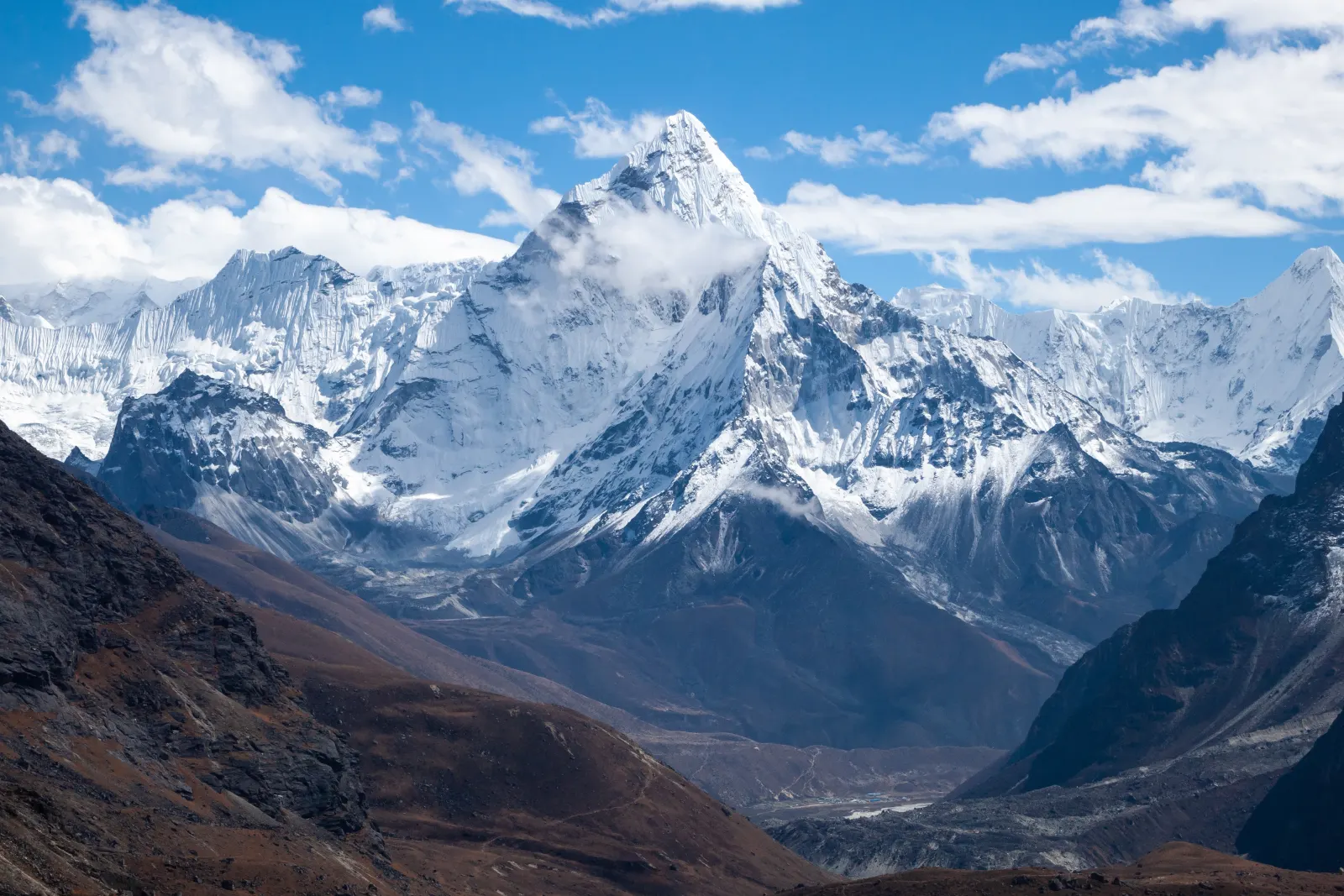
Photo: Vyacheslav Argenberg / Wikimedia Commons

Capital
Kathmandu
Language
Nepali
Currency
Nepalese rupee (NPR)
Time zone
UTC+05:45
Plugs
Type C, D · 230 V
Driving
On the left
Emergency
100 / 101 / 102

Why visit Nepal

Nepal suits an overland trip that links its towns and cities. Start in Kathmandu, the capital, add Bhaktapur, then travel on to Pokhara or small Jomsom, home to about 1,370 people. The best months to go are November, December, January and February. One honest limitation: Nepal has no coast, so choose somewhere else if you want beaches. Clocks run at UTC+05:45, and you pay in Nepalese rupees (NPR).

  • A clear window from November to February

    The best months to visit Nepal are November, December, January and February. Plan your trip inside this window if you can. Outside it, conditions are less reliable, so check the season carefully before you book flights or treks.

  • Kathmandu as your starting base

    Kathmandu is the capital and the largest city in our list, with about 845767 people. It makes a practical first stop to arrange onward travel, change money into Nepalese rupees and get used to local life before heading elsewhere.

  • Pokhara for a slower city break

    Pokhara has about 353841 people, well under half the size of Kathmandu. If the capital feels too intense, Pokhara is a good second base for a calmer stay while you plan the next part of your route.

  • Bhaktapur on a smaller scale

    Bhaktapur is much smaller, with about 81748 residents. It suits travellers who prefer to explore on foot at a slower pace, and it makes a clear contrast with the larger cities of Kathmandu, Bharatpur and Pokhara.

  • Remote places like Jomsom

    Nepal covers 147181 km² and has about 30034040 people, but many places are tiny. Jomsom has only about 1370 residents. Expect basic services in small settlements like this, and allow extra time to reach them.

Is Nepal right for you?

Great for

  • Dry-season travellers in November or December, with about 1 rain day and under 10 mm of rain a month
  • People who like mild days, with highs of 17–22°C from November to February
  • Sun seekers, with 9–10 hours of sun a day in the best months
  • City and culture visits to Kathmandu, Bhaktapur and Pokhara in the dry months

Less ideal for

  • Trips from June to September, with 24–30 rain days and up to 715 mm of rain in July
  • Beach holidays, as none of the main cities are on a coast
  • Travellers who dislike cold nights, with lows of 5–7°C in December and January
  • Late-spring trips in May, when rain jumps to 21 days and 246 mm

Nepal right now: October

7.9/10
Avg high
24°C
Avg low
16°C
Rain days
10

Averages for Nepal.

Weather by month

The climate data for Nepal (2015–2024) shows that November and December are the best months, with only 1 rain day a month, 4–9 mm of rain and daytime highs of 17.9–21.5°C. Avoid June to September, when it rains on 24–30 days a month and July alone gets 715 mm.

Average highs and lows in Nepal by month January: high 17°C, low 5°C , 5 rain days . February: high 19°C, low 7°C , 6 rain days . March: high 24°C, low 11°C , 9 rain days . April: high 27°C, low 14°C , 12 rain days . May: high 27°C, low 17°C , 21 rain days . June: high 27°C, low 19°C , 25 rain days . July: high 26°C, low 20°C , 30 rain days . August: high 27°C, low 20°C , 29 rain days . September: high 26°C, low 19°C , 24 rain days . October: high 24°C, low 16°C , 10 rain days . November: high 22°C, low 11°C , 1 rain days . December: high 18°C, low 7°C , 1 rain days . 17°C 5°C JAN 5d 19°C 7°C FEB 6d 24°C 11°C MAR 9d 27°C 14°C APR 12d 27°C 17°C MAY 21d 27°C 19°C JUN 25d 26°C 20°C JUL 30d 27°C 20°C AUG 29d 26°C 19°C SEP 24d 24°C 16°C OCT 10d 22°C 11°C NOV 1d 18°C 7°C DEC 1d
Best months Other months (low–high) Nd = rain days

Nepal (country average) · averages 2015–2024

Best time to visit Nepal: month-by-month weather →

Sample itineraries

7 days

Kathmandu, Bhaktapur and Pokhara in one week

  1. Day 1–2

    Kathmandu

    Start in the capital, the largest city on this route with about 845767 people. Use the first days to rest, change money into Nepalese rupees and walk the central districts at an easy pace.

  2. Day 3–4

    Bhaktapur

    Move to Bhaktapur, a much smaller city of about 81748 people. Spend two slow days exploring on foot, and stay overnight to see it in the quiet early morning and evening.

  3. Day 5–6

    Pokhara

    Travel west to Pokhara, home to about 353841 people. Use these days for gentle walks, time outdoors and rest before the trip home.

  4. Day 7

    Kathmandu

    Return to Kathmandu for your last day. Keep it light: buy last souvenirs and leave spare time in case transport runs late.

10 days

Ten days from Kathmandu to the lowlands and hills

  1. Day 1–2

    Kathmandu

    Begin in the capital. Take two days to adjust to the UTC+05:45 time zone, sort out a local SIM and cash, and explore the city on foot.

  2. Day 3

    Bhaktapur

    Spend a full day and night in Bhaktapur, a city of about 81748 people. It is small enough to see on foot without a fixed plan.

  3. Day 4–5

    Bharatpur

    Head south to Bharatpur, a city of about 369377 people. Use two days to see a different, lower-lying side of Nepal away from the capital.

  4. Day 6

    Siddharthanagar

    Continue west to Siddharthanagar, a smaller city of about 63483 people. One night is enough to look around before moving north.

  5. Day 7–9

    Pokhara

    Spend three days in Pokhara. Mix easy walks with rest days, and use it as a base if you want to add short trips nearby.

  6. Day 10

    Kathmandu

    Return to Kathmandu for your final day. Plan nothing important, so a delay on the way back does not put your departure at risk.

Food to try in Nepal

Dal bhat

Rice with lentil soup, usually served with vegetable curry and pickle. It is the everyday meal across Nepal, often eaten twice a day. Trekking lodges and local restaurants commonly offer refills.

Momo

Steamed or fried dumplings filled with meat or vegetables and served with a spicy dipping sauce. You find them in street stalls and restaurants, especially in Kathmandu.

Chiya (milk tea)

Sweet black tea boiled with milk and often spices. Nepalis drink it throughout the day, and small tea shops serve it in towns and along trekking routes.

Sel roti

A ring-shaped, slightly sweet bread made from rice flour and deep-fried. It is made at home for festivals such as Tihar and Dashain, and sold as a snack.

Thukpa

A noodle soup with vegetables or meat, from Tibetan cooking traditions. It is common in the mountains, where a hot bowl helps in cold weather.

Gundruk

Fermented and dried leafy greens, often made into a sour soup or pickle. It is a traditional side dish, eaten with dal bhat, especially in rural and hill areas.

Know before you go

  • Plugs and voltage: Sockets take type C and D plugs and run at 230 V. Bring an adapter if your plugs are different. Check that any device built for a lower voltage can handle 230 V.
  • Driving side: Traffic drives on the left. If you plan to rent a car or motorbike, check the local rules and licence requirements before you go.
  • Emergency numbers: The emergency numbers are 100, 101 and 102. Save them in your phone before you arrive. The country calling code is +977.
  • Currency: The currency is the Nepalese rupee (NPR). Carry enough cash before you head to rural or trekking areas, where card payment and cash machines can be hard to find.
  • Language: The main language is Nepali. Learning a few basic greetings and thank-you phrases is polite and helps, especially outside Kathmandu.
  • Time zone: Nepal uses UTC+05:45, which is not a whole-hour offset. Double-check flight times, meetings and calls when you convert from your home time.
  • Tap water: Do not drink the tap water. Use treated, filtered or boiled water instead. A refillable bottle with a filter also cuts down on plastic waste on trekking routes.
  • Tipping: Tipping trekking guides and porters at the end of a trek is expected. Ask your agency or group what is normal rather than guessing.

Nepal: frequently asked questions

When is the best time to visit Nepal?

November and December are the best months. They have the highest scores of the year, at 9.8 and 9.7. November averages 1.2 rain days and 4 mm of rain. December averages 1 rain day and 9 mm. Days are mild, with highs of 21.5°C and 17.9°C, and there are about 9 to 10 hours of sun a day. January and February are also rated best.

Is Nepal good to visit in July or August?

Only if you don't mind rain almost every day. July is the wettest month, with 715 mm of rain over 29.7 rain days and just 7.1 hours of sun. August is similar, with 490 mm over 28.9 rain days. It is warm, with highs around 26°C and lows around 20°C. If clear skies matter to you, wait until October or November.

Is October a good month to visit Nepal?

Yes, October is rated one of the best months. Rain drops sharply after September. It falls from 354 mm over 24.3 days in September to 86 mm over 10.4 days in October. You get about 10 hours of sun a day and highs of 24.4°C. November is drier still, with only 1.2 rain days.

How cold is Nepal in winter?

Days are mild, but nights are cool. In January, the coldest month, highs average 16.6°C and lows 5.3°C. In December they average 17.9°C and 6.9°C. Winter is also dry and sunny, with about 9 hours of sun a day. There are 4.8 rain days in January and 1 in December. Pack warm layers for the evenings.

Is spring a good time to visit Nepal?

March and April are fine, but May gets wet. March is rated best, with 9.3 rain days and highs of 23.5°C. April is warmer at 26.6°C, with 12.1 rain days and 79 mm of rain. In May, rain jumps to 246 mm over 20.8 days. If you want drier weather, plan to leave by the end of April.

What plugs, currency and time zone does Nepal use?

Nepal uses plug types C and D at 230 V. The currency is the Nepalese rupee (NPR). The time zone is UTC+05:45, which is an unusual 45-minute offset. Traffic drives on the left. The country calling code is +977, and the emergency numbers are 100, 101 and 102.

Similar destinations

Countries with a year of weather much like Nepal.