Skip to content
wheretotravel.info
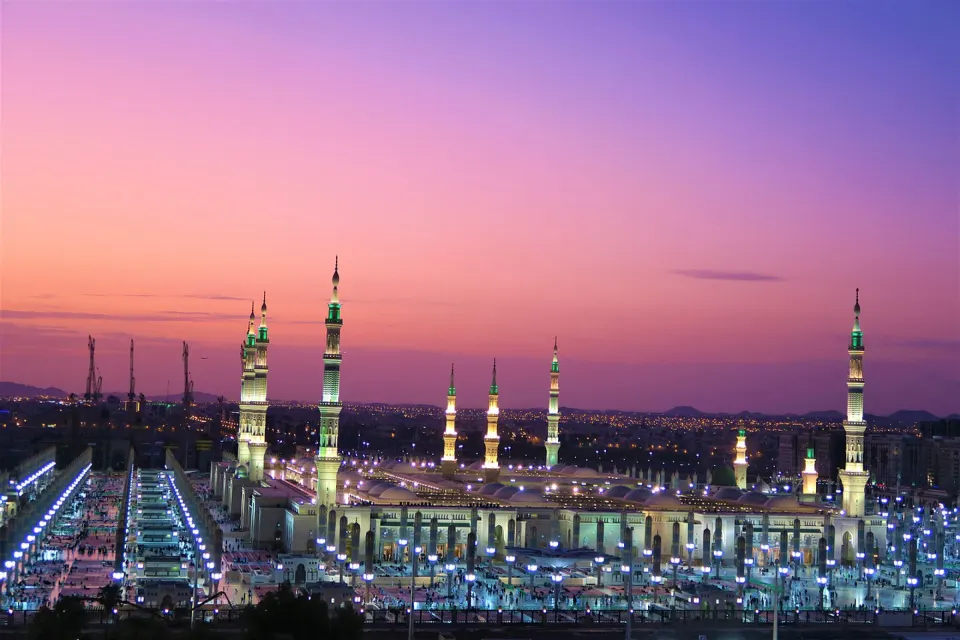
Nabawi Mosque illuminated at sunset with minarets

Saudi Arabia travel guide

Coastal cities, a desert oasis and a large capital, spread across a very big country

Best: Jan, Feb, Nov, Dec

Photo: Konevi / Pixabay

Capital
Riyadh
Language
Arabic
Currency
Saudi riyal
Time zone
UTC+03:00
Plugs
Type G · 230 V / 220 V
Driving
On the right
Emergency
112 / 911 / 999

Why visit Saudi Arabia

Saudi Arabia suits travellers who like to plan a route through a big country. You can move from the capital Riyadh to coastal Jeddah and Dammam, then on to smaller places such as Al-Ula, Diriyah, Abha and the Al-Ahsa Oasis. The best months to go are November to February. The honest limitation is scale. The country covers about 2,149,690 km², so the distances between these places are long, and you will spend real time travelling between them.

Is Saudi Arabia right for you?

Great for

  • Winter sun seekers: November to February highs of 21–27°C with about 10 sun hours a day
  • Travellers who want dry days: no month has more than 3.9 rain days
  • Heritage trips to Al-Ula, Diriyah and the Al-Ahsa Oasis in the cooler months
  • City breaks mixing the capital Riyadh with coastal Jeddah and Dammam

Less ideal for

  • Summer sightseeing on foot: June to August highs reach 41–42°C, with nights near 27–28°C
  • Late spring and early autumn trips expecting mild days: May hits 37.5°C, September 39.1°C
  • Short trips hoping to cover a lot: the country spans 2149690 km²

Saudi Arabia right now: October

4.5/10
Avg high
34°C
Avg low
20°C
Rain days
0

Averages for Saudi Arabia.

Weather by month

The climate data for Saudi Arabia (2015–2024) shows November to February as the best time, with daytime highs of 21–27°C, cool nights of 8–15°C and about 10 hours of sun a day. From May to September the heat is extreme, with highs of 38–42°C, nights that stay at 24–28°C and almost no rain, so midday sightseeing outdoors is hard.

Average highs and lows in Saudi Arabia by month January: high 21°C, low 8°C , 3 rain days . February: high 23°C, low 10°C , 2 rain days . March: high 28°C, low 14°C , 3 rain days . April: high 32°C, low 18°C , 3 rain days . May: high 38°C, low 24°C , 1 rain days . June: high 41°C, low 27°C , 0 rain days . July: high 42°C, low 28°C , 0 rain days . August: high 41°C, low 28°C , 0 rain days . September: high 39°C, low 25°C , 0 rain days . October: high 34°C, low 20°C , 0 rain days . November: high 27°C, low 15°C , 4 rain days . December: high 22°C, low 10°C , 2 rain days . 21°C 8°C JAN 3d 23°C 10°C FEB 2d 28°C 14°C MAR 3d 32°C 18°C APR 3d 38°C 24°C MAY 1d 41°C 27°C JUN 0d 42°C 28°C JUL 0d 41°C 28°C AUG 0d 39°C 25°C SEP 0d 34°C 20°C OCT 0d 27°C 15°C NOV 4d 22°C 10°C DEC 2d
Best months Other months (low–high) Nd = rain days

Saudi Arabia (country average) · averages 2015–2024

Best time to visit Saudi Arabia: month-by-month weather →

Sample itineraries

7 days

Jeddah, Ta'if and Al-Ula in one week

  1. Day 1–2

    Jeddah

    Start in Jeddah, a large coastal city. Walk along the seafront, try local food in the evenings and use these first days to settle in.

  2. Day 3–4

    Ta'if

    Head inland to Ta'if, away from the coast. Explore the city at an easy pace and compare its feel with busy, seaside Jeddah.

  3. Day 5–7

    Al-Ula

    End in Al-Ula, a small town of 32,413 people. Give yourself 3 full days to explore the surrounding landscape slowly, with early starts and quiet evenings.

10 days

From the east coast to the west

  1. Day 1–2

    Dammam

    Begin in Dammam, a coastal city of 903,312 people. Spend time by the water and ease into the trip before moving inland.

  2. Day 3–4

    Al-Ahsa Oasis

    Continue to Al-Ahsa Oasis. Take 2 days to explore the oasis and its surroundings on foot or by car, at a slower pace than in the cities.

  3. Day 5–6

    Diriyah

    Travel west to Diriyah, a town of 43,269 people. Walk its streets, visit its cafés and learn about the area's history at your own pace.

  4. Day 7–8

    Al-Ula

    Fly or drive on to Al-Ula, a small inland town. Use your 2 days here to explore the landscape around the town, ideally in the cooler early mornings.

  5. Day 9–10

    Jeddah

    Finish in Jeddah, the largest city on this route and on the coast. Relax by the sea, shop for souvenirs and enjoy a final evening meal.

Food to try in Saudi Arabia

Kabsa

Spiced rice cooked with chicken or lamb, often topped with nuts and raisins. It is Saudi Arabia's best-known dish and is served on large shared platters at family meals and gatherings.

Qahwa (Saudi coffee)

A light, golden coffee flavoured with cardamom and sometimes saffron, poured into small cups. It is offered with dates to welcome guests in homes, offices and hotels.

Jareesh

Crushed wheat slow-cooked with meat or yoghurt until soft and creamy. It is a traditional dish of the central Najd region around Riyadh, often eaten at home and during Ramadan.

Mutabbaq

A thin pastry stuffed with minced meat, egg and onion, or with sweet fillings, then fried on a griddle. It is a popular street snack, especially in the evening in western cities like Jeddah.

Mandi

Tender meat or chicken slow-cooked over rice with smoky spices, a dish with Yemeni roots. Dedicated mandi restaurants serve it across the country, often in private family dining rooms.

Saleeg

Rice cooked slowly in broth and milk until creamy, usually served with roast chicken. It is a comfort dish from the Hejaz region in the west, including Taif.

Know before you go

  • Plugs: Saudi Arabia uses type G plugs. If your devices have a different plug, bring a travel adapter that fits type G sockets.
  • Voltage: The mains supply is listed as 230 V / 220 V. Check the input range printed on your chargers before plugging in. If a device does not match, you will need a converter, not just an adapter.
  • Driving side: Traffic drives on the right. If you come from a country that drives on the left, take extra care at junctions and roundabouts during your first days.
  • Emergency number: The emergency numbers listed for Saudi Arabia are 112, 911 and 999. Save them in your phone before you arrive.
  • Currency: The local currency is the Saudi riyal. Check the current exchange rate before you travel so you can judge costs quickly.
  • Language: Arabic is the official language. Learning a few basic Arabic greetings is a polite gesture. A translation app on your phone can also help.
  • Time zone: Saudi Arabia uses one time zone, UTC+03:00. Check the time difference from home to plan calls and arrival times.
  • Calling code: The country calling code is +966. Use it when giving your local number to people abroad or when saving Saudi numbers in your phone.

Saudi Arabia: frequently asked questions

When is the best time to visit Saudi Arabia?

November to February is the best time for most travellers. Daytime highs average 26.6°C in November, 21.7°C in December, 20.5°C in January and 22.7°C in February. Nights are cool, with lows of 8.3°C in January. March also scores well, with highs of 27.7°C, before the heat builds from April.

Is Saudi Arabia too hot to visit in August?

August is very hot. Average highs are 41.4°C and lows are 27.6°C, so nights stay warm too. There are 0 rain days and about 11.5 hours of sun a day. June to September all have highs of 39°C or more. If you go, plan outdoor time for early morning or evening.

Is October a good month to visit Saudi Arabia?

October is a warm shoulder month. Highs average 33.8°C and lows 19.9°C. That is cooler than the summer peak but still hot in the afternoon. Rain is rare, with 0.3 rain days and 1 mm on average. The weather eases more in November, when highs drop to 26.6°C.

Does it rain much in Saudi Arabia?

No, rain is rare all year. November has the most rain days, at 3.9, and April has the most rain, at 19 mm. From June to September there is 0 mm of rain on average. Even in the wettest months you still get about 10 to 11 hours of sun a day.

What plugs and voltage does Saudi Arabia use?

Saudi Arabia uses type G plugs. The voltage is 230 V / 220 V. Bring an adapter if your devices use a different plug type. Check that your chargers and other devices accept this voltage before you plug them in.

What is the emergency number in Saudi Arabia?

You can call 112, 911 or 999 in an emergency. A few other basics: traffic drives on the right, the currency is the Saudi riyal, and the time zone is UTC+03:00. The country calling code is +966.

Similar destinations

Countries with a year of weather much like Saudi Arabia.