Skip to content
wheretotravel.info
United Arab Emirates

United Arab Emirates travel guide

Coastal cities from Abu Dhabi and Dubai to Fujairah, plus inland Al Ain

Best: Jan, Feb, Mar, Dec

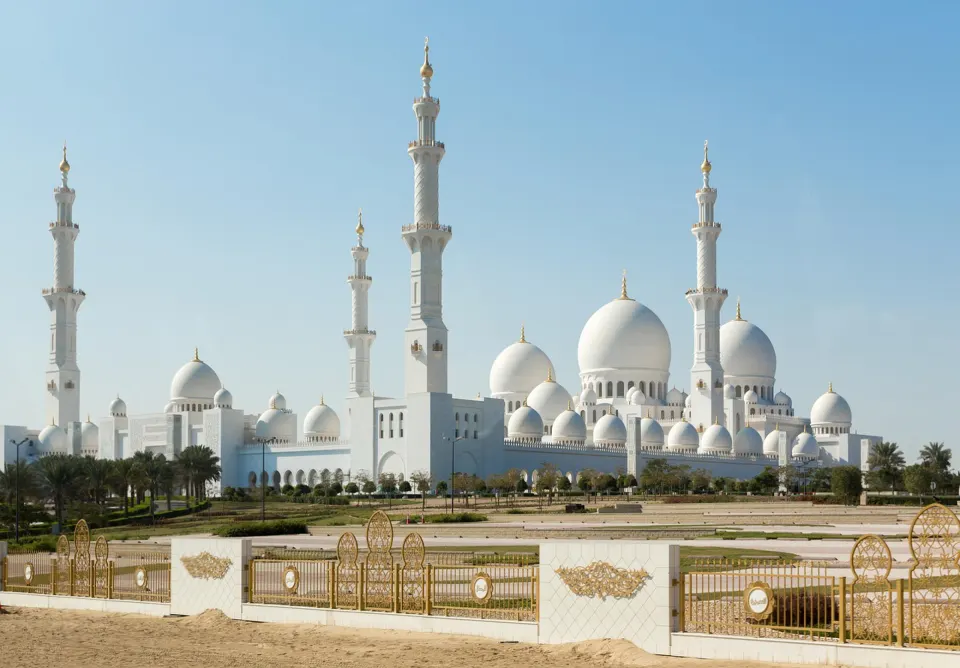
Photo: Mariakray / Pixabay

Capital
Abu Dhabi
Language
Arabic
Currency
United Arab Emirates dirham
Time zone
UTC+04:00
Plugs
Type C, G · 220 V
Driving
On the right
Emergency
112 / 999

Why visit United Arab Emirates

The United Arab Emirates suits a city-focused trip with time by the sea. Most of its main cities are coastal, including the capital Abu Dhabi, Dubai, Sharjah, Ras al-Khaimah and Fujairah, while Al Ain gives you an inland contrast. Arabic is the official language, and the currency is the dirham. The best months are December, January, February and March. The honest limitation is timing: that best window is short, so the rest of the year falls outside it.

  • A clear best season

    December, January, February and March are the best months to visit the United Arab Emirates. If you plan a trip in winter, you visit during the season the country is best suited to. Book early for these months, as this is when most travellers want to go.

  • Dubai, the largest city

    Dubai is home to 3,944,751 people, which makes it the biggest city in the country by a wide margin. It sits on the coast, so you can combine city time with the sea on the same trip.

  • Abu Dhabi, the coastal capital

    Abu Dhabi is the capital and has a population of 1,570,000. Like Dubai, it lies on the coast. It gives a second large city to explore, so a trip does not have to centre on one place.

  • Al Ain, away from the coast

    Al Ain is the only city on this list that is not on the coast. With 766,936 people, it offers an inland contrast to the seaside cities. It is a good choice if you want to see a different side of the country.

  • Many cities in a small country

    The country covers 83,600 km², and it holds six notable cities, including the coastal cities of Sharjah, Ras al-Khaimah and Fujairah. Distances stay manageable, so you can visit several cities on one trip. Traffic drives on the right.

Is United Arab Emirates right for you?

Great for

  • Winter sun seekers: December to February highs of 24–26°C with about 10 sun hours a day
  • City breaks in coastal Dubai, Abu Dhabi and Sharjah, with inland Al Ain for a change
  • Travellers who want dry weather: under 2 rain days a month all year
  • Multi-city trips in a compact country of 83,600 km²

Less ideal for

  • Outdoor sightseeing from May to September, when highs reach 39.6–43.5°C
  • Travellers seeking cool nights in summer: July and August lows stay near 30°C
  • Anyone hoping for cold weather or snow: the coolest month's low is 14.4°C

United Arab Emirates right now: October

3.4/10
Avg high
37°C
Avg low
25°C
Rain days
0

Averages for United Arab Emirates.

Weather by month

Climate data for the United Arab Emirates (2015–2024, no single city given) shows December to March is the most comfortable time, with highs of 24–30°C, lows of 14–18°C and about 10 hours of sun a day. From May to September, highs reach 40–44°C and nights stay at 25–30°C, with July and August the hottest at 43.5°C.

Average highs and lows in United Arab Emirates by month January: high 24°C, low 14°C , 2 rain days . February: high 26°C, low 15°C , 1 rain days . March: high 30°C, low 18°C , 2 rain days . April: high 35°C, low 22°C , 1 rain days . May: high 40°C, low 25°C , 0 rain days . June: high 42°C, low 28°C , 0 rain days . July: high 44°C, low 30°C , 0 rain days . August: high 44°C, low 30°C , 0 rain days . September: high 41°C, low 28°C , 0 rain days . October: high 37°C, low 25°C , 0 rain days . November: high 31°C, low 21°C , 0 rain days . December: high 26°C, low 17°C , 1 rain days . 24°C 14°C JAN 2d 26°C 15°C FEB 1d 30°C 18°C MAR 2d 35°C 22°C APR 1d 40°C 25°C MAY 0d 42°C 28°C JUN 0d 44°C 30°C JUL 0d 44°C 30°C AUG 0d 41°C 28°C SEP 0d 37°C 25°C OCT 0d 31°C 21°C NOV 0d 26°C 17°C DEC 1d
Best months Other months (low–high) Nd = rain days

United Arab Emirates (country average) · averages 2015–2024

Best time to visit United Arab Emirates: month-by-month weather →

Sample itineraries

7 days

Dubai, Sharjah, Abu Dhabi and Al Ain

  1. Day 1–3

    Dubai

    Start in Dubai, the country's largest city. Spend your first days walking the coast, trying local food and getting used to the time zone and the dirham before you move on.

  2. Day 4

    Sharjah

    Take a day in Sharjah, a coastal neighbour of Dubai. Explore its older streets and markets at a slower pace than in the bigger city.

  3. Day 5–6

    Abu Dhabi

    Move on to Abu Dhabi, the capital. Use 2 days to see the city and its waterfront, and plan your trip inland.

  4. Day 7

    Al Ain

    End in Al Ain, the only city on this route that is not on the coast. It gives you a look at inland life away from the Gulf shore.

10 days

A loop through six Emirati cities

  1. Day 1–3

    Dubai

    Begin in Dubai, the largest city. Use 3 days to explore the coast and the city, and to settle in before a longer route around the country.

  2. Day 4

    Sharjah

    Spend a day in Sharjah, just along the coast. Walk its older areas and markets for a quieter view than Dubai.

  3. Day 5–6

    Ras al-Khaimah

    Head north to Ras al-Khaimah, a much smaller coastal city. Slow down for 2 days by the sea. If you rent a car, traffic drives on the right.

  4. Day 7

    Fujairah

    Cross to Fujairah, a small coastal city on the east side of the country. Spend the day by the water before turning inland.

  5. Day 8

    Al Ain

    Stop in Al Ain, the inland city on this route. It is a change from the coast and shows another side of the country.

  6. Day 9–10

    Abu Dhabi

    Finish in Abu Dhabi, the capital. Use your last 2 days to see the city and its waterfront at an easy pace before you fly home.

Food to try in United Arab Emirates

Machboos

Spiced rice cooked with meat, chicken or fish, often flavoured with dried lime. It is a common family lunch dish and appears at many Emirati restaurants.

Harees

Wheat and meat cooked slowly until smooth, like a thick porridge. It is served at weddings and religious festivals, and often at iftar, the evening meal that breaks the fast.

Luqaimat

Small fried dough balls, crisp outside and soft inside, covered in date syrup. You find them at festivals, cafés and food stalls, and families serve them with coffee.

Balaleet

Sweet vermicelli noodles flavoured with sugar, cardamom and saffron, usually topped with a thin omelette. It is a traditional breakfast dish.

Gahwa (Arabic coffee)

Light coffee spiced with cardamom and poured into small cups without handles. Hosts offer it to guests as a sign of welcome, often with dates.

Karak chai

Strong tea boiled with milk, sugar and spices such as cardamom. Small cafés and roadside shops sell it all day, and it is a popular everyday drink.

Know before you go

  • Plugs and voltage: Sockets take type C and type G plugs, and the supply is 220 V. Check that your chargers and devices accept this voltage, and pack an adapter if your plugs are a different type.
  • Driving side: Traffic drives on the right. If you come from a country that drives on the left, take extra care at junctions and roundabouts during your first days behind the wheel.
  • Emergency number: For emergencies, call 112 or 999. Save both numbers in your phone before you arrive so you can find them quickly if you need help.
  • Currency: The local currency is the United Arab Emirates dirham. Check the exchange rate before you travel so you can judge prices when you arrive.
  • Language: Arabic is the official language. Learning a few basic Arabic greetings is a polite way to start a conversation with locals.
  • Time zone: The whole country uses one time zone, UTC+4. Set your phone and travel plans to local time when you land to avoid missing bookings or transfers.
  • Calling code: The country calling code is +971. Use it when you give your hotel or tour operator a local number, or when friends at home call a UAE number.

United Arab Emirates: frequently asked questions

When is the best time to visit the United Arab Emirates?

The best months are December to March. Daytime highs are about 24°C in January, 26°C in February and December, and 30°C in March. Nights drop to 14–18°C, so pack a light layer for the evenings. January scores 9.7, the highest of any month, with February and December close behind at 9.6.

Is the UAE good to visit in August?

August is one of the hottest months, so expect extreme heat. The average high is 43.5°C, and nights stay around 30°C. Rain is rare, with 0.2 rain days, and you get about 11 hours of sun a day. Midday sightseeing outdoors is hard in this heat. Plan outdoor time for early morning or evening, and keep the middle of the day for indoor places.

Does it rain much in the UAE?

No, rain is rare all year. Even the wettest months average fewer than 2 rain days. March has 1.8 rain days and 23 mm, and January has 1.5 days and 16 mm. From April to November there is less than 1 rain day a month, and June has no recorded rain at all.

Is November a good month to visit the UAE?

Yes, November is a good month, and the heat is easing. The average high is 31.1°C, down from 36.5°C in October, and nights fall to about 21°C. November scores 7.4, close to March at 7.5. By December, highs drop to 26.4°C, and the best season begins.

What plugs and voltage does the UAE use?

The UAE uses plug types C and G, and the voltage is 220 V. Bring an adapter if your devices use a different plug. Check that your chargers and other electronics accept 220 V before you plug them in.

What currency, time zone and emergency number does the UAE use?

The currency is the United Arab Emirates dirham, and the time zone is UTC+04:00. For emergencies, call 112 or 999. Traffic drives on the right, and the official language is Arabic. The international calling code is +971.

Similar destinations

Countries with a year of weather much like United Arab Emirates.