Skip to content
wheretotravel.info
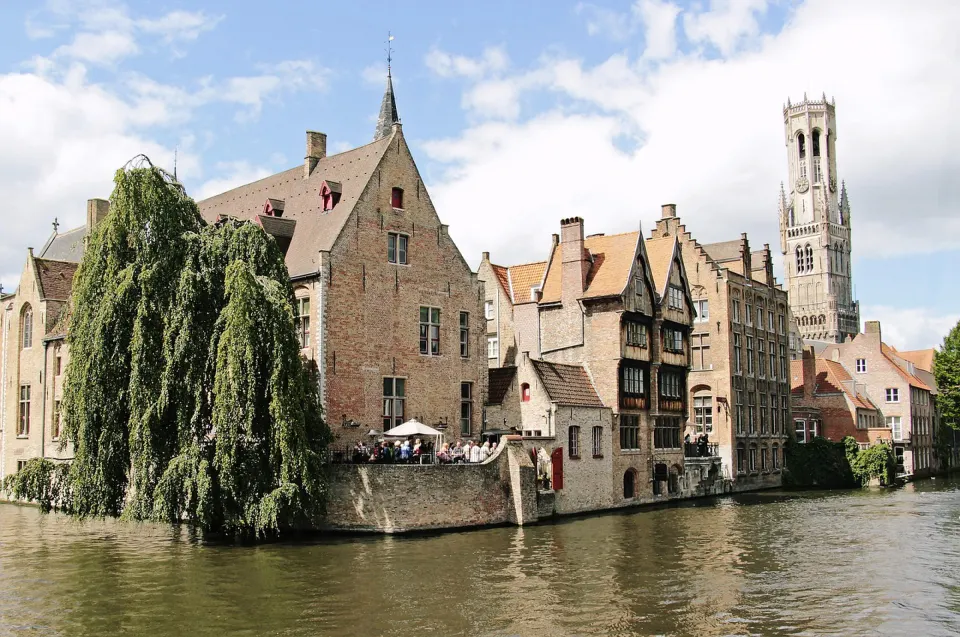
Bruges canal with belfry tower and willow tree

Belgium travel guide

Compact city breaks built around Brussels, Ghent, Bruges and the Meuse towns

Best: Jun, Jul, Aug, Sep

Photo: NoName_13 / Pixabay

Capital
Brussels
Languages
German, French, Dutch
Currency
Euro
Time zone
UTC+01:00
Plugs
Type C, E · 230 V
Driving
On the right
Emergency
112
Entry
EU and Schengen area

Why visit Belgium

Belgium suits travellers who want short city breaks with easy hops between towns. Brussels, Ghent, Bruges, Leuven, Liège and Namur are all on one small map, so you can base yourself in one and take day trips. The best months are June to September, and Liège also works well in May. One honest limitation is language. Dutch, French and German are all official, so signs and menus change as you move between regions.

  • Several cities in one trip

    Belgium covers just 30,528 km², so one trip can include a few cities. The list includes Brussels, Ghent, Bruges, Liège, Namur and Leuven. Ghent is the largest city in the data, with 272,657 people, more than Brussels with 195,546.

  • Three languages, one country

    Belgium has 3 official languages: Dutch, French and German. You will hear different languages as you move between places such as Ghent, Bruges, Liège and Namur. That makes one short trip feel varied.

  • Clear best season: June to September

    June, July, August and September are the best months for Belgium and for most of its main cities. Liège also lists May, which makes it a good choice for a late-spring trip. The data does not rate other months as best, so plan around this window if you can.

  • Smaller places beyond the big cities

    Belgium is more than its capital. Bastogne has 20,940 people, and De Panne, on the coast, has 11,129. Both give you a change from city streets, whether you choose a small inland town or the seaside.

  • Easy logistics for European travellers

    Belgium uses the Euro and runs on UTC+01:00. Plugs are types C and E at 230 V, and cars drive on the right. If you live elsewhere in Western Europe, you will likely need no new currency, adapter or driving habits.

Is Belgium right for you?

Great for

  • City-hoppers: Brussels, Ghent, Bruges, Liège and Namur all sit in a country of just 30,528 km²
  • Travellers who dislike heat: Brussels highs stay around 22–23 °C from June to August
  • Summer and early-autumn trips, with June to September the best months
  • Visitors who speak French, Dutch or German, the 3 official languages
  • Travellers from other euro countries, since Belgium uses the euro

Less ideal for

  • Beach holidays: only 1 listed town, De Panne, is on the coast, and summers peak near 23 °C
  • Winter sun seekers: December has only 3.2 sun hours and highs of about 8 °C
  • Anyone hoping for dry weather: every month has at least 10 rain days

Belgium right now: October

5.7/10
Avg high
16°C
Avg low
9°C
Rain days
12

Averages for Brussels.

Weather by month

Climate data for Brussels (2015–2024) shows June to September as the best time to visit Belgium, with highs of 20–23°C and 9 to 11 hours of sun a day. Avoid November to March, when highs reach only 6–11°C, rain falls on 12 to 14 days a month, and December gets just 3.2 hours of sun a day.

Average highs and lows in Brussels by month January: high 6°C, low 2°C , 14 rain days . February: high 8°C, low 2°C , 12 rain days . March: high 11°C, low 3°C , 14 rain days . April: high 14°C, low 5°C , 11 rain days . May: high 18°C, low 9°C , 12 rain days . June: high 22°C, low 13°C , 10 rain days . July: high 23°C, low 14°C , 11 rain days . August: high 23°C, low 15°C , 12 rain days . September: high 20°C, low 12°C , 11 rain days . October: high 16°C, low 9°C , 12 rain days . November: high 10°C, low 5°C , 13 rain days . December: high 8°C, low 3°C , 14 rain days . 6°C 2°C JAN 14d 8°C 2°C FEB 12d 11°C 3°C MAR 14d 14°C 5°C APR 11d 18°C 9°C MAY 12d 22°C 13°C JUN 10d 23°C 14°C JUL 11d 23°C 15°C AUG 12d 20°C 12°C SEP 11d 16°C 9°C OCT 12d 10°C 5°C NOV 13d 8°C 3°C DEC 14d
Best months Other months (low–high) Nd = rain days

Brussels · averages 2015–2024

Best time to visit Belgium: month-by-month weather →

Where to go in Belgium

City guides with their own best months and weather.

Sample itineraries

7 days

One week in Brussels, Leuven, Ghent and Bruges

  1. Day 1–2

    Brussels

    Start in the capital and spend 2 days exploring on foot. Belgium uses Dutch, French and German, so expect the language around you to change as you travel.

  2. Day 3

    Leuven

    Take a slower day in Leuven, a city of about 101,032 people. It works well as a 1-day stop before the longer stays that follow.

  3. Day 4–5

    Ghent

    Ghent is the largest city on this route, with about 272,657 people. Give it 2 full days. June, July, August and September are its best months.

  4. Day 6–7

    Bruges

    End in Bruges, a smaller city of about 118,509 people. Its best months are June to September, so plan this trip for summer or early autumn if you can.

10 days

Ten days from the coast to the east

  1. Day 1–2

    Brussels

    Begin in the capital. Its best months are June, July, August and September, which also suit every other city on this route.

  2. Day 3–4

    Bruges

    Spend 2 days in Bruges, home to about 118,509 people. Walk at your own pace and use it as your base before heading to the coast.

  3. Day 5

    De Panne

    De Panne is the only coastal town on this route, with about 11,129 people. A single day and night here gives you a break from the cities.

  4. Day 6–7

    Ghent

    Head back inland to Ghent, the largest city on this trip at about 272,657 people. 2 days lets you see it without rushing.

  5. Day 8–9

    Namur

    Move south to Namur, a city of about 115,330 people. July is listed first among its best months, with June, August and September also good.

  6. Day 10

    Liège

    Finish in Liège, home to about 195,278 people. Its best months are May, June and September, so it is less suited to July and August than the other stops.

Where to stay

One good base in each main city and who it suits.

Sainte-Catherine and Rue Antoine Dansaert

Brussels

Good for food lovers, couples, design shops

Just west of the centre, this area has seafood restaurants around the old fish market, independent fashion shops and lively bars. You can still walk to the Grand-Place. Drawback: the squares get busy and loud on weekend evenings.

Historic centre (Korenmarkt, Graslei and Korenlei)

Ghent

Good for first-timers, short stays

This is the old core around the canals, churches and Gravensteen castle, so most main sights are a short walk away. It is the easiest base for a first visit. The drawback is crowds and noise from bars and day-trippers, especially on weekend evenings.

Hors-Château and Féronstrée

Liège

Good for history lovers, couples

These old streets run below the hillside, with brick houses, small courtyards, museums and the steps of the Montagne de Bueren nearby. The area feels calmer and more characterful than the main squares while staying close to the centre. Expect cobbles and steep lanes if you head uphill, which can be tiring with luggage.

Markt and Burg (historic centre)

Bruges

Good for first-timers, short stays

This is the medieval core around the two main squares, with the belfry, canal boat departures and most sights a short walk away. Staying here saves time if you only have a night or two. Drawback: day-trippers and tour groups fill the streets from late morning. Rooms facing the squares can hear bells and late crowds.

Old Town (Centre)

Namur

Good for first-timers, food and bars, no car

The compact historic core between the Sambre and the station has cobbled lanes, squares with café terraces and most sights within walking distance. It is the easiest base for a short first visit. Drawback: bars around the squares can be noisy late at night, especially at weekends, and parking is difficult.

Food to try in Belgium

Moules-frites

Mussels steamed in a large pot, often with white wine or celery and onion, served with fries. You will find them on brasserie menus across Belgium, especially on the coast.

Frites from a friterie

Thick-cut fries, usually fried twice, served in a paper cone with mayonnaise or another sauce. Locals buy them from small roadside stands called friteries or frietkoten, often as a quick snack.

Liège and Brussels waffles

The Liège waffle is dense and chewy, with pearl sugar that caramelises on the outside, and is eaten warm from street stalls. The Brussels waffle is lighter, rectangular, and served with toppings in cafés.

Carbonnade flamande (stoofvlees)

Beef cooked slowly in Belgian beer until soft, often with onions and bread spread with mustard. It is a Flemish home and pub dish, usually served with fries.

Waterzooi

A creamy stew of chicken or fish with vegetables, thickened with egg yolk and cream. It comes from Ghent and is a filling main course in traditional restaurants.

Trappist beer

Strong ales brewed under the control of Trappist monasteries. Cafés across the country serve them, and each beer usually comes in its own branded glass.

Know before you go

  • Plugs and voltage: Belgium uses plug types C and E at 230 V. Travellers from the UK, the US and other places with different plugs need an adapter. Check that your devices work at 230 V before you plug them in.
  • Driving side: Traffic drives on the right. If you come from a country that drives on the left, take extra care at junctions and roundabouts during your first days.
  • Emergency number: Call 112 for police, fire or ambulance. It is free and works from any phone. Belgium's country calling code is +32.
  • Currency: Belgium uses the euro. If you are coming from another eurozone country, you do not need to change money.
  • Languages: Belgium has 3 official languages: Dutch, French and German. Which one you hear depends on where you are, so learn a few polite words in more than one.
  • Tipping: Service is normally included in restaurant and café bills. Tipping is not expected. Rounding up or leaving a little extra for good service is a kind gesture, but it is your choice.
  • Tap water: Tap water is safe to drink. You can refill a bottle instead of buying water.

Belgium: frequently asked questions

When is the best time to visit Belgium?

June to September is the best time to visit Belgium. June scores highest at 7.8, with July and September close behind at 7.7. In Brussels (2015–2024 data), daytime highs in these months reach 20–23°C, and you get 9–11 hours of sunshine a day. May also rates as a best month at 7.5, but it is cooler, with highs around 18°C.

Is Belgium good in August?

Yes, August is one of the best months to visit Belgium. It is the warmest month in Brussels, with an average high of 23.4°C and a low of 14.6°C. Expect about 10.7 hours of sunshine a day. It still rains on around 12 days, so bring a light rain jacket.

Should I visit Belgium in winter?

Most travellers should avoid Belgium from November to March if good weather matters. December and January score just 1, the lowest of the year. Brussels highs are only 6–8°C, it rains on about 14 days a month, and you get only 3–4 hours of sunshine a day. Go in winter only if you are happy to spend most of your time indoors.

Does it rain a lot in Belgium?

Yes, rain is common all year in Belgium. Brussels gets at least 10 rain days in every month, even in June, the month with the fewest at 10.2. December and January are the wettest, with 75 mm each. April is the driest by volume, at 47 mm. Pack a rain jacket or umbrella whatever month you travel.

Is April or October a good time to visit Belgium?

April and October are fair choices, both rated ok with a score of 5.7. April in Brussels is cool, with highs of 14.1°C and lows of 4.9°C, but it is the driest month at 47 mm of rain. October is a little warmer, with highs of 15.6°C, but it is wetter at 71 mm and gets only 6 hours of sunshine a day.

What currency, plugs and languages does Belgium use?

Belgium uses the Euro. Plugs are types C and E, and the voltage is 230 V. People speak Dutch, French and German. Cars drive on the right, the time zone is UTC+01:00, and the emergency number is 112. The country calling code is +32.

Similar destinations

Countries with a year of weather much like Belgium.