Skip to content
wheretotravel.info
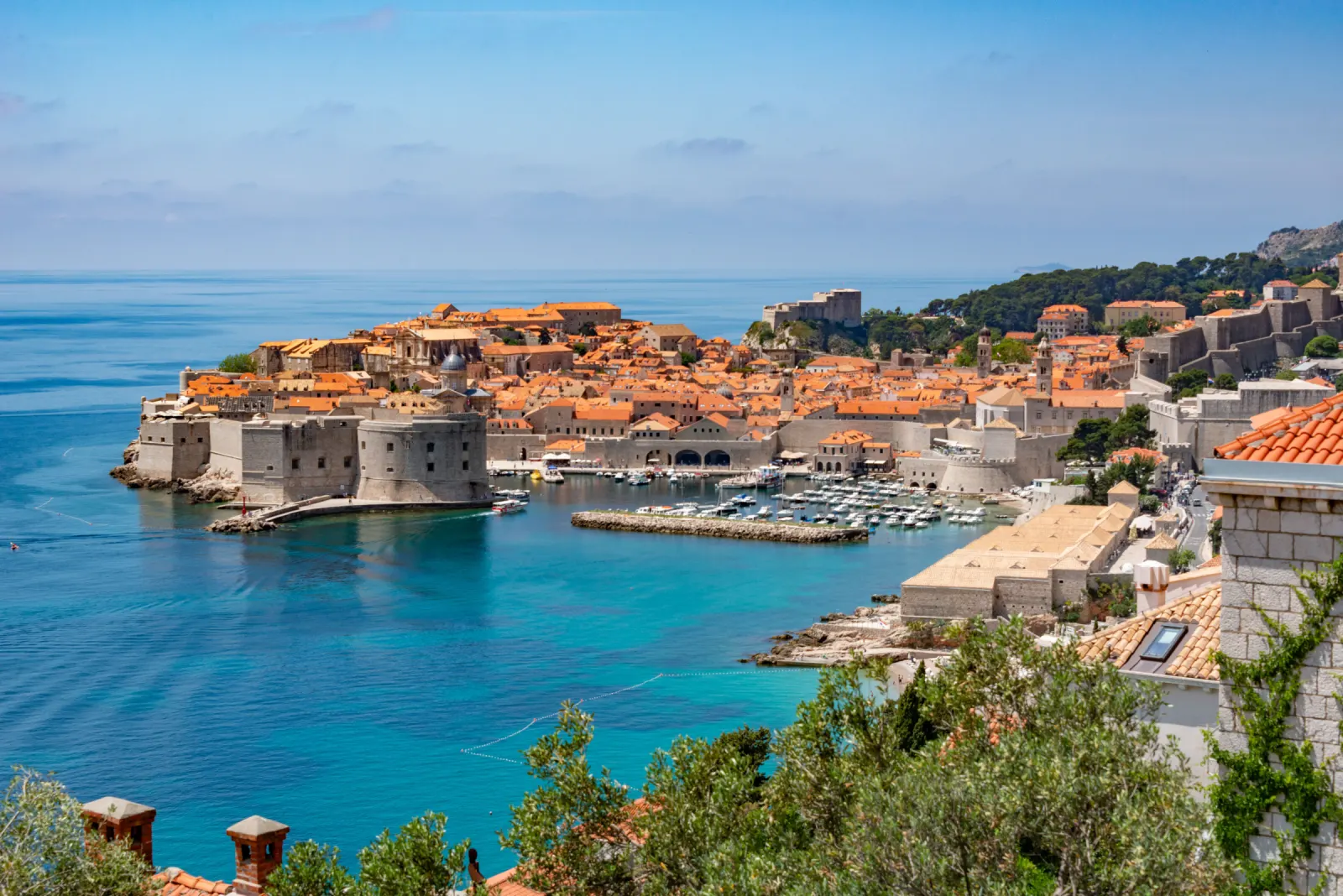
Aerial view of Dubrovnik old town and harbor

Croatia travel guide

Coastal cities and an inland capital, best in June, September and October

Best: Jun, Sep, Oct

Photo: Diego F. Parra / Pexels

Capital
Zagreb
Language
Croatian
Currency
Euro
Time zone
UTC+01:00
Plugs
Type C, F · 230 V
Driving
On the right
Emergency
112
Entry
EU and Schengen area

Why visit Croatia

Croatia suits travellers who want to combine time by the sea with city stops inland. Split, Rijeka and Zadar sit on the coast, while the capital, Zagreb, and Osijek lie inland. The country covers about 56,594 km² and uses the Euro. The best months to go are June, September and October. One honest limitation: Zagreb, the largest city, is not on the coast, so pairing the capital with the sea means extra travel.

  • Three cities on the coast

    Croatia's coast has more than one base. Split is the largest coastal city, with 160577 people. Rijeka has 107964 and Zadar has 70779. You can compare several seaside cities of different sizes on one trip.

  • A capital away from the sea

    Zagreb is the capital and the largest city, with 767131 people. It is inland, not on the coast. It is a good choice if you want a city break rather than a beach holiday.

  • Clear best months

    The best months to visit are June, September and October. Plan around these three months if you can. If your dates are fixed to other months, check the season first.

  • Inland east for a different view

    Osijek, with 96313 people, and Vukovar, with 23175, are both inland in the east. They show a side of Croatia beyond the coast and the capital, in a country of 56594 km².

  • Simple practical details

    Croatia uses the Euro and is on UTC+01:00. Plugs are types C and F at 230 V. Cars drive on the right. The emergency number is 112.

Is Croatia right for you?

Great for

  • Summer sun seekers: July averages 12.7 hours of sun a day and highs near 29°C.
  • Coastal city breaks in Split, Rijeka or Zadar, three of the largest cities.
  • Shoulder-season travellers: September highs of 22°C and October highs of 17°C are both best months.
  • June visitors wanting long, warm days: highs of 26°C and 12 sun hours.
  • Visitors from the eurozone, since Croatia uses the Euro.

Less ideal for

  • Winter trips seeking warmth: January highs are only 6°C, with lows of -2°C.
  • Late-spring visitors expecting dry weather: May has 15.8 rain days and 135 mm of rain.
  • November travellers: 128 mm of rain and only 5 sun hours a day.

Croatia right now: September

7.9/10
Avg high
22°C
Avg low
12°C
Rain days
11

Averages for Croatia.

Weather by month

This 2015–2024 climate data covers Croatia as a whole, not one city, and the best months are June, September and October, with highs of 26°C, 22°C and 17°C and 7.5 to 12 hours of sun a day. Avoid November to February, when January highs drop to 6°C, lows fall to -2°C and November brings 128 mm of rain.

Average highs and lows in Croatia by month January: high 6°C, low -2°C , 12 rain days . February: high 9°C, low 0°C , 11 rain days . March: high 12°C, low 2°C , 11 rain days . April: high 17°C, low 5°C , 10 rain days . May: high 20°C, low 10°C , 16 rain days . June: high 26°C, low 15°C , 10 rain days . July: high 29°C, low 17°C , 9 rain days . August: high 28°C, low 17°C , 9 rain days . September: high 22°C, low 12°C , 11 rain days . October: high 17°C, low 8°C , 10 rain days . November: high 11°C, low 4°C , 12 rain days . December: high 8°C, low 0°C , 10 rain days . 6°C -2°C JAN 12d 9°C 0°C FEB 11d 12°C 2°C MAR 11d 17°C 5°C APR 10d 20°C 10°C MAY 16d 26°C 15°C JUN 10d 29°C 17°C JUL 9d 28°C 17°C AUG 9d 22°C 12°C SEP 11d 17°C 8°C OCT 10d 11°C 4°C NOV 12d 8°C 0°C DEC 10d
Best months Other months (low–high) Nd = rain days

Croatia (country average) · averages 2015–2024

Best time to visit Croatia: month-by-month weather →

Sample itineraries

7 days

Capital and coast in one week

  1. Day 1–2

    Zagreb

    Start in the capital, the largest city on this list with 767,131 people. Spend 2 days walking the centre, visiting museums and getting used to paying in euros.

  2. Day 3–4

    Zadar

    Head to the coast. Zadar is the smallest coastal city here, with 70,779 people, so it suits a slower 2 days by the sea.

  3. Day 5–7

    Split

    Finish in Split, the largest coastal city on this list, with 160,577 people. Use the last 3 days for the waterfront, local food and time to rest.

10 days

Zagreb and three coastal cities

  1. Day 1–3

    Zagreb

    Give the capital 3 days. It is the largest city on this list and a good base to settle in, plan the route and explore at an easy pace.

  2. Day 4–5

    Rijeka

    Move to Rijeka, a coastal city of 107,964 people. Spend 2 days in the centre and on the seafront. If you rent a car, remember Croatia drives on the right.

  3. Day 6–7

    Zadar

    Continue to Zadar, a smaller coastal city of 70,779 people. It works well for 2 quieter days by the water before the larger city ahead.

  4. Day 8–10

    Split

    End with 3 days in Split, the largest coastal city on this list. Take time for the waterfront, local food and a final slow day before leaving.

Food to try in Croatia

Peka

Meat, octopus or vegetables slow-cooked under a bell-shaped iron lid covered in hot embers. It is common along the Dalmatian coast, and many restaurants ask you to order it hours ahead.

Pašticada

Beef marinated and then stewed for a long time in a rich wine sauce. This Dalmatian dish is often served with gnocchi, especially at family celebrations and weddings.

Crni rižot (black risotto)

Risotto coloured black with cuttlefish or squid ink and cooked with the seafood itself. You will find it on menus in coastal towns and on the islands.

Zagorski štrukli

Pastry dough filled with fresh cottage cheese, then boiled or baked with cream. It comes from the Zagorje region north of Zagreb and is widely served in the capital.

Soparnik

A thin, flat pie filled with Swiss chard, onion and olive oil. It is a traditional dish of the Poljica area near Split in Dalmatia.

Rakija

Strong fruit or herb brandy, such as plum šljivovica or herbal travarica. Hosts often offer a small glass to guests, and it is drunk across the whole country.

Know before you go

  • Plugs and voltage: Croatia uses plug types C and F, with a 230 V supply. Bring an adapter if your devices use a different plug. Check that your chargers accept 230 V before you plug them in.
  • Driving side: Traffic in Croatia drives on the right. If you come from a country that drives on the left, take extra care at junctions and roundabouts, especially on your first days.
  • Emergency number: Call 112 for emergencies in Croatia. Save it in your phone before you travel so you do not need to look it up in a stressful moment.
  • Currency: The currency in Croatia is the Euro. If you arrive from another country that uses the Euro, you do not need to change money.
  • Language: The official language is Croatian. Learning a few basic words, such as hello and thank you, is a simple way to show respect to local people.
  • Time zone: Croatia is on UTC+01:00. Check the time difference from home so you do not miss bookings, transport or calls.
  • Calling code: The country calling code for Croatia is +385. Use it when you give a Croatian phone number to someone abroad or save local numbers in your phone.

Croatia: frequently asked questions

What is the best time to visit Croatia?

June, September and October are the best months to visit Croatia. They have the highest scores: 7.9 for June and September, and 7.7 for October. June brings highs of 26°C and 12 hours of sun a day. September is milder at 22.2°C. October cools to 17.4°C but is still pleasant for sightseeing. These figures are country-wide averages for 2015–2024.

Is Croatia good in August?

Yes, August is a good month for Croatia, with a score of 7.3. Days reach about 27.9°C and nights stay around 16.5°C. It has the fewest rain days of the year, 8.9 on average, and 11.5 hours of sun. July is slightly hotter at 28.7°C but scores a little lower, at 6.8.

Should I visit Croatia in winter?

No, winter is not a good time for most trips to Croatia. November, December, January and February are all rated "avoid". January is the coldest month, with highs of 6.1°C, lows of -2.2°C and only 5.3 hours of sun. December scores just 2.2 out of 10. November is also wet, with 128 mm of rain.

Is May a rainy month in Croatia?

Yes, May is the wettest month in Croatia. It has 15.8 rain days and 135 mm of rain on average. It is still rated good, with a score of 7, and highs of 20°C. If you want fewer wet days in spring, April scores 7.2 and has 10.4 rain days, but it is cooler at 16.6°C.

Is October a good time to visit Croatia?

Yes, October is one of the 3 best months, with a score of 7.7. Highs are around 17.4°C and lows around 8.2°C, so bring a warm layer for evenings. There are 9.5 rain days, but rain totals are high at 114 mm, so some showers can be heavy. You get about 7.5 hours of sun a day.

What currency, plugs and emergency number does Croatia use?

Croatia uses the Euro. Plugs are types C and F, and the voltage is 230 V. The emergency number is 112, and the calling code is +385. Cars drive on the right. The time zone is UTC+01:00. The official language is Croatian, and the capital is Zagreb.

Similar destinations

Countries with a year of weather much like Croatia.