Skip to content
wheretotravel.info
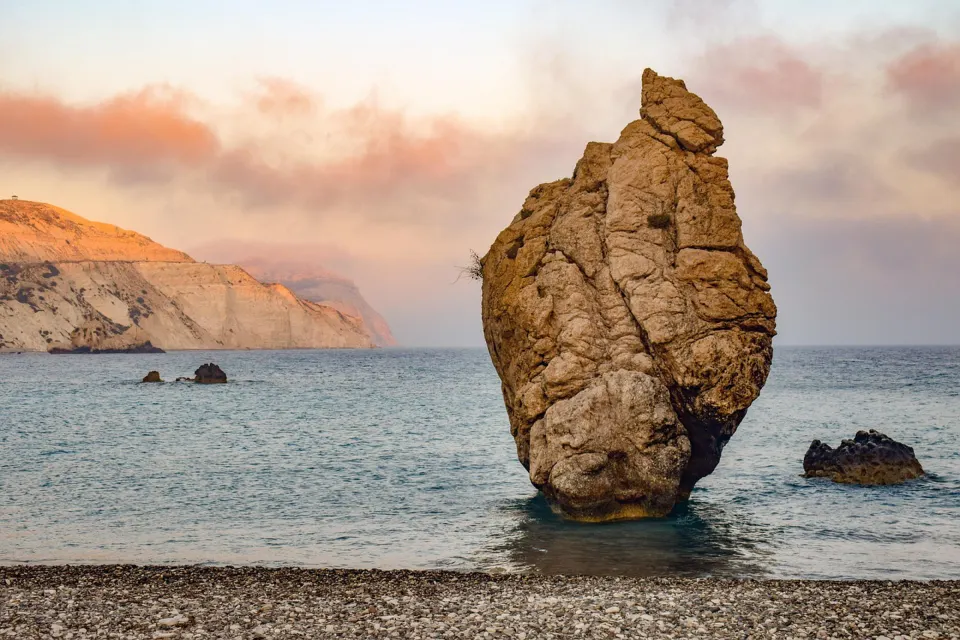
Aphrodite's Rock at sunset by the sea

Cyprus travel guide

A small island for coastal trips in spring and autumn, with most main towns on the sea

Best: Apr, May, Oct, Nov

Photo: dimitrisvetsikas1969 / Pixabay

Capital
Nicosia
Languages
Greek, Turkish
Currency
Euro
Time zone
UTC+02:00
Plugs
Type G · 240 V
Driving
On the left
Emergency
112
Entry
EU member (not Schengen)

Why visit Cyprus

Cyprus suits a coast-based trip with short drives between towns. The island covers 9251 km², and Limassol, Famagusta, Kyrenia and Protaras all sit on the sea. The capital, Nicosia, is inland. The best months are April, May, October and November. The summer months do not make that list. One thing to plan for: you drive on the left. Sockets are type G at 240 V, so many visitors will need an adapter.

  • Best in spring and autumn

    Our data puts April, May, October and November as the best months for Cyprus. The summer months are not on that list. Plan your trip for spring or autumn rather than the middle of the year.

  • A small country, easy to cover

    Cyprus covers 9251 km² and has about 983000 people. This small size means you can see both the coast and the capital on one trip without long days of travel.

  • A choice of coastal towns

    Limassol is the largest city in our list, with about 107970 people, and it sits on the coast. Famagusta, Kyrenia and Protaras are also coastal. You can pick a busy city base or a smaller town.

  • An inland capital for contrast

    Nicosia, the capital, is the only city in our list that is not on the coast. It has about 56848 people. A day or two here is a change from the seaside towns.

  • Simple practical details

    Cyprus uses the Euro and runs on UTC+02:00. Cars drive on the left. Plugs are type G at 240 V, so bring an adapter if you need one. The languages are Greek and Turkish.

Is Cyprus right for you?

Great for

  • Spring and autumn trips: April highs reach 21.2°C and October 25.1°C, with about 6 rain days
  • Summer beach trips on the coast: July has 0.8 rain days and 13.9 sun hours a day
  • Winter escapes from colder places: January highs of 12.4°C and 8.1 sun hours a day
  • Travellers from the UK and Ireland: left-side driving, type G plugs, 240 V and the Euro
  • Short road trips on a small island of 9251 km², linking Nicosia, Limassol and Protaras

Less ideal for

  • Heat-sensitive travellers in July and August, when highs reach 33.3°C and 32.5°C
  • Winter beach holidays: January highs are 12.4°C, lows 5°C, with 11.6 rain days
  • Big-city lovers: the largest city, Limassol, has only about 107970 people

Cyprus right now: September

7.5/10
Avg high
30°C
Avg low
19°C
Rain days
3

Averages for Cyprus.

Weather by month

This 2015–2024 climate data covers Cyprus as a whole rather than one named city, and the best months are April, May, October and November, with highs of 20–26°C and only 6–7 rain days a month. Avoid July and August, when highs reach 33°C, and expect wet weather in January, with 73 mm of rain over about 12 days.

Average highs and lows in Cyprus by month January: high 12°C, low 5°C , 12 rain days . February: high 14°C, low 6°C , 9 rain days . March: high 16°C, low 7°C , 9 rain days . April: high 21°C, low 11°C , 6 rain days . May: high 26°C, low 15°C , 7 rain days . June: high 29°C, low 19°C , 5 rain days . July: high 33°C, low 22°C , 1 rain days . August: high 33°C, low 22°C , 1 rain days . September: high 30°C, low 19°C , 3 rain days . October: high 25°C, low 15°C , 6 rain days . November: high 20°C, low 11°C , 7 rain days . December: high 15°C, low 7°C , 9 rain days . 12°C 5°C JAN 12d 14°C 6°C FEB 9d 16°C 7°C MAR 9d 21°C 11°C APR 6d 26°C 15°C MAY 7d 29°C 19°C JUN 5d 33°C 22°C JUL 1d 33°C 22°C AUG 1d 30°C 19°C SEP 3d 25°C 15°C OCT 6d 20°C 11°C NOV 7d 15°C 7°C DEC 9d
Best months Other months (low–high) Nd = rain days

Cyprus (country average) · averages 2015–2024

Best time to visit Cyprus: month-by-month weather →

Sample itineraries

7 days

Capital and coast in one week

  1. Day 1–3

    Limassol

    Start on the coast in Limassol, the largest city on this list. Give yourself time to settle in, walk the seafront and swim before moving inland.

  2. Day 4–5

    Nicosia

    Head inland to Nicosia, the capital and the only city here away from the sea. Use these days for museums, markets and city walks rather than beach time.

  3. Day 6–7

    Protaras

    Finish at Protaras on the coast for two slower days of swimming and rest. If you hire a car, remember that Cyprus drives on the left.

10 days

Five towns across Cyprus

  1. Day 1–3

    Limassol

    Begin in Limassol with 3 days on the coast. Walk the seafront, eat well and swim, then use the last day to plan the rest of the trip.

  2. Day 4–5

    Nicosia

    Move inland to Nicosia, the capital. Spend 2 days on its museums, markets and older streets, where you will hear both Greek and Turkish.

  3. Day 6–7

    Kyrenia

    Go to Kyrenia on the coast for 2 days. It is a smaller town, so plan unhurried walks by the water and a day of swimming.

  4. Day 8

    Famagusta

    Spend 1 day in Famagusta, another coastal town. Walk the older parts of town and stop for a long lunch before moving on.

  5. Day 9–10

    Protaras

    End with 2 quiet beach days in Protaras. If you are driving between towns, note that traffic keeps to the left, and 112 is the emergency number.

Food to try in Cyprus

Halloumi

A firm white cheese, traditionally made from goat and sheep milk. It holds its shape when heated, so Cypriots often grill or fry it and serve it at breakfast or as part of a meze.

Meze

Not one dish but a long run of small plates, such as dips, salads, grilled meats and fish. Tavernas across the island serve it, usually in the evening and shared by a group.

Souvla

Large chunks of pork or lamb slow-cooked on long skewers over charcoal. It is a favourite at family gatherings, Sunday lunches and village celebrations.

Kleftiko

Lamb baked slowly in a sealed clay oven until it falls off the bone. Look for it in village tavernas, often as a main course at lunch.

Commandaria

A sweet dessert wine made from sun-dried grapes in villages in the hills near Limassol. It is usually drunk in small glasses after a meal.

Zivania

A strong, clear spirit distilled from what is left after grapes are pressed for wine. It is often served chilled in small glasses, sometimes alongside meze.

Know before you go

  • Plugs and voltage: Cyprus uses type G plugs, the kind with three rectangular pins. The supply is 240 V. Pack an adapter if your devices have other plugs, and check that your chargers accept 240 V.
  • Driving side: Traffic drives on the left. If you normally drive on the right, take extra care at junctions and roundabouts, especially during your first few days behind the wheel.
  • Emergency number: Dial 112 for police, ambulance or fire services. Save the number in your phone before you arrive so you do not have to look it up in a hurry.
  • Currency: The currency is the euro. If you are coming from another euro country, you will not need to change money before your trip.
  • Language: The official languages are Greek and Turkish. Learning a few basic greetings in either language is a polite way to start a conversation with local people.
  • Phone calls: The country calling code for Cyprus is +357. Use it when you call a Cypriot number from abroad, or when you give your contact details to hotels.
  • Time zone: Cyprus is on UTC+02:00. Check the time difference from home before booking transfers or tours, so you do not miss an early pickup on your first morning.

Cyprus: frequently asked questions

When is the best time to visit Cyprus?

April, May, October and November are the best months. April and October both score 8.8, November 8.7 and May 8.5. Daytime highs are mild to warm: 21.2°C in April, 25.5°C in May, 25.1°C in October and 19.5°C in November. Rain falls on only about 6 to 7 days in each of these months.

Is Cyprus good in August?

August is only ok, mainly because of the heat. It scores 5. The average high is 32.5°C and nights stay warm at 21.8°C. It is very dry, with 1.4 rain days and 6 mm of rain. July is similar, with a high of 33.3°C. If you dislike heat, go in September (29.7°C) or October (25.1°C) instead.

Is Cyprus worth visiting in January?

January is ok, but it is the coolest and wettest month. It scores 4.9. Highs reach 12.4°C and lows drop to 5°C. There are 11.6 rain days and 73 mm of rain. For a winter trip, February (score 6.2) and December (score 6.6) are rated good and a little drier.

What plug type and voltage does Cyprus use?

Cyprus uses plug type G and 240 V. Check that your chargers and devices work at this voltage, and bring an adapter if your plugs are a different type. Also note that traffic drives on the left, which matters if you plan to rent a car.

What currency, time zone and emergency number does Cyprus use?

Cyprus uses the Euro and is on UTC+02:00. The emergency number is 112. The country calling code is +357. The official languages are Greek and Turkish, and the capital is Nicosia.

Similar destinations

Countries with a year of weather much like Cyprus.