Skip to content
wheretotravel.info
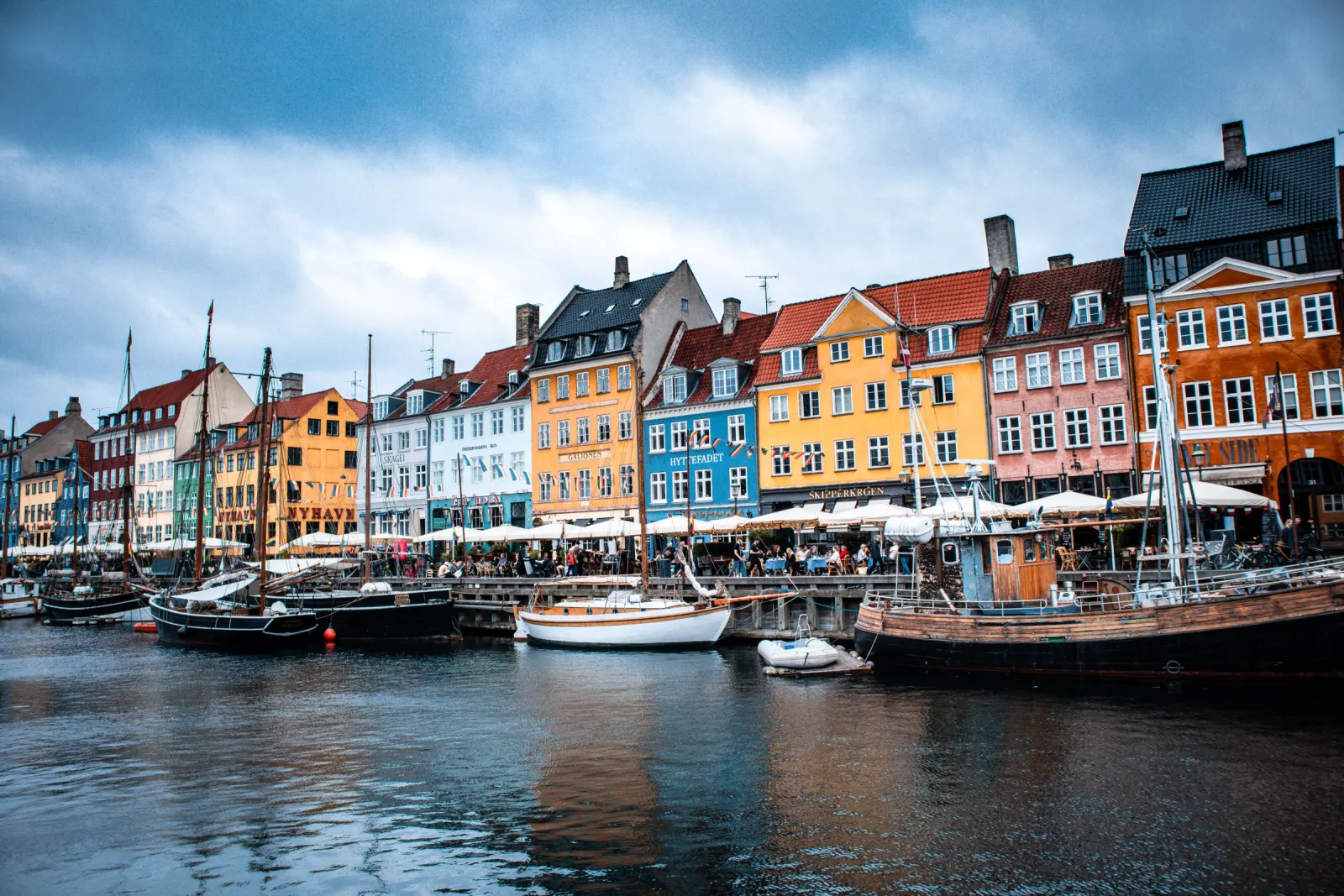
Colorful Nyhavn waterfront with boats and buildings

Denmark travel guide

Compact Northern European trips linking coastal cities from Copenhagen to Skagen, at their best in June

Best: Jun

Photo: Pham Ngoc Anh / Pexels

Capital
Copenhagen
Language
Danish
Currency
Danish krone (DKK)
Time zone
UTC-04:00, UTC-03:00 +2
Plugs
Type C, E, F, K · 230 V
Driving
On the right
Emergency
112
Entry
EU and Schengen area

Why visit Denmark

Denmark suits city breaks and coastal stops more than long road journeys. At 43,094 km², it is small enough to combine Copenhagen, Aarhus and Odense in one trip. Copenhagen, Aarhus and Skagen all sit on the coast. June is the best month to go. The honest limit: June is the only month our data rates as best, so the ideal window is short. If you can, plan around it. You will pay in Danish krone (DKK).

  • June is the month to aim for

    Our data picks out June as the best month to visit Denmark. It is the only month on that list, so if your dates are flexible, plan around June. Other months may suit you, but we have no data to recommend them.

  • A small country to cover

    Denmark is 43,094 km² with 6,032,304 people. Its five main cities range from Copenhagen to Billund, a town of 6,194. You can visit big cities and small towns on the same trip. Drive on the right if you hire a car.

  • Copenhagen, a capital by the sea

    Copenhagen is the capital and the largest city, with 667,099 people. It is a coastal city, so the sea is part of any visit. It is the obvious first stop for most trips.

  • Coastal cities of every size

    Aarhus is the second-largest city, with 290,598 people, and it sits on the coast. Skagen is also coastal, with only 7,394 people. Together they let you compare a large city and a small town by the sea.

  • Inland towns away from the coast

    Not everything is by the sea. Odense, with 185,480 people, is an inland city. Billund, with 6,194 people, is an inland town. Add one or both if you want to see Denmark beyond its coastline.

Is Denmark right for you?

Great for

  • Travellers who dislike heat: summer highs stay around 20°C, even in July and August.
  • June trips, with highs of about 19°C and roughly 13 sun hours a day.
  • City breaks in Copenhagen or Aarhus, both coastal cities.
  • Short multi-city trips in a small country of about 43094 km².
  • Road trips for drivers used to driving on the right.

Less ideal for

  • Beach holidays: even in August, highs only reach about 20°C.
  • Winter sun seekers: December has about 2 sun hours and highs near 5°C.
  • Anyone wanting dry weather: every month has 11 to 14.5 rain days.

Denmark right now: September

7.3/10
Avg high
17°C
Avg low
11°C
Rain days
12

Averages for Denmark.

Weather by month

This data is for Denmark as a whole (2015–2024), not one city, and June is the best month, with highs of 19°C, lows of 11°C and about 13 sun hours; July to September are also good. Avoid October to March, when October brings 82 mm of rain over 14 days and December has highs of only 5°C with about 2 sun hours.

Average highs and lows in Denmark by month January: high 4°C, low 0°C , 13 rain days . February: high 5°C, low 0°C , 11 rain days . March: high 7°C, low 1°C , 12 rain days . April: high 11°C, low 3°C , 11 rain days . May: high 16°C, low 7°C , 12 rain days . June: high 19°C, low 11°C , 12 rain days . July: high 20°C, low 13°C , 14 rain days . August: high 20°C, low 13°C , 13 rain days . September: high 17°C, low 11°C , 12 rain days . October: high 13°C, low 8°C , 14 rain days . November: high 8°C, low 4°C , 14 rain days . December: high 5°C, low 2°C , 15 rain days . 4°C 0°C JAN 13d 5°C 0°C FEB 11d 7°C 1°C MAR 12d 11°C 3°C APR 11d 16°C 7°C MAY 12d 19°C 11°C JUN 12d 20°C 13°C JUL 14d 20°C 13°C AUG 13d 17°C 11°C SEP 12d 13°C 8°C OCT 14d 8°C 4°C NOV 14d 5°C 2°C DEC 15d
Best months Other months (low–high) Nd = rain days

Denmark (country average) · averages 2015–2024

Best time to visit Denmark: month-by-month weather →

Sample itineraries

7 days

Copenhagen, Odense and Aarhus in 7 days

  1. Day 1–3

    Copenhagen

    Start in the capital and largest city. Spend 3 days walking the waterfront and central districts, and visiting a few museums. Leave time for cafés and slow evenings.

  2. Day 4

    Odense

    Stop for 1 day in this inland city. It is smaller and quieter than Copenhagen. Walk the old centre at an easy pace and take a break from the capital's crowds.

  3. Day 5–7

    Aarhus

    End in Denmark's second city, on the coast. Use 3 days for its harbour, museums and food scene. Aarhus is compact, so you can see a lot on foot or by bike.

10 days

From Copenhagen to Skagen in 10 days

  1. Day 1–3

    Copenhagen

    Begin with 3 days in the coastal capital. Explore the harbour, central streets and museums, and try a day on a bike. The city is flat and easy to get around.

  2. Day 4–5

    Odense

    Give this inland city 2 days. Walk its older streets, visit a museum or two, and enjoy a slower rhythm than in Copenhagen.

  3. Day 6

    Billund

    Spend 1 day in this very small inland town. It suits families most. If you travel without children, you can skip it and add the day to Aarhus.

  4. Day 7–8

    Aarhus

    Use 2 days in Denmark's second-largest city. See the harbour area, spend time in its museums and eat well. It is a good base before heading north.

  5. Day 9–10

    Skagen

    Finish in this small coastal town in the far north. Spend 2 days walking beaches and the town centre. It is much quieter than the cities, so plan for rest, not nightlife.

Food to try in Denmark

Smørrebrød

Open sandwiches on dark rye bread, topped with things like pickled herring, egg, shrimp or roast beef. Danes usually eat them at lunch, and many traditional restaurants in Copenhagen serve them.

Rugbrød

A dense, sour rye bread full of seeds and grains. It is the base of smørrebrød and part of everyday Danish meals, from packed lunches to breakfast.

Frikadeller

Pan-fried meatballs, usually made with minced pork. They are classic home cooking, served hot with potatoes and gravy for dinner or cold on rye bread at lunch.

Stegt flæsk med persillesovs

Crispy fried pork belly with boiled potatoes and a creamy parsley sauce. It is a heavy, traditional dinner dish found in homes and old-style Danish restaurants.

Wienerbrød

The flaky, buttery pastry known abroad as a Danish pastry. Look for it in local bakeries, where people buy it for breakfast or with afternoon coffee.

Æbleskiver and gløgg

Æbleskiver are round, fluffy pancake balls served with jam and powdered sugar. They are a Christmas season treat, often eaten with gløgg, a hot spiced wine.

Know before you go

  • Plugs and voltage: Denmark uses plug types C, E, F and K, and the voltage is 230 V. Most European two-pin plugs fit. Visitors from the UK or North America will need an adapter. Check that your devices accept 230 V.
  • Driving side: Traffic drives on the right. If you come from a country that drives on the left, take extra care at junctions and roundabouts during your first days.
  • Emergency number: Call 112 for police, fire or an ambulance. It is free to call from any phone. Denmark's international calling code is +45.
  • Currency: The currency is the Danish krone (DKK). Denmark does not use the euro, so check prices in DKK and change money or use a card that works abroad.
  • Language: The official language is Danish. English is widely spoken, especially in Copenhagen and other cities, so most visitors can manage without learning Danish.
  • Time zones: Mainland Denmark uses UTC+01:00. The country's other time zones cover Greenland and the Faroe Islands. Check local time if you travel there.
  • Tipping: Service is normally included in bills, so tipping is not expected. You can round up or leave a little extra for good service, but nobody will mind if you don't.
  • Tap water: Tap water is safe to drink across Denmark. You do not need to buy bottled water, so bring a refillable bottle.

Denmark: frequently asked questions

When is the best time to visit Denmark?

June is the best month to visit Denmark, with a score of 7.6 out of 10. Highs average 19.2°C and lows 11.1°C. June also has the most sun of the year in our data, at 12.9 sun hours. May, July, August and September are also rated good. If you want the mildest mix of warmth and sun, aim for June.

Is Denmark good in August?

Yes, August is a good month for Denmark, with a score of 7.4. It is the warmest month, with highs of 20.4°C and lows of 13°C. The downside is rain. August gets 81 mm over about 13 rain days, so pack a rain jacket and plan some indoor options.

Is it worth visiting Denmark in winter?

Not if good weather matters to you. November to March are all rated avoid, and December scores lowest at 0.7. December highs average 5.4°C, with 14.5 rain days and only 2.2 sun hours. January is colder, with highs of 4°C and lows of 0°C. Expect short, grey, wet days.

What is the rainiest month in Denmark?

July is the wettest month by volume, with 94 mm of rain over about 14 rain days. It is still rated good, with a score of 7.1, because it is warm, with highs of 20°C. December has the most rain days, at 14.5. October is also wet, with 82 mm, and is rated avoid.

Is October a good time to visit Denmark?

No, October is rated avoid, with a score of 3.7. Highs drop to 12.5°C and lows to 8°C. It is one of the wettest months, with 82 mm of rain over about 14 rain days, and sun falls to 5.3 sun hours. If you want autumn, September is a better choice, with a score of 7.3.

What plugs, currency and emergency number does Denmark use?

Denmark uses plug types C, E, F and K, at 230 V. The currency is the Danish krone (DKK). The emergency number is 112, and the country calling code is +45. If you rent a car, note that Denmark drives on the right.

Similar destinations

Countries with a year of weather much like Denmark.