Skip to content
wheretotravel.info
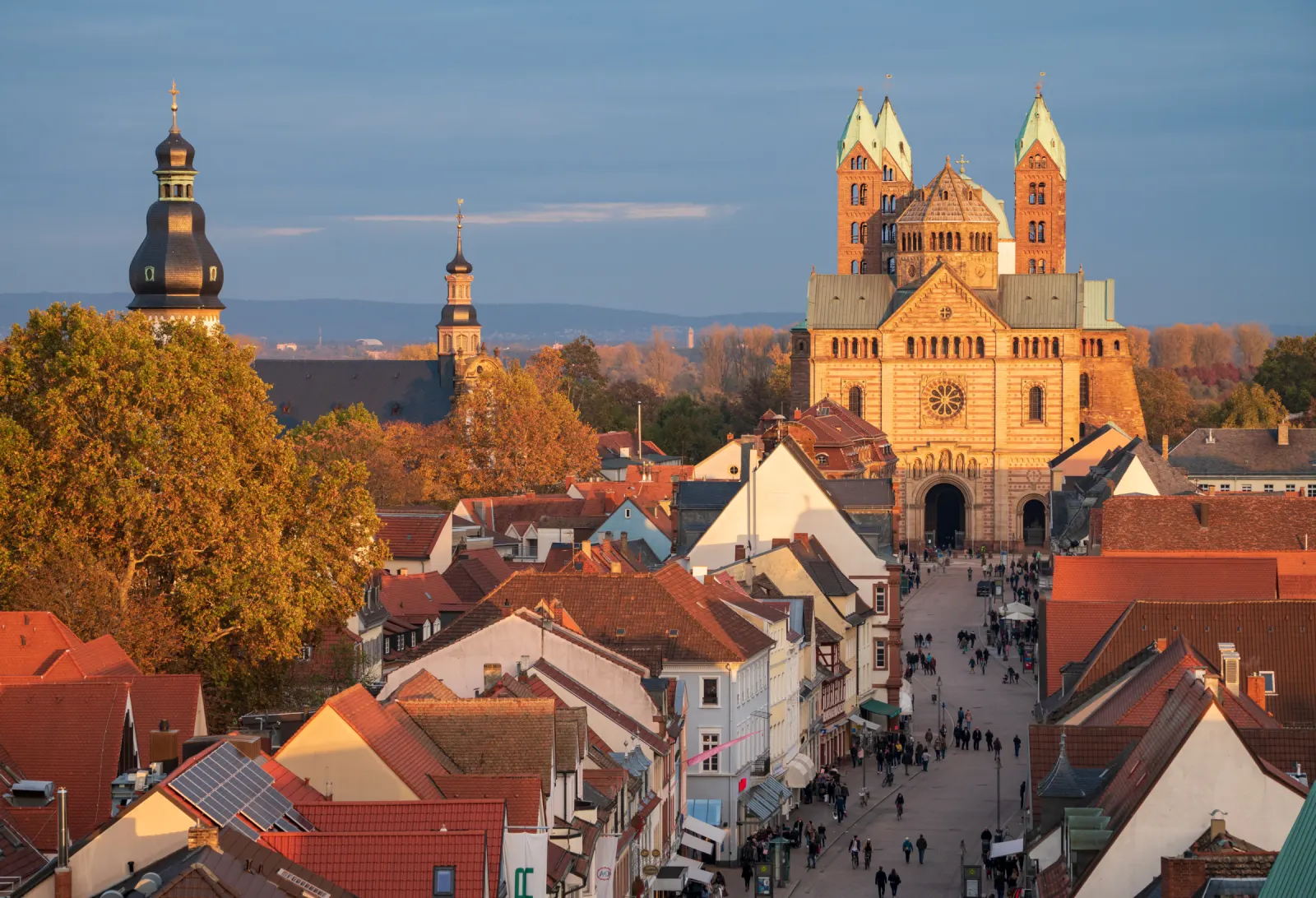
Speyer Cathedral above town street at sunset

Germany travel guide

Cities, castles and rail travel across Germany's regions

Best: Jun, Aug, Sep

Photo: Roman Eisele / Wikimedia Commons

Capital
Berlin
Language
German
Currency
Euro
Time zone
UTC+01:00
Plugs
Type C, F · 230 V
Driving
On the right
Emergency
112
Entry
EU and Schengen area

Why visit Germany

Germany suits independent travellers who like cities with history close by, from Berlin's museums to Heidelberg's old town. Public transport links Hamburg, Munich, Cologne, Frankfurt, Dresden and Nuremberg easily, so you can mix capital life with smaller towns. June, August and September bring the best weather for walking and outdoor sightseeing. Winters are cold and days are short, which limits outdoor plans.

  • Four cities over a million people

    Berlin has 3782202 residents, Hamburg 1910160, Munich 1510378 and Cologne 1024621. Each city has its own feel, from Berlin's history to Munich's Bavarian traditions, so you can plan a trip that moves between very different urban atmospheres.

  • Smaller cities with their own character

    Dresden counts 564904 people, Nuremberg 529508 and Heidelberg 162960. These smaller centres sit close to the bigger hubs, so they work well as day trips or slower stops away from the largest crowds.

  • A country built for city-hopping

    With 83298787 people living across 357114 square kilometres, Germany packs a dense network of well-connected cities into a relatively compact area, making multi-city trips straightforward by train.

  • Warm-season travel windows

    June, August and September are listed as the best months to visit, giving travellers a choice between early summer, peak summer and early autumn conditions for sightseeing and outdoor time.

  • One currency, one clock, simple logistics

    Germany uses the Euro, sits in the UTC+01:00 time zone and runs on a single 230 V electrical standard with plug types C and F, which keeps trip planning and packing simple across the whole country.

Is Germany right for you?

Great for

  • City-break travellers who want big cities like Berlin, Munich, Hamburg and Cologne
  • Summer walkers and cyclists: June to August highs of 21.4 to 23°C, rarely too hot
  • Autumn visitors in September: highs of 18.6°C and the fewest rain days, 9.7
  • Travellers who dislike heat: even August, the warmest month, averages a 23°C high
  • Visitors from other euro countries, who can pay in Euro without changing money

Less ideal for

  • Beach holidays: none of the main cities in our data is on the coast
  • Winter sun seekers: December averages 2.4 sun hours a day and January highs reach 3°C
  • Travellers who want dry weather: rain falls on 9.7 to 15.7 days every month
  • People who hate cold: January and February lows drop to -1.5°C and -0.8°C

Germany right now: November

1.2/10
Avg high
7°C
Avg low
2°C
Rain days
13

Averages for Germany.

Weather by month

This climate data is for Germany (based on a representative city). June to September is the sweet spot, with highs of 21–23°C, around 10–12 sun hours and fewer rain days than the rest of the year, September standing out as the top-rated month. January, February, November and December are the toughest, with highs near 3–5°C, under 5 sun hours a day and frequent rain or grey skies.

Average highs and lows in Germany by month January: high 3°C, low -2°C , 16 rain days . February: high 5°C, low -1°C , 12 rain days . March: high 9°C, low 1°C , 13 rain days . April: high 12°C, low 3°C , 11 rain days . May: high 17°C, low 8°C , 11 rain days . June: high 21°C, low 12°C , 12 rain days . July: high 23°C, low 14°C , 13 rain days . August: high 23°C, low 14°C , 12 rain days . September: high 19°C, low 10°C , 10 rain days . October: high 13°C, low 7°C , 12 rain days . November: high 7°C, low 2°C , 13 rain days . December: high 5°C, low 0°C , 14 rain days . 3°C -2°C JAN 16d 5°C -1°C FEB 12d 9°C 1°C MAR 13d 12°C 3°C APR 11d 17°C 8°C MAY 11d 21°C 12°C JUN 12d 23°C 14°C JUL 13d 23°C 14°C AUG 12d 19°C 10°C SEP 10d 13°C 7°C OCT 12d 7°C 2°C NOV 13d 5°C 0°C DEC 14d
Best months Other months (low–high) Nd = rain days

Germany (country average) · averages 2015–2024

Best time to visit Germany: month-by-month weather →

Sample itineraries

7 days

Berlin to Munich in a week

  1. Day 1–3

    Berlin

    Spend three days in Germany's capital, home to 3,782,202 people. Explore museums, historic sites and the mix of old and new architecture across the city's districts.

  2. Day 4–5

    Dresden

    Walk through the rebuilt old town of Dresden, a city of 564,904 people on the Elbe, known for its baroque architecture and art collections.

  3. Day 6–7

    Munich

    Finish in Munich, Bavaria's capital with 1,510,378 residents, where you can see the city centre and sample Bavarian food culture.

10 days

A wider loop through western and southern Germany

  1. Day 1–2

    Frankfurt

    Start in Frankfurt, a financial hub of 775,790 people, and take in its skyline along the Main river before heading onward.

  2. Day 3–4

    Cologne

    Visit Cologne, home to 1,024,621 people and its famous cathedral, then wander the Rhine riverside and old town streets.

  3. Day 5–6

    Hamburg

    Head north to Hamburg, Germany's second-largest city with 1,910,160 people, built around its port and canals.

  4. Day 7–8

    Nuremberg

    Stop in Nuremberg, a Bavarian city of 529,508 people, to see its medieval old town and castle.

  5. Day 9

    Heidelberg

    Spend a day in Heidelberg, a university town of 162,960 people, known for its hillside castle and riverside setting.

  6. Day 10

    Munich

    End the trip in Munich, with 1,510,378 people, exploring its central squares and beer halls before departing.

Food to try in Germany

Bratwurst

A grilled or fried pork sausage sold across Germany, often from street stalls. It usually comes in a bread roll with mustard.

Sauerbraten

A pot roast marinated for days before cooking, often made with beef. It is a classic dish in home kitchens and traditional restaurants.

Pretzel (Brezel)

A twisted bread with a dark, salty crust, common in bakeries across the country. It is eaten as a snack any time of day.

Currywurst

Sliced sausage topped with ketchup and curry powder, a popular fast-food dish in cities like Berlin. It is often served with fries.

Sauerkraut

Fermented cabbage served as a side dish with meats like sausage or pork. It has a sharp, tangy taste and appears in meals nationwide.

Riesling wine

A white wine grown along rivers such as the Rhine and Mosel. It ranges from dry to sweet and is a staple of German wine regions.

Know before you go

  • Plugs and voltage: Germany uses plug types C and F, with 230 V power. If your devices run on a different voltage, bring a travel adapter and check your charger is compatible before plugging in.
  • Driving side: Cars drive on the right side of the road in Germany. If you rent a car, remember this especially when pulling out of parking lots or roundabouts.
  • Emergency number: Dial 112 for police, fire or medical emergencies anywhere in Germany. The number works free from any phone, including mobiles without credit.
  • Currency: Germany uses the Euro. Many smaller shops, cafes and markets still prefer cash, so it helps to carry some with you even though cards are widely accepted in cities.
  • Language: German is the official language. In larger cities and tourist areas many people speak English, but learning a few basic German phrases is useful in smaller towns.
  • Tipping: Tipping is common but modest. Rounding up the bill or adding a small amount for good service is normal practice in restaurants, taxis and cafes.
  • Tap water: Tap water across Germany is safe to drink. There is no need to buy bottled water, though many restaurants will serve bottled water by default unless you ask for tap.
  • Calling code: Germany's international calling code is +49. Keep this in mind if you need to give out a phone number or dial home while travelling.

Germany: frequently asked questions

Is Germany good to visit in August?

Yes, August is one of the best months, with a score of 7.6 out of 10. Days reach 23°C on average, the warmest of the year, with lows around 13.9°C. There are about 12.1 rain days and 71 mm of rain, so pack a light rain jacket, but sunshine runs close to 11 hours a day.

When is the best time to visit Germany?

September, June and August score highest, all rated 'best'. September tops the list with a score of 8.1, offering highs of 18.6°C, lows of 10.2°C and fewer rain days (9.7) than summer. June and August bring warmer temperatures, up to 21.4°C and 23°C, with more sunshine hours.

Is Germany cold in winter?

Yes. January is the coldest month, with highs of just 3°C and lows of -1.5°C. It also gets only 3 sun hours a day and 15.7 rain days, the most of any month. December and February are similarly cold, with highs of 4.5°C and 5.1°C, so winter travel means short, often grey days.

Does it rain a lot in Germany?

Rain is spread through the year rather than concentrated in one season. Monthly totals range from 56 mm in April to 76 mm in January, and rain days vary between 9.7 in September and 15.7 in January. No month is dry, so a rain jacket is useful whenever you travel.

What is the weather like in Germany in spring?

Spring warms up gradually and scores 'ok' to 'good'. March still feels cool, with highs of 8.6°C and only 7 sun hours a day. April improves to 12.4°C highs and 9.8 sun hours, while May jumps to 16.7°C highs, 7.8°C lows and a 'good' score of 7.2, making it a solid month for mild sightseeing weather.

What plug and voltage does Germany use?

Germany runs on 230 V with plug types C and F, the standard round two-pin European sockets. Bring an adapter if your country uses a different plug shape. The emergency number is 112, and driving is on the right-hand side of the road.

Similar destinations

Countries with a year of weather much like Germany.