Skip to content
wheretotravel.info
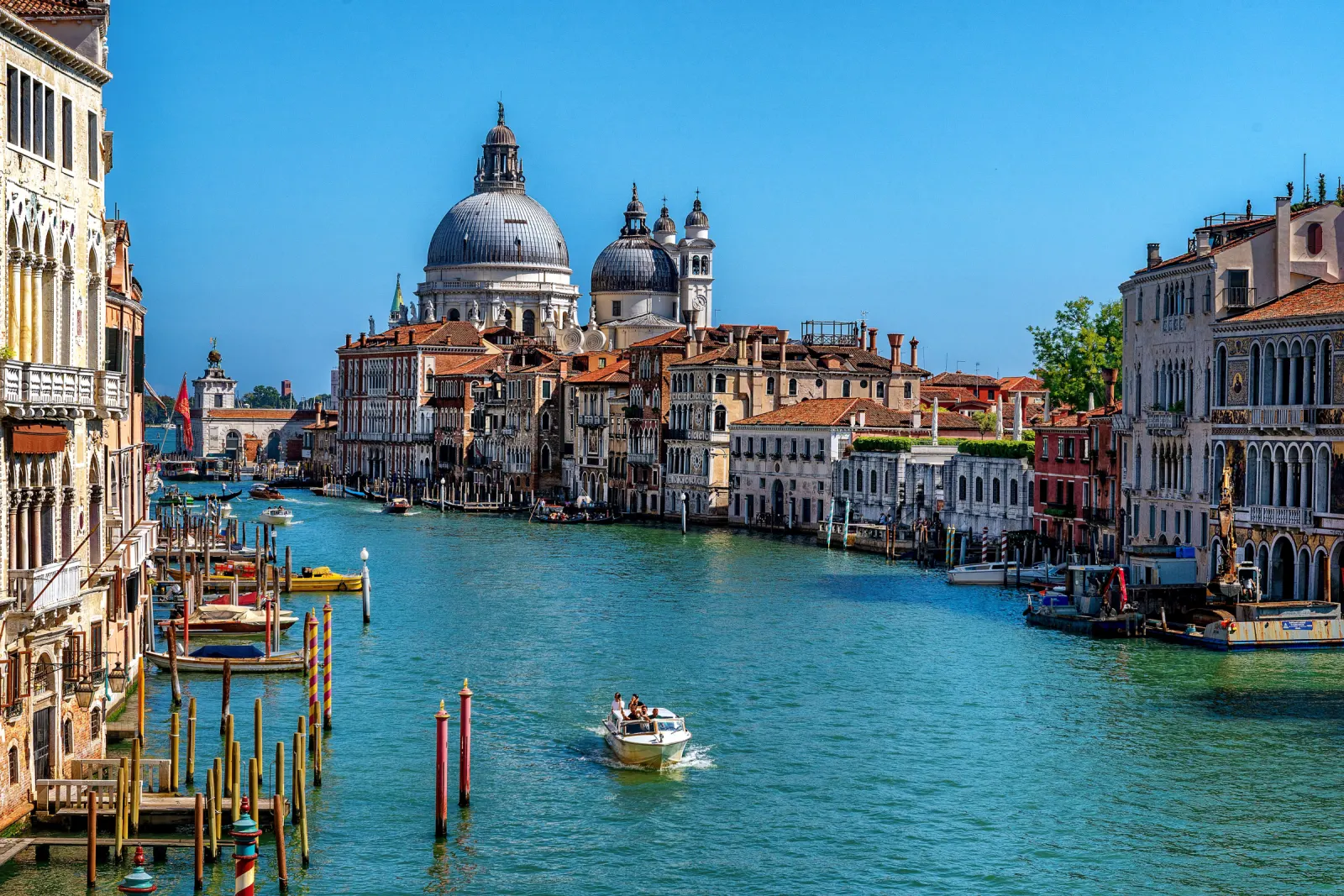
Grand Canal in Venice with basilica

Italy travel guide

Italy for city breaks in Rome, Florence and Venice, plus coastal cities like Naples and Palermo

Best: Apr, Jun, Sep, Oct

Photo: Michael / Pexels

Capital
Rome
Languages
Catalan, Italian
Currency
Euro
Time zone
UTC+01:00
Plugs
Type C, F, L · 230 V
Driving
On the right
Emergency
112
Entry
EU and Schengen area

Why visit Italy

Italy suits travellers who want to see several cities in one trip. Rome, Milan, Florence and Verona are inland, while Naples, Palermo, Catania and Venice sit on the coast. The best months to go are June, September and October. One honest limitation: the country covers 301,336 km², so trying to fit Milan, Rome and Palermo into one short trip means long travel days. Pick 1 or 2 areas and save the rest for another visit.

  • Rome and Milan, two big cities

    Rome is the capital and the largest city, with 2748109 people. Milan is second, with 1354196. Both are inland, so they suit a city-focused trip rather than a beach holiday.

  • Four coastal cities to choose from

    If you want to be by the sea, Naples (913462 people), Palermo (630167), Catania (311584) and Venice (250369) are all coastal. This gives you a choice of large and smaller seaside bases.

  • Smaller cities at a slower pace

    Florence has 360930 people and Verona has 255588. Both are inland and much smaller than Rome. They are an option if you want city life on a smaller scale.

  • Clear best months to go

    Our data points to June, September and October as the best months to visit. If your dates are flexible, plan around these 3 months. Other months are outside this best window.

  • Simple practical set-up

    Italy uses the Euro, and cars drive on the right. The emergency number is 112. Power is 230 V with plug types C, F and L, so check your adapter before you travel.

Is Italy right for you?

Great for

  • City-hoppers: Rome, Milan, Florence, Verona, Venice and Naples give plenty of big-city choice
  • Trips in June, September or October, the best months in the data
  • Sun lovers in July, with about 13.7 sun hours and only 5.4 rain days
  • Coastal city breaks in Naples, Palermo, Catania or Venice
  • Travellers from euro countries, since Italy uses the Euro

Less ideal for

  • People who struggle with heat: July highs average 29.8°C, August 29.3°C
  • Winter visitors wanting mild days: January highs average 8.2°C, lows -0.7°C
  • Late-autumn trips hoping for dry weather: November averages 115 mm rain over 12.2 days
  • May visitors who hate rain: about 14.2 rain days, the most of any month

Italy right now: September

8.1/10
Avg high
27°C
Avg low
17°C
Rain days
9

Averages for Rome.

Weather by month

The fact pack gives no city, only 2015–2024 averages for Italy as a whole, and June, September and October are best, with highs of 26°C, 23°C and 19°C and only 8 to 10 rain days. Avoid January and December, when highs reach only 8–10°C, lows fall to -0.7°C and 0.6°C, and December brings 103 mm of rain.

Average highs and lows in Rome by month January: high 12°C, low 4°C , 10 rain days . February: high 14°C, low 5°C , 9 rain days . March: high 16°C, low 6°C , 10 rain days . April: high 20°C, low 9°C , 9 rain days . May: high 23°C, low 13°C , 12 rain days . June: high 29°C, low 18°C , 6 rain days . July: high 33°C, low 21°C , 4 rain days . August: high 33°C, low 21°C , 5 rain days . September: high 27°C, low 17°C , 9 rain days . October: high 23°C, low 13°C , 11 rain days . November: high 17°C, low 9°C , 13 rain days . December: high 14°C, low 5°C , 10 rain days . 12°C 4°C JAN 10d 14°C 5°C FEB 9d 16°C 6°C MAR 10d 20°C 9°C APR 9d 23°C 13°C MAY 12d 29°C 18°C JUN 6d 33°C 21°C JUL 4d 33°C 21°C AUG 5d 27°C 17°C SEP 9d 23°C 13°C OCT 11d 17°C 9°C NOV 13d 14°C 5°C DEC 10d
Best months Other months (low–high) Nd = rain days

Rome · averages 2015–2024

Best time to visit Italy: month-by-month weather →

Where to go in Italy

City guides with their own best months and weather.

Sample itineraries

7 days

Venice, Florence and Rome in one week

  1. Day 1–2

    Venice

    Start on the coast in Venice, the smallest city on this route. Spend 2 days exploring on foot, and walk away from the busiest streets to find quieter corners.

  2. Day 3–4

    Florence

    Move inland to Florence for 2 days. It is much smaller than Rome, so you can cover a lot of the centre on foot and still keep your evenings free.

  3. Day 5–7

    Rome

    End with 3 days in Rome, Italy's capital and the largest city on this trip. Split your time between the historic centre and calmer neighbourhoods, and book popular sites ahead if you can.

10 days

Rome, Naples and two Sicilian cities

  1. Day 1–3

    Rome

    Begin in Rome, the capital and the largest city on this route. Use 3 days to see the historic centre at a steady pace, without trying to fit in everything.

  2. Day 4–5

    Naples

    Head south to coastal Naples for 2 days. Focus on the old town and the local food, and keep your bag close in crowded areas, as in any big city.

  3. Day 6–8

    Palermo

    Cross to Sicily and base yourself in coastal Palermo for 3 days. Walk its streets and seafront, and leave one day unplanned so the trip does not feel rushed.

  4. Day 9–10

    Catania

    Finish in Catania, a coastal city smaller than Palermo. 2 days is enough for the centre and a slow last evening. Save 112, Italy's emergency number, before you go.

Where to stay

One good base in each main city and who it suits.

Centro Storico (the Pantheon and Piazza Navona)

Rome

Good for first-timers, walkers

This is the old centre, with narrow lanes, piazzas and many major sights close together. You can walk to most places and come back to rest in the afternoon. It is the busiest and most touristy area, and some streets are loud until late.

Food to try in Italy

Pizza napoletana

A soft, thin pizza with a puffy edge, baked fast in a very hot wood-fired oven. It comes from Naples, and pizzerias there are the classic place to try it.

Spaghetti alla carbonara

A Roman pasta made with egg, hard pecorino cheese, cured pork cheek (guanciale) and black pepper. Order it in Rome, where most traditional trattorias serve it.

Pesto alla genovese

A raw sauce of basil, pine nuts, garlic, olive oil and hard cheese. It comes from Genoa and the Liguria coast, where it is often served with short trofie pasta.

Risotto alla milanese

Creamy rice cooked slowly in stock and coloured yellow with saffron. It is a classic of Milan and northern Italy, where rice dishes are more common than in the south.

Gelato

Italian ice cream, usually denser and softer than many other ice creams. You find it all over the country, and many Italians buy a cone for an evening walk.

Espresso

A short, strong coffee. Italians often drink it quickly while standing at the bar. Milky coffees such as cappuccino are mostly drunk in the morning, not after meals.

Know before you go

  • Plugs and voltage: Italy uses plug types C, F and L at 230 V. Type L is the Italian three-pin plug. A two-pin European adapter fits most sockets, but some older ones only take type L.
  • Driving side: Traffic drives on the right. Many historic town centres limit car access, so check signs before you drive into old streets.
  • Emergency number: Call 112 for police, ambulance or fire. It works from any phone. The country calling code for Italy is +39.
  • Currency: Italy uses the euro. Cards are common in cities, but carry some cash for small cafés, markets and rural shops.
  • Language: Italian is the main language. Catalan is also recognised, but only in Alghero on Sardinia. English is common in tourist areas and less so in small towns.
  • Tipping: Tipping is not expected. Restaurant bills often include a cover charge (coperto) or a service charge. Rounding up or leaving small change for good service is enough.
  • Tap water: Tap water is safe to drink in most of Italy. Many towns have free public drinking fountains. Do not drink from taps marked "acqua non potabile" (not drinkable).
  • Common scams: At busy sights, people may hand you a "free" bracelet, rose or petition and then demand money. Say no and walk on. Watch for pickpockets on crowded buses and trains.

Italy: frequently asked questions

When is the best time to visit Italy?

June, September and October are the best months to visit Italy. They have the highest scores: 8.3 for June, 8 for September and 7.9 for October. June brings average highs of 25.7°C, 8.3 rain days and 13.2 hours of sun. September is a little cooler at 23.4°C. October drops to 18.9°C, with 10.3 rain days. These figures are national averages for 2015–2024.

Is Italy good in August?

Yes, August is a good month for Italy, but expect heat. It scores 7. Average highs reach 29.3°C, and nights stay around 16°C. It is dry, with 7 rain days and 49 mm of rain, and gets 12.6 hours of sun. July is similar and slightly hotter, at 29.8°C. If you dislike heat, choose June or September instead.

Should I avoid Italy in January and December?

Yes, January and December are the weakest months, and both are rated "avoid". January scores 2.6. Average highs are 8.2°C, lows are -0.7°C, and there are only 6.6 hours of sun. December scores 3.6, with highs of 9.8°C and 103 mm of rain. If you want a cooler trip without the worst weather, February and March are rated "ok".

What is the rainiest month in Italy?

November is the wettest month, with 115 mm of rain over 12.2 rain days. May has the most rain days, 14.2, and 99 mm of rain, but it is still rated "good" with highs of 19.9°C. July is the driest month, with 35 mm over 5.4 days. Pack a rain jacket for a spring or autumn trip.

What plugs and voltage does Italy use?

Italy uses plug types C, F and L, and the voltage is 230 V. Travellers from countries with other plug types will need an adapter. If your devices are not rated for 230 V, you will also need a converter. Most phone and laptop chargers accept 230 V, but check the label first.

What currency does Italy use, and what is the emergency number?

Italy uses the Euro. The emergency number is 112. Other basics: the country calling code is +39, and Italy is on UTC+01:00. Cars drive on the right. The main language is Italian, and the capital is Rome.

Similar destinations

Countries with a year of weather much like Italy.