Skip to content
wheretotravel.info
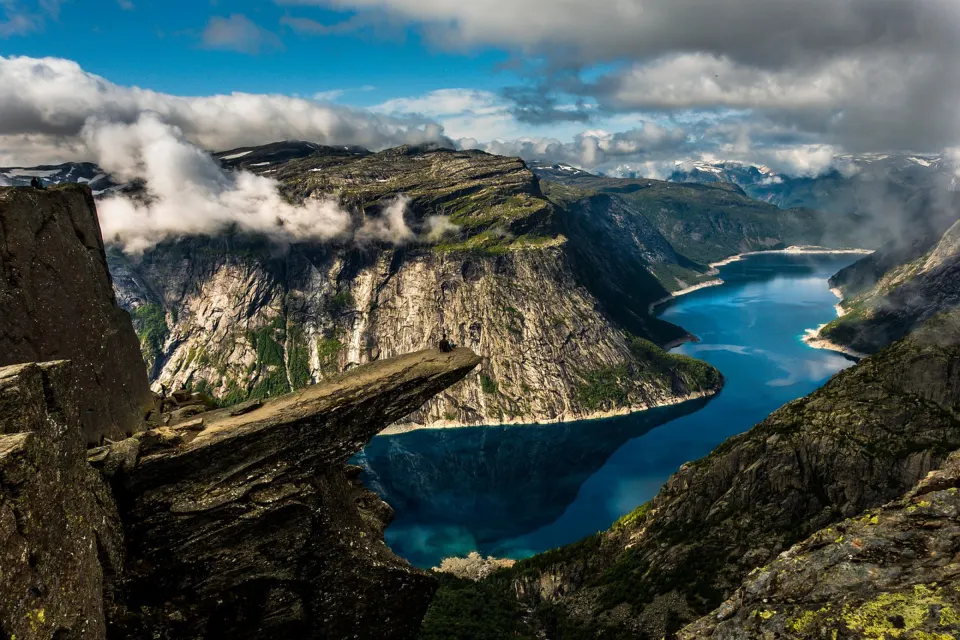
Trolltunga rock overlooking fjord and mountains

Norway travel guide

Fjords, coastal towns and Arctic light for travellers who plan around short summers

Best: Jul, Aug

Photo: trondmyhre4 / Pixabay

Capital
Oslo
Languages
Norwegian Nynorsk, Norwegian Bokmål, Southern Sami
Currency
Norwegian krone
Time zone
UTC+01:00
Plugs
Type C, F · 230 V
Driving
On the right
Emergency
112
Entry
Schengen area

Why visit Norway

Norway suits travellers who want fjords, coastal cities and the Arctic without rushing. July and August are the best months across the country, from Bergen and Trondheim to Tromsø, Bodø and Svolvær in the Lofoten Islands, with Lillehammer best in May and June. The honest limitation: this window is short, so good weather for most of the country is packed into just two months.

  • A coastline built for fjords and islands

    Norway's coast runs through Bergen (291,189 people), Trondheim (198,777), Bodø (43,504) and the Lofoten port of Svolvær (4,807). Each of these coastal towns lists July and August as its best months, when ferries, boat trips and fjord scenery are easiest to enjoy.

  • Svalbard, a true Arctic outpost

    Longyearbyen, population 2,417, sits further north than almost anywhere else you can fly to. Its best months are also July and August, when the midnight sun keeps the archipelago lit around the clock.

  • Tromsø for the far north

    Tromsø, home to 38,980 people, is the main base for exploring above the Arctic Circle. Like most Norwegian coastal cities, its best months are July and August.

  • Oslo and Lillehammer inland

    The capital Oslo is best from June to August, giving a longer window than the coastal towns. Lillehammer, with 21,677 residents, peaks earlier, in May and June, before the summer crowds arrive.

  • A big, lightly populated country

    Norway covers 323,802 square kilometres but has only 5,636,904 people, so even busy months like July and August, the country's overall best time to visit, leave plenty of open space along the coast and inland.

Is Norway right for you?

Great for

  • Summer travellers who want long daylight, with Oslo highs of 21-22°C in July and August
  • Hikers and outdoor trip planners, since July and August are the best months in almost every city
  • Coastal and fjord trips, as Bergen, Trondheim, Bodø, Tromsø and Svolvær are all coastal towns
  • Arctic and northern lights seekers heading to Tromsø or Longyearbyen outside peak summer
  • Shoulder-season visitors to Lillehammer, where May and June bring milder, drier days

Less ideal for

  • Travellers who dislike rain, since Oslo sees rain on 11-13 days a month most of the year
  • Sun-seekers in winter, when Oslo gets under 3 sun hours a day from November to January
  • People sensitive to cold, as Oslo lows drop to around -5°C in January
  • Beach holidaymakers, since the fact pack shows no beach-focused destinations in the country

Norway right now: November

0.7/10
Avg high
5°C
Avg low
1°C
Rain days
12

Averages for Oslo.

Weather by month

Based on Oslo's climate data, June to August is the sunniest and warmest stretch, with highs of 20-22°C and up to 13.1 hours of sun in June, making July and August the top-scoring months. December through February is the toughest period, with highs near 0°C, lows down to -5.3°C in January, and under 3 hours of daily sun.

Average highs and lows in Oslo by month January: high 0°C, low -5°C , 12 rain days . February: high 2°C, low -4°C , 11 rain days . March: high 5°C, low -2°C , 9 rain days . April: high 11°C, low 2°C , 8 rain days . May: high 17°C, low 7°C , 12 rain days . June: high 21°C, low 12°C , 12 rain days . July: high 22°C, low 14°C , 13 rain days . August: high 20°C, low 13°C , 13 rain days . September: high 17°C, low 10°C , 11 rain days . October: high 10°C, low 5°C , 12 rain days . November: high 5°C, low 1°C , 12 rain days . December: high 1°C, low -3°C , 13 rain days . 0°C -5°C JAN 12d 2°C -4°C FEB 11d 5°C -2°C MAR 9d 11°C 2°C APR 8d 17°C 7°C MAY 12d 21°C 12°C JUN 12d 22°C 14°C JUL 13d 20°C 13°C AUG 13d 17°C 10°C SEP 11d 10°C 5°C OCT 12d 5°C 1°C NOV 12d 1°C -3°C DEC 13d
Best months Other months (low–high) Nd = rain days

Oslo · averages 2015–2024

Best time to visit Norway: month-by-month weather →

Norway's climate regions

The weather varies across the country; each region has its own best months.

  • Southeast Norway (Oslo area)

    Oslo, Lillehammer

    This inland region has warm summers and cold winters. July highs reach 21°C while January averages -1.8°C, with 142 rain days a year. June is the best month to visit.

    Best: Jun

  • Western Fjords (Bergen/Trondheim)

    Bergen, Trondheim

    Norway's wettest region, with 206.5 rain days a year. Winters are mild for the latitude at 1.6°C in January, and summer highs reach 17.7°C in July and August, the best months to go.

    Best: Jul, Aug

  • Arctic Coast (Bodø/Tromsø/Lofoten)

    Bodø, Tromsø, Svolvær

    A cold, damp coastal climate with 205 rain days a year. January highs sit at -1.8°C and July reaches 16.7°C, with July and August the best months for milder, lighter conditions.

    Best: Jul, Aug

  • High Arctic Svalbard

    Longyearbyen

    The coldest and driest region, with January highs of -8.7°C and only 126.8 rain days a year. Even in July, the warmest month, highs reach just 9.7°C, with July and August the best time to visit.

    Best: Jul, Aug

Where to go in Norway

City guides with their own best months and weather.

Sample itineraries

7 days

Oslo to Trondheim in a Week

  1. Day 1–2

    Oslo

    Start in the capital. Walk the harbor and city center, and visit a museum or two. June and August are the best months to be here.

  2. Day 3–4

    Bergen

    Bergen is Norway's second largest city with 291189 people. Explore the old wooden waterfront and surrounding fjords, best done in July or August.

  3. Day 5–7

    Trondheim

    Finish in Trondheim, a coastal city of 198777 people. See the cathedral and wander the river district; July and August bring the mildest weather.

10 days

Oslo to the Arctic in Ten Days

  1. Day 1–2

    Oslo

    Begin in Oslo, best visited in June or August, taking in museums and the waterfront before heading north.

  2. Day 3

    Lillehammer

    Stop in Lillehammer, a town of 21677 people known for its Olympic history. May and June are its best months, but it still makes a good short detour.

  3. Day 4–5

    Trondheim

    Spend two days in Trondheim, population 198777, visiting the cathedral and old town. July and August are the calmest, warmest months here.

  4. Day 6

    Bodø

    Pass through Bodø, a coastal city of 43504 people, for views over the sea and nearby islands. Best visited in July or August.

  5. Day 7–8

    Tromsø

    Base yourself in Tromsø, home to 38980 people, for boat trips and arctic scenery. July and August offer the longest daylight and easiest travel.

  6. Day 9–10

    Longyearbyen

    End in Longyearbyen on Svalbard, a settlement of 2417 people. July and August bring milder temperatures and continuous daylight for exploring.

Where to stay

One good base in each main city and who it suits.

Sentrum

Oslo

Good for first-timers, short stays

The city centre around Karl Johans gate puts the Royal Palace, the Parliament and the main station within walking distance. Trains to the airport and most trams and metro lines start here, so getting around is easy. Some streets near the station feel busy and scruffy late at night, and the main shopping streets get noisy.

Bryggen

Bergen

Good for first-timers, sightseeing

The old Hanseatic wharf, a UNESCO World Heritage Site, with its wooden buildings sits a short walk from the Fish Market and the Fløibanen funicular. Staying here puts most of Bergen's best-known sights on your doorstep. The drawback is crowds, especially on days when cruise ships are in port.

Midtbyen

Trondheim

Good for first-timers, sightseeing, shopping

The city centre sits on a river peninsula, with the main square, shopping streets and Nidaros Cathedral all within walking distance. It is the easiest base for a short first visit, as most sights and restaurants are on your doorstep. Streets near the bars can be loud late on weekend nights.

Hunstad

Bodø

Good for families, self-caterers, longer stays

A quiet suburb east of the centre with houses, apartments, supermarkets and easy access to walking paths and ski tracks in winter. It feels like everyday Bodø rather than a visitor area. You will need the bus or a car to reach the harbour and most sights.

Sentrum

Tromsø

Good for first-timers, nightlife, no car

The compact city centre on the east side of Tromsøya island has most restaurants, bars, museums and the harbour where many tours start. Almost everything is walkable, and most northern lights and whale tours pick up here. The drawback is weekend bar noise and street lighting that makes aurora spotting from your window unlikely.

Sentrum

Lillehammer

Good for first-timers, car-free travellers, food and cafés

The compact town centre is built around Storgata, a pedestrian street lined with old wooden buildings, shops, cafés and bars. You can walk to the train station, the lakeside and most sights, so it works well without a car. Streets climb steeply uphill from the lake, and weekend evenings on Storgata can be noisy.

Svinøya

Svolvær

Good for couples, classic Lofoten stay

A small island joined to the centre by a short bridge, lined with traditional red fishermen's cabins (rorbuer) on stilts over the water. You get a waterside setting and harbour views while staying within walking distance of the centre. Drawback: the cabins are close together and can feel busy with other guests in peak season, and parking is limited.

Sentrum

Longyearbyen

Good for first-timers, short stays, no car

The small town centre around the pedestrian street holds most shops, cafés, bars and tour pick-up points, so everything is a short walk away. It is the easiest base in the dark or cold months, when you want little time outside between stops. It has less wilderness feel than the upper valley, and rooms here tend to fill first in busy seasons.

Food to try in Norway

Fårikål

This is Norway's national dish: mutton and cabbage stewed with whole peppercorns. Families often cook it in autumn, when the sheep are brought down from mountain pastures.

Rakfisk

Rakfisk is trout that has been fermented for weeks in brine. It has a strong smell and taste, and it is traditionally served in late autumn and winter, often with flatbread and onion.

Brunost

Brunost is a caramel-colored brown cheese made from whey. Norwegians eat it year-round, sliced thin on bread or waffles for breakfast.

Lutefisk

Lutefisk is dried whitefish that has been soaked in lye and water before cooking, giving it a jelly-like texture. It is a traditional Christmas dish in many Norwegian homes.

Pinnekjøtt

Pinnekjøtt is dried and salted lamb ribs, steamed over birch sticks. It is a classic Christmas Eve meal, especially on the west coast of Norway.

Aquavit

Aquavit is a spiced spirit flavored with caraway and dill, often aged in oak casks. It is traditionally drunk with festive meals like pinnekjøtt or lutefisk during the holiday season.

Know before you go

  • Plugs and voltage: Sockets take type C and F plugs, the round two-pin plugs used in most of mainland Europe. The voltage is 230 V. Bring an adapter if your devices use a different plug.
  • Driving side: Norway drives on the right. If you come from a country that drives on the left, take extra care at junctions and roundabouts during your first days.
  • Emergency number: Call 112 for emergencies. Save it in your phone before you go, especially if you plan to hike or drive in remote areas.
  • Currency: The currency is the Norwegian krone. Norway does not use the euro, so plan to pay in krone or by card.
  • Language: Norwegian is written in two official forms, Bokmål and Nynorsk. Three Sami languages are also recognised: Northern Sami, Lule Sami and Southern Sami. You may see Sami place names on signs in the north.
  • Time and calling code: Norway uses UTC+01:00, the same time zone as much of central Europe. The country calling code is +47, which you need when calling Norwegian numbers from abroad.
  • Tap water: Tap water is safe to drink across Norway. Carry a refillable bottle instead of buying bottled water.

Norway: frequently asked questions

Is Norway good to visit in August?

Yes. August scores 6.4 out of 10 in Oslo, one of the three best months. Highs reach 20.4°C and lows 12.8°C, with 10.5 hours of sun a day. Rain is still common, with 12.6 rain days and 94 mm, so pack a waterproof jacket.

When is the best time to visit Norway?

July and August are the top months, both scoring over 6 out of 10. Oslo highs hit 21-22°C with 12-13 hours of sunshine daily. June also scores well at 6.0. September and May sit in the middle as 'ok' months, while October to April score below 3.3 and feel cold and dark.

Is Norway cold in winter?

Yes. From November to February, Oslo highs stay between 0°C and 4.7°C, and lows drop as far as -5.3°C in January. Sun hours fall to under 3 a day in December and January. These months score 0.4 to 1.3 out of 10 for general travel, though they suit visitors chasing snow or northern lights.

Does it rain a lot in Norway?

Rain is frequent year-round in Oslo. Every month has at least 8 rain days, and July is the wettest with 112 mm over 13.1 rain days. December has the fewest sun hours, just 1.9 a day, while June offers the most at 13.1 hours.

Which Norwegian cities are best in summer?

Bergen, Trondheim, Bodø, Tromsø, Svolvær and Longyearbyen all list July and August as their best months. Oslo's best months are June and August. Lillehammer, inland and not coastal, peaks earlier in May and June.

What is Norway's emergency number and plug type?

Dial 112 for emergencies anywhere in Norway. Power sockets use plug types C and F at 230 V, so travellers from outside Europe will need an adapter. Norway drives on the right, and the currency is the Norwegian krone.

Similar destinations

Countries with a year of weather much like Norway.