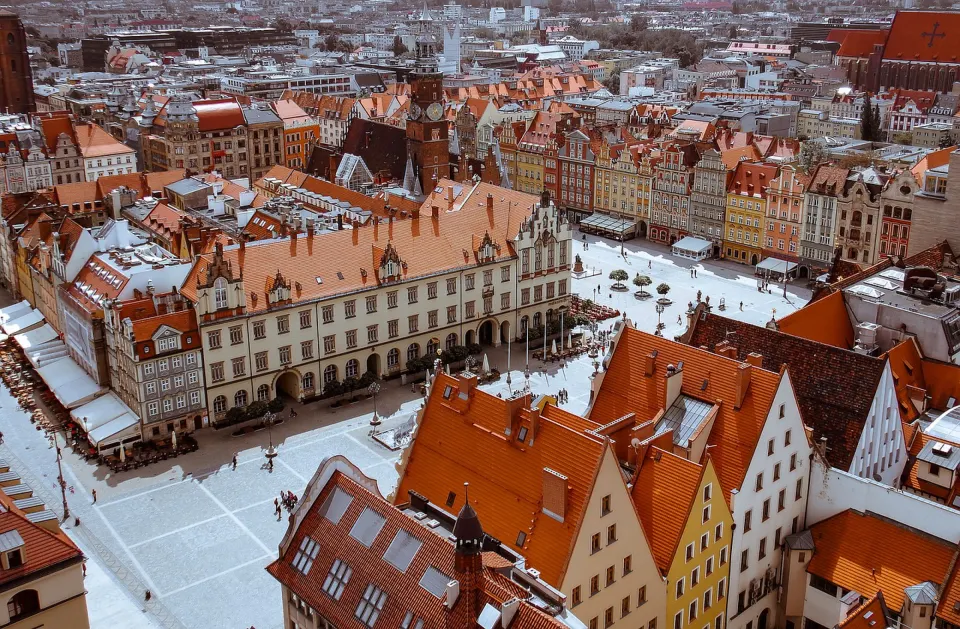
Why travel to
Poland is a diverse country situated in Central Europe offering culture, art, history, music, attractive landscapes and welcoming people. It is home to some of the world's oldest cities, medieval castles and fortresses, as well as picturesque lakes and mountains. It offers great value for money, with several stunning cities, including Warsaw and Krakow, which boast a variety of dining and entertainment options. Poland is also home to several UNESCO World Heritage sites, so if you're a history buff, you definitely won't be disappointed. Whether you want to explore the outdoors, such as Wieliczka Salt Mine, the Auschwitz-Birkenau Memorial and Museum, or take a stroll through a charming countryside village, there's something in Poland for everyone.
Cost of living
The cost of living in Poland varies greatly depending on location and lifestyle. Generally, living in larger cities such as Warsaw and Kraków may require a higher budget due to a higher cost of goods and services. However, there are still numerous options for cost conscious expats and budget travelers. Accommodation and transportation costs tend to be quite affordable in Poland, while food, leisure activities and entertainment can vary in price.
Safety
Yes, it is generally safe to travel to Poland. The US Department of State has issued a Level 2 travel advisory for the country, meaning travelers should exercise increased caution when visiting.
Places to visit
- Wawel Castle – Situated atop a hill overlooking the old town of Krakow, Wawel Castle was once the political centre of Poland and served as the residence of its kings. The 11th-century castle complex contains a mix of Gothic, Renaissance and Baroque architecture as well as interior collections of remarkable art and antiques.
- Auschwitz-Birkenau – The largest concentration and extermination camp of Nazi Germany during World War II, Auschwitz-Birkenau is a solemn and heartbreaking reminder of an estimated 1.3 million people who were killed in this camp alone. The museum brings home the horror of the Holocaust and makes a visit to Poland definitely worth the time.
- Old Town, Warsaw – Home to the best restaurants and nightlife in the city, the Old Town's atmospheric streets feature Gothic and Renaissance-style buildings, historic churches and cosy pubs. Explore the impressive architecture, sample Polish food and drinks, and listen to some of the live music in the area.
- Malbork Castle – The largest castle in the world, Malbork Castle is located on the banks of the Nogat River in northern Poland. It was originally built by the Teutonic Order, a Catholic Red Cross on a mission to convert the pagan population, and it shows a fascinating mix of Gothic and Renaissance architecture.
- Saint Mary's Basilica – Located in the old town of Krakow, Saint Mary's Basilica is a must-visit in Poland. The Gothic-style church is renowned for its magnificent facade and its magnificent interior, which includes an altar decorated with gold. Furthermore, visitors should look for the marble statue of the Black Madonna near the main altar, a unique feature of this church.
Food to try
- Pierogi – Polish dumplings filled with a variety of ingredients ranging from savoury to sweet. Pierogi can be boiled, fried, or even served as a dessert.
- Bigos – Traditional hunter-style stew made with a variety of meats and cabbage.
- Kotlet Schabowy – Traditional breaded pork cutlet served with mashed potatoes and a variety of sauces.
- Gołąbki – Cabbage rolls filled with meat and rice, usually served with tomato sauce.
- Zapiekanka – Open-faced sandwich made with sautéed mushrooms and onions on a crusty baguette and topped with cheese.
- Kaszanka – A type of black sausage made with pork, buckwheat, and spices.
- Kielbasa – A type of smoked sausage, typically made with pork or turkey, and often served as a snack or an accompaniment to other dishes.
- Rogaliki – Traditional crescent-shaped pastry made with flaky dough and often filled with raspberry jam or poppy seeds.
- Sernik – Traditional Polish cheesecake, usually topped with a layer of sweetened cottage cheese.
- Paczki – Deep-fried round pastries filled with jam, curd cheese, or chocolate and topped with sugar or icing.
Souvenirs
- Amber Jewelry – This is an iconic Polish souvenir, mainly because Poland is known for its large deposits of amber. It is often used to make intricately designed jewellery, necklaces, rings, and other trinkets.
- Polish Pottery – Highly skilled pottery artisans from the town of Boleslawiec have been producing popular pottery items for centuries. The pieces are distinctively painted with a blue, white and red design.
- Krakow Milk Bar Sign – These nostalgic signs were signs advertising a milk bar located in the medieval capital of Krakow. The signs were often made of colourful tin and they can now be found as a souvenir.
- Wooden Carvings – Poland has long been known for its carvers, who create beautiful, highly detailed wooden figures—from simple eggs to intricate figurines.
- Sugar Cubes – A popular Polish souvenir is a box of sugar cubes that have been sculpted into various shapes and sizes.
- Wodka – Vodka is a very popular alcoholic beverage in Poland. Vodka bottles make great souvenirs, as they are often decorated with colourful labels and artwork.
- Kielbasa – Kielbasa is a type of Polish sausage that is popular around the world. It is usually smoked and can be found as a snack in most Polish supermarkets.
- Pysanky Egg – Pysanky eggs are traditional Ukrainian Easter eggs that are decorated with a wax-resist technique. Since both Ukraine and Poland share the same traditional decorations, these are popular souvenirs.
- Bookmarks – These bookmarks feature historical or cultural designs such as the Polish eagle or cities like Krakow.
- Gdańsk Matches – These long wooden matches are made in the northern Polish city of Gdańsk. As a result, they are a popular souvenirs for tourists.