Skip to content
wheretotravel.info
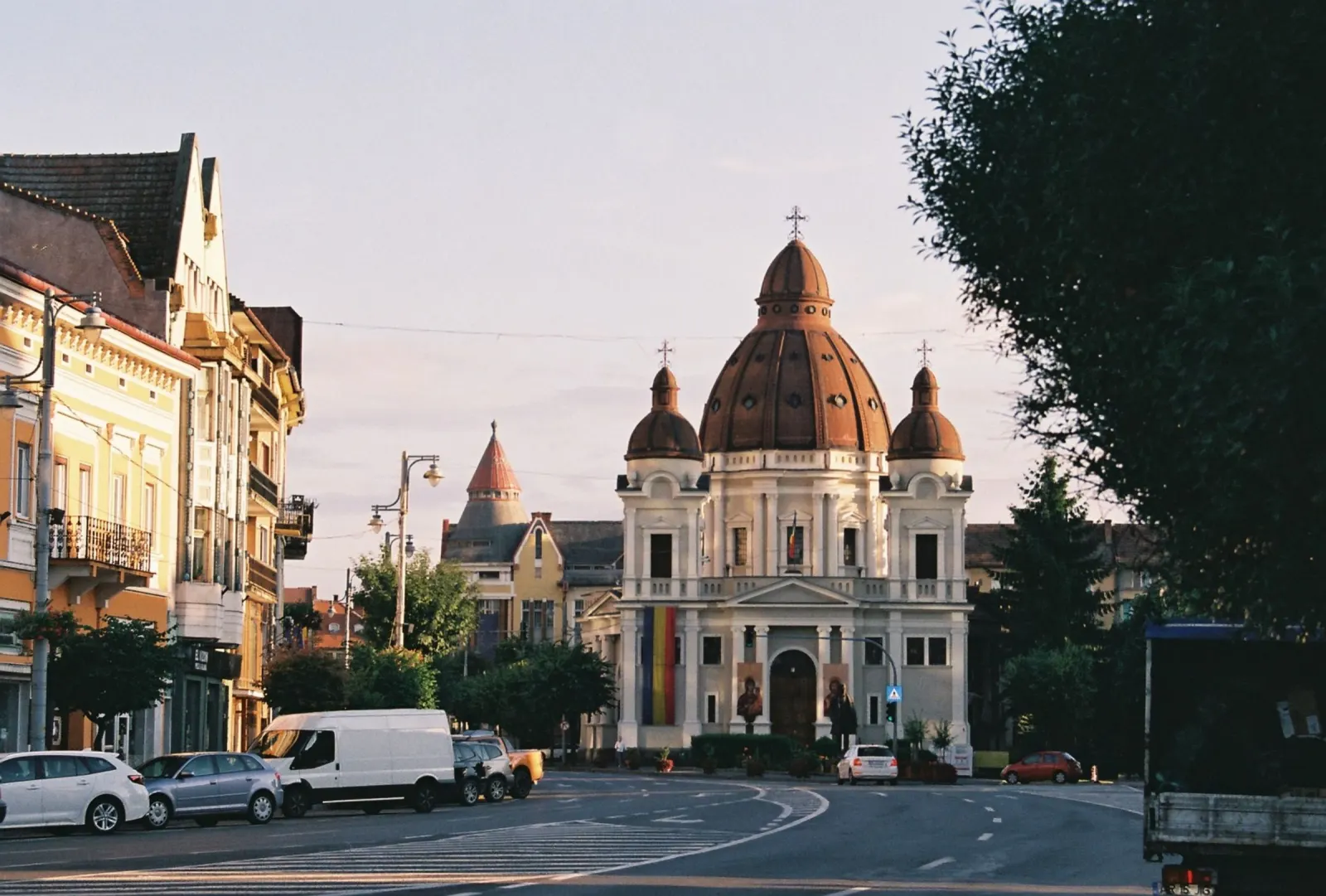
Ornate domed church on Romanian street

Romania travel guide

Romania's cities, from Bucharest to Cluj-Napoca and Sibiu, with a short stretch of coast at Constanța

Best: Jul, Aug, Sep

Photo: AMMA Singuran / Pexels

Capital
Bucharest
Language
Romanian
Currency
Romanian leu
Time zone
UTC+02:00
Plugs
Type C, F · 230 V
Driving
On the right
Emergency
112
Entry
EU and Schengen area

Why visit Romania

Romania suits an independent road trip that links several cities. Start in Bucharest, the capital, then head to Brașov, Sibiu, Cluj-Napoca and Timișoara. Add Constanța if you want time by the sea. The best months to go are July, August and September. One honest limitation: the country covers 238391 km², so the distances between these cities are long. You will spend a lot of time travelling, so plan fewer stops rather than more.

  • Summer is the best season

    July, August and September are the best months to visit Romania. Plan your trip for these months if you want the most reliable conditions. August and September come out on top, so aim for late summer if your dates are flexible.

  • Bucharest, the largest city

    Bucharest is the capital and by far the biggest city in Romania. It is several times larger than any other city on this list. It makes a natural start or end point for a trip around the country.

  • A string of smaller inland cities

    Cluj-Napoca, Timișoara, Brașov and Sibiu are all inland cities, and each is much smaller than Bucharest. You can link several of them in one trip and get a feel for regional life beyond the capital.

  • A coast to add in summer

    Constanța is Romania's main coastal city on our list and one of its largest. It fits well with the best months of July and August if you want to combine city stops with time by the sea.

  • Simple for independent travellers

    Romania uses a single time zone, drives on the right and uses the Romanian leu. Plugs are types C and F at 230 V, common in much of Europe. The emergency number is 112, the same as across the EU.

Is Romania right for you?

Great for

  • Summer travellers who want warm but not extreme heat: July and August highs are about 25°C
  • Early autumn trips: September has 20.5°C highs, 9 rain days and nearly 10 hours of sun
  • City-hoppers who want to combine Bucharest, Cluj-Napoca, Brașov, Sibiu and Timișoara in one trip
  • A short Black Sea stop in Constanța in August, the driest summer month with 8.7 rain days

Less ideal for

  • Winter visitors wanting mild weather: January highs are 2.1°C and lows drop to -5.5°C
  • Travellers who need long sunny days in winter: December averages only 4.4 sun hours
  • Beach-centred holidays: Constanța is the only coastal city among the main cities
  • Dry-weather trips in May or June, the wettest months with about 15 rain days each

Romania right now: October

6.8/10
Avg high
15°C
Avg low
5°C
Rain days
8

Averages for Romania.

Weather by month

Climate data for 2015–2024 covers Romania as a whole rather than one city, and it points to July to September as best: August reaches 25.5°C with 12 sun hours and 8.7 rain days, and September stays mild at 20.5°C. Avoid November to March, when January highs are only 2.1°C, nights drop to -5.5°C and December gets just 4.4 sun hours.

Average highs and lows in Romania by month January: high 2°C, low -6°C , 10 rain days . February: high 6°C, low -3°C , 8 rain days . March: high 9°C, low -1°C , 10 rain days . April: high 15°C, low 3°C , 11 rain days . May: high 19°C, low 9°C , 16 rain days . June: high 23°C, low 13°C , 15 rain days . July: high 25°C, low 15°C , 13 rain days . August: high 26°C, low 15°C , 9 rain days . September: high 21°C, low 11°C , 9 rain days . October: high 15°C, low 5°C , 8 rain days . November: high 9°C, low 1°C , 10 rain days . December: high 4°C, low -2°C , 10 rain days . 2°C -6°C JAN 10d 6°C -3°C FEB 8d 9°C -1°C MAR 10d 15°C 3°C APR 11d 19°C 9°C MAY 16d 23°C 13°C JUN 15d 25°C 15°C JUL 13d 26°C 15°C AUG 9d 21°C 11°C SEP 9d 15°C 5°C OCT 8d 9°C 1°C NOV 10d 4°C -2°C DEC 10d
Best months Other months (low–high) Nd = rain days

Romania (country average) · averages 2015–2024

Best time to visit Romania: month-by-month weather →

Sample itineraries

7 days

Bucharest, Brașov and Sibiu in one week

  1. Day 1–3

    Bucharest

    Start in the capital, home to 1716961 people and by far the largest city on this route. Get cash in Romanian leu, settle in and explore the city at your own pace.

  2. Day 4–5

    Brașov

    Move on to Brașov, a city of 237589 people. After the size of the capital, the pace here is calmer, so spend your time walking and trying local food.

  3. Day 6–7

    Sibiu

    End in Sibiu, the smallest city on this trip with 134308 people. It is a good place to slow down before you head home.

10 days

From Bucharest west to Timișoara

  1. Day 1–2

    Bucharest

    Begin in the capital, a city of 1716961 people. Use these days to get over the journey, get Romanian leu and see the city before heading north.

  2. Day 3–4

    Brașov

    Continue to Brașov, which has 237589 people. It feels much smaller than the capital, so it suits slow days of walking and eating out.

  3. Day 5–6

    Sibiu

    Stop in Sibiu, the smallest city on this route with 134308 people. Keep the plan loose here and give yourself time to rest mid-trip.

  4. Day 7–8

    Cluj-Napoca

    Head to Cluj-Napoca, the largest city after Bucharest on this list, with 286598 people. Spend your time on its streets, cafés and local food.

  5. Day 9–10

    Timișoara

    Finish in Timișoara, a city of 250849 people in the west of the country. This route skips the coast at Constanța, so add extra days if you want the sea.

Food to try in Romania

Sarmale

Cabbage leaves rolled around minced pork and rice, then slow-cooked. They are often served with mămăligă and sour cream, and appear at Christmas, weddings and family celebrations.

Mămăligă

A thick porridge made from cornmeal, eaten as a side dish across the country. It is often topped with salty sheep's cheese and sour cream, especially in rural areas.

Mici (mititei)

Small grilled rolls of minced meat without a skin, seasoned with garlic and herbs. They are usually eaten with mustard and bread at outdoor grills and garden restaurants.

Ciorbă de burtă

A sour tripe soup finished with sour cream, egg yolk and garlic. Many Romanians see it as a hangover cure, and most traditional restaurants serve it.

Papanași

Fried doughnuts made with soft fresh cheese, topped with sour cream and fruit jam. They are a common dessert in traditional restaurants and mountain guesthouses.

Țuică

A strong plum brandy, often made at home in villages. Hosts may offer a small glass as a welcome drink before a meal. The stronger version is called palincă.

Know before you go

  • Plugs and voltage: Romania uses plug types C and F, with a supply of 230 V. Bring a suitable adapter. Devices built only for a lower voltage will also need a converter.
  • Driving side: Traffic drives on the right in Romania. If you usually drive on the left, take extra care at junctions, roundabouts and when overtaking.
  • Emergency number: The emergency number in Romania is 112. Save it in your phone before you travel so you do not have to search for it in a stressful moment.
  • Currency: The local currency is the Romanian leu. Check the current exchange rate before you go so you can judge prices and spot a poor rate at exchange counters.
  • Language: The official language is Romanian. Learning a few basic words, such as hello, please and thank you, is polite and can help in small shops and outside Bucharest.
  • Time zone: Standard time in Romania is UTC+2. Check the time difference with home before you book transport or plan calls, so early connections do not catch you out.
  • Phone calls: The country calling code for Romania is +40. Use it when you save local numbers, such as your accommodation, so they work from a foreign phone.

Romania: frequently asked questions

When is the best time to visit Romania?

July to September is the best time to visit Romania. August scores highest at 8.3, with average highs of 25.5°C, 8.7 rain days and 12 hours of sun. September is close behind at 8.2, with milder highs of 20.5°C. April, May, June and October are also rated good. These figures are national averages for 2015–2024.

Is Romania good in August?

Yes, August is the top-rated month for Romania, with a score of 8.3. Average highs reach 25.5°C and lows 14.8°C. Rain drops to 72 mm over 8.7 days, much drier than June's 119 mm. You also get about 12 hours of sunshine a day.

Is it worth visiting Romania in winter?

For most travellers, no. November to March are all rated 'avoid'. January averages a high of 2.1°C and a low of -5.5°C, and December gets just 4.4 hours of sun a day. December and January score only 2.1 and 2.2. Go in winter only if you are happy with cold, short, grey days.

Does it rain a lot in Romania in May and June?

Yes, May and June are the wettest months in Romania. June gets 119 mm of rain over 15.2 days, and May 105 mm over 15.5 days. Both still score 7 because they are warm, with June highs of 23°C. Pack rain gear, or wait for August, when rain falls to 72 mm.

What plugs and currency does Romania use?

Romania uses plug types C and F at 230 V. The currency is the Romanian leu. The country is on UTC+02:00, and the capital is Bucharest. The main language is Romanian.

What is the emergency number in Romania?

The emergency number in Romania is 112. If you plan to drive, note that traffic drives on the right. The country calling code is +40, which you need when calling Romanian numbers from abroad.

Similar destinations

Countries with a year of weather much like Romania.