Breadfruit
This starchy fruit grows across the islands and is baked, boiled, or roasted over a fire. It's a staple side dish served with fish at most family meals.
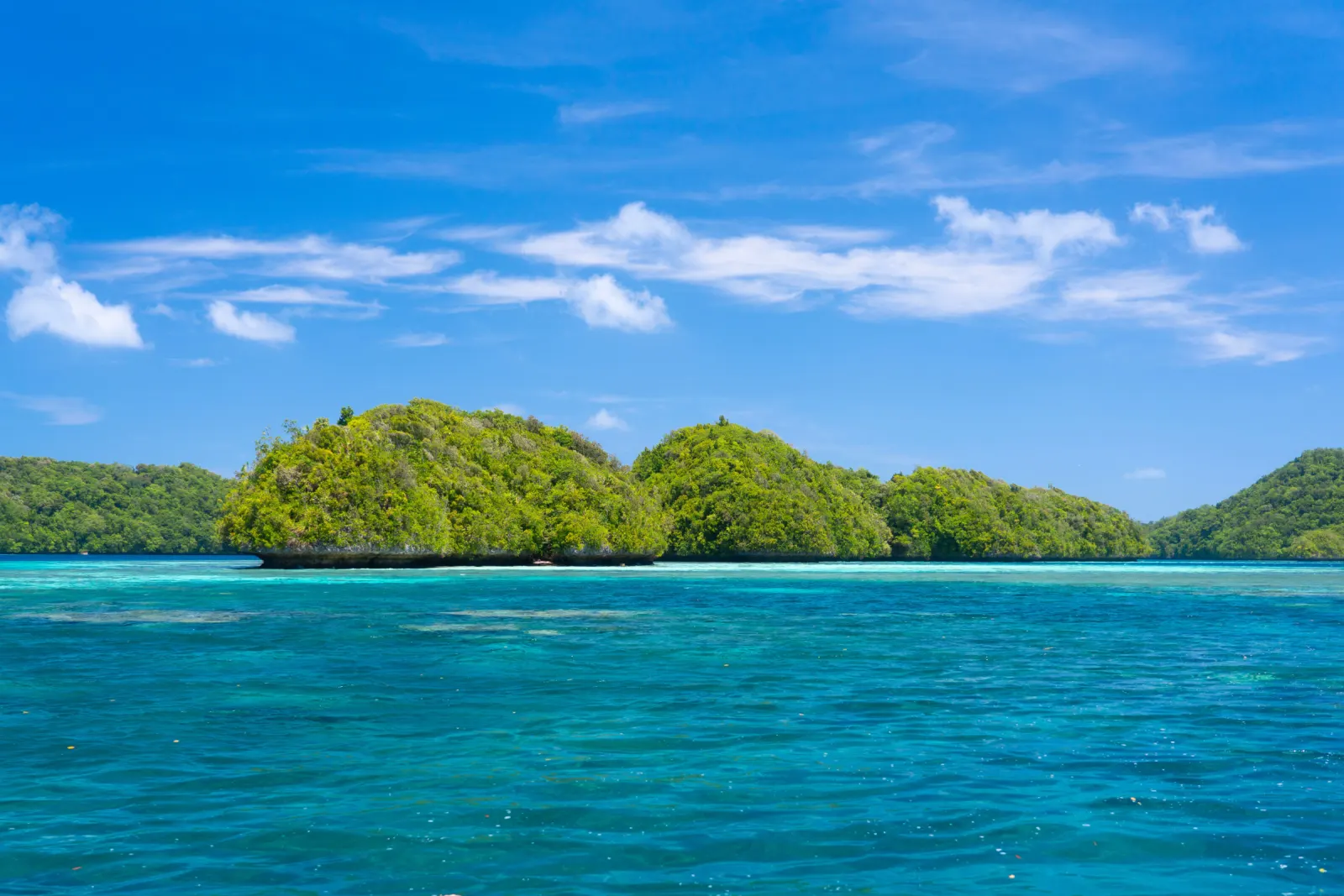
Scattered Pacific islands built for divers, not for crowds
Photo: Timo Volz / Pexels
Jan, Mar
Top score of 6.6, with 9.5 sun hours a day and a high of 27°C.
Feb, Apr, May, Jun, Jul, Aug, Sep, Oct, Nov, Dec
Micronesia is a cluster of small islands spread across the Pacific, home to just 75,817 people across 702 km2. It suits travellers who want remote diving, quiet lagoons and slow island time rather than nightlife or big sights. January and March are the best months to go. The catch: with only one real hub city, Palikir, getting between islands takes planning and time.
Micronesia has just 75,817 people living across only 702 km2 of land. That low density means travellers can find quiet coastlines and uncrowded villages, a contrast to busier Pacific destinations.
The country spans UTC+10:00 and UTC+11:00, a reminder of how far its islands are spread across the Pacific. Island-hopping here means literally crossing time zones within a single nation.
The best months to visit are January and March. These months fall outside the wettest stretch of the year, making them a practical window for diving, boating, or exploring the outer islands.
The capital, Palikir, sits on the coast and has a population of just 6,227. It's a low-key base for exploring Pohnpei island and arranging trips to the more remote atolls.
Micronesia uses the United States dollar and English as an official language. For travellers from the US or English-speaking countries, this removes two common sources of travel friction: currency exchange and language barriers.
Great for
Less ideal for
Averages for Micronesia.
Based on data for Micronesia, temperatures stay near 27°C all year, so weather by month changes mainly in rainfall and sunshine rather than heat. January and February are the driest and sunniest stretch, with around 207-223mm of rain and roughly 22-25 rain days, making them the best pick, while May and July bring the heaviest rain, with 374mm and 362mm over nearly 29-30 rain days.
Micronesia (country average) · averages 2015–2024
This starchy fruit grows across the islands and is baked, boiled, or roasted over a fire. It's a staple side dish served with fish at most family meals.
Taro root is pounded or boiled and eaten daily across Micronesia. It often replaces rice as the main starch in island households.
Fresh reef fish, grilled or baked in an underground oven called an um, is a common dish on coastal islands. It's usually caught the same day it's cooked.
Sakau is a traditional drink made from the pepper plant root, drunk mainly on Pohnpei. It has a mild numbing effect and is shared during community gatherings.
This large land crab lives in coastal forests and is eaten boiled or grilled. It has a rich, slightly sweet meat prized across the islands.
Bananas are mashed or baked with grated coconut and coconut milk to make simple desserts. These are often served at local feasts and family celebrations.
Yes, August works, but it's one of the wetter months. Expect a high of 27.5°C and 28.4 rain days with 358mm of rain. Sun hours stay decent at 10 per day, so showers tend to pass quickly rather than ruin the whole day.
March and January score best, both rated 'good'. January has slightly less rain, with 223mm over 24.5 days, while March brings more rain at 273mm over 25.3 days. Both months have similar temperatures, around 27°C highs and 24°C lows.
Not really. Rain falls year-round, with every month recording at least 22 rain days. February is the driest with 207mm of rain over 22.4 days, while May is the wettest with 374mm over 29.1 days. Plan for frequent rain whenever you go.
Temperatures stay steady all year, with highs between 26.9°C and 27.6°C and lows around 23.9°C to 24.2°C. There's barely any seasonal swing, so pack for warm, humid weather no matter which month you choose.
Micronesia uses the United States dollar (USD) and English is the official language. The country runs on 120V electricity with plug types A and B, and driving is on the right side of the road.
January is one of the better months, with a high of 27.1°C and a low of 24.2°C. It still rains often, 24.5 days with 223mm total, but this is among the lower rainfall totals of the year, and the month scores 6.5 out of 10 as 'good'.
Countries with a year of weather much like Micronesia.
Enter to search · Esc to close