Skip to content
wheretotravel.info
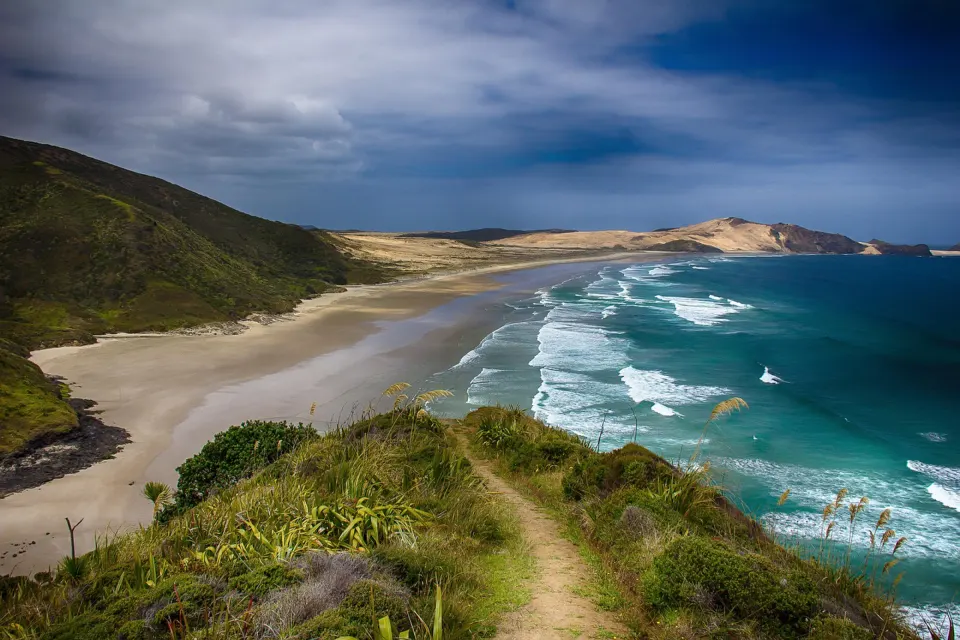
Coastal path overlooking sandy beach and turquoise waves

New Zealand travel guide

Self-drive trips between coastal cities and inland towns, best from January to March

Best: Jan, Feb, Mar

Photo: holgerheinze0 / Pixabay

Capital
Wellington
Languages
English, Maori, New Zealand Sign Language
Currency
New Zealand dollar (NZD)
Time zone
UTC-11:00, UTC-10:00 +3
Plugs
Type I · 230 V
Driving
On the left
Emergency
111

Why visit New Zealand

New Zealand suits independent travellers who like planning their own road trip. Most of the main cities sit on the coast, including Auckland, Wellington, Christchurch, Dunedin and Nelson. Rotorua and Queenstown lie inland. The best months to go are January, February and March. One honest limitation: the country covers 270467 km² and towns can be far apart. Without a car, you will see much less. You also drive on the left, which takes some getting used to.

  • Go in late summer

    The best months to visit are January, February and March. If you want the most reliable conditions for a trip around the country, plan for this window. Outside these months, expect less settled weather and plan with more care.

  • Lots of space, few people

    New Zealand covers 270,467 km² but has only about 4,993,923 people. Outside the main cities, you share a large country with relatively few others. That makes it well suited to slow road trips.

  • Auckland as an easy start

    Auckland is the largest city, with about 1,470,100 people, and it sits on the coast. It is a practical first stop before heading out to smaller places.

  • A compact coastal capital

    Wellington, the capital, is home to about 216,200 people and sits on the coast. It is small enough to explore on foot and works well as a stop between other cities.

  • Coast and inland towns

    Most major cities, including Christchurch, Dunedin and Nelson, are on the coast. For a change of scene, head inland to Rotorua, with about 58,500 people, or Queenstown, with about 29,000. People drive on the left, English is widely spoken, and prices are in New Zealand dollars.

Is New Zealand right for you?

Great for

  • Travellers who dislike heat: even January, the warmest month, averages highs of only 19°C.
  • Summer trips from January to March, with about 12.5 hours of sun a day in January.
  • English speakers who want an easy trip, since English is an official language.
  • Coastal city breaks: Wellington, Auckland, Christchurch, Dunedin and Nelson all sit on the coast.

Less ideal for

  • Hot beach holidays: summer highs stay around 19°C, so the sea and air feel cool.
  • Winter trips for mild weather: July highs average 10.6°C and lows 6.9°C.
  • Travellers who hate rain: August averages 13.2 rain days and November 13.3.
  • Nervous drivers used to driving on the right, as traffic here drives on the left.

New Zealand right now: September

4.3/10
Avg high
12°C
Avg low
8°C
Rain days
13

Averages for New Zealand.

Weather by month

The chart uses 2015–2024 data labelled only as New Zealand, not a named city, and it shows January to March as best, with highs of 17–19°C, 7.6–10.3 rain days and 10–12.5 sun hours. Avoid July and August, when highs drop to about 11°C, rain reaches 133–137 mm and there are 11.5–13.2 rain days.

Average highs and lows in New Zealand by month January: high 19°C, low 14°C , 8 rain days . February: high 19°C, low 14°C , 8 rain days . March: high 17°C, low 13°C , 10 rain days . April: high 15°C, low 11°C , 10 rain days . May: high 13°C, low 10°C , 11 rain days . June: high 11°C, low 8°C , 11 rain days . July: high 11°C, low 7°C , 12 rain days . August: high 11°C, low 7°C , 13 rain days . September: high 12°C, low 8°C , 13 rain days . October: high 14°C, low 9°C , 13 rain days . November: high 15°C, low 11°C , 13 rain days . December: high 17°C, low 12°C , 12 rain days . 19°C 14°C JAN 8d 19°C 14°C FEB 8d 17°C 13°C MAR 10d 15°C 11°C APR 10d 13°C 10°C MAY 11d 11°C 8°C JUN 11d 11°C 7°C JUL 12d 11°C 7°C AUG 13d 12°C 8°C SEP 13d 14°C 9°C OCT 13d 15°C 11°C NOV 13d 17°C 12°C DEC 12d
Best months Other months (low–high) Nd = rain days

New Zealand (country average) · averages 2015–2024

Best time to visit New Zealand: month-by-month weather →

Sample itineraries

7 days

North Island in one week

  1. Day 1–3

    Auckland

    Start in Auckland, the largest city on this list with about 1,470,100 people. It is on the coast, so give yourself time to settle in and explore the city and its waterfront at an easy pace.

  2. Day 4–5

    Rotorua

    Move inland to Rotorua, a much smaller town of about 58,500 people. It is the only stop on this route away from the coast. If you hire a car, remember that New Zealand drives on the left.

  3. Day 6–7

    Wellington

    Finish in Wellington, the capital, a coastal city of about 216,200 people. It is compact compared with Auckland, which makes it a good place to spend your last days on foot.

10 days

Capital and South Island in ten days

  1. Day 1–2

    Wellington

    Begin in Wellington, the capital, a coastal city of about 216,200 people. Use these first days to adjust and get to know the city before heading south.

  2. Day 3–4

    Nelson

    Cross to Nelson, a small coastal town of about 51,100 people. It suits travellers who want a slower pace after the capital.

  3. Day 5–6

    Christchurch

    Continue to Christchurch, the largest city on this route with about 383,200 people. It is a good point to restock and plan the rest of the trip. If you drive, keep to the left.

  4. Day 7–8

    Dunedin

    Head down the coast to Dunedin, a city of about 106,200 people. It makes a quieter base than Christchurch for two days of exploring on your own terms.

  5. Day 9–10

    Queenstown

    End inland in Queenstown, the smallest stop with about 29,000 people. It is the only stop on this route away from the coast, so it offers a change of scene before you leave.

Food to try in New Zealand

Hāngī

A Māori way of cooking meat and vegetables in a pit oven heated with hot stones. You usually eat it at community events, marae visits or cultural shows.

Meat pie

A small pastry pie filled with minced meat and gravy, often with cheese. Bakeries, petrol stations and dairies (corner shops) sell them all day as a quick, cheap meal.

Fish and chips

Battered fish with thick-cut chips, bought from takeaway shops and often eaten outdoors. It is a common casual dinner, especially in coastal towns.

Pavlova

A meringue dessert with a crisp outside and soft centre, topped with cream and fresh fruit such as kiwifruit. Both New Zealand and Australia claim it. It is a classic at celebrations and Christmas.

Hokey pokey ice cream

Vanilla ice cream with small, crunchy pieces of honeycomb toffee. You find it in supermarkets and ice cream shops across the country.

Flat white

An espresso coffee with steamed milk and a thin layer of microfoam. Cafés everywhere serve it, and coffee culture is especially strong in Wellington.

Know before you go

  • Plugs and voltage: New Zealand uses type I plugs, with two flat pins set in a V shape. The supply is 230 V. Bring an adapter, and check that your devices work at 230 V before you plug them in.
  • Driving side: Traffic drives on the left. If you come from a country that drives on the right, take extra care at junctions and roundabouts, and when you pull out after a stop.
  • Emergency number: Call 111 for police, fire or ambulance. Save it in your phone before you arrive, especially if you plan to hike or drive in remote areas.
  • Currency: The currency is the New Zealand dollar (NZD). Check with your bank about card and cash withdrawal fees before you travel.
  • Language: English is the main language you will use day to day. Maori and New Zealand Sign Language are also official languages, and you will see Maori names on many places and signs.
  • Tipping: Tipping is not expected in New Zealand. You can leave a little extra for very good service, but nobody will mind if you don't.
  • Calling code: The country calling code is +64. Add it when you save local numbers, such as for accommodation or car hire, so they work from a foreign SIM.

New Zealand: frequently asked questions

When is the best time to visit New Zealand?

January to March is the best time to visit New Zealand. These 3 months score highest on our scale: 8.5 in January, 8.3 in February and 7.6 in March. January is the warmest and driest month, with highs of 19°C, 7.6 rain days, 62 mm of rain and 12.5 sun hours a day. These figures are national averages for 2015–2024, so local weather will differ.

Is New Zealand good to visit in August?

No, August is one of the 2 months we suggest you avoid, with a score of 3.8. It has the most rain of the year at 137 mm, over 13.2 rain days. Highs reach only 10.8°C and lows drop to 7.1°C. July is similar, with a score of 3.7 and the coldest highs at 10.6°C. Go in January to March instead if you can.

Is December a good month to visit New Zealand?

Yes, December is a good month, with a score of 7.3. Highs average 17.4°C and lows 12.4°C, and you get 11.9 sun hours a day. The downside is rain: December has 12 rain days, far more than the 7.6 in January. If you want drier weather, January is the better choice.

Does it rain a lot in New Zealand?

Yes, rain is common in most months. Rain days range from 7.6 in January to 13.3 in November. The wettest month by volume is August, with 137 mm, while January is the driest at 62 mm. Even in the best months, pack a rain jacket. February and March still see 8.4 and 10.3 rain days.

What plugs, voltage and emergency number does New Zealand use?

New Zealand uses Type I plugs and 230 V power, so check whether your devices need an adapter or converter. The emergency number is 111. Cars drive on the left. The currency is the New Zealand dollar (NZD), and the country calling code is +64.

What languages are spoken in New Zealand?

New Zealand has 3 official languages: English, Maori and New Zealand Sign Language. English is the language you will use for most travel needs, such as signs, bookings and transport. The capital is Wellington, and the largest city is Auckland, with a population of 1470100.

Similar destinations

Countries with a year of weather much like New Zealand.