Skip to content
wheretotravel.info
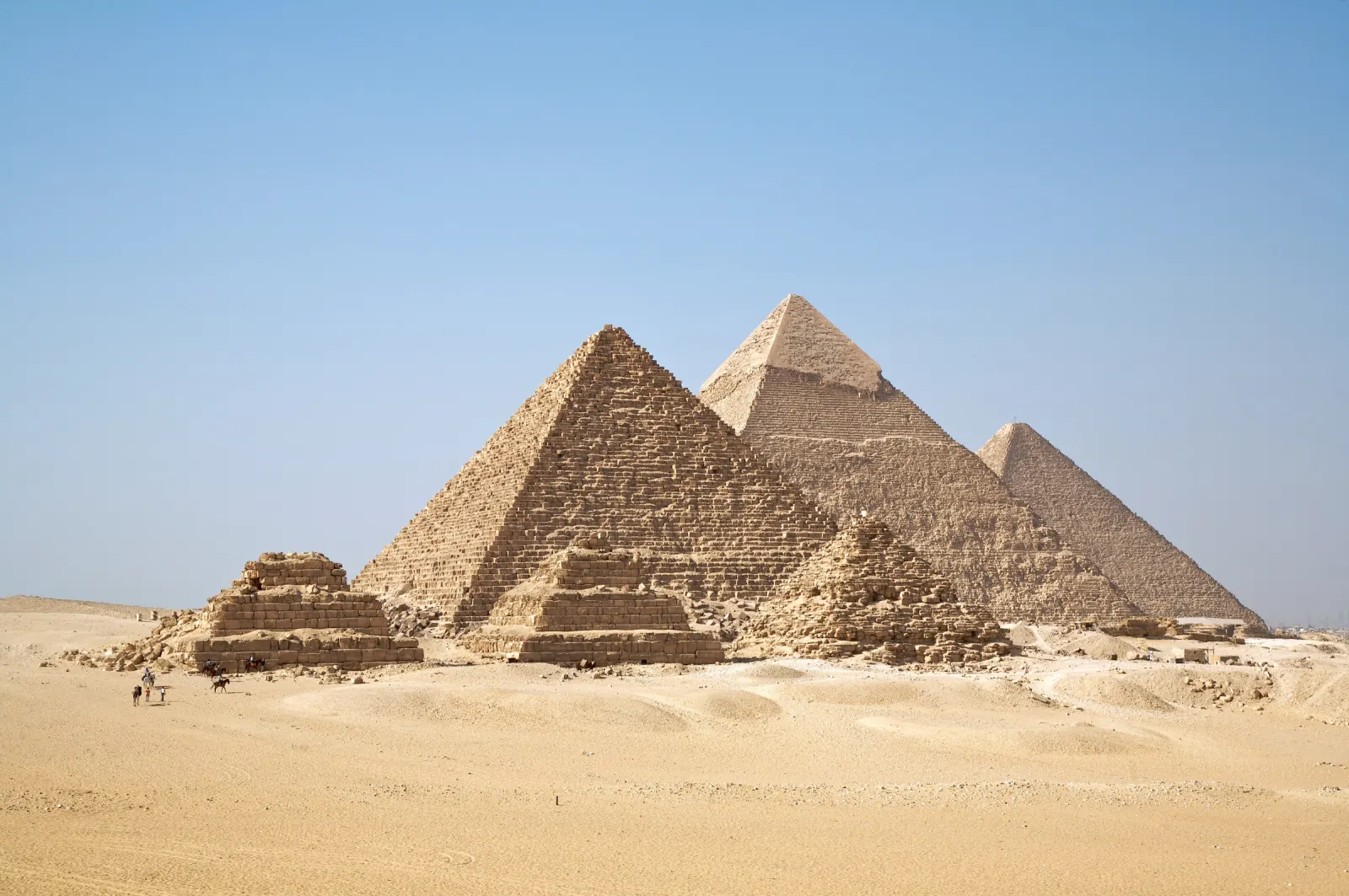
Giza pyramids complex under blue sky

Egypt travel guide

Cairo, Luxor and Aswan inland, with coastal towns for the end of the trip

Best: Feb, Mar, Nov, Dec

Photo: Ricardo Liberato / Wikimedia Commons

Capital
Cairo
Language
Arabic
Currency
Egyptian pound
Time zone
UTC+02:00
Plugs
Type C, F · 220 V
Driving
On the right
Emergency
122 / 123 / 180

Why visit Egypt

Egypt suits a trip that mixes cities and coast. You can start in Cairo, the capital, and travel inland to Luxor and Aswan. Then you can finish in a coastal town such as Hurghada, Sharm el-Sheikh or Alexandria. The best months to go are November, December, February and March. One honest limitation: Egypt covers 1,002,450 km², so these places are far apart. Allow time to travel between them, or choose fewer stops.

  • A clear best-time window

    The best months to visit Egypt are November, December, February and March. Cairo has the same best months, so a city stay and a wider trip fit the same window. If you can only travel at other times, check conditions carefully before you book.

  • Cairo as your starting point

    Cairo is the capital of a country of 108613296 people. Most trips can start here and then move on to other cities. Plan your Cairo days for November, December, February or March, its best months.

  • Several coastal cities to choose from

    Egypt has a range of coastal cities. Hurghada has 214247 people, Sharm el-Sheikh 73000 and Marsa Matruh 108774, which makes them much smaller than Alexandria, a coastal city of 5362517. You can pick a quieter town or a large city by the water.

  • Inland cities beyond the capital

    Aswan and Luxor are inland cities. Aswan has 401890 people and Luxor 202232, so both are far smaller than Cairo. They are a good change of pace if you want to see more of the country than the capital and the coast.

  • Simple practical basics

    Egypt uses the Egyptian pound, and the official language is Arabic. Plugs are types C and F at 220 V, and traffic drives on the right. These details make it easy to plan power adapters and road travel in advance.

Is Egypt right for you?

Great for

  • Winter sun seekers: Cairo highs of 19–21°C from December to February, with about 9 hours of sun a day
  • People who hate rain: Cairo has under 2 rain days a month all year, and none from June to September
  • Spring and autumn city breaks: Cairo highs near 25°C in March and 26°C in November
  • Trips that mix cities and coast: Alexandria, Hurghada, Marsa Matruh and Sharm el-Sheikh all sit on the sea

Less ideal for

  • Summer sightseeing on foot: Cairo highs reach nearly 38°C in July and August
  • Travellers who struggle in heat: Cairo highs stay at 34°C or more from May to September
  • Light packers in winter: Cairo nights drop to about 9°C in January, so bring a warm layer

Egypt right now: October

7.4/10
Avg high
31°C
Avg low
20°C
Rain days
1

Averages for Cairo.

Weather by month

In Cairo, the best time to go is November to March, when highs are 19 to 26°C, nights cool to 9 to 15°C, and there are at most 1.8 rain days a month. Avoid June to September, when highs reach 36 to 38°C and nights stay at 22 to 24°C, so long days of sightseeing become tiring.

Average highs and lows in Cairo by month January: high 19°C, low 9°C , 2 rain days . February: high 21°C, low 10°C , 2 rain days . March: high 25°C, low 12°C , 1 rain days . April: high 30°C, low 15°C , 0 rain days . May: high 34°C, low 19°C , 0 rain days . June: high 37°C, low 22°C , 0 rain days . July: high 38°C, low 23°C , 0 rain days . August: high 38°C, low 24°C , 0 rain days . September: high 36°C, low 23°C , 0 rain days . October: high 31°C, low 20°C , 1 rain days . November: high 26°C, low 15°C , 1 rain days . December: high 21°C, low 11°C , 1 rain days . 19°C 9°C JAN 2d 21°C 10°C FEB 2d 25°C 12°C MAR 1d 30°C 15°C APR 0d 34°C 19°C MAY 0d 37°C 22°C JUN 0d 38°C 23°C JUL 0d 38°C 24°C AUG 0d 36°C 23°C SEP 0d 31°C 20°C OCT 1d 26°C 15°C NOV 1d 21°C 11°C DEC 1d
Best months Other months (low–high) Nd = rain days

Cairo · averages 2015–2024

Best time to visit Egypt: month-by-month weather →

Where to go in Egypt

City guides with their own best months and weather.

Sample itineraries

7 days

Cairo, Luxor and Aswan in one week

  1. Day 1–3

    Cairo

    Start in Cairo, the capital. Use 3 days to settle in and explore at an easy pace. The best months for Cairo are November, December, February and March, so aim for one of those.

  2. Day 4–5

    Luxor

    Move on to Luxor, a much smaller inland city than Cairo. Spend 2 days sightseeing, and keep one afternoon free to rest.

  3. Day 6–7

    Aswan

    End the week in Aswan, another inland city. Take the last 2 days slowly before you travel home.

10 days

Cairo, Luxor and Aswan, then the coast

  1. Day 1–3

    Cairo

    Begin in Cairo, the capital. Give it 3 full days so you are not rushed. Cairo's best months are November, December, February and March.

  2. Day 4–5

    Luxor

    Go on to Luxor, a smaller inland city. Use 2 days for sightseeing at a calmer pace than in the capital.

  3. Day 6–7

    Aswan

    Spend 2 days in Aswan, also inland. Keep your plans light here, as the trip is about to switch from cities to the sea.

  4. Day 8–10

    Hurghada

    Finish on the coast in Hurghada. Use the last 3 days to rest by the sea after a week of city stops.

Where to stay

One good base in each main city and who it suits.

Downtown

Cairo

Good for first-timers, budget travellers

Cairo's central district has grand old European-style buildings, cheap cafes and the Egyptian Museum on Tahrir Square. You can walk to many sights and reach most of the city by metro. Traffic, car horns and crowds make it loud from morning until late at night.

Food to try in Egypt

Koshari

A filling mix of rice, lentils, pasta and chickpeas, topped with spicy tomato sauce and crispy fried onions. It is cheap street food, sold in dedicated koshari shops in Cairo and other cities.

Ful medames

Fava beans cooked slowly and mashed with oil, cumin and lemon. Egyptians often eat it for breakfast with flatbread, and street carts sell it in the morning.

Ta'ameya

Egypt's version of falafel, made with fava beans instead of chickpeas, so it is green inside. It is usually eaten at breakfast, often in bread with salad and tahini.

Molokhia

A thick green soup made from chopped jute leaves, cooked with garlic and coriander. It is home cooking, usually served with rice or bread and chicken or rabbit.

Feteer meshaltet

A flaky layered pastry made with lots of butter or ghee. It can be eaten plain, with honey or cheese, or with savoury fillings, and is sold in special feteer shops.

Karkadeh

A deep red drink made from dried hibiscus flowers, served cold and sweet or hot like tea. You will find it in cafés, from street sellers and at celebrations.

Know before you go

  • Plugs and voltage: Egypt uses plug types C and F, with a supply of 220 V. Bring a suitable adapter. Check that your chargers and devices work at 220 V before you plug them in.
  • Driving side: Traffic in Egypt drives on the right. If you are used to driving on the left, take extra care at junctions and roundabouts, especially in your first few days.
  • Emergency numbers: The emergency numbers in Egypt are 122, 123 and 180. Save them in your phone before you arrive. The country calling code is +20.
  • Currency: The local currency is the Egyptian pound. Carry some small notes, because they are useful for tips, taxis and small purchases.
  • Language and time: Arabic is the official language. Learning a few basic greetings is polite and helps. Egypt uses the UTC+02:00 time zone.
  • Tipping: Tipping, often called baksheesh, is a normal part of daily life in Egypt. People commonly expect small tips for many services, so keep small notes ready.
  • Tap water: Most visitors choose bottled or filtered water rather than drinking from the tap. This helps you avoid stomach problems during your trip.
  • Common scams: At popular sites, some people offer help, directions or rides and then ask for money. Agree on any price clearly before you accept a service, and politely refuse offers you did not ask for.

Egypt: frequently asked questions

What is the best time to visit Egypt?

The best months to visit Egypt are November, February, March and December. November has the top score, 9.8. In these months, Cairo highs are about 21–26°C and there is almost no rain. January and April also count as best months. Our weather data covers Cairo only (2015–2024), so the coast and the south may differ.

Is Egypt good to visit in August?

No. August is a month to avoid, and so are June, July and September. In August, Cairo highs average 37.6°C, and nights stay warm at about 24°C. July is even hotter, with a high of 37.9°C. If you want warm but bearable weather, October is a better choice, with highs of about 31°C.

Is Egypt cold in January?

Days in January are mild, but nights are cool. In Cairo, January is the coldest month, with an average high of 19.1°C and a low of 9°C. Pack a warm layer for the evenings. January is still one of the best months to go. It scores 9.6 and gets about 9.3 hours of sun a day.

Does it rain much in Egypt?

Hardly at all. Cairo's wettest month is March, and it gets only 9 mm of rain. January has the most rain days, at 1.8. From June to September there are no rain days on average. Rain should not affect your plans in any month.

What plugs and voltage does Egypt use?

Egypt uses plug types C and F, and the voltage is 220 V. If your devices have a different plug, bring an adapter. Check that your chargers work at 220 V before you plug them in.

What currency, time zone and emergency numbers does Egypt use?

Egypt's currency is the Egyptian pound, and the country is on UTC+02:00. The emergency numbers are 122, 123 and 180. The calling code is +20. Cars drive on the right, and the main language is Arabic.

Similar destinations

Countries with a year of weather much like Egypt.