Skip to content
wheretotravel.info
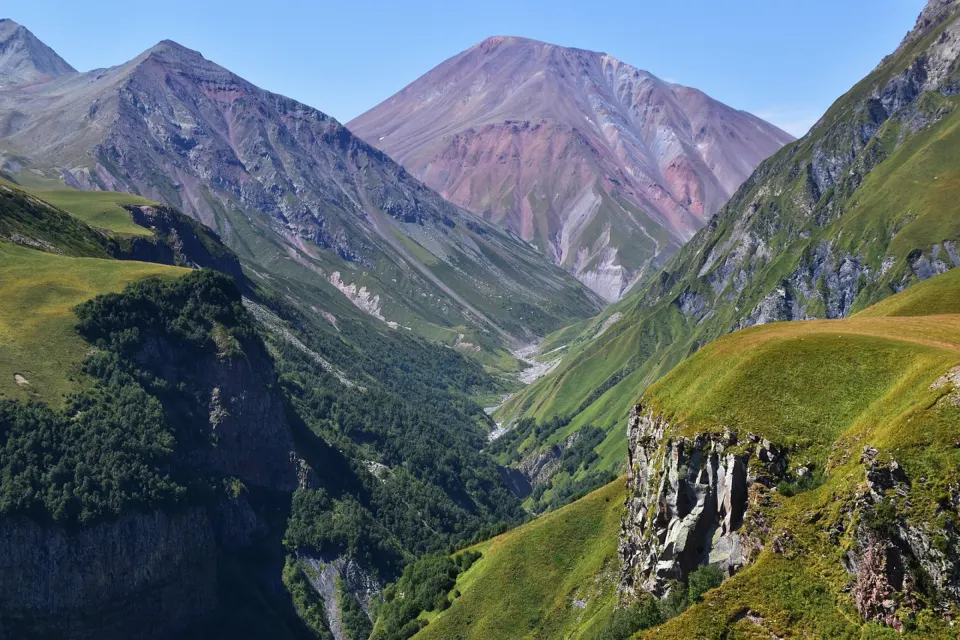
Green valley with dramatic mountain peaks in Georgia

Georgia travel guide

Tbilisi, coastal Batumi and small towns like Sighnaghi, at their best in September and October

Best: Sep, Oct

Photo: InesHirschi / Pixabay

Capital
Tbilisi
Language
Georgian
Currency
Georgian lari
Time zone
UTC+04:00
Plugs
Type C, F · 220 V
Driving
On the right
Emergency
112 / 111

Why visit Georgia

Georgia suits a trip that mixes a capital city, a stretch of coast and small towns in one compact country of 69,700 km². Start in Tbilisi, then add coastal Batumi, Kutaisi or small places like Telavi and Sighnaghi, home to just 1,485 people. September and October are the best months overall. The honest limit is that this window is short. Batumi's best run starts earlier, in July and August, so September is the one month when coast and capital both peak.

  • Autumn is the peak season

    September and October are the best months for Georgia as a whole. They are also good months for Tbilisi, Kutaisi and Gori, and September suits Borjomi too. One autumn trip works well across much of the country.

  • Tbilisi in spring or autumn

    The capital, Tbilisi, has 3 good windows: September, October and April. April gives you a spring option if you cannot travel in autumn, and it is also a good month on the coast in Batumi.

  • Batumi for a summer coast trip

    Batumi is Georgia's coastal city, with 235,668 people. Its best months are July, August and September, and April is also listed. Choose it if you want a summer city break by the water.

  • Small towns with long seasons

    Georgia is more than its cities. Telavi has 19,509 people and is at its best from July to September. Sighnaghi, home to just 1,485 people, suits June, August and September. Borjomi, with 11,194 people, is best in September.

  • A compact, easy country to plan

    Georgia covers 69,700 km² and has 3,657,000 people. The whole country uses one time zone, UTC+04:00, and one currency, the Georgian lari. That keeps planning simple when you move between cities and towns.

Is Georgia right for you?

Great for

  • Autumn city breaks in Tbilisi: September highs of 26°C and October highs of 19°C
  • Summer beach trips to Batumi on the coast, best in July, August and September
  • Sun seekers in summer: Tbilisi gets about 12.5 hours of sun a day in July
  • Small-town trips to Sighnaghi, Telavi or Borjomi, all at their best in September
  • Dry winter city visits: Tbilisi gets only 19 mm of rain in January

Less ideal for

  • Heat-sensitive travellers in July and August, when Tbilisi highs reach 31–32°C
  • Spring trips hoping for dry days: May brings 97 mm of rain over about 13 days
  • Winter sun seekers: December highs are only 8°C with lows near 0°C
  • Long beach holidays: Batumi is the only coastal city listed

Georgia right now: October

7.5/10
Avg high
19°C
Avg low
10°C
Rain days
9

Averages for Tbilisi.

Weather by month

In Tbilisi, September and October have the best weather, with highs of 26°C and 19°C, about 8 to 9 rain days a month and 8 to 10 hours of sun. December to February is the coldest time, with highs of 7 to 9°C, lows near 0°C and as little as 6.5 hours of sun, while July and August reach 31 to 32°C.

Average highs and lows in Tbilisi by month January: high 7°C, low -1°C , 5 rain days . February: high 9°C, low 0°C , 5 rain days . March: high 13°C, low 3°C , 12 rain days . April: high 18°C, low 7°C , 11 rain days . May: high 23°C, low 12°C , 13 rain days . June: high 29°C, low 18°C , 11 rain days . July: high 31°C, low 20°C , 7 rain days . August: high 32°C, low 21°C , 5 rain days . September: high 26°C, low 16°C , 8 rain days . October: high 19°C, low 10°C , 9 rain days . November: high 13°C, low 4°C , 7 rain days . December: high 8°C, low 0°C , 6 rain days . 7°C -1°C JAN 5d 9°C 0°C FEB 5d 13°C 3°C MAR 12d 18°C 7°C APR 11d 23°C 12°C MAY 13d 29°C 18°C JUN 11d 31°C 20°C JUL 7d 32°C 21°C AUG 5d 26°C 16°C SEP 8d 19°C 10°C OCT 9d 13°C 4°C NOV 7d 8°C 0°C DEC 6d
Best months Other months (low–high) Nd = rain days

Tbilisi · averages 2015–2024

Best time to visit Georgia: month-by-month weather →

Georgia's climate regions

The weather varies across the country; each region has its own best months.

  • Tbilisi

    Tbilisi

    The capital has hot summers, with July highs near 31°C, and cool winters, with January highs around 7°C. It is the driest region, with about 99 rain days a year. September, October and April are the best months.

    Best: Apr, Sep, Oct

  • Western Georgia and Black Sea

    Batumi, Kutaisi

    Batumi and Kutaisi have the mildest winters, with January highs near 10°C, and July highs around 27°C. It is the wettest region, with about 177 rain days a year. September is the best month.

    Best: Sep

  • Kartli and Kakheti

    Gori, Telavi, Sighnaghi

    Gori, Telavi and Sighnaghi have warm summers, with July highs near 28°C. Winters are colder than in Tbilisi, with January highs around 5.5°C. Rain falls on about 121 days a year. September and June are the best months.

    Best: Jun, Sep

  • Borjomi Gorge

    Borjomi

    Borjomi has the coolest weather, with July highs around 26°C and January highs near 5°C. Rain is frequent, falling on about 159 days a year. September is the best month.

    Best: Sep

Where to go in Georgia

City guides with their own best months and weather.

Sample itineraries

7 days

Tbilisi to the Black Sea coast

  1. Day 1–3

    Tbilisi

    Start in Tbilisi, the capital, and take your time on foot to get a feel for the city and its food. September, October and April are its best months.

  2. Day 4

    Gori

    Head west to Gori, a town of about 44524 people. Spend a slow day walking its centre. September, June and October are the best months here.

  3. Day 5

    Borjomi

    Continue to Borjomi, a small town of about 11194 people. Use the day to slow down and walk around it. September is its best month.

  4. Day 6–7

    Batumi

    Finish in Batumi, Georgia's coastal city on this route, with about 235668 people. Spend your last days by the sea. July, August, September and April are its best months.

10 days

East to west across Georgia

  1. Day 1–3

    Tbilisi

    Begin in Tbilisi, the capital. Walk its streets and try Georgian food while you settle in. September, October and April are its best months.

  2. Day 4–5

    Sighnaghi

    Go east to Sighnaghi, the smallest place on this route with about 1485 people. Enjoy a quiet pace for a couple of days. August, September and June are its best months.

  3. Day 6

    Telavi

    Move on to Telavi, a town of about 19509 people. Spend the day walking its centre. September, August and July are its best months.

  4. Day 7

    Gori

    Cross back west to Gori, home to about 44524 people. Explore the town at an easy pace. September, June and October are its best months.

  5. Day 8

    Kutaisi

    Stop in Kutaisi, a city of about 160971 people, and spend the day walking around. October is its best month.

  6. Day 9–10

    Batumi

    End on the coast in Batumi, the largest city here after the capital, with about 235668 people. Relax by the sea. July, August, September and April are its best months.

Where to stay

One good base in each main city and who it suits.

Old Town

Tbilisi

Good for first-timers, sightseeing

The historic core by the Mtkvari River has winding lanes, wooden balconies, the sulphur baths and the cable car up to Narikala Fortress, all within walking distance. It is the easiest base for a short first trip. Streets are steep and cobbled, and the busiest lanes are touristy and can be loud at night.

Food to try in Georgia

Khachapuri

Bread filled with melted cheese, eaten all over Georgia. The Adjarian version from the Black Sea coast is boat-shaped and topped with an egg and butter that you stir in.

Khinkali

Large dumplings filled with spiced meat and hot broth. Hold the twisted top, bite a small hole and drink the broth first. They are served in Tbilisi and across the mountains.

Badrijani nigvzit

Thin slices of fried aubergine rolled around a walnut and garlic paste, often topped with pomegranate seeds. It is a common cold starter at restaurants and at a supra, the Georgian feast.

Churchkhela

Walnuts threaded on a string, dipped many times in thickened grape juice and dried. You will see it hanging at markets and roadside stalls. It travels well as a snack.

Qvevri wine

Wine made the traditional way in large clay jars buried in the ground. White grapes made this way turn amber and taste dry and slightly tannic. Look for it in wine bars and family cellars.

Chacha

A strong clear spirit distilled from the grape skins left after winemaking. Hosts often pour it for toasts at meals. Drink it slowly, because homemade chacha can be very strong.

Know before you go

  • Plugs and voltage: Sockets take type C and F plugs, the round two-pin European style. The voltage is 220 V. Bring an adapter if your plugs are different. Check that your chargers work at 220 V.
  • Driving side: Traffic drives on the right. If you usually drive on the left, give yourself time to adjust before you drive a hire car in busy traffic.
  • Emergency numbers: The emergency numbers are 112 and 111. Save both in your phone before you arrive, so you do not need to search for them in a stressful moment.
  • Currency: The currency is the Georgian lari. Plan to pay in lari, not in your home currency. Carry some cash as a backup in case card payment is not possible.
  • Language: The official language is Georgian. A translation app or a few basic Georgian phrases will make everyday situations easier, especially outside the capital, Tbilisi.
  • Time zone: Georgia uses UTC+4. Check the time difference with home before you book connecting flights, trains or calls.
  • Phone calls: The country calling code is +995. Use it when you save local numbers, such as your accommodation, so you can call them from a foreign phone.

Georgia: frequently asked questions

What is the best time to visit Georgia?

September and October are the best months to visit Georgia. In Tbilisi, September has highs of 26.1°C and lows of 16°C, with about 8.3 rain days. October is cooler, with highs of 18.8°C, lows of 10°C and about 8.8 rain days. Both months are warm enough for sightseeing but less hot than midsummer.

Is Georgia good in August?

Yes, August is a good month, especially if you like heat. Tbilisi reaches an average high of 31.6°C and a low of 20.5°C. It is also one of the driest months, with about 5.2 rain days and 11.9 hours of sun a day. Batumi, Telavi and Sighnaghi all list August among their best months.

What is the weather like in Georgia in winter?

Winter in Tbilisi is cold and fairly dry. January has highs of 7.2°C and lows of -1.4°C, with about 4.6 rain days and 19 mm of rain. December is similar, with a high of 8°C, a low of 0.3°C and 6.5 hours of sun a day. Pack warm layers for cold nights.

What is the rainiest month in Tbilisi?

May is the wettest month in Tbilisi, with about 97 mm of rain over 13.4 rain days. It is still a good month to visit. Highs reach 22.8°C and there are 10.9 hours of sun a day. Expect short showers rather than a fully dry trip.

When is the best time to visit Batumi?

July, August, September and April are the best months for Batumi, Georgia's coastal city on the Black Sea. The summer months suit a beach trip. April and September are quieter options for the shoulder season.

What plugs, currency and emergency number does Georgia use?

Georgia uses plug types C and F at 220 V. The currency is the Georgian lari. The emergency numbers are 112 and 111. Cars drive on the right, and the country is on UTC+04:00. The international calling code is +995.

Similar destinations

Countries with a year of weather much like Georgia.