Skip to content
wheretotravel.info
Cordoba

Cordoba travel guide

What to see, where to stay and the best time to visit Cordoba, Spain.

Best: Feb, Apr, Oct, Nov

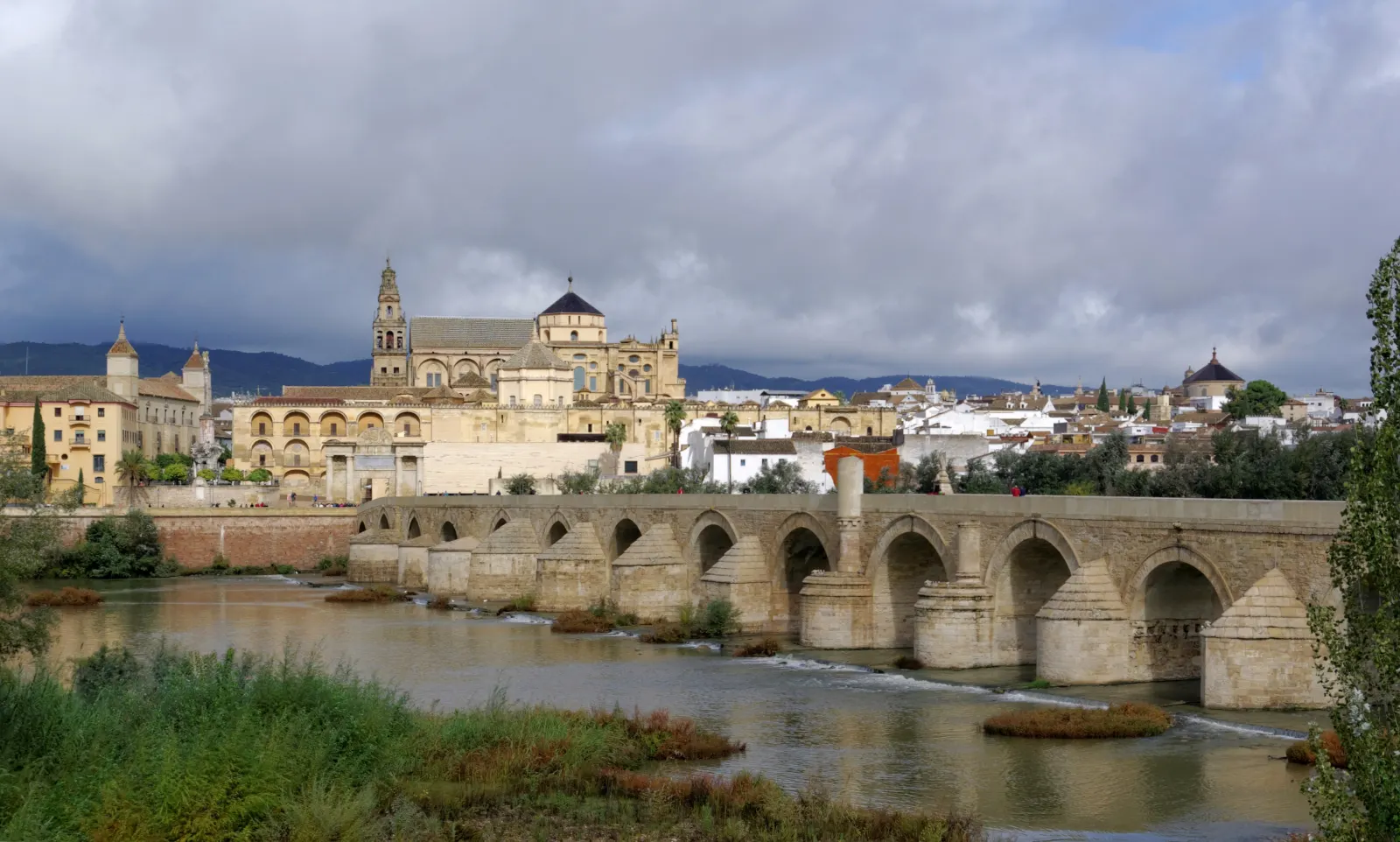
Photo: Berthold Werner / Wikimedia Commons

Country
Spain

About Cordoba

Cordoba is a compact Spanish city built around the Mezquita, a mosque turned cathedral that sums up centuries of Islamic and Christian history in one building. Beyond it, narrow lanes in the Judería lead past patios, the Alcázar and the Roman Bridge over the Guadalquivir. It's an easy place to explore on foot, with most sights in the Historic Centre. The best months to visit are February, April, October and November, when temperatures are milder than the hot Cordoba summer.

How many days do you need in Cordoba?

Two full days cover the Mezquita, Alcázar, Judería and riverside. Add a third day for Medina Azahara on the outskirts and smaller museums like the Viana Palace.

Top attractions in Cordoba

  1. 1Mosque-Cathedral of Córdoba (Mezquita)

    1.5–2 hours

    Historic Centre

    The city's main sight: a great Umayyad mosque with a forest of red-and-white striped arches, with a Renaissance cathedral built in the middle after the Christian conquest. Go for the prayer hall, the carved mihrab and the orange-tree courtyard. You can also climb the bell tower for views over the old town.

  2. 2Alcázar of the Christian Monarchs (Alcázar de los Reyes Cristianos)

    1–2 hours

    Historic Centre

    A fortified palace by the river with terraced gardens, long pools, fountains and cypress hedges. You can walk the towers and walls, and see Roman mosaics inside.

  3. 3Roman Bridge and Calahorra Tower

    1 hour

    Guadalquivir riverside

    The old stone bridge crosses the Guadalquivir from the Mosque-Cathedral to the Calahorra Tower, a medieval gate tower that now holds a museum on life in al-Andalus. Walk across at sunset for the classic view of the city.

  4. 4Jewish Quarter (Judería)

    1–2 hours

    Judería

    A maze of narrow whitewashed lanes around the Mosque-Cathedral, with flower-filled corners such as Calleja de las Flores. It also has the small medieval Synagogue and the Casa de Sefarad, which tell the story of the city's Jewish community.

  5. 5Medina Azahara (Madinat al-Zahra)

    Half a day

    Outskirts, west of the city

    The ruins of a palace city built by the caliphs of Córdoba, now a UNESCO World Heritage site. A visitor centre explains the site before you walk through restored halls, gardens and terraces. You need a car, taxi or tour bus to get there.

  6. 6Viana Palace (Palacio de Viana)

    1–1.5 hours

    Santa Marina

    A noble mansion known for its many courtyards, each with a different style of planting and fountains. It is the easiest way to see Córdoba's famous patio culture at any time of year.

  7. 7Plaza de la Corredera

    30 minutes–1 hour

    Historic Centre

    A large rectangular square closed in by arcaded buildings, unusual in Andalusia. It is a local spot for coffee, tapas and people-watching, with a food market on one side.

  8. 8Archaeological Museum of Córdoba

    1–1.5 hours

    Historic Centre

    Set in a Renaissance palace built over the remains of a Roman theatre, which you can see in the basement. Its collections cover Roman, Visigothic and Islamic Córdoba.

  9. 9Royal Stables (Caballerizas Reales)

    1–1.5 hours

    Historic Centre

    Stables next to the Alcázar where the Andalusian horse breed was developed. Visitors come for the evening equestrian shows that mix horse riding with flamenco.

  10. 10Roman Temple (Templo Romano)

    15–30 minutes

    Historic Centre

    Tall reconstructed columns of a Roman temple stand beside the modern town hall. It is a quick stop that shows how important Córdoba was in Roman times.
Cordoba by month

Average weather and our month score, from 10 years of climate data.

Weather by month and month scores for Cordoba
Month High / low Rain days Sunshine Score
January 15°C / 5°C 7 days (42 mm) 7.6 h/day 6.9/10
Best month: February 17°C / 6°C 6 days (40 mm) 9.0 h/day 8.5/10
March 20°C / 8°C 10 days (94 mm) 9.4 h/day 8.0/10
Best month: April 23°C / 11°C 8 days (57 mm) 10.8 h/day 8.4/10
May 28°C / 15°C 5 days (32 mm) 12.3 h/day 8.0/10
June 33°C / 19°C 2 days (13 mm) 13.4 h/day 4.6/10
July 38°C / 22°C 0 days (1 mm) 13.5 h/day 3.5/10
August 37°C / 22°C 1 day (4 mm) 12.7 h/day 3.4/10
September 31°C / 19°C 3 days (24 mm) 11.1 h/day 6.8/10
Best month: October 26°C / 15°C 7 days (69 mm) 9.1 h/day 8.5/10
Best month: November 19°C / 9°C 7 days (64 mm) 7.9 h/day 8.5/10
December 16°C / 6°C 6 days (58 mm) 7.5 h/day 7.8/10
  1. Jan

    Highs reach 14.7°C with 6.8 rain days. Mild but cool and a bit wet, this month scores 6.9, a good time to visit.

  2. Feb

    Highs climb to 17.2°C with 5.5 rain days and 9 sun hours. One of the top months, scoring 8.5, with pleasant, drier conditions.

  3. Mar

    Highs of 19.6°C come with 9.8 rain days, the wettest month at 94mm. Still rated among the best months at 8.

  4. Apr

    Highs reach 22.5°C with 8.2 rain days and 10.8 sun hours. Warm, bright days make this a top-rated month at 8.4.

  5. May

    Highs hit 28.1°C with just 4.7 rain days and 12.3 sun hours. Warm and mostly dry, scoring 8, among the best months.

  6. Jun

    Highs surge to 32.9°C with only 2.2 rain days. Hot and dry conditions push the score down to 4.6, an ok month.

  7. Jul

    Highs peak at 37.7°C with almost no rain, just 0.2 rain days. Extreme heat makes this the lowest-scoring month at 3.5.

  8. Aug

    Highs stay near 37.1°C with 0.7 rain days. The intense heat continues, giving this month a low score of 3.4.

  9. Sep

    Highs ease to 31.3°C with 3 rain days and 11.1 sun hours. Still warm but more bearable, scoring 6.8, a good month.

  10. Oct

    Highs drop to 26.1°C with 7.1 rain days and 9.1 sun hours. Comfortable temperatures earn this month a top score of 8.5.

  11. Nov

    Highs of 19°C come with 7.3 rain days. Mild and pleasant weather makes this one of the best months, also scoring 8.5.

  12. Dec

    Highs reach 16.1°C with 5.8 rain days and 58mm of rain. Cool but comfortable, this month scores 7.8, among the best.

Climate averages 2015–2024 · Best time to visit Spain →

Where to stay in Cordoba

The best areas to base yourself and who each one suits.

Judería

Good for first-timers, sightseeing on foot

This is the old Jewish quarter, a maze of narrow whitewashed lanes right beside the Mezquita-Catedral. You can walk to most of the main sights in minutes. Day-trippers and tour groups fill the streets from mid-morning, and cars and taxis can't reach many doors.

San Basilio

Good for couples, patio lovers, quieter old-town stays

Also called Alcázar Viejo, it sits just west of the Judería near the Alcázar de los Reyes Cristianos. It is known for its flower-filled courtyard houses and feels more residential than the area around the Mezquita. It has fewer bars and shops, so evenings out mean a short walk into the Judería or the centre.

Centro

Good for shoppers, nightlife, transport links

The modern centre around Plaza de las Tendillas has the main shopping streets, plenty of tapas bars and easy access to buses and taxis. It is a practical base that is still walkable to the old town. The buildings and streets are less historic, and weekend nights can be noisy.

San Pedro

Good for repeat visitors, local atmosphere

Part of the Axerquía to the east of the Judería, it centres on Plaza del Potro and the old churches near the river. It feels more lived-in, with neighbourhood bars and fewer crowds. Main sights are a longer walk, and some streets are very quiet after dark.

Santa Marina

Good for budget travellers, local life

A traditional working neighbourhood in the north-east of the old city, with Fernandine churches, small taverns and courtyard houses. It gives a real sense of everyday Cordoba. It is the furthest of these areas from the Mezquita, so expect a longer walk to the river.

Campo de la Verdad

Good for drivers, views of the old town

This area lies on the south bank of the Guadalquivir, across the Roman Bridge from the Mezquita. Parking is easier than in the old town and there are views back across the river. It has little character of its own, and you will cross the bridge for almost everything you want to see.

Getting to and around Cordoba

From the airport
Cordoba does not have a major international airport, so most visitors arrive by train instead. Trains from Madrid take 1 h 45 min, and from Sevilla just 42 min, both landing at Cordoba's central station, a short walk or taxi ride from the historic centre.
Public transport
Cordoba has local buses but no metro or tram. Most visitors walk everywhere in the compact centre. Buses are mainly useful for reaching the station or outlying areas like Medina Azahara.
On foot
The centre is very walkable. The Mezquita, Alcázar, Judería, and Plaza de la Corredera all sit close together in the Historic Centre, easily covered on foot in a day.

Day trips from Cordoba

Places within 2½ hours by train, bus, ferry or car.

  • Madrid

    train · 24.78–72.71 EUR

    Renfe AVE/Avlo plus OUIGO and iryo, about 40 trains a day. Minimum fare 24.78 EUR, average 72.71 EUR. Easy as a day trip from Madrid or a stop on the way to Sevilla.

    1 h 45 min
  • Sevilla

    train · 8.42 USD

    About 28 trains a day (Renfe AVE and Avant, plus OUIGO and iryo), average 42 minutes. Trainline's US site lists fares from USD 8.42; Avant tickets are the cheapest and rarely sell out. Good as a day trip either way.

    42 min

Food to try in Cordoba

Salmorejo

This is a thick, cold tomato soup, blended with bread, garlic and olive oil, then topped with chopped egg and ham. Locals eat it in summer as a starter to cool down from the Cordoba heat.

Flamenquín

A roll of pork loin wrapped around serrano ham, coated in breadcrumbs and deep-fried. It is a classic main course in local taverns, often served with fries and a sauce.

Rabo de toro

Oxtail stew cooked slowly with wine, vegetables and spices until the meat falls off the bone. It is a hearty winter dish, common on menus in traditional restaurants.

Mazamorra cordobesa

An older, almond-based cousin of salmorejo, made with almonds, bread, garlic and olive oil, served cold. It is less common than salmorejo but still found in some local eateries.

Berenjenas con miel

Thin slices of eggplant, fried until crisp and drizzled with cane or bee honey. This tapa shows the Moorish influence on Cordoba's cooking and is popular in bars across the old town.

More of Spain

Spain travel guide →

Cordoba: frequently asked questions

Is Cordoba good to visit in August?

No, August scores 3.4 out of 10, the lowest of the year. Highs average 37.1°C with only 0.7 rain days, so the heat dominates everything. If you go, plan around the midday hours and expect strong sun for most of the day.

What is the best month to visit Cordoba?

February, October, November and April all score 8.4–8.5 and are rated "best". Daytime highs sit between 17.2°C and 26.1°C in these months, with moderate rainfall and enough sunshine to walk the old town comfortably without the summer heat.

How many days do I need in Cordoba?

Two full days cover the main sights. The Mezquita takes 1.5–2 hours, the Alcázar 1–2 hours, and the Jewish Quarter another 1–2 hours. Add a half day if you want to see Medina Azahara on the outskirts, which needs transport out of the city centre.

Is Cordoba hot in summer?

Yes, July and August are the hottest months, with average highs of 37.7°C and 37.1°C. Rain almost disappears, with just 0.2 and 0.7 rain days respectively, so summer here means dry, intense heat rather than storms.

Does it rain a lot in Cordoba?

Rain is concentrated in spring and late autumn. March sees the most rain days, 9.8, with 94mm falling, while October and November each bring over 60mm. Summer months from June to August are almost rain-free, with July recording just 1mm.