Skip to content
wheretotravel.info
Madrid

Madrid travel guide

What to see, where to stay and the best time to visit Madrid, Spain.

Best: Apr, May, Sep, Oct

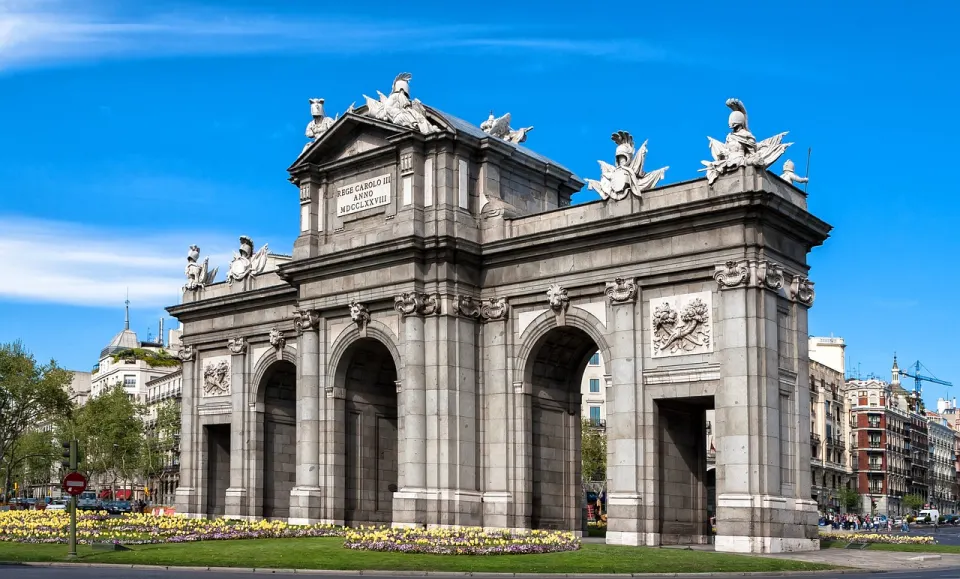
Photo: Juanlufer4 / Pixabay

Country
Spain

About Madrid

Madrid is the capital of Spain. It is an inland city, so come for art, food and nightlife, not beaches. Most big sights are in Centro and along the Paseo del Prado. These include the Prado, Reina Sofía and Thyssen-Bornemisza museums, the Royal Palace, Plaza Mayor and Retiro Park. For tapas, stay in La Latina and Los Austrias. For nightlife, try Malasaña or Chueca. The best months to go are April, May, September and October.

How many days do you need in Madrid?

The Prado alone takes 2–3 hours. The Reina Sofía needs about 2 hours and the Thyssen-Bornemisza 1.5–2 hours. Add the Royal Palace and Retiro Park, and you need several days to see the main sights without rushing.

Top attractions in Madrid

  1. 1Prado Museum

    2–3 hours

    Paseo del Prado, Retiro district

    Spain's main art museum, with the world's best collection of Velázquez, Goya and Spanish court painting, plus Bosch, Titian and Rubens. It is very large, so pick a few rooms rather than trying to see everything. Queues are shortest early in the morning.

  2. 2Retiro Park

    1–2 hours

    Retiro district

    The city's central park, with a boating lake, formal gardens and the glass Crystal Palace used for art shows. Locals use it heavily on weekend afternoons, which is when it feels most alive but also most crowded.

  3. 3Royal Palace of Madrid

    1.5–2 hours

    Centro, near Ópera

    The official palace of the Spanish royal family, though they do not live here. The tour covers grand state rooms, the throne room and the armoury. Parts can close without warning when state events are held.

  4. 4Plaza Mayor

    30 minutes

    Centro

    A large enclosed square ringed by arcades and red-painted buildings, once used for markets, trials and bullfights. It is worth walking through, but the cafés under the arches charge tourist prices for ordinary food.

  5. 5Reina Sofía Museum

    2 hours

    Atocha, Centro

    Spain's modern art museum and the home of Picasso's Guernica. Also strong on Dalí and Miró. Go if you care about 20th-century art; skip it if you only have one museum day and prefer old masters.

  6. 6Thyssen-Bornemisza Museum

    1.5–2 hours

    Paseo del Prado

    A private collection turned national museum that fills the gaps the other two leave: Italian primitives, Dutch painting, Impressionists and American art. It is smaller and calmer than the Prado, and easier to finish in one visit.

  7. 7Puerta del Sol

    30 minutes

    Centro

    The square at the centre of Madrid and the point from which Spanish road distances are measured. It is a transport hub and meeting place more than a sight, but most walks through the old centre start here.

  8. 8Mercado de San Miguel

    1 hour

    Centro, beside Plaza Mayor

    A restored iron-and-glass market hall now filled with tapas and wine stalls. Good for a quick standing snack and photos; it is expensive and packed at peak hours, so go mid-afternoon or look for neighbourhood bars instead.

  9. 9Temple of Debod

    45 minutes

    Parque del Oeste, Moncloa

    An ancient Egyptian temple given to Spain and rebuilt on a hilltop west of the centre. The draw is the sunset view over the Casa de Campo and the Sierra beyond; the temple interior is small and often has a queue.

  10. 10Gran Vía

    1 hour

    Centro

    Madrid's main early 20th-century avenue, lined with tall stone buildings, theatres and chain shops. Walk it for the architecture and the street life rather than the shopping.
Madrid by month

Average weather and our month score, from 10 years of climate data.

Weather by month and month scores for Madrid
Month High / low Rain days Sunshine Score
January 10°C / 1°C 7 days (38 mm) 7.0 h/day 4.6/10
February 13°C / 3°C 5 days (26 mm) 8.4 h/day 6.6/10
March 16°C / 5°C 9 days (58 mm) 9.2 h/day 7.2/10
Best month: April 19°C / 7°C 9 days (59 mm) 10.8 h/day 8.2/10
Best month: May 24°C / 12°C 6 days (31 mm) 12.6 h/day 8.7/10
June 30°C / 16°C 5 days (21 mm) 13.3 h/day 7.4/10
July 34°C / 20°C 1 day (7 mm) 13.9 h/day 4.1/10
August 33°C / 20°C 2 days (12 mm) 12.7 h/day 4.5/10
Best month: September 27°C / 15°C 5 days (52 mm) 11.0 h/day 8.6/10
Best month: October 22°C / 11°C 9 days (66 mm) 8.6 h/day 8.3/10
November 15°C / 6°C 8 days (49 mm) 7.3 h/day 6.5/10
December 12°C / 3°C 7 days (42 mm) 6.4 h/day 5.0/10
  1. Jan

    Cold and grey: highs near 10.3°C, lows 1.1°C, 6.5 rain days and only 7 hours of sun. Scores 4.6 — fine for museums, poor for parks.

  2. Feb

    Milder at 13.3°C, and the driest winter month with 5.4 rain days and 26 mm. Score 6.6: good for walking if you pack a coat.

  3. Mar

    Highs 16°C, but 9 rain days and 58 mm make it damp. Still scores 7.2, helped by 9.2 hours of sun a day.

  4. Apr

    One of the best months: 19.1°C highs, 10.8 sun hours, score 8.2. Expect 9 rain days, so carry a light jacket.

  5. May

    The top score, 8.7. Highs 24.4°C, 12.6 hours of sun and just 6.3 rain days. Terraces and parks at their best.

  6. Jun

    Hot but manageable: 29.5°C highs, 4.5 rain days, 13.3 sun hours. Score 7.4 — plan indoor time in the early afternoon.

  7. Jul

    The worst month, score 4.1. Highs average 34.4°C, nights stay at 20.2°C, rain is almost nil. Outdoor sightseeing is hard after midday.

  8. Aug

    Still very hot at 33.4°C, with 1.7 rain days. Score 4.5. Many small businesses close for summer holidays.

  9. Sep

    Near-perfect, score 8.6: 26.8°C highs and 11 sun hours. Storms bring 52 mm over 5.2 days, usually short.

  10. Oct

    Another strong month, score 8.3. Highs 21.5°C, but the wettest of the year: 66 mm over 8.6 days. Pack an umbrella.

  11. Nov

    Cooler at 14.5°C, with 7.8 rain days and 7.3 sun hours. Score 6.5 — good for museums and short walks.

  12. Dec

    Cold and dim: 11.5°C highs, 3.1°C lows, 6.4 sun hours a day. Score 5 — worth it mainly for Christmas lights.

Climate averages 2015–2024 · Best time to visit Spain →

Where to stay in Madrid

The best areas to base yourself and who each one suits.

La Latina and Los Austrias

Good for food and tapas, atmosphere, couples

The oldest part of Madrid, with sloping lanes, small squares and one of the city's best concentrations of tapas bars, especially along Cava Baja. Good for evenings on foot and for Sunday mornings at the Rastro flea market. Two honest drawbacks: the streets are steep in places, and Sundays are busy and noisy from late morning onwards.

Malasaña and Conde Duque

Good for nightlife, younger travellers, independent shops

North of Gran Vía, this is the area for record shops, vintage stores, speciality coffee and late bars, with Plaza del Dos de Mayo as its centre. It suits people who want a local, going-out atmosphere rather than monuments. It is one of the loudest parts of Madrid at night, and it is a longer walk to the big museums.

Chueca

Good for nightlife, LGBTQ+ travellers, dining

A compact, flat district just east of Malasaña, long the heart of gay Madrid and now a strong restaurant and shopping area too. Central enough to walk to Gran Vía, Sol and the Salamanca shops. Expect noise on weekend nights, and Pride week in summer fills the whole area.

Affiliate link (Booking.com): we may earn a commission at no extra cost to you.

See hotels in Madrid

Getting to and around Madrid

From the airport
Madrid's main airport is Barajas. The usual ways into the centre are the metro, a local Cercanías train, an express airport bus or a taxi. Check current fares and times before you travel.
Public transport
Most visitors use the metro, with city buses filling the gaps. Tip: Madrid is a good base for fast train day trips, for example Cordoba in 1 h 45 min or Sevilla in 2 h 30 min.
On foot
The centre is very walkable. Puerta del Sol, Plaza Mayor, Mercado de San Miguel and the Royal Palace sit close together. The Prado, Thyssen-Bornemisza and Reina Sofía museums line up near Retiro Park.

Typical journey times and fares from the airport and other cities.

Route By Time Price
Madrid → Malaga Renfe AVE to Malaga Maria Zambrano, in the city centre next to the bus station. Minimum fare 28.72 EUR, average 101.54 EUR, so book early. Official route page: renfe.com/es/en/inspirate/rutas/madrid-malaga. train 2 h 44 min 28.72–101.54 EUR ↗

Day trips from Madrid

Places within 2½ hours by train, bus, ferry or car.

  • Barcelona

    train · 9–90 EUR

    Three operators: Renfe AVE/Avlo, iryo and OUIGO, 35+ departures a day. Fares start at 9 EUR (OUIGO), 15 EUR (iryo), 17 EUR (Renfe) in advance; walk-up fares reach 90 EUR or more. Atocha to Barcelona Sants.

    2 h 30 min
  • Sevilla

    train · 27.3–77.1 EUR

    Renfe AVE, Atocha to Sevilla Santa Justa. Around 27.30 EUR if booked about a month ahead; same-day average 77.10 EUR. OUIGO and iryo also run this line.

    2 h 30 min
  • Cordoba

    train · 24.78–72.71 EUR

    Renfe AVE/Avlo plus OUIGO and iryo, about 40 trains a day. Minimum fare 24.78 EUR, average 72.71 EUR. Easy as a day trip from Madrid or a stop on the way to Sevilla.

    1 h 45 min
  • Alicante

    train · 29–140 EUR

    Renfe AVE/Avlo, OUIGO and iryo to Alicante Terminal, 10 minutes' walk from the beach. Fares 29-140 EUR; booking 21 days ahead saves about 35% on average.

    2 h 22 min

Food to try in Madrid

Cocido madrileño

A chickpea stew with pork, chorizo, black pudding and vegetables. It is served in courses: broth with noodles first, then the chickpeas and meat. A winter lunch, usually eaten midday.

Bocadillo de calamares

A crusty roll filled with fried squid rings. Bars around Plaza Mayor sell it all day, and locals grab one standing at the counter, often with a beer.

Callos a la madrileña

Tripe slow-cooked with chorizo, black pudding and paprika in a thick sauce. Old taverns serve it as a starter or a ración to share, mostly in cold months.

Huevos rotos

Fried eggs broken over chips, often with jamón or chorizo on top. A casual shared dish in tabernas, ordered for a late lunch or an early evening bite.

Churros con chocolate

Fried dough sticks dipped in thick hot chocolate. Madrid eats them for breakfast, at weekends, or very late at night after going out.

Oreja a la plancha

Grilled pig's ear, chopped small and served with garlic and paprika. A classic bar snack, common in the taverns around La Latina.

More of Spain

Spain travel guide →

Madrid: frequently asked questions

When is the best time to visit Madrid?

May, September, October and April score highest in our ratings. May scores 8.7 out of 10, September 8.6, October 8.3 and April 8.2. In May, highs average 24.4°C with only 6.3 rainy days. September brings highs of 26.8°C and 11 hours of sun a day, so sightseeing on foot stays comfortable.

Is Madrid good in August?

August is only an average month, scoring 4.5 out of 10. Highs average 33.4°C and nights stay near 19.7°C, which makes walking tours hard work. The upside is dry weather: just 1.7 rainy days and 12 mm of rain. If you come, plan indoor stops for the afternoon.

How hot does Madrid get in July?

July is the hottest month, with average highs of 34.4°C and lows of 20.2°C. It scores 4.1 out of 10, the lowest of the year. Rain is almost absent at 7 mm across 1 day, and the sun shines about 13.9 hours a day. Expect real heat from late morning onwards.

What is Madrid like in winter?

Cold but manageable. January averages highs of 10.3°C and lows of 1.1°C, with 7 hours of sun a day and 38 mm of rain over 6.5 days. December is similar at 11.5°C and 3.1°C. Both score around 5 out of 10, so bring a warm coat and expect short daylight.

Which month is wettest in Madrid?

October is the wettest month, with 66 mm of rain over 8.6 days. April (59 mm) and March (58 mm) follow, both with 9 rainy days. Even so, October still scores 8.3 out of 10 because highs of 21.5°C suit long days of walking.