Skip to content
wheretotravel.info
Malaga

Malaga travel guide

What to see, where to stay and the best time to visit Malaga, Spain.

Best: May, Oct, Nov, Dec

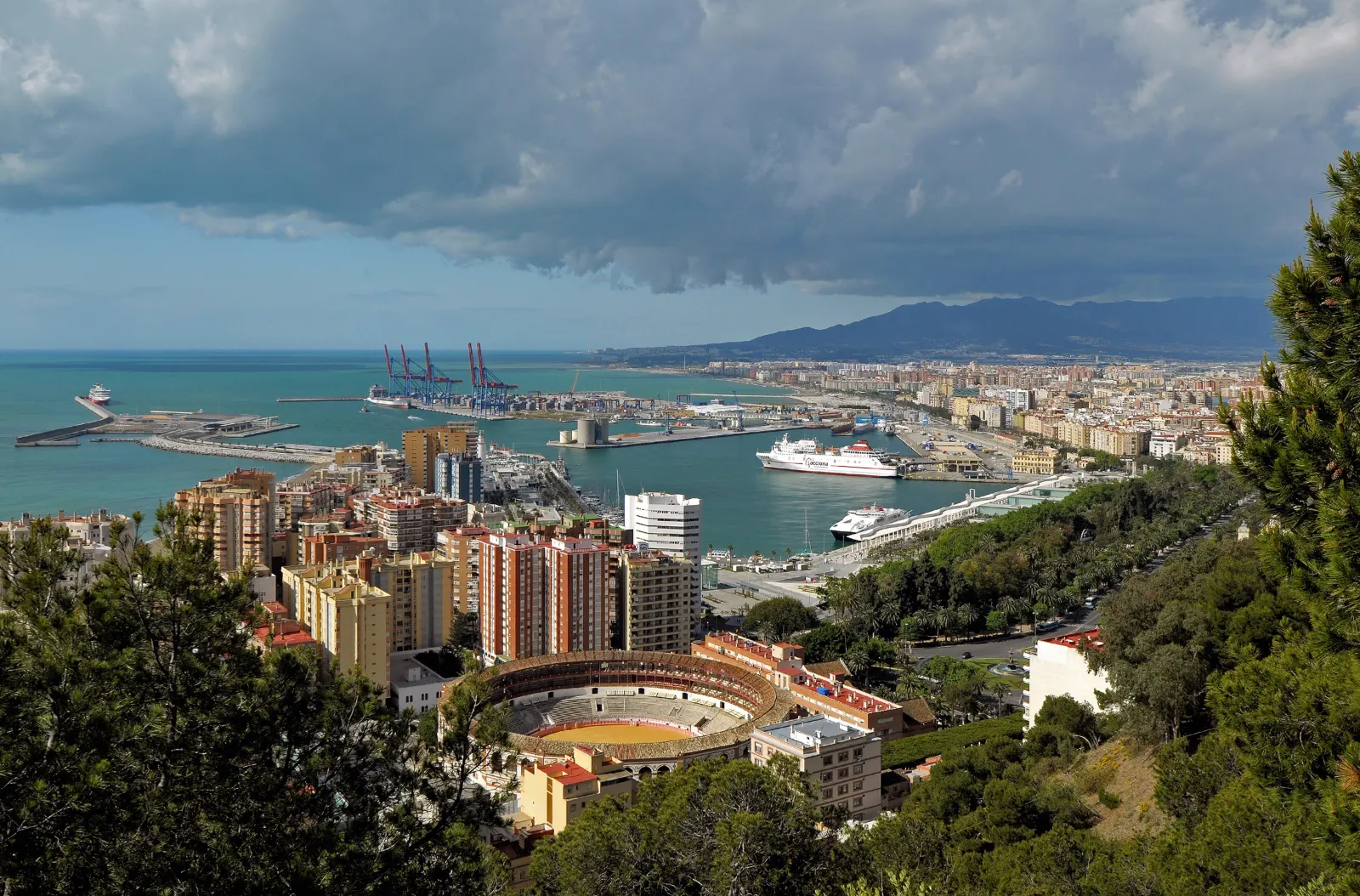
Photo: Ввласенко / Wikimedia Commons

Country
Spain

About Malaga

Malaga is a sunny port city in southern Spain, known for its old town, its Picasso connections, and its mix of Roman, Moorish and modern layers. Visitors can walk from the Alcazaba and Roman Theatre to the Picasso Museum and Cathedral in a single day, then relax on the beach at La Malagueta or Pedregalejo. The best months to visit are May, October, November and December, when the heat has eased but the city still feels lively.

How many days do you need in Malaga?

With around ten main sights in the historic centre, most needing 30 minutes to two hours, two to three days is enough to see the key museums, the Alcazaba and Gibralfaro Castle, and still have time on the beach.

Top attractions in Malaga

  1. 1Alcazaba

    1–2 hours

    Centro Histórico

    A Moorish fortress-palace on the hillside above the old town, with layered walls, courtyards, fountains and gardens. It is the best place in Malaga to see the city's Islamic past, and the terraces look out over the port.

  2. 2Gibralfaro Castle

    1–2 hours

    Monte Gibralfaro

    Castle walls on the hilltop above the Alcazaba. You can walk along the ramparts and get the widest views of the city, the bullring and the coast. The path up from the town is steep, so many visitors take a bus or taxi up and walk down.

  3. 3Malaga Cathedral

    1 hour

    Centro Histórico

    The city's large Renaissance cathedral, known locally as 'La Manquita' (the one-armed lady) because its second tower was never finished. Inside are a carved choir and side chapels. Rooftop tours give a close view of the domes and the old town.

  4. 4Picasso Museum Málaga

    1–2 hours

    Centro Histórico

    A museum of Picasso's work set in a Renaissance palace in the city where he was born. The collection covers his whole career. Archaeological remains found under the building can be seen in the basement.

  5. 5Roman Theatre

    30 minutes–1 hour

    Centro Histórico

    The remains of a Roman theatre at the foot of the Alcazaba, rediscovered by chance and now restored. A small visitor centre explains its history, and you can see much of it from the street for free.

  6. 6Museo de Málaga

    1–2 hours

    Centro Histórico

    The city's main museum, in the Palacio de la Aduana, a former customs house next to the Alcazaba. It combines a fine arts collection, mostly Spanish painting, with an archaeology section covering the region's long history.

  7. 7Carmen Thyssen Museum

    1–2 hours

    Centro Histórico

    A collection of Spanish painting, especially Andalusian scenes, housed in a restored palace in the old town. It is a good choice if you want to see how artists pictured southern Spain.

  8. 8Atarazanas Market

    30 minutes–1 hour

    Centro

    Malaga's central food market, in a building that keeps a Moorish gateway and has a large stained-glass window. Locals shop here for fish, fruit, olives and ham, and small bars inside serve tapas and fried fish.

  9. 9Picasso Birthplace Museum

    1 hour

    Plaza de la Merced

    The house where Picasso was born, on the square of Plaza de la Merced. It shows family items, early works and changing exhibitions. It pairs well with the larger Picasso Museum a short walk away.

  10. 10La Concepción Historical-Botanical Garden

    Half a day

    North of the city centre

    A large garden created by a wealthy local family, with tropical and subtropical plants, palm groves, ponds and a viewpoint over the city. It is a quiet green escape from the old town, reached by bus or car.
Malaga by month

Average weather and our month score, from 10 years of climate data.

Weather by month and month scores for Malaga
Month High / low Rain days Sunshine Score
January 17°C / 9°C 6 days (46 mm) 8.3 h/day 8.1/10
February 17°C / 10°C 5 days (30 mm) 9.4 h/day 8.7/10
March 19°C / 11°C 10 days (85 mm) 9.9 h/day 8.1/10
April 21°C / 13°C 8 days (41 mm) 11.2 h/day 8.5/10
Best month: May 24°C / 16°C 4 days (23 mm) 12.6 h/day 9.2/10
June 28°C / 20°C 2 days (9 mm) 13.5 h/day 8.6/10
July 31°C / 23°C 0 days (1 mm) 13.2 h/day 7.4/10
August 31°C / 23°C 1 day (8 mm) 12.6 h/day 7.3/10
September 28°C / 21°C 4 days (28 mm) 11.3 h/day 8.4/10
Best month: October 24°C / 17°C 6 days (68 mm) 9.5 h/day 8.8/10
Best month: November 20°C / 13°C 6 days (66 mm) 8.8 h/day 8.9/10
Best month: December 18°C / 11°C 5 days (39 mm) 8.2 h/day 8.8/10
  1. Jan

    Highs reach 16.6°C with 6 rain days and 46mm of rain. Score 8.1, rated best: mild, quiet and good for walking the old town.

  2. Feb

    Highs climb to 17.3°C with fewer rain days, just 4.7, and 30mm of rain. Score 8.7, rated best for comfortable sightseeing weather.

  3. Mar

    Highs reach 19°C but rain picks up: 9.7 rain days and 85mm, the wettest month. Score 8.1, still rated best despite the showers.

  4. Apr

    Highs of 20.5°C with 7.6 rain days and 41mm of rain. Score 8.5, rated best, with 11.2 sun hours a day.

  5. May

    Highs reach 24.2°C with only 3.9 rain days and 23mm of rain. Score 9.2, the top-rated month, with long sunny days.

  6. Jun

    Highs of 28.1°C and barely any rain, 1.7 days and 9mm. Score 8.6, rated best, warm and dry for beach time.

  7. Jul

    Highs hit 31°C with almost no rain, 0.4 days and 1mm. Score 7.4, rated good: tough heat for walking but ideal for the coast.

  8. Aug

    Highs of 30.9°C and nearly rainless, 1.2 days and 8mm. Score 7.3, rated good; intense midday sun makes shade and water breaks useful.

  9. Sep

    Highs ease to 27.6°C with 4 rain days and 28mm of rain. Score 8.4, rated best, with warm seas and fewer crowds.

  10. Oct

    Highs of 24°C but rain returns, 6.1 days and 68mm. Score 8.8, rated best, mixing mild warmth with some wet spells.

  11. Nov

    Highs drop to 20°C with 5.5 rain days and 66mm of rain. Score 8.9, rated best, cooler but still comfortable for exploring.

  12. Dec

    Highs of 17.6°C with 5 rain days and 39mm of rain. Score 8.8, rated best, mild winter weather for city walks.

Climate averages 2015–2024 · Best time to visit Spain →

Where to stay in Malaga

The best areas to base yourself and who each one suits.

Centro Histórico

Good for first-timers, sightseeing, food lovers

The old town holds the cathedral, the Alcazaba, the Picasso Museum and the main tapas streets, all within walking distance. It is the easiest base if you want to see the main sights without using transport. Bars stay open late, so streets can be noisy at night, especially at weekends.

Soho

Good for art fans, couples, younger travellers

Soho sits between the old town and the port and is known for its large street murals, small galleries and the Contemporary Art Centre. It is a short walk to both the centre and the harbour, with a more local feel than the old town. Some streets are still being redeveloped and look a little rough in places.

La Malagueta

Good for beach lovers, families, first-timers

This area just east of the port has the city beach, a seafront promenade and many fish restaurants. You can walk to the old town and still be close to the sea. The tall apartment blocks along the front give it less historic charm than the centre.

Pedregalejo

Good for quiet stays, seafood, couples

Pedregalejo is a former fishing district further east along the coast, with small beaches, a seafront walk and beach restaurants grilling sardines. It feels relaxed and local, away from the busier centre. It is a bus or taxi ride from the main sights, which adds time to every trip into town.

El Limonar

Good for families, quiet, longer stays

El Limonar is a leafy residential area of old villas and gardens on the hillside east of the centre. It is calm and green, and close to the beaches of La Malagueta. The streets climb uphill, and there are few shops or bars nearby.

Lagunillas

Good for budget travellers, street art, local life

Lagunillas is a working-class district just north-east of the old town, with colourful murals and a strong community feel. It is close enough to walk to the centre and gives a less touristy view of the city. Some streets are steep and a few corners feel run-down.

Getting to and around Malaga

From the airport
The fact pack has no direct route data for Malaga's airport to the centre. Visitors usually take the train, a bus, or a taxi into town; check current options on arrival since no times or prices are given here.
Public transport
Malaga has limited public transport details in this fact pack. For trips beyond the centre, buses connect to other cities, like the 1 h 30 min bus to Granada. Within town, walking covers most sights.
On foot
Centro Histórico is compact and walkable. The Alcazaba, Cathedral, Picasso Museum, Roman Theatre, Museo de Málaga, and Carmen Thyssen Museum all sit close together, making it easy to see several sights on foot in one day.

Typical journey times and fares from the airport and other cities.

Route By Time Price
Madrid → Malaga Renfe AVE to Malaga Maria Zambrano, in the city centre next to the bus station. Minimum fare 28.72 EUR, average 101.54 EUR, so book early. Official route page: renfe.com/es/en/inspirate/rutas/madrid-malaga. train 2 h 44 min 28.72–101.54 EUR ↗

Day trips from Malaga

Places within 2½ hours by train, bus, ferry or car.

  • Granada

    bus · 8 EUR

    ALSA runs about 40 buses a day, 1h30 direct and up to 2h30 with stops, from 8 EUR. Some services start at Malaga Airport. The bus beats the train on this route.

    1 h 30 min

Food to try in Malaga

Espetos de sardinas

These are sardines skewered on wooden sticks and grilled over an open fire, often right on the beach. Locals eat them at chiringuitos, the beach bars along the coast, especially in the warmer months.

Pescaito frito

A mix of small fish and seafood lightly floured and fried until crisp. It's a classic lunch dish, usually shared at casual restaurants near the port or old town.

Ajoblanco

A cold soup made from almonds, garlic, bread and olive oil, sometimes topped with grapes. It's a refreshing starter, common in Andalusian homes and tapas bars.

Porra antequerana

A thick, cold tomato soup similar to gazpacho but denser, usually topped with boiled egg and jamón. It comes from the nearby town of Antequera but is widely served in Malaga.

Boquerones en vinagre

Fresh anchovies marinated in vinegar, garlic and olive oil. They're a staple tapa found in almost every bar in the city, often paired with a cold beer.

Vino dulce de Málaga

A sweet dessert wine made from Moscatel or Pedro Ximénez grapes grown in the hills around the city. It's traditionally served after meals or alongside local pastries.

More of Spain

Spain travel guide →

Malaga: frequently asked questions

Is Malaga good in August?

Yes, but it's hot. August highs average 30.9°C with lows near 23.4°C, so days and nights both stay warm. Rain is rare, with just 1.2 rain days and 8mm for the month, and sun hours sit at 12.6. Malaga scores 7.3 in August, a 'good' rating rather than 'best', mainly because of the heat.

What is the best month to visit Malaga?

May is the top-rated month, scoring 9.2. Highs reach 24.2°C and lows 16.4°C, with only 3.9 rain days and 23mm of rain. Sun hours climb to 12.6. October, November and December also score 8.8 or higher, giving mild temperatures and fewer rainy days than spring months like March.

How many days do I need in Malaga?

Two to three days cover the main sights. The Alcazaba, Gibralfaro Castle, Cathedral and Picasso Museum each take 1–2 hours, while smaller stops like the Roman Theatre or Atarazanas Market take 30 minutes to an hour. Add half a day for La Concepción Historical-Botanical Garden if you want to see it too.

Does it rain a lot in Malaga?

Not much, especially in summer. July has just 0.4 rain days and 1mm of rain, and August has 1.2 rain days with 8mm. March is the wettest month with 9.7 rain days and 85mm, followed by October at 68mm and November at 66mm.

Is Malaga warm in winter?

Yes, relatively. January highs average 16.6°C and lows 9.3°C, while December highs reach 17.6°C. Sun hours drop to around 8.2–8.3 in December and January, the lowest of the year, but temperatures stay mild compared to much of Europe.