Skip to content
wheretotravel.info
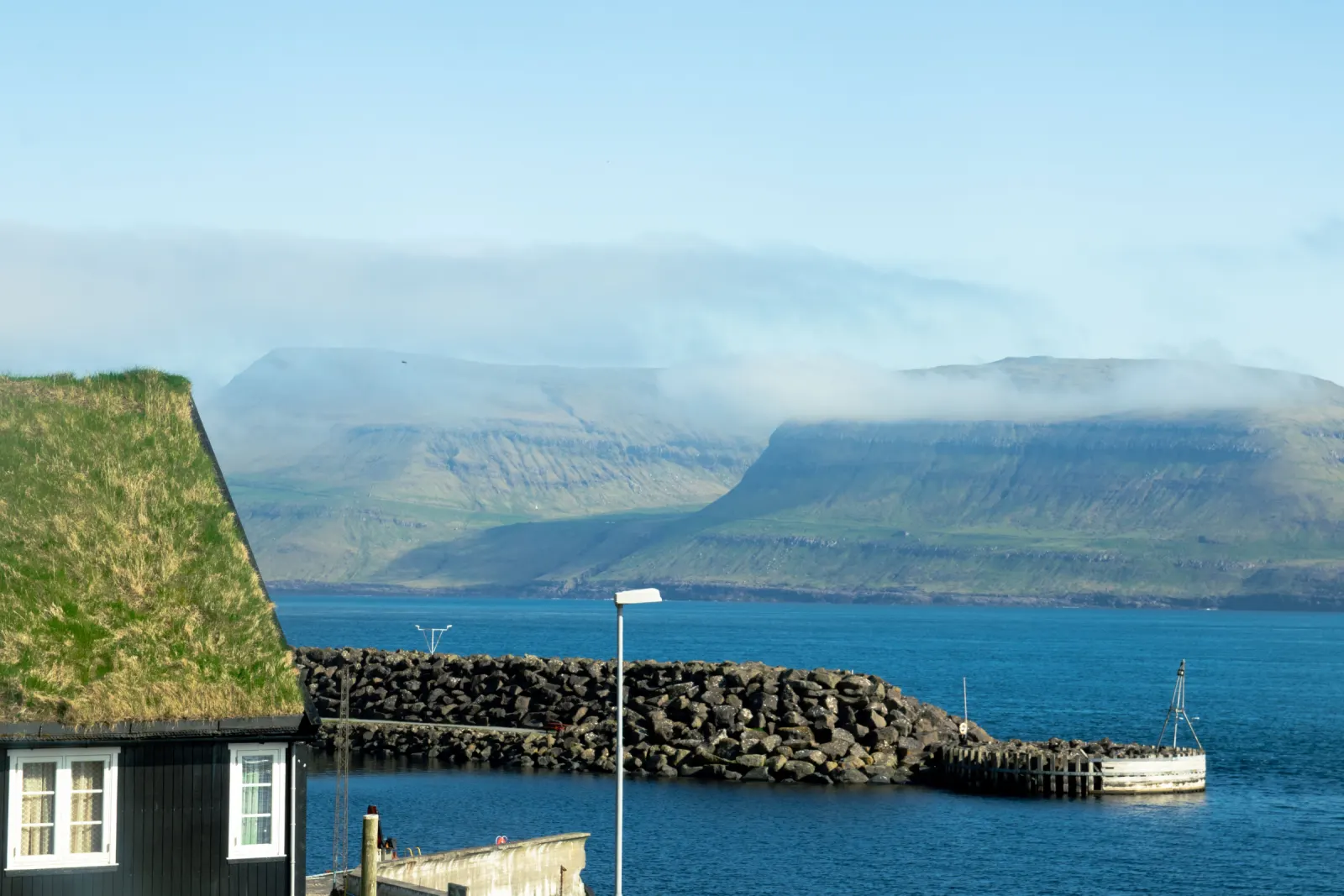
Traditional Faroese house with grass roof near harbor

Tórshavn travel guide

What to see, where to stay and the best time to visit Tórshavn, Faroe Islands.

Best: Jul, Aug

Photo: Maksim Smirnov / Pexels

Country
Faroe Islands
Currency
DKK

About Tórshavn

Tórshavn is the small, coastal capital of the Faroe Islands, with a population of 14038. It mixes a historic old town of turf-roofed houses at Tinganes with a working harbour, a cathedral, a national gallery and museum, and short trips out to villages like Kirkjubøur. It's a walkable base for a few days rather than a big city break. July and August are the best months to visit, with calmer weather for walking the harbour and old town streets.

How many days do you need in Tórshavn?

Two to three days are enough to see the old town, harbour, cathedral and museums at an easy pace, with time left for a half-day trip to Kirkjubøur.

Top attractions in Tórshavn

  1. 1Tinganes

    1 hour

    Old town

    A small rocky point by the harbour with red-painted wooden buildings and turf roofs. It is one of the oldest parliamentary meeting places in the world, and the Faroese government still has offices here. You can walk freely through the narrow lanes.

  2. 2Reyn

    1 hour

    Old town

    The old residential quarter next to Tinganes, with tarred wooden houses, turf roofs and steep, narrow alleys. It is a quiet place to wander and see how the town looked before it grew.

  3. 3Skansin

    1 hour

    East harbour

    An old fort on a grassy hill above the harbour, with a small lighthouse and cannons, including British guns from the Second World War. It has good views over the harbour and towards the island of Nólsoy.

  4. 4Vágsbotn

    1–2 hours

    Harbour

    The inner harbour at the heart of town, lined with old warehouses, cafés and restaurants. Fishing boats and small ferries come and go, and it is the natural meeting point for a walk around the centre.

  5. 5Tórshavn Cathedral (Havnar Kirkja)

    30 minutes

    Old town

    A white church with a black roof and clock tower, close to the harbour and Tinganes. It is the seat of the Faroese bishop and is simple and calm inside.

  6. 6National Gallery of the Faroe Islands (Listasavn Føroya)

    1–2 hours

    Viðarlundin

    The main art museum of the islands, with Faroese painting and sculpture, including works by Sámal Joensen-Mikines. It sits at the edge of the town park, so a visit pairs well with a walk.

  7. 7Viðarlundin

    1 hour

    Central Tórshavn

    The town park, one of the few places on the islands with planted trees, along a small river with paths and ponds. It feels sheltered on windy days.

  8. 8Nordic House (Norðurlandahúsið)

    1 hour

    North of the centre

    A cultural centre with a grass roof built into the hillside, used for concerts, theatre and exhibitions. Even without a show, the building and its café are worth a stop.

  9. 9National Museum of the Faroe Islands

    2 hours

    Hoyvík

    The main history museum, covering Viking-age finds, boats, fishing and farming life. The site includes Hoyvíksgarður, an old farm with traditional buildings you can walk around.

  10. 10Kirkjubøur

    half a day

    Kirkjubøur

    A small village south of Tórshavn and the old religious centre of the islands. You can see the unfinished stone walls of the medieval St Magnus Cathedral, the old Olav's Church and Roykstovan, a historic wooden farmhouse still owned by the same family line. The walk there over the hills from Tórshavn is popular in good weather.

Tórshavn by month

Average weather and our month score, from 10 years of climate data.

Weather by month and month scores for Tórshavn
Month High / low Rain days Sunshine Sea temp Score
January 5°C / 1°C 20 days (147 mm) 1.8 h/day 7°C 0.5/10
February 5°C / 2°C 19 days (145 mm) 3.9 h/day 7°C 1.0/10
March 6°C / 2°C 22 days (134 mm) 5.7 h/day 7°C 1.4/10
April 7°C / 3°C 16 days (85 mm) 7.8 h/day 7°C 2.0/10
May 9°C / 5°C 17 days (83 mm) 8.6 h/day 8°C 2.6/10
June 11°C / 8°C 16 days (97 mm) 9.0 h/day 9°C 3.7/10
Best month: July 13°C / 9°C 20 days (108 mm) 7.8 h/day 11°C 4.3/10
Best month: August 13°C / 9°C 18 days (113 mm) 7.7 h/day 11°C 4.3/10
September 12°C / 8°C 19 days (143 mm) 5.6 h/day 11°C 3.1/10
October 9°C / 6°C 20 days (163 mm) 3.8 h/day 10°C 1.5/10
November 7°C / 4°C 19 days (140 mm) 2.2 h/day 9°C 0.6/10
December 6°C / 2°C 20 days (169 mm) 1.0 h/day 8°C 0.3/10
  1. Jan

    Highs near 5°C with rain on about 20 days a month. Score is low at 0.5, so this is a cold, wet start to the year.

  2. Feb

    Still cold, highs around 5°C, rain on 18-19 days. Score of 1 shows weather stays tough with little sun, just 3.9 hours daily.

  3. Mar

    Highs reach 6°C but rain days climb to 22, the wettest frequency of the year. Score of 1.4 reflects persistent damp, blustery conditions.

  4. Apr

    Highs near 7°C and rain eases to 16 days. Score rises to 2 as sunshine grows to 7.8 hours, though it still feels raw.

  5. May

    Highs hit 9°C, sea warms to 8.2°C, rain falls on 17 days. Score of 2.6 marks a transition toward milder, brighter days.

  6. Jun

    Highs reach 11°C with 9 hours of sun daily, rain on 16 days. Score of 3.7 shows this is among the better months.

  7. Jul

    Highs peak near 13°C, sea at 10.8°C, though rain returns on 20 days. Score of 4.3 rates this an ok month for a visit.

  8. Aug

    Warmest month with highs of 13°C and sea temp of 11.3°C, rain on 18 days. Score of 4.3 keeps it an ok choice.

  9. Sep

    Highs drop to 11.5°C, rain climbs back to 19 days and sun hours fall to 5.6. Score of 3.1 signals cooling, wetter weather.

  10. Oct

    Highs fall to 9°C, rain hits 163mm over 20 days, the wettest month by volume. Score of 1.5 reflects rough, dark conditions.

  11. Nov

    Highs near 7°C with rain on 19 days and just 2.2 hours of sun daily. Score of 0.6 shows a dark, cold month.

  12. Dec

    Coldest light levels with only 1 hour of sun daily, highs of 6°C, rain on 20 days. Score of 0.3 marks tough winter weather.

Climate averages 2015–2024 · Best time to visit Faroe Islands →

Where to stay in Tórshavn

The best areas to base yourself and who each one suits.

Miðbýur

Good for first-timers, short stays

The compact town centre around the main shopping streets, with cafés, restaurants, the cathedral and the bus terminal close by. It is the easiest base for walking everywhere and catching buses or tours out of town. Streets climb steeply from the harbour, and weekend nights can be a little noisy near the bars.

Reyni

Good for couples, history lovers

The old quarter next to the Tinganes peninsula, with narrow lanes and black-tarred wooden houses with turf roofs. You are a few minutes' walk from the harbour and centre but in a much calmer setting. Choice of places to stay is small, and the lanes are uneven, which is awkward with heavy luggage.

Vágsbotn

Good for food lovers, nightlife

The inner harbour, lined with restaurants, bars and boats, and the liveliest part of town on summer evenings. It is ideal if you want to step straight out to dinner by the water. Expect some noise late at night, and it is exposed to wind and rain off the sea.

Hoyvík

Good for families, self-drivers

A residential district north of the centre with newer homes, a large shopping centre and open views over the sea. It is quieter and often has more space, such as apartments with parking. You will need a car, a bus or a fairly long walk to reach the old town and harbour.

Argir

Good for quiet, longer stays

A former village just south of the centre, now joined to Tórshavn, with a small harbour and a local, residential feel. It suits travellers who want calm evenings and easy access to the road heading south. It has few places to eat, so most evenings mean a walk, bus or drive into town.

Getting to and around Tórshavn

From the airport
No route data is given for Tórshavn's airport. Vágar Airport is the usual gateway, and visitors typically use an airport bus or a taxi to reach the centre, since no train or metro link exists on the islands.
Public transport
Tórshavn has local buses but no metro, tram or train. Public transport options are limited, so many visitors walk or use a car for trips beyond the centre. Check bus routes in advance if you plan to reach Kirkjubøur or Hoyvík this way.
On foot
The old town is compact and easy to walk. Tinganes, Reyn, Tórshavn Cathedral and Viðarlundin, with its National Gallery, all sit close together, while Skansin and Vágsbotn are an easy stroll from the harbour area.

Food to try in Tórshavn

Skerpikjøt

This is wind-dried, fermented mutton that hangs for months in a hjallur, a wooden shed built for curing meat. Locals slice it thin and eat it on dark rye bread, often as a snack or part of a cold table.

Ræst kjøt og spik

Fermented mutton cooked with a strip of whale blubber, served with potatoes. It is a traditional Faroese dinner, especially in colder months when heavier, preserved foods are common.

Garnatálg

A sausage-like dish made from sheep's offal, suet and flour, cooked and often served alongside boiled fish or ræst kjøt. It is part of the same preserved-meat food culture tied to Tórshavn's hjallur sheds.

Dried fish

Cod or other whitefish is hung outdoors to air-dry near the harbour, then eaten plain or with butter. It is a everyday snack rather than a restaurant dish, often sold in local shops.

Faroese langoustine and seafood

Tórshavn's coastal setting means fresh langoustine, salmon and other seafood show up on restaurant menus around the harbour. Local chefs pair them with island vegetables and foraged herbs.

More of Faroe Islands

Faroe Islands travel guide →

Tórshavn: frequently asked questions

Is Tórshavn good to visit in August?

Yes. August is one of the two best months, with a score of 4.3 out of 5. The high is 12.8°C and the low 9.3°C, so it is mild by Faroese standards. There are 18.4 rain days and 113mm of rain, which is less than the autumn months, and sea temperature peaks at 11.3°C.

What is the best time of year to visit Tórshavn?

July and August are the best months, both scoring 4.3 and rated "ok". July has a high of 12.7°C and 7.8 sun hours, August is slightly warmer at 12.8°C with similar rain. Every other month scores below 3.7, mainly because daylight drops sharply and rain days stay high from September through March.

How many days do I need in Tórshavn?

Two days covers the main sights. The old town attractions (Tinganes, Reyn, Skansin, the cathedral, Vágsbotn) each take about 1 hour, and the museums (National Gallery, Nordic House, National Museum) add another 4 to 5 hours. A half-day trip to nearby Kirkjubøur fits well on a second day.

Does it rain a lot in Tórshavn?

Yes, most of the year. Rain falls on 15.9 to 21.6 days a month, with no dry season. December is wettest at 169mm over 20.2 rain days, while April and May are driest at 85mm and 83mm. Even the best months, July and August, still see 18 to 20 rain days.

Is Tórshavn cold in winter?

It stays mild for its latitude but dark. January and February highs are only 5.1°C and 5.2°C, with lows around 1.4°C to 1.5°C, so it rarely freezes hard. The bigger issue is light: January gets just 1.8 sun hours and December only 1 hour, which is why winter months score lowest, from 0.3 to 1.4.