Skip to content
wheretotravel.info
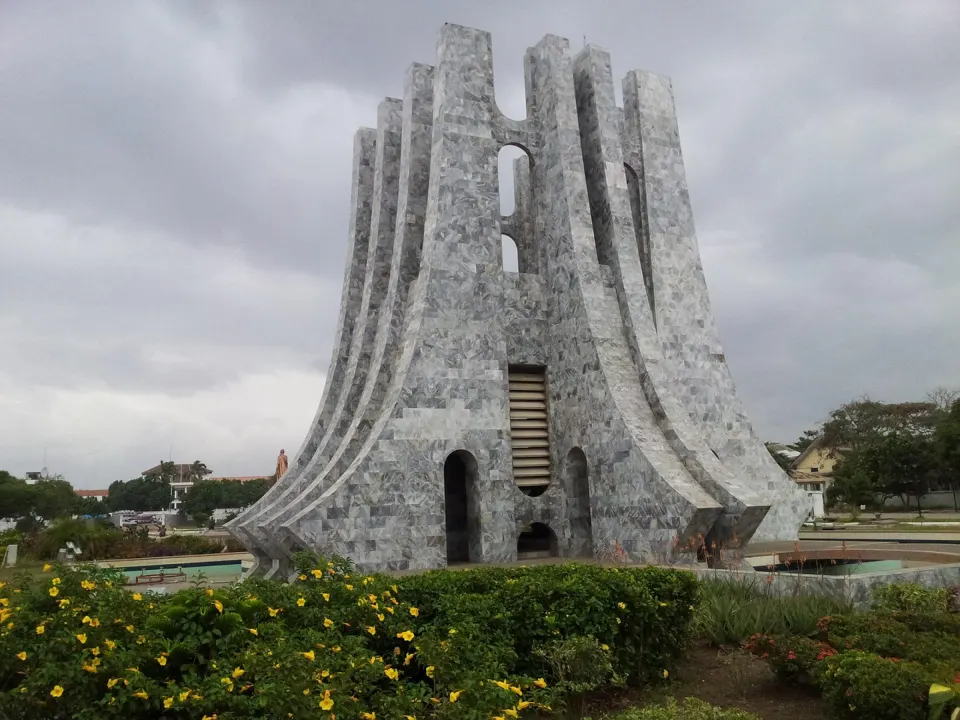
Modern stone monument with arches and stairs

Accra travel guide

What to see, where to stay and the best time to visit Accra, Ghana.

Best: Jan, Feb, Jul, Sep

Photo: edwardquarm10 / Pixabay

Country
Ghana

About Accra

Accra is Ghana's capital, a coastal city on the Gulf of Guinea with a population of over 1,782,150. It mixes colonial-era streets in Jamestown with modern life in Osu and Cantonments. Visitors come for markets, museums tied to independence history, and beaches like Labadi. The best months to visit are January, February, July, and September, when conditions suit walking around the old town and the coast.

How many days do you need in Accra?

Accra's main sights, including Jamestown, Independence Square, Makola Market and the Arts Centre, can be covered in two to three days, with extra time for Osu's nightlife and a half-day beach trip to Labadi.

Top attractions in Accra

  1. 1Kwame Nkrumah Memorial Park and Mausoleum

    1–2 hours

    Central Accra

    A memorial park and mausoleum for Kwame Nkrumah, Ghana's first president, with a museum about his life and the independence movement. It is the best single place in Accra to learn how modern Ghana began.

  2. 2Jamestown

    2–3 hours

    Old Accra

    One of Accra's oldest neighbourhoods, a working fishing community with colourful boats, the red-and-white Jamestown Lighthouse and the colonial-era Ussher Fort nearby. Local guides lead walking tours that explain its history and daily life.

  3. 3Independence Square (Black Star Square)

    Under 1 hour

    Victoriaborg

    A huge parade ground by the sea with the Independence Arch and the Black Star Gate, used for national ceremonies. It is a quick stop, best combined with the Nkrumah Memorial Park close by.

  4. 4Makola Market

    1–2 hours

    Central Accra

    Accra's largest and busiest market, a maze of stalls selling fabric, food, household goods and much more. It is crowded and hot, but it is the most direct way to see the city's trading life up close.

  5. 5Centre for National Culture (Arts Centre)

    1–2 hours

    Central Accra

    A large craft market near the sea with stalls selling kente cloth, wood carvings, drums, beads and paintings. Expect firm sales pitches and be ready to bargain.

  6. 6W.E.B. Du Bois Centre

    1 hour

    Cantonments

    The former home of the African-American scholar and Pan-Africanist W.E.B. Du Bois, who spent his last years in Ghana and is buried here. A small museum covers his life and the links between Ghana and the African diaspora.

  7. 7Osu and Oxford Street

    Half a day

    Osu

    Osu is Accra's main area for restaurants, bars, shops and nightlife, centred on the busy Oxford Street. It is a good base for eating out and seeing the modern side of the city.

  8. 8Labadi Beach (La Pleasure Beach)

    Half a day

    La

    Accra's best-known city beach, with beach bars, music and horse riding, and especially lively at weekends. The sea has strong currents, so most people come to relax on the sand rather than swim.

  9. 9Legon Botanical Garden

    Half a day

    Legon

    A large green space next to the University of Ghana with forest walks, a canopy walkway and outdoor activities. It offers a quieter break from the traffic and noise of central Accra.

Accra by month

Average weather and our month score, from 10 years of climate data.

Weather by month and month scores for Accra
Month High / low Rain days Sunshine Sea temp Score
Best month: January 31°C / 24°C 5 days (17 mm) 10.4 h/day 28°C 8.4/10
Best month: February 32°C / 25°C 8 days (30 mm) 10.3 h/day 28°C 7.9/10
March 31°C / 26°C 13 days (53 mm) 10.0 h/day 28°C 7.2/10
April 31°C / 26°C 15 days (74 mm) 10.5 h/day 29°C 7.1/10
May 30°C / 25°C 21 days (130 mm) 10.2 h/day 29°C 7.0/10
June 28°C / 24°C 24 days (171 mm) 9.3 h/day 27°C 7.0/10
Best month: July 27°C / 23°C 17 days (86 mm) 10.2 h/day 24°C 8.0/10
August 27°C / 23°C 15 days (58 mm) 9.8 h/day 23°C 7.7/10
Best month: September 28°C / 23°C 20 days (89 mm) 10.1 h/day 24°C 8.0/10
October 29°C / 24°C 21 days (122 mm) 10.3 h/day 27°C 7.0/10
November 30°C / 25°C 14 days (51 mm) 10.6 h/day 29°C 7.2/10
December 31°C / 24°C 8 days (24 mm) 10.5 h/day 29°C 7.9/10
  1. Jan

    Highs reach 31.3°C with just 4.5 rain days, making this a dry, sunny month. Score 8.4, rated best.

  2. Feb

    Still hot at 31.5°C, but rain days rise to 8.4 as the first showers return. Score 7.9, rated best.

  3. Mar

    Highs stay near 31.3°C while rain days climb to 13.3 and rainfall reaches 53mm. Score 7.2, rated good.

  4. Apr

    Expect 31.1°C highs with 14.5 rain days and 74mm of rain, as the wet season builds. Score 7.1, rated good.

  5. May

    Rain becomes frequent: 20.9 days and 130mm, with highs easing to 30.1°C. Score 7, rated good.

  6. Jun

    The wettest stretch continues with 23.8 rain days and 171mm of rain, while highs drop to 28.1°C. Score 7, rated good.

  7. Jul

    Rain eases to 17.3 days and 86mm, and highs cool further to 27.1°C in this drier spell. Score 8, rated best.

  8. Aug

    Coolest month with 27.1°C highs and sea temp down to 23.4°C; rain days fall to 14.9. Score 7.7, rated best.

  9. Sep

    Rain picks up again to 19.8 days and 89mm, while highs stay mild at 27.8°C. Score 8, rated best.

  10. Oct

    A second rainy peak brings 21.2 rain days and 122mm, with highs climbing back to 29°C. Score 7, rated good.

  11. Nov

    Rain drops sharply to 13.5 days and 51mm as highs rise to 30.3°C. Score 7.2, rated good.

  12. Dec

    A dry close to the year with 7.9 rain days and highs of 31.3°C. Score 7.9, rated best.

Climate averages 2015–2024 · Best time to visit Ghana →

Where to stay in Accra

The best areas to base yourself and who each one suits.

Osu

Good for first-timers, nightlife, food lovers

Osu is Accra's busiest area for restaurants, bars, shops and live music. Oxford Street runs through its centre. It is a good first base because so much is within walking distance. The drawback is noise and traffic, especially on weekend nights.

Airport Residential Area

Good for business travellers, short stays

This calm, leafy district sits next to Kotoka International Airport. It has wide streets, offices and many modern places to eat. It is convenient for early flights and feels orderly, but it is quiet at night and you will need taxis to reach the old town and the coast.

Cantonments

Good for couples, longer stays, quiet

Cantonments is an upmarket residential area with embassies, tree-lined roads and smart cafés. It sits between Osu and the airport, so both are a short drive away. It feels safe and relaxed, but it is spread out and not easy to explore on foot.

Labone

Good for families, relaxed stays

Labone is a quieter neighbourhood just north-east of Osu, with small guesthouses, cafés and art spaces. You get easy access to Osu's nightlife without the late-night noise. Some streets have few pavements, and walking after dark is less comfortable.

Labadi

Good for beach lovers, weekend vibe

Labadi, also called La, is a coastal district known for Labadi Beach, with music, horse rides and beach bars at weekends. It suits travellers who want the sea close by. The beach gets crowded and loud on Sundays, and hawkers can be persistent.

East Legon

Good for repeat visitors, residential feel

East Legon is a well-off suburb north of the airport, with malls, newer restaurants and a local, residential feel. It suits visitors with friends or family in the area. It is far from the coast and central sights, and traffic on the main roads can be slow.

Getting to and around Accra

From the airport
Accra's Kotoka International Airport sits close to the city, near Airport Residential Area. No fixed fare or travel time is given here, so plan on a taxi or a ride-hailing app as the usual way into town.
Public transport
Accra has little formal public transport for visitors. Shared minibuses (tro-tros) and taxis cover most routes, but there's no metro or tram system. Ride-hailing apps are the practical tip for getting around without guesswork.
On foot
Central Accra attractions like Kwame Nkrumah Memorial Park, Makola Market, and the Arts Centre sit close together and are walkable. Other areas, like Osu or Labadi, need a taxi to reach.

Food to try in Accra

Waakye

This is rice and beans cooked together, often sold at breakfast and lunch stalls across Accra. It usually comes with spaghetti, boiled egg, gari and a spicy sauce on the side.

Jollof Rice

A one-pot rice dish cooked in a tomato and pepper base, served at most Ghanaian restaurants in Accra. It often comes with grilled chicken or fried fish and a side salad.

Banku with Tilapia

Banku is a fermented corn and cassava dough, eaten with grilled tilapia and a hot pepper sauce. It is a common evening meal near the coast, where fresh fish is easy to find.

Kenkey with Fried Fish

Kenkey is another fermented corn dough, wrapped in corn husks or plantain leaves before cooking. Locals pair it with fried fish and shito, a dark pepper sauce, often as a weekend meal.

Red Red

This dish is black-eyed peas stewed in palm oil with tomatoes and spices, giving it a deep red colour. It is usually served with fried ripe plantain and is a popular lunch option.

Kelewele

Kelewele is ripe plantain cut into cubes, spiced with ginger and chilli, then deep fried. Street vendors across Accra sell it as a snack, especially in the late afternoon and evening.

More of Ghana

Ghana travel guide →

Accra: frequently asked questions

Is Accra good to visit in August?

Yes, August scores 7.7 out of 10 and rates as a best-time month. Daytime highs reach 27.1°C and nights cool to 22.9°C, the coolest combination of the year. It has 14.9 rain days and 58mm of rain, with 9.8 hours of sun a day, so it's drier than the peak of the rainy season.

When is the best time to visit Accra?

January, February, July and September are the top-rated months, each scoring 7.7 or higher. January leads with an 8.4 score, 4.5 rain days and 17mm of rain, the driest conditions of the year. July and September also score well despite some rain, because temperatures drop to a comfortable 27–28°C high.

How many days do I need in Accra?

Two to three days covers the main sights. Jamestown and Osu's Oxford Street each take half a day, while Kwame Nkrumah Memorial Park, Makola Market and the Centre for National Culture need 1–2 hours each. Add a half day for Labadi Beach or Legon Botanical Garden if you want to slow down.

Is Accra very rainy in June?

Yes, June is one of the wettest months, with 23.8 rain days and 171mm of rain, the highest monthly total of the year. Highs drop to 28.1°C and lows to 24°C, and sun hours fall to 9.3, the lowest in the calendar. It still scores 7 out of 10, so travel is possible, just expect frequent showers.

How hot does Accra get?

Accra stays warm all year, with highs ranging from 27.1°C in July and August to 31.5°C in February. Lows never drop below 22.9°C, recorded in August. There's no cold season, so pack for heat whenever you go, and expect the coolest daytime temperatures from June to September.