Skip to content
wheretotravel.info
Ottawa

Ottawa travel guide

What to see, where to stay and the best time to visit Ottawa, Canada.

Best: May, Sep

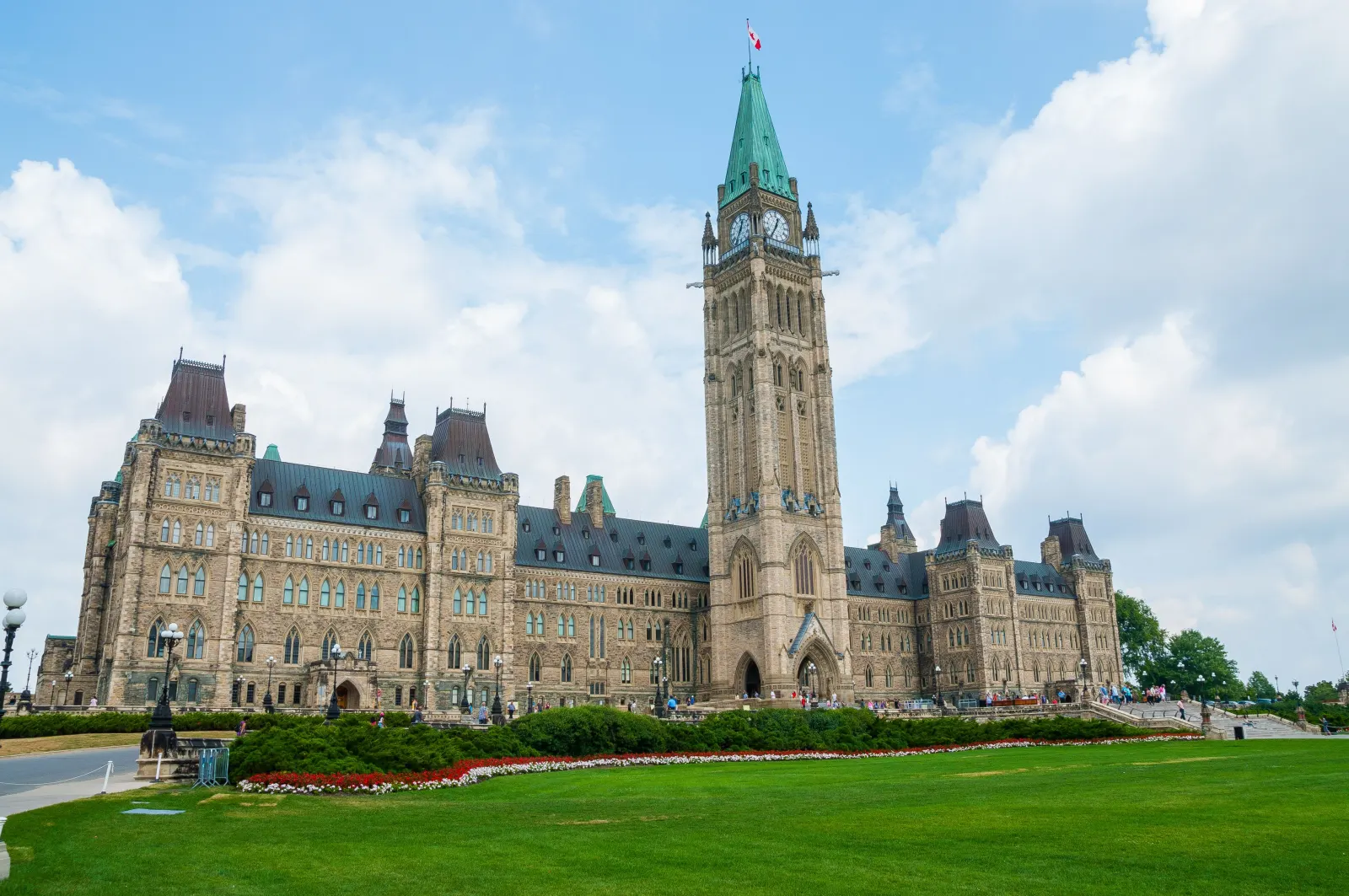
Photo: Splash of Rain / Pexels

Country
Canada
Currency
CAD

About Ottawa

Ottawa is Canada's capital, a compact city built around government, museums and the Rideau Canal. Visitors spend their time moving between Parliament Hill, the National Gallery and ByWard Market, with Gatineau's Canadian Museum of History just across the river in Quebec. The city is calm and walkable, suited to travellers who like history and architecture without big-city chaos. September and May bring mild temperatures and fewer crowds, making them the best months to visit.

How many days do you need in Ottawa?

Two to three days cover the main sights: Parliament Hill, the Rideau Canal, the National Gallery and ByWard Market. Add a day for the war or nature museums, or a half-day trip to Gatineau's history museum.

Top attractions in Ottawa

  1. 1Parliament Hill

    2–3 hours

    Downtown (Centretown)

    The seat of Canada's federal government sits on a bluff above the Ottawa River, with Gothic Revival buildings and wide lawns. The Centre Block is closed for a long renovation, so free guided tours run in other parliamentary buildings instead. The grounds and riverside paths are open for walking.

  2. 2Rideau Canal

    1–3 hours

    Downtown to Glebe

    This UNESCO World Heritage canal runs through the city centre, with locks next to Parliament Hill. In summer people walk, cycle or take boat trips along it. In winter part of it often becomes a skating route, though this depends on how cold the season is.

  3. 3National Gallery of Canada

    2–4 hours

    Lower Town

    Canada's national art museum, in a glass-and-granite building with views of Parliament Hill. It has large collections of Canadian and Indigenous art as well as European works. Louise Bourgeois's giant spider sculpture, Maman, stands outside.

  4. 4ByWard Market

    1–3 hours

    Lower Town

    One of Canada's oldest public markets, with produce stalls, food shops, cafés and restaurants spread over several streets. It is a good place for a meal or a casual walk, and it stays lively in the evening.

  5. 5Canadian Museum of History

    half a day

    Gatineau, Quebec

    Across the river from Parliament Hill, this museum covers Canada's human history. The Grand Hall holds a large collection of totem poles from the Pacific Northwest. You can walk there over the Alexandra Bridge.

  6. 6Canadian War Museum

    2–4 hours

    LeBreton Flats

    A modern museum on Canada's military history, from early conflicts to recent peacekeeping. It has tanks, artillery and personal stories from soldiers and civilians. The building itself is designed to feel stark and reflective.

  7. 7Canadian Museum of Nature

    2–3 hours

    Centretown

    Housed in a castle-like heritage building, this museum has fossil galleries, a blue whale skeleton, and halls on birds, minerals and Arctic life. It works well for families and on cold or rainy days.

  8. 8Notre-Dame Cathedral Basilica

    30–60 minutes

    Lower Town

    Ottawa's oldest church and the seat of the city's Roman Catholic archbishop. Its twin silver spires are easy to spot. Inside, the blue vaulted ceiling with gold stars and the carved woodwork are the main features.

  9. 9Rideau Hall

    1–2 hours

    New Edinburgh

    The official residence of the Governor General of Canada. Visitors can walk the landscaped grounds and see trees planted by visiting leaders, and guided tours of the house are offered.

Ottawa by month

Average weather and our month score, from 10 years of climate data.

Weather by month and month scores for Ottawa
Month High / low Rain days Sunshine Score
January -4°C / -13°C 11 days (76 mm) 4.9 h/day 2.0/10
February -2°C / -12°C 12 days (74 mm) 6.1 h/day 2.1/10
March 3°C / -7°C 12 days (76 mm) 7.5 h/day 2.6/10
April 11°C / 0°C 13 days (105 mm) 8.2 h/day 4.0/10
Best month: May 20°C / 8°C 11 days (91 mm) 10.4 h/day 7.8/10
June 24°C / 13°C 13 days (115 mm) 10.8 h/day 7.4/10
July 27°C / 17°C 13 days (108 mm) 12.1 h/day 7.0/10
August 25°C / 17°C 13 days (121 mm) 10.9 h/day 7.4/10
Best month: September 22°C / 13°C 9 days (76 mm) 9.5 h/day 8.1/10
October 14°C / 7°C 12 days (104 mm) 6.4 h/day 5.3/10
November 6°C / 0°C 12 days (76 mm) 5.0 h/day 1.9/10
December 0°C / -6°C 13 days (88 mm) 3.8 h/day 1.4/10
  1. Jan

    Days top out near -3.5°C with lows of -12.7°C and 11 rain or snow days; score 2, tough weather from deep cold makes this a hard month to enjoy outdoors.

  2. Feb

    Highs reach only -2°C with 11.9 days of precipitation; score 2.1, still deep winter cold that limits comfortable sightseeing.

  3. Mar

    Highs climb to 3.3°C but lows stay at -6.6°C with 11.5 wet days; score 2.6, a cold, slushy transition month.

  4. Apr

    Highs reach 11.1°C though lows near freezing (0.4°C) and 12.6 rain days, often the wettest month with 105mm; score 4, an okay shoulder month.

  5. May

    Highs of 19.5°C, lows of 7.9°C and 11 rain days with 10.4 sun hours; score 7.8, the best month for mild, bright conditions.

  6. Jun

    Warm highs of 23.7°C, lows 13.4°C, 12.9 rain days and 10.8 sun hours; score 7.4, a good month for warm outdoor time.

  7. Jul

    Hottest month with highs of 26.7°C, lows 17.1°C and the most sun at 12.1 hours, though 13.3 rain days; score 7, good despite frequent showers.

  8. Aug

    Highs of 25.2°C, lows 16.7°C and the wettest totals at 121mm over 12.8 rain days; score 7.4, still good and warm despite the rain.

  9. Sep

    Highs of 21.9°C, lows 13.2°C and drier at just 9.3 rain days; score 8.1, the top-rated month with warm, calmer weather.

  10. Oct

    Highs drop to 14.3°C, lows 6.9°C, 12.4 rain days and sun hours fall to 6.4; score 5.3, an okay cooling month.

  11. Nov

    Highs of just 6.2°C and lows below freezing at -0.3°C, with 11.8 wet days and only 5 sun hours; score 1.9, raw, grey cold sets in.

  12. Dec

    Highs of 0.2°C, lows -6.3°C, 12.6 precipitation days and the least sun at 3.8 hours; score 1.4, deep winter cold and dark days return.

Climate averages 2015–2024 · Best time to visit Canada →

Where to stay in Ottawa

The best areas to base yourself and who each one suits.

ByWard Market

Good for first-timers, nightlife, food lovers

This old market district sits just east of Parliament Hill and the Rideau Canal, with food stalls, restaurants and bars on its streets. You can walk to most major sights and museums from here. It gets loud late at night, especially at weekends, so light sleepers should ask for a quiet room.

Centretown

Good for first-timers, business travellers, walkers

Centretown is the central grid south of Parliament Hill, with offices, shops and the Bank Street and Elgin Street strips. It puts you close to the canal, the government buildings and many restaurants. Some blocks feel quiet and office-like in the evenings and at weekends.

The Glebe

Good for families, couples, quiet stays

The Glebe is a leafy residential area south of Centretown, beside the Rideau Canal, with independent shops and cafés along Bank Street. It feels calm and local, and Lansdowne Park hosts events and a farmers' market. It is a longer walk or a bus ride to Parliament Hill and the ByWard Market.

Sandy Hill

Good for students, budget travellers, quiet streets

Sandy Hill lies east of the ByWard Market, around the University of Ottawa, with older houses and tree-lined streets. It is close to the centre but calmer than the Market. Choice of places to stay is more limited, and the area can feel busy with students during term.

Hintonburg

Good for repeat visitors, food and coffee fans

Hintonburg is west of downtown, along Wellington Street West, with small restaurants, breweries, galleries and cafés. It feels like a lived-in neighbourhood, and it is near the Ottawa River pathways. You will need transit or a bike to reach the main downtown sights.

Westboro

Good for families, outdoor lovers, shoppers

Westboro is further west, with shops along Richmond Road and easy access to the Ottawa River and its beaches and paths. It is relaxed and residential, good for a slower stay. It is the furthest option here from Parliament Hill, so expect a bus or light rail ride for sightseeing.

Getting to and around Ottawa

From the airport
No specific route data is available for Ottawa's airport. Visitors usually take a taxi, rideshare, or the OC Transpo bus into the centre, since there's no train link to downtown.
Public transport
Ottawa has no metro or tram system. Visitors rely on OC Transpo buses, including the Confederation Line light rail, to get around. Check routes ahead, since service can be less frequent than in larger cities.
On foot
Downtown Centretown is walkable, linking Parliament Hill, the Canadian Museum of Nature, and the Rideau Canal. Lower Town's ByWard Market, National Gallery, and Notre-Dame Cathedral Basilica also sit close together.

Food to try in Ottawa

BeaverTails

A flat, fried pastry stretched into the shape of a beaver's tail and topped with sugar, cinnamon, or chocolate. The original stand sits in the ByWard Market, a popular stop for a sweet snack any time of year.

Poutine

Fries covered in cheese curds and gravy, a Canadian classic found on menus across Ottawa. Many diners and pubs in the city serve their own version, often late at night after a night out.

ByWard Market shawarma

Ottawa has a strong Lebanese food scene, and shawarma wraps are a lunchtime staple in the ByWard Market area. Locals line up at small counters for a quick, filling meal.

Maple taffy

Hot maple syrup poured on snow and rolled onto a stick, eaten as a treat at sugar shacks in the Ottawa region. It is tied to the maple syrup season in early spring.

Obama cookie

A chocolate-dipped sablé cookie named after a visit from a US president, sold at a bakery in the ByWard Market. It has become a local souvenir treat for visitors walking through the market.

More of Canada

Canada travel guide →

Ottawa: frequently asked questions

Is Ottawa good to visit in August?

Yes, August works well, with a score of 7.4 out of 10. Days average 25.2°C with 16.7°C lows, and there are around 12.8 rain days with 121mm of rain, the wettest month of the year. Sun hours sit at 10.9, so expect warm, humid conditions with frequent short showers.

What is the best time to visit Ottawa?

September and May score highest, at 8.1 and 7.8 out of 10. September has mild highs of 21.9°C, lows of 13.2°C, and only 9.3 rain days, the driest stretch of the year. May brings 19.5°C highs and 7.9°C lows as spring arrives, with 10.4 sun hours a day.

Is Ottawa cold in winter?

Yes, Ottawa winters are cold. January highs average -3.5°C and lows drop to -12.7°C, with similar numbers in February and December. Sun hours fall to 3.8–6.1 a day in these months, and all three score 2.1 or below, reflecting the dark, frozen conditions typical of a Canadian capital winter.

How many days do I need in Ottawa?

Plan for 2 to 3 days to cover the main sights. Parliament Hill takes 2–3 hours, the National Gallery of Canada 2–4 hours, and ByWard Market 1–3 hours. Add a half day for the Canadian Museum of History across the river in Gatineau if you want a fuller trip.

Does it rain a lot in Ottawa?

Rain falls on roughly 9 to 13 days every month, year-round. June, July, and August are the wettest by volume, with 108mm to 121mm of rain each, while September is driest with 76mm over 9.3 days. There's no single dry season, so pack for showers whenever you visit.