Skip to content
wheretotravel.info
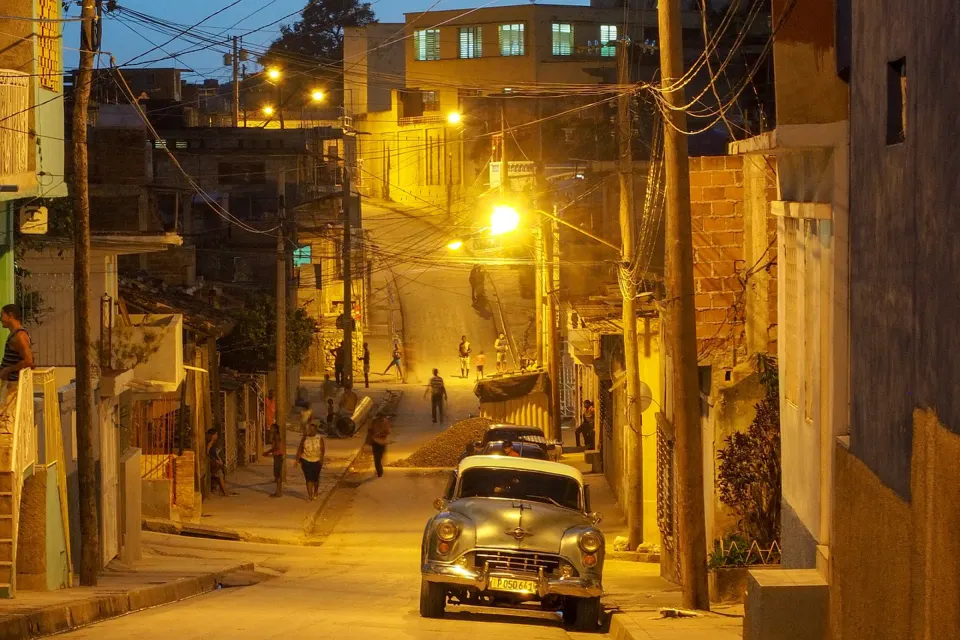
Vintage car on Cuban street at dusk with streetlights

Cuba travel guide

Caribbean streets, old cars and coastal towns, best seen in the dry winter months

Best: Jan, Feb, Mar, Dec

Photo: JudiHa / Pixabay

Capital
Havana
Language
Spanish
Currency
Cuban peso (CUP)
Time zone
UTC-05:00
Plugs
Type A, B · 110 V
Driving
On the right
Emergency
106 / 104 / 105

Why visit Cuba

Cuba suits travellers who want colonial cities, live music and beach time without a packed itinerary. Havana, Santiago de Cuba and Cienfuegos sit on the coast, while Camagüey, Santa Clara and Pinar del Río give an inland feel. The best months to go are December through March, when the weather is driest. One honest limitation: outside those months, heat and humidity rise, and the island's 109,884 km2 stretch between coasts means long bus or car rides if you want to see more than one region.

  • Havana, a capital on the sea

    Havana is Cuba's capital and its largest city by a wide margin. It sits on the coast, so you can combine city streets with time by the water in a single trip. Many visitors start and end their journey here.

  • Dry-season months to aim for

    The best months to visit are December, January, February and March. If you have a choice, plan your trip for this window. Outside it, you may find the weather less comfortable, so check conditions before booking other months.

  • More coast beyond the capital

    Several other Cuban cities lie on the coast. These include Santiago de Cuba, the second-largest city, the smaller Cienfuegos and the resort town of Varadero. This lets you choose between a larger city base and a quieter seaside stop.

  • Inland cities for a different view

    Not all of Cuba is about the beach. Camagüey, Santa Clara and Pinar del Río are all inland cities. Adding one or more of them to a route shows you a side of the country that coastal stays miss.

  • Straightforward to plan a road trip

    Cuba uses one time zone, and cars drive on the right. Spanish is the official language, so some basic phrases will help a lot outside tourist areas. A route linking Havana, Santa Clara, Camagüey and Santiago de Cuba connects the main cities.

Is Cuba right for you?

Great for

  • Sun-seekers who want dry, warm weather with highs around 26-27°C in January-March and December
  • Beach travellers, since most listed cities like Havana, Santiago de Cuba, Cienfuegos and Varadero are coastal
  • Travellers who enjoy plenty of sunshine, with over 10 hours a day in the dry season months
  • Visitors happy with a single time zone and simple +53 dialling code for planning calls home

Less ideal for

  • Travellers who dislike heavy rain, since October averages 151mm over 16.5 rain days
  • Visitors sensitive to humidity and heat, as highs reach 30°C in July and August with high rain-day counts
  • People wanting varied voltage or plug options, since Cuba only uses 110V with type A/B plugs

Cuba right now: November

6.4/10
Avg high
28°C
Avg low
26°C
Rain days
8

Averages for Cuba.

Weather by month

Based on data for Havana, January to April and December are the best months, with highs of 26–28°C, little rain (17–29mm) and under 4 rain days a month. October is toughest, with 151mm of rain over 16.5 days, while August brings the year's highest heat, up to 30.2°C, alongside heavy rain from May through September.

Average highs and lows in Cuba by month January: high 26°C, low 24°C , 4 rain days . February: high 26°C, low 24°C , 4 rain days . March: high 27°C, low 24°C , 4 rain days . April: high 28°C, low 25°C , 6 rain days . May: high 28°C, low 26°C , 15 rain days . June: high 29°C, low 27°C , 16 rain days . July: high 30°C, low 28°C , 13 rain days . August: high 30°C, low 28°C , 16 rain days . September: high 30°C, low 28°C , 16 rain days . October: high 29°C, low 27°C , 17 rain days . November: high 28°C, low 26°C , 8 rain days . December: high 27°C, low 25°C , 4 rain days . 26°C 24°C JAN 4d 26°C 24°C FEB 4d 27°C 24°C MAR 4d 28°C 25°C APR 6d 28°C 26°C MAY 15d 29°C 27°C JUN 16d 30°C 28°C JUL 13d 30°C 28°C AUG 16d 30°C 28°C SEP 16d 29°C 27°C OCT 17d 28°C 26°C NOV 8d 27°C 25°C DEC 4d
Best months Other months (low–high) Nd = rain days

Cuba (country average) · averages 2015–2024

Best time to visit Cuba: month-by-month weather →

Sample itineraries

7 days

Havana, Varadero and Central Cuba

  1. Day 1–3

    Havana

    Explore the capital, home to 2,492,618 people. Walk the old streets, look at the classic cars and spend an evening by the coast since the city is on the sea.

  2. Day 4–5

    Varadero

    Relax in this small coastal town of 21,170 people, known for its beaches along Cuba's north shore.

  3. Day 6–7

    Santa Clara

    Finish inland in Santa Clara, a city of 247,436 people, with a slower pace than the capital before heading home.

10 days

Cuba from West to East

  1. Day 1–2

    Pinar del Río

    Start inland in Pinar del Río, population 188,614, a quieter base away from the coast.

  2. Day 3–5

    Havana

    Spend three days in Havana, the coastal capital with 2,492,618 residents. See the historic center and the waterfront.

  3. Day 6–7

    Cienfuegos

    Move to Cienfuegos, a coastal city of 164,924 people, for a change of pace by the water.

  4. Day 8–9

    Camagüey

    Head inland to Camagüey, population 321,992, one of Cuba's larger inland cities.

  5. Day 10

    Santiago de Cuba

    End in Santiago de Cuba, a coastal city of 506,037 people on the eastern end of the island.

Food to try in Cuba

Ropa vieja

This is shredded beef cooked slowly in a tomato-based sauce with peppers and onions. It is a classic Cuban main course served with rice in homes and restaurants across the island.

Moros y cristianos

This is a dish of black beans and white rice cooked together. It is a staple side dish found at almost every meal in Cuba.

Lechón asado

This is slow-roasted pork, often marinated in garlic and citrus. It is a centerpiece of Cuban celebrations, especially around Christmas and New Year.

Tostones

These are twice-fried green plantain slices, flattened and crisped. They are a common side dish or snack sold at street stalls and paladares.

Cuban sandwich (sándwich cubano)

This pressed sandwich layers ham, roast pork, Swiss cheese, pickles, and mustard in Cuban bread. It is popular as a quick lunch in cafés across Havana and other cities.

Mojito

This cocktail mixes white rum, lime juice, sugar, soda water, and mint. It originated in Cuba and is served in bars throughout the country, especially in Havana.

Know before you go

  • Currency: Cuba uses the Cuban peso (CUP). It's worth checking current exchange rules before you arrive, since Cuba's currency system has multiple rates in practice.
  • Language: Spanish is the official language. English is not widely spoken outside tourist areas, so a few basic Spanish phrases help a lot.
  • Plugs and voltage: Cuba uses plug types A and B, the same flat-pin style as North America. The voltage is 110 V, so check your devices before plugging in.
  • Driving side: Cars drive on the right side of the road in Cuba.
  • Emergency numbers: For emergencies in Cuba, dial 106, 104, or 105 depending on the service you need.
  • Time zone: Cuba runs on UTC-05:00 year-round, so check the time difference from your home country before planning calls or flights.

Cuba: frequently asked questions

Is Cuba good to visit in August?

August scores 3.9 out of 10, the lowest of the year. Highs reach 30.2°C with 27.6°C lows, and rain falls on 15.5 days for a total of 114 mm. It's hot, humid and wet, part of the June to November hurricane season, though some travellers still go for the lower crowds.

What is the best time to visit Cuba?

December to April scores highest, with January leading at 9.2 out of 10. These months have less rain, around 3 to 6 rain days a month, and highs between 26 and 28°C. December through April are all rated best, making the dry winter and early spring the most comfortable window.

When is the rainy season in Cuba?

The wettest months run from May to October. October sees the most rain at 151 mm over 16.5 days, and September, June and August all bring over 110 mm each. May starts the shift, jumping to 132 mm from just 27 mm in April.

What is the weather like in Cuba in November?

November is rated good, scoring 6.4 out of 10. Highs sit at 28.2°C with lows of 25.6°C, and rain drops to 7.5 days totalling 63 mm. It's a transition month, drier than October but not yet as settled as the winter peak from December onward.

What language is spoken in Cuba and what's the capital?

Spanish is the official language, and Havana is the capital. Havana is also the largest city by population and sits on the coast, alongside other coastal cities like Santiago de Cuba, Cienfuegos and Varadero.

Similar destinations

Countries with a year of weather much like Cuba.