Skip to content
wheretotravel.info
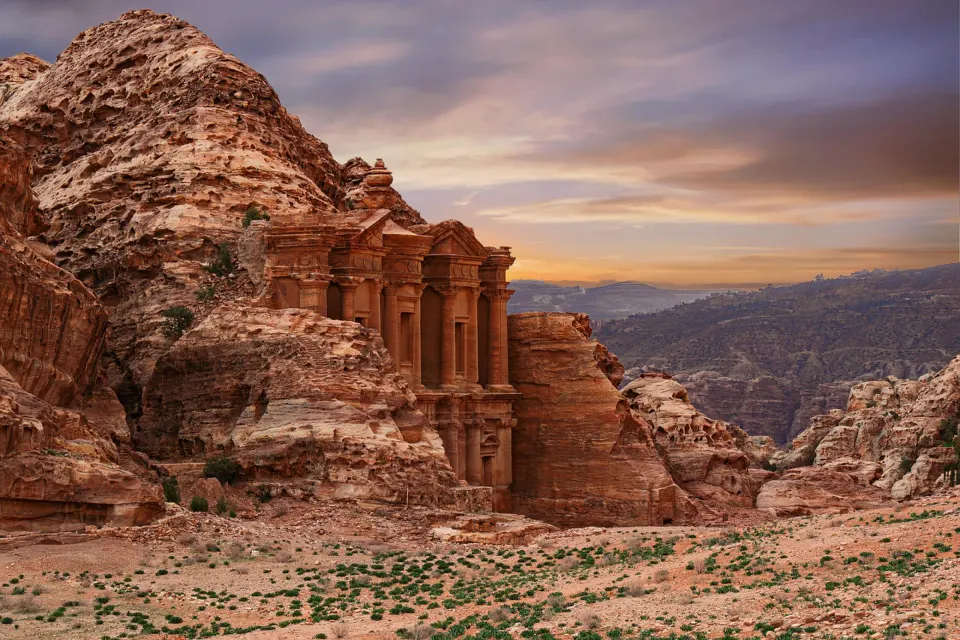
Petra's Treasury carved into red rock at sunset

Petra travel guide

What to see, where to stay and the best time to visit Petra, Jordan.

Best: Mar, Apr, Oct, Nov

Photo: ChiemSeherin / Pixabay

Country
Jordan

About Petra

Petra is Jordan's ancient city carved into rose-coloured rock, reached through a narrow canyon called the Siq. Beyond the famous Treasury, the site spreads over a large area with tombs, a theatre and hiking trails up to the Monastery and the High Place of Sacrifice. It's a walking destination with uneven ground and sun exposure, best visited in October, November, March or April, when temperatures are milder than in the height of summer.

How many days do you need in Petra?

Plan on 2 to 3 days. One day covers the Siq, Treasury and main valley; a second day lets you hike to the Monastery or High Place of Sacrifice and visit Little Petra without rushing.

Top attractions in Petra

  1. 1Al-Khazneh (The Treasury)

    30–60 minutes

    Petra Archaeological Park

    A tall tomb façade carved into pink sandstone, and the first major monument you see as you leave the Siq. Light on the façade changes through the day, so many visitors return to see it again on the way out.

  2. 2The Siq

    1 hour

    Petra Archaeological Park

    A narrow, winding gorge with high rock walls that forms the main walking entrance to Petra. Look for the old water channels cut into the sides and the carved niches along the way.

  3. 3Ad Deir (The Monastery)

    2–3 hours

    Petra Archaeological Park

    A huge carved façade high above the main valley, reached by a long, steep stairway path. The climb is tiring in the heat, but the monument is less crowded than the Treasury and the nearby viewpoints look out over the desert mountains.

  4. 4Royal Tombs

    1–1.5 hours

    Petra Archaeological Park

    A row of large tombs cut into the cliff of Jabal al-Khubtha, including the Urn Tomb, the Silk Tomb, the Corinthian Tomb and the Palace Tomb. Inside, the rock shows bands of red, yellow and white, and the terrace gives a good view over the city centre.

  5. 5High Place of Sacrifice

    2–3 hours

    Petra Archaeological Park

    A ceremonial site on a mountaintop, reached by a steep path of carved steps. The descent on the far side passes the Lion Fountain, the Garden Tomb and the Roman Soldier Tomb, and it returns to the valley floor with far fewer people around.

  6. 6Street of Facades

    30 minutes

    Petra Archaeological Park

    A line of tomb fronts carved into the cliff between the Treasury and the Theatre. It is an easy stop on the main route and shows the step-topped style typical of Nabataean tombs.

  7. 7Theatre

    30 minutes

    Petra Archaeological Park

    A large theatre carved straight out of the mountainside, with rows of seats cut from the rock. Older tombs were partly cut away when it was built, and you can still see their openings above the seats.

  8. 8Colonnaded Street, Great Temple and Qasr al-Bint

    1–2 hours

    Petra Archaeological Park

    The old city centre on the valley floor, with a paved Roman-era street, the ruins of the Great Temple complex and Qasr al-Bint, one of the few free-standing buildings left in Petra. It helps you picture Petra as a living city and not only a place of tombs.

  9. 9Little Petra (Siq al-Barid)

    1–2 hours

    Beidha

    A smaller Nabataean site north of the main park, with carved buildings in a short canyon. It is usually quiet, and one chamber still has traces of its original painted ceiling.

  10. 10Petra Museum

    1 hour

    Wadi Musa

    A modern museum near the visitor centre at the main entrance, with finds from Petra and clear displays on the Nabataeans. It is a good first stop for background before walking into the site, or a cool break after a hot day.
Petra by month

Average weather and our month score, from 10 years of climate data.

Weather by month and month scores for Petra
Month High / low Rain days Sunshine Score
January 13°C / 6°C 8 days (45 mm) 9.2 h/day 5.9/10
February 15°C / 7°C 7 days (43 mm) 9.7 h/day 6.9/10
Best month: March 18°C / 9°C 5 days (29 mm) 10.8 h/day 9.0/10
Best month: April 24°C / 13°C 3 days (11 mm) 12.0 h/day 9.5/10
May 28°C / 17°C 1 day (6 mm) 12.7 h/day 8.7/10
June 31°C / 20°C 0 days (0 mm) 13.1 h/day 7.6/10
July 32°C / 22°C 0 days (0 mm) 13.1 h/day 5.4/10
August 32°C / 22°C 0 days (1 mm) 12.8 h/day 5.2/10
September 30°C / 20°C 0 days (1 mm) 11.5 h/day 7.7/10
Best month: October 26°C / 17°C 2 days (8 mm) 10.7 h/day 9.6/10
Best month: November 20°C / 12°C 5 days (19 mm) 9.9 h/day 9.1/10
December 15°C / 8°C 5 days (23 mm) 9.1 h/day 7.7/10
  1. Jan

    Highs reach 12.9°C with 7.8 rain days, so cold and wet spells are common. Score is 5.9, an ok time to visit.

  2. Feb

    Highs climb to 14.6°C with 7 rain days, still cool and showery. Score rises to 6.9, a good month.

  3. Mar

    Highs hit 18.4°C and rain drops to 4.9 days. Score is 9, rated the best.

  4. Apr

    Highs of 23.6°C with just 2.7 rain days give warm, dry days. Score peaks at 9.5, the best month.

  5. May

    Highs reach 28.1°C and rain almost stops at 1 day. Score of 8.7 keeps it among the best.

  6. Jun

    Highs of 30.7°C and almost no rain, 0.1 days, bring dry heat. Score is 7.6, still best.

  7. Jul

    Highs of 32.3°C with zero rain days make walking the site tough in midday heat. Score drops to 5.4, ok.

  8. Aug

    Highs stay near 32.4°C with 0.3 rain days, so the heat remains intense. Score is 5.2, ok.

  9. Sep

    Highs ease to 30.4°C with 0.3 rain days, still hot but more bearable. Score of 7.7 marks it best.

  10. Oct

    Highs fall to 25.9°C and rain returns lightly at 1.9 days. Score tops out at 9.6, the best month.

  11. Nov

    Highs drop to 20.1°C with 4.5 rain days, bringing cooler, damper conditions. Score is 9.1, best.

  12. Dec

    Highs reach 15.3°C with 4.8 rain days, cool and occasionally wet. Score is 7.7, rated best.

Climate averages 2015–2024 · Best time to visit Jordan →

Where to stay in Petra

The best areas to base yourself and who each one suits.

Lower Wadi Musa

Good for first-timers, short stays, early starts

This is the strip of Wadi Musa closest to the Petra Visitor Centre and the main gate, so you can walk in at opening time and come back for a rest at midday. Restaurants, shops and the Petra by Night start point are all close by. It is the busiest and most tour-group-heavy part of town, so expect traffic and higher demand in peak season.

Wadi Musa Town Centre

Good for budget travellers, independent travellers

The centre around the main roundabout is where locals live and shop. It has bakeries, simple grill restaurants and more budget guesthouses than anywhere else. The drawback is the hill: the walk down to the Petra gate is easy, but the walk back up after a long day on foot is steep and tiring, so many people take a taxi.

Ain Musa

Good for views, quiet, travellers with a car

At the top of Wadi Musa, around the spring linked to the story of Moses, this area is calmer and has wide views over the valley at sunset. Several larger hotels sit along the ridge. It is too far and too steep to walk to the Petra gate, so you will rely on taxis, hotel shuttles or your own car.

Taybeh

Good for couples, quiet, scenery

Taybeh is a small village on the hills south of Wadi Musa, with views over the Petra mountains and a slower, rural feel. It suits people who want peace after busy days in the site. You need a car or taxi for every trip to Petra, and there are few places to eat outside the hotels.

Little Petra

Good for camping, stargazing, adventurous travellers

North of Wadi Musa, near the small rock-cut site of Siq al-Barid, you sleep in Bedouin-style desert camps surrounded by sandstone. Nights are dark and quiet, good for stars, and there is a walking trail towards the Monastery for fit hikers with a guide. It is a drive from the main Petra gate, facilities are basic, and desert nights can be cold outside summer.

Umm Sayhoun

Good for cultural interest, homestays

This is the village where many Bdoul Bedouin families were resettled from inside Petra, on the hillside above the site's northern edge. Staying here gives a closer look at local life, and some guides lead walks into Petra from nearby. Accommodation is limited and simple, and there is little in the way of restaurants or shops.

Getting to and around Petra

From the airport
Petra has no airport of its own; most visitors arrive by bus or private transfer from Amman or Aqaba. From Amman, buses take about 3 h 30 min and cost 10–18.44 JOD. From Aqaba, buses take about 2 h 30 min and cost 5 JOD.
Public transport
Petra has little public transport. Visitors rely on buses between towns, taxis, or walking inside the archaeological park. Book inter-city buses or taxis in advance, since schedules are limited.
On foot
Petra Archaeological Park is fully walkable, linking the Siq, Treasury, Royal Tombs, Theatre and Monastery on one route, though distances and climbs are long.

Typical journey times and fares from the airport and other cities.

Route By Time Price
Amman → Petra JETT runs one daily bus. It leaves Amman (Abdali or 7th Circle) early in the morning, about 06:30, and returns from Petra (Wadi Musa) at about 17:00. The trip takes about 3.5 hours, including one rest stop halfway. The fare is about JOD 10 at the JETT office (jett.com.jo). Resellers such as 12go charge about JOD 18.44. Book a day or more ahead in high season. I could not open the JETT site, so I used a 2025 guide and a reseller listing. bus 3 h 30 min 10–18.44 JOD ↗

Day trips from Petra

Places within 2½ hours by train, bus, ferry or car.

  • Aqaba

    bus · 5 JOD

    Direct public minibuses run between Wadi Musa (Petra) and Aqaba, with few departures (around midday in the afternoon from Aqaba, none on Fridays). The fare is about JOD 5. You can also change in Ma'an, which is cheaper. The 150 minutes is a rough figure based on reported 2.5-hour taxi rides; I did not find a published bus time. A taxi costs about JOD 35–55.

    2 h 30 min

Food to try in Petra

Mansaf

This is Jordan's national dish: lamb cooked in a sauce of fermented dried yogurt, served over rice with pine nuts and almonds. Restaurants near Petra's entrance serve it at lunchtime, often for travellers who want a filling meal after a morning hiking in the ruins.

Maqluba

A layered dish of rice, meat and fried vegetables (usually eggplant, cauliflower or potato) cooked in one pot, then flipped upside down onto a plate before serving. It's common in local homes and small Bedouin-run eateries in Wadi Musa, the town next to Petra.

Zarb

This is meat and vegetables slow-cooked underground in a sand oven, a Bedouin cooking method still used in the area around Petra. Some desert camps and local guides prepare it for evening meals, especially for visitors staying overnight near Wadi Musa.

Bedouin tea

Sweet black tea flavored with sage or mint, brewed over a small fire. Local sellers and guides inside Petra often offer it to tired walkers resting along the long trails between monuments.

Falafel and hummus

Fried chickpea balls and chickpea dip with olive oil are everyday staples across Jordan. They're sold cheaply at small stalls and cafés in Wadi Musa, usually eaten with fresh bread for breakfast or a quick lunch.

Knafeh

A sweet dessert made of thin pastry layered with cheese and soaked in sugar syrup, topped with crushed pistachios. It's popular as an evening treat in Wadi Musa after a day spent exploring Petra's sites.

More of Jordan

Jordan travel guide →

Petra: frequently asked questions

Is Petra good to visit in August?

August is rated ok, not best, with a score of 5.2. Daytime highs hit 32.4°C and lows only drop to 22.2°C, so walking the Siq and climbing to the Monastery feels hot. Rain is almost zero, with 0.3 rain days, so the heat is the main issue, not wet weather.

When is the best time to visit Petra?

October, April, November and March score highest, all rated best. October tops the list at 9.6, with highs around 25.9°C and lows of 17.1°C, giving comfortable conditions for walking between the Treasury, Royal Tombs and the Monastery without the summer heat.

How many days do I need in Petra?

Plan at least 2 full days. The Siq and Treasury alone take about 1.5 hours, but the Monastery needs 2–3 hours round trip, the High Place of Sacrifice another 2–3 hours, and the Royal Tombs and Colonnaded Street add 2–3 more hours. Add a half day if you also want Little Petra, which takes 1–2 hours.

Is Petra cold in January?

Petra is cool in January, with a score of 5.9, the lowest of the year along with winter months. Daytime highs reach only 12.9°C and lows drop to 5.6°C. January also has the most rain days, at 7.8, and 45mm of rainfall, so bring layers for cold mornings on stone paths.

Does it rain much in Petra?

Rain is light overall but concentrated in winter. January and February each bring around 43–45mm of rain over 7–7.8 days. From June to September, rain almost disappears, with 0 to 1mm and under 0.3 rain days a month, so summer visits are dry but hot.