Skip to content
wheretotravel.info
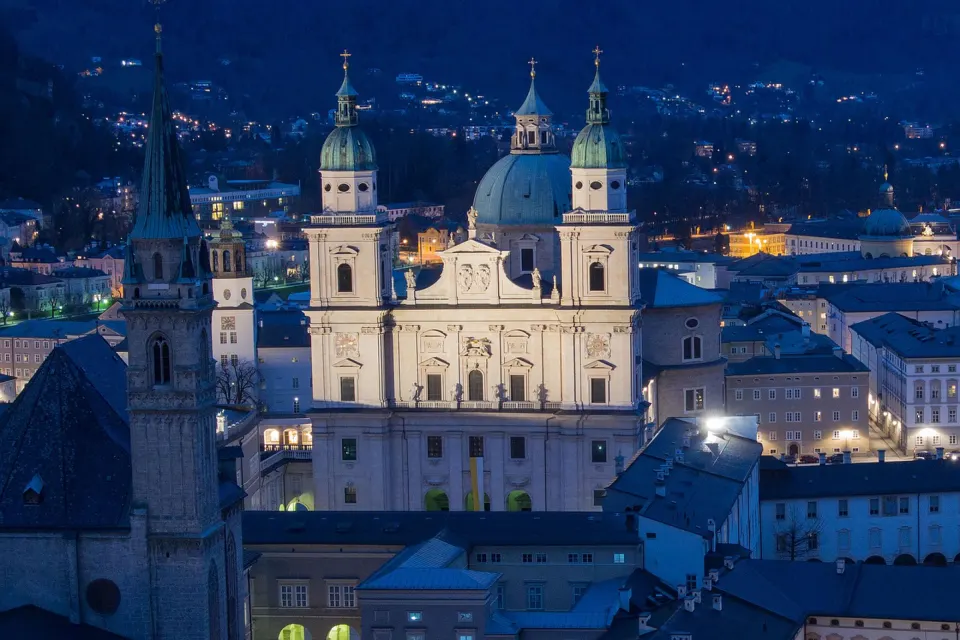
Night view of Salzburg Cathedral and city lights

Salzburg travel guide

What to see, where to stay and the best time to visit Salzburg, Austria.

Best: May, Sep

Photo: werdepate / Pixabay

Country
Austria

About Salzburg

Salzburg is a compact Austrian city of 155,021 people, set below the Alps and known for its baroque old town and ties to Mozart. It's an easy place to explore on foot, with hills and gardens close to the centre. May and September are the best months to visit: the weather is mild, and summer crowds have either not arrived yet or have thinned out.

How many days do you need in Salzburg?

Salzburg's old town is small, so 2 to 3 days is enough to see the main sights and still have time for a day trip into the surrounding mountains.

Top attractions in Salzburg

  1. 1Hohensalzburg Fortress

    2–3 hours

    Old Town (Festungsberg)

    A large medieval fortress on the hill above the Old Town, and the city's main landmark. You can walk up or take the funicular, then tour the state rooms and museums. The views over the rooftops and the Alps are the main reason to go.

  2. 2Salzburg Cathedral

    1 hour

    Old Town

    A Baroque cathedral with a white marble-like interior, a large dome and several organs. It sits at the centre of a ring of squares, including Domplatz and Residenzplatz.

  3. 3DomQuartier

    2–3 hours

    Old Town

    One combined route through the Residenz state rooms, the Residenz Gallery, the cathedral organ gallery and the museum of St Peter's Abbey. It shows how the prince-archbishops lived and ruled, and gives views of the cathedral from inside and above.

  4. 4Mozart's Birthplace

    1–1.5 hours

    Old Town (Getreidegasse)

    The yellow house on Getreidegasse where Wolfgang Amadeus Mozart was born, now a museum. It holds family letters, portraits and instruments, including his childhood violin.

  5. 5Getreidegasse

    1 hour

    Old Town

    The Old Town's best-known shopping lane, narrow and lined with tall houses and wrought-iron shop signs. Look for the small passages and courtyards that link it to the river and the squares behind.

  6. 6Mirabell Palace and Gardens

    1–2 hours

    New Town (Neustadt)

    A palace with formal Baroque gardens, fountains, statues and flower beds, with the fortress framed in the background. The gardens are free to walk through, and some scenes from The Sound of Music were filmed here.

  7. 7St Peter's Abbey and Cemetery

    1 hour

    Old Town

    One of the oldest monasteries in the German-speaking world, with a richly decorated church. The small cemetery beside it has ornate iron grave markers and catacombs cut into the Mönchsberg cliff.

  8. 8Hellbrunn Palace and Trick Fountains

    half a day

    Hellbrunn, south of the centre

    An early Baroque summer palace built for a prince-archbishop, best known for its trick fountains that spray visitors without warning on a guided tour. The large park around it is good for a walk and holds the gazebo from The Sound of Music.

  9. 9Mönchsberg and Museum of Modern Art

    2–3 hours

    Mönchsberg

    A wooded hill right above the Old Town, reached by a lift from Gstättengasse or by footpaths. The modern art museum at the top has changing exhibitions, and walking trails lead along the ridge towards the fortress with views across the city.

  10. 10Mozart Residence

    1 hour

    New Town (Makartplatz)

    The larger apartment the Mozart family moved into after leaving the Getreidegasse house. Its museum focuses on Mozart's life and work as a young composer, with an audio guide and original instruments.
Salzburg by month

Average weather and our month score, from 10 years of climate data.

Weather by month and month scores for Salzburg
Month High / low Rain days Sunshine Score
January 5°C / -4°C 16 days (124 mm) 4.8 h/day 1.2/10
February 8°C / -2°C 13 days (94 mm) 6.3 h/day 1.9/10
March 11°C / 1°C 14 days (92 mm) 7.8 h/day 3.8/10
April 15°C / 4°C 15 days (109 mm) 9.3 h/day 5.6/10
Best month: May 19°C / 8°C 19 days (182 mm) 9.3 h/day 7.0/10
June 24°C / 13°C 16 days (146 mm) 11.4 h/day 7.0/10
July 25°C / 15°C 17 days (156 mm) 11.5 h/day 7.0/10
August 25°C / 15°C 15 days (170 mm) 10.4 h/day 7.0/10
Best month: September 20°C / 11°C 13 days (147 mm) 8.8 h/day 7.4/10
October 16°C / 7°C 13 days (109 mm) 7.0 h/day 6.3/10
November 10°C / 2°C 13 days (97 mm) 5.7 h/day 2.9/10
December 7°C / -2°C 15 days (106 mm) 4.6 h/day 1.2/10
  1. Jan

    Cold month with a high of 5°C and 15.8 rain days, plus just 4.8 hours of sun daily. Score is low at 1.2, reflecting the dark, chilly conditions rather than ruling it out.

  2. Feb

    Still cold, with highs of 8°C and 13.4 rain days. Sun hours creep up to 6.3. Score of 1.9 shows winter still dominates.

  3. Mar

    Highs reach 11.2°C with 14 rain days and 7.8 hours of sun, as spring starts slowly. Score of 3.8 marks a transition month with mixed weather.

  4. Apr

    Milder days with a high of 15°C, 14.5 rain days, and 9.3 sun hours. Score rises to 5.6, an ok month as spring settles in.

  5. May

    Warmer at 18.5°C high but wettest month with 19.2 rain days and 182mm rain. Score hits 7, a good month despite the showers.

  6. Jun

    Summer arrives with a high of 23.6°C, 16.2 rain days, and 11.4 sun hours. Score of 7 keeps it a good choice.

  7. Jul

    Warmest month at 24.8°C high, 17 rain days, and 11.5 sun hours, the most of the year. Score stays strong at 7.

  8. Aug

    Highs of 24.7°C with 15.4 rain days and 170mm of rain. Score of 7 holds steady as a good summer month.

  9. Sep

    Highs cool to 20°C with 13.2 rain days and 8.8 sun hours. Score peaks at 7.4, the best-rated month of the year.

  10. Oct

    Autumn brings a high of 16.4°C, 13.4 rain days, and 7 sun hours. Score of 6.3 still counts as good.

  11. Nov

    Cold sets in with a high of 10°C, 12.6 rain days, and only 5.7 sun hours. Score drops to 2.9 as daylight shrinks.

  12. Dec

    Winter cold returns with a high of 6.5°C, 14.6 rain days, and just 4.6 sun hours. Score of 1.2 reflects the short, dark days.

Climate averages 2015–2024 · Best time to visit Austria →

Where to stay in Salzburg

The best areas to base yourself and who each one suits.

Altstadt

Good for first-timers, sightseeing

The Old Town on the left bank of the Salzach is the historic core, with Getreidegasse, the cathedral and the fortress above. You can walk to most major sights in minutes. Daytime crowds fill the narrow lanes, and cobbles plus car restrictions make arriving with luggage awkward.

Neustadt

Good for first-timers, couples, good transport

Across the river from the Old Town, this area runs from Mirabell Gardens along Linzer Gasse and has a more everyday feel, with cafés and shops used by locals. A short bridge walk takes you to the main sights, and buses run often. Main roads such as Rainerstraße carry steady traffic, so street-facing rooms can be noisy.

Mülln

Good for beer lovers, relaxed stays

This old quarter sits below the Mönchsberg, just north-west of the Old Town, and is known for the Augustiner monastery brewery and its large beer garden. It feels quieter and more local than the centre, yet the walk into town is easy along the river. Some streets are steep, and evenings near the brewery can be lively.

Nonntal

Good for quiet, walkers

Nonntal lies on the south side of the fortress hill, around Nonnberg Abbey, and is mostly residential with university buildings and green space. It suits travellers who want calm nights while staying within walking distance of the Old Town. Dining choice is limited, and reaching the centre on foot can mean climbing over or skirting the hill.

Elisabeth-Vorstadt

Good for rail travellers, budget-minded

The district around the main railway station is handy for day trips and late arrivals, with frequent buses into the centre. It has plenty of practical shops and international eateries. It is less attractive than the historic areas, and the walk to the Old Town is longer than from the other options.

Parsch

Good for families, quiet

Parsch is a leafy residential area east of the Kapuzinerberg, with villas, gardens and easy access to walking trails. It is peaceful and feels far from the tourist flow. You will rely on buses or a fairly long walk to reach the sights, and there is little nightlife.

Getting to and around Salzburg

From the airport
Salzburg Airport sits close to the city, and visitors usually reach the centre by public bus or taxi. No timings or fares are available here, so check current options before you travel.
Public transport
Salzburg's centre is served by a city bus network, which is the main way to get around without a car. There are no trams, metro or ferry lines, so buses are your only public transport option. Tip: buy a ticket before boarding, since inspections are common.
On foot
Salzburg's old town is compact and largely pedestrian, making it easy to explore on foot once you arrive. Specific neighbourhoods and attractions aren't listed here, but the historic core is known for being walkable.

Food to try in Salzburg

Salzburger Nockerl

This fluffy baked dessert looks like small mountains topped with powdered sugar. It is a signature sweet in Salzburg restaurants and cafés, often ordered as a shareable finish to dinner.

Mozartkugel

A round chocolate praline with pistachio marzipan and nougat, created in Salzburg and named after the composer. Locals and visitors buy them from confectioners across the old town as a classic treat or gift.

Wiener Schnitzel

A thin, breaded and fried cutlet, usually veal, served with potato salad or fries. It is a staple on menus throughout the city, eaten for lunch or dinner in traditional guesthouses.

Kasnocken

Small dumplings mixed with melted cheese and topped with fried onions, a hearty Alpine dish from the region around Salzburg. It is popular in mountain huts and traditional taverns, especially after outdoor activity.

Apfelstrudel

Thin pastry rolled around spiced apples, raisins and sometimes nuts, served warm with vanilla sauce or cream. It appears on café menus across Salzburg as an afternoon coffee companion.

More of Austria

Austria travel guide →

Salzburg: frequently asked questions

Is Salzburg good to visit in August?

Yes. August scores 7 out of 10 in our data. Daytime highs reach 24.7°C and there are 10.4 hours of sunshine a day. Rain is still common, with 15.4 rain days and 170mm of rainfall, so pack a light rain jacket even in summer.

What is the best month to visit Salzburg?

September is the top-rated month, scoring 7.4 out of 10. Highs average 20°C, lows drop to 10.6°C, and sunshine runs at 8.8 hours a day. Rain days fall to 13.2, among the lowest of the year, making it a drier, milder choice than peak summer.

Is Salzburg cold in January?

Yes. January is the coldest month, with highs of just 5°C and lows of -3.6°C. It also gets only 4.8 hours of sunshine a day, the least of any month, while 15.8 rain days (often falling as snow) add to the gray, damp feel.

Does it rain a lot in Salzburg in May?

Yes, May is the wettest month. It brings 182mm of rain over 19.2 rain days, more than any other month. Despite this, May still scores 7 out of 10 overall thanks to mild highs of 18.5°C and 9.3 hours of daily sunshine.

Is October a good time to visit Salzburg?

Yes, October scores 6.3 out of 10, making it one of the better shoulder-season months. Highs average 16.4°C and lows 7°C, with sunshine around 7 hours a day. Rain days drop to 13.4, similar to September, giving reasonably stable weather before winter sets in.