Skip to content
wheretotravel.info
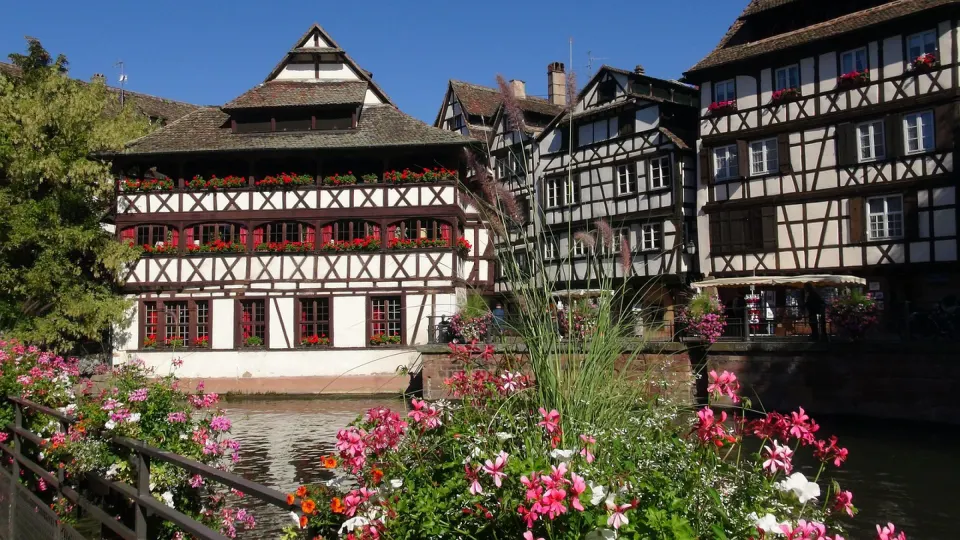
Half-timbered house with flowers along canal

Strasbourg travel guide

What to see, where to stay and the best time to visit Strasbourg, France.

Best: Jun, Jul, Aug, Sep

Photo: ZEBULON72 / Pixabay

Country
France

About Strasbourg

Strasbourg sits on the French-German border, and that mix shows in its half-timbered houses, canals, and wide Neustadt boulevards. The Grande Île, a UNESCO-listed old town, is easy to cover on foot, with the cathedral and Petite France as the main draws. June, July, August, and September bring the warmest, driest weather, good for walking the canals and sitting out at cafés. Outside these months, expect cooler, wetter days, though the city still works well for museums and indoor sights.

How many days do you need in Strasbourg?

Two to three days are enough to see the Grande Île, Petite France, and the Neustadt, with time for a boat tour and the European Quarter. Add a day if you want a slower pace or day trips nearby.

Top attractions in Strasbourg

  1. 1Strasbourg Cathedral (Notre-Dame de Strasbourg)

    1–2 hours

    Grande Île

    This Gothic cathedral of pink sandstone dominates the old town. It is known for its astronomical clock and carved west front. You can climb to the viewing platform for a view over the rooftops, and on clear days toward the Black Forest.

  2. 2Petite France

    1–2 hours

    Grande Île

    The old tanners' and millers' quarter sits where the River Ill splits into canals. It has half-timbered houses, locks and small bridges. Walk on to the Covered Bridges (Ponts Couverts) and the Vauban Dam nearby. Go early in the morning, as it gets very crowded later in the day.

  3. 3Boat tour on the Ill

    1–2 hours

    Grande Île

    Sightseeing boats circle the old town island and pass through the locks of Petite France. Some tours continue to the European Quarter. It is an easy way to see the city if you are short on time or tired of walking.

  4. 4Palais Rohan

    2–3 hours

    Grande Île

    This former bishops' palace stands next to the cathedral. It houses three museums: the Museum of Fine Arts, the Museum of Decorative Arts with the former state apartments, and the Archaeological Museum. Pick one or two if your time is limited.

  5. 5Musée de l'Œuvre Notre-Dame

    1–2 hours

    Grande Île

    This museum holds original statues and stained glass from the cathedral, along with medieval and Renaissance art from the Upper Rhine. Visit it after the cathedral to see its sculptures up close.

  6. 6Neustadt (German Imperial Quarter)

    1–2 hours

    Neustadt

    The city was extended in the late 19th century with wide avenues and large public buildings, centred on Place de la République. It is part of Strasbourg's UNESCO World Heritage listing. It is quieter than the old town and good for a walk.

  7. 7European Parliament

    1–2 hours

    European Quarter

    Strasbourg is the official seat of the European Parliament. The visitor centre explains how the EU works. The nearby Council of Europe and Human Rights Building are worth seeing from outside. Check official access rules before you go, as they change during plenary sessions.

  8. 8Parc de l'Orangerie

    1–2 hours

    European Quarter

    This is the city's oldest and best-known park, close to the European institutions. It has a lake with rowing boats, lawns and a small zoo. Storks nest here, and they are a symbol of Alsace. It is a good break for families.

Strasbourg by month

Average weather and our month score, from 10 years of climate data.

Weather by month and month scores for Strasbourg
Month High / low Rain days Sunshine Score
January 6°C / 0°C 15 days (86 mm) 4.0 h/day 1.1/10
February 9°C / 1°C 12 days (68 mm) 6.1 h/day 2.3/10
March 12°C / 3°C 12 days (70 mm) 8.0 h/day 4.6/10
April 16°C / 5°C 12 days (70 mm) 10.0 h/day 6.6/10
May 20°C / 10°C 13 days (88 mm) 11.0 h/day 7.4/10
Best month: June 25°C / 15°C 13 days (76 mm) 11.9 h/day 7.5/10
Best month: July 27°C / 16°C 11 days (74 mm) 12.6 h/day 7.5/10
Best month: August 26°C / 16°C 11 days (63 mm) 11.1 h/day 7.6/10
Best month: September 22°C / 12°C 10 days (60 mm) 9.8 h/day 8.1/10
October 16°C / 8°C 12 days (78 mm) 6.8 h/day 6.5/10
November 10°C / 4°C 14 days (81 mm) 4.9 h/day 2.3/10
December 7°C / 2°C 14 days (90 mm) 3.8 h/day 1.2/10
  1. Jan

    Cold and gray, with a high of 6°C and rain or snow on about 15 days; just 4 hours of sun daily makes this the lowest-scoring month, best for travellers who like quiet, misty streets.

  2. Feb

    Still chilly at 9°C high with 12 rain days and only 6 hours of sun; this is another low-scoring month, suited to those who don't mind damp, short days.

  3. Mar

    Highs reach 12°C and rain eases to 12 days a month; sun climbs to 8 hours, giving a middling score as the city shifts toward spring.

  4. Apr

    A good month with highs of 16°C, 11.6 rain days and 10 hours of sun; mild temperatures make walking the old town comfortable.

  5. May

    Warmer at 20°C with 13 rain days and 11 hours of sun; scores stay good despite a slight uptick in rainfall.

  6. Jun

    One of the best months: highs of 25°C, fewer rain days at 12.6, and nearly 12 hours of sunshine for long evenings outdoors.

  7. Jul

    Peak summer heat at 26.5°C high, 11.2 rain days and 12.6 hours of sun make this a top-scoring month for outdoor sightseeing.

  8. Aug

    Similarly warm at 26°C with 11.4 rain days and 11 hours of sun; another best-rated month, though afternoons can feel hot.

  9. Sep

    The highest-scoring month: 22°C highs, fewer rain days at 9.7, and nearly 10 hours of sun make conditions comfortable and dry.

  10. Oct

    Cooling to 16°C with 11.9 rain days and 6.8 hours of sun; still rated good, with crisp air suited to canal walks.

  11. Nov

    Highs drop to 10°C, rain returns on 14 days, and sunshine falls to under 5 hours; a low-scoring month marked by damp, overcast weather.

  12. Dec

    The coldest and wettest stretch, with a 7°C high, 13.6 rain days and just 3.8 hours of sun; scores are lowest, though festive lights and markets suit those who enjoy winter atmosphere.

Climate averages 2015–2024 · Best time to visit France →

Where to stay in Strasbourg

The best areas to base yourself and who each one suits.

Grande Île (city centre)

Good for first-timers, sightseeing

The river island around the cathedral is where most of the main sights are, and you can walk to nearly everything. It is the easiest base for a short first visit. The drawback: it gets very crowded, especially during the December Christmas market, and some streets stay noisy late.

Petite France

Good for couples, photographers

This corner of the Grande Île has canals, half-timbered houses and covered bridges, and it is prettiest early in the morning before the tour groups arrive. You are a short walk from the cathedral and the station. The drawback: in the daytime it is one of the busiest spots in the city, and many restaurants are aimed at tourists.

Krutenau

Good for nightlife, younger travellers

Just across the river from the centre, this former fishermen's district is now a student area with bars, cafés and cheaper places to eat. It feels more local than the centre but is still a short walk to the cathedral. The drawback: weekend nights can be loud near the bars.

Neustadt (German Quarter)

Good for architecture fans, quieter stays

Built when Strasbourg was part of Germany, this area has wide avenues, large stone buildings and a calmer, residential feel. It is on the tram line and within walking distance of the centre. The drawback: there is less going on in the evening, so you will walk back to the old town for most restaurants.

Gare (station area)

Good for short stays, day trips

Staying near the main station makes sense if you arrive late, leave early or plan day trips around Alsace by train. Trams run from here to the centre, and the old town is walkable. The drawback: the streets right around the station are less attractive and can feel rough at night.

Orangerie and European Quarter

Good for families, quiet

This leafy area around the Orangerie park and the European institutions is calm, green and good for children. Trams connect it to the centre. The drawback: it is too far out to walk to the old town comfortably, and it can feel empty at weekends and in the evening.

Getting to and around Strasbourg

From the airport
Strasbourg Airport sits outside the city, and no fixed route data is given here. Visitors usually take a shuttle bus or train link to the city centre, or a taxi, rather than walking or cycling from the airport.
Public transport
Strasbourg runs a tram network that covers most of the city, plus buses reaching areas the tram misses. Buy a ticket before boarding and validate it, since inspectors do check on board.
On foot
The Grande Île centre is compact and walkable. The Cathedral, Petite France, Palais Rohan and the Musée de l'Œuvre Notre-Dame all sit within this small island area.

Food to try in Strasbourg

Choucroute garnie

This is sauerkraut served with sausages, smoked pork and sometimes ham. It's the classic Alsatian dish and appears on menus across Strasbourg, especially in winter brasseries.

Tarte flambée (Flammekueche)

A thin, crisp dough topped with cream, onions and bacon lardons, baked fast in a hot oven. Locals eat it as a casual dinner or starter, often shared at the table.

Baeckeoffe

A slow-cooked casserole of marinated meat, potatoes and vegetables, traditionally baked overnight at the local baker's oven. It's a hearty dish for cold months.

Bretzel (Alsatian pretzel)

A soft, salted pretzel sold at bakeries and markets throughout the city. People eat it as a snack any time of day, often with a coffee.

Kougelhopf

A sweet, brioche-like cake baked in a fluted mould, studded with almonds and raisins. It's a breakfast or afternoon treat, especially around Christmas markets.

More of France

France travel guide →

Strasbourg: frequently asked questions

Is Strasbourg good to visit in August?

Yes. August scores 7.6 out of 10 and ranks among the best months. Daytime highs average 26.2°C and lows sit around 16.1°C, with 11.4 rain days and 63mm of rain. Sun hours average 11.1 a day, so it's a warm, fairly dry month.

What is the best time to visit Strasbourg?

September, August, June and July score highest, from 7.5 to 8.1 out of 10. September edges ahead with a score of 8.1, highs of 21.8°C, and fewer rain days (9.7) than summer. These months combine warm weather with manageable rainfall and long sun hours (9.8 to 12.6 a day).

How many days do I need in Strasbourg?

Two to three days cover the main sights. The Grande Île holds most attractions, including the Cathedral, Petite France, the boat tour, Palais Rohan and the Musée de l'Œuvre Notre-Dame, each needing 1–3 hours. Add time for the Neustadt district, the European Parliament and Parc de l'Orangerie if you want a slower pace.

Is Strasbourg cold in January?

Yes. January is the coldest month, with highs of just 5.6°C and lows at 0°C. It also brings 14.6 rain days, the most of any month, and only 4 hours of sun a day. The month scores 1.1 out of 10, reflecting the cold, grey conditions.

Does it rain a lot in Strasbourg?

Rain is spread fairly evenly through the year rather than concentrated in one season. December and January see the most, with 90mm and 86mm respectively, while September and August are driest, at 60mm and 63mm. Rain days range from about 9.7 to 14.6 per month, so some rain is likely whenever you visit.