Skip to content
wheretotravel.info
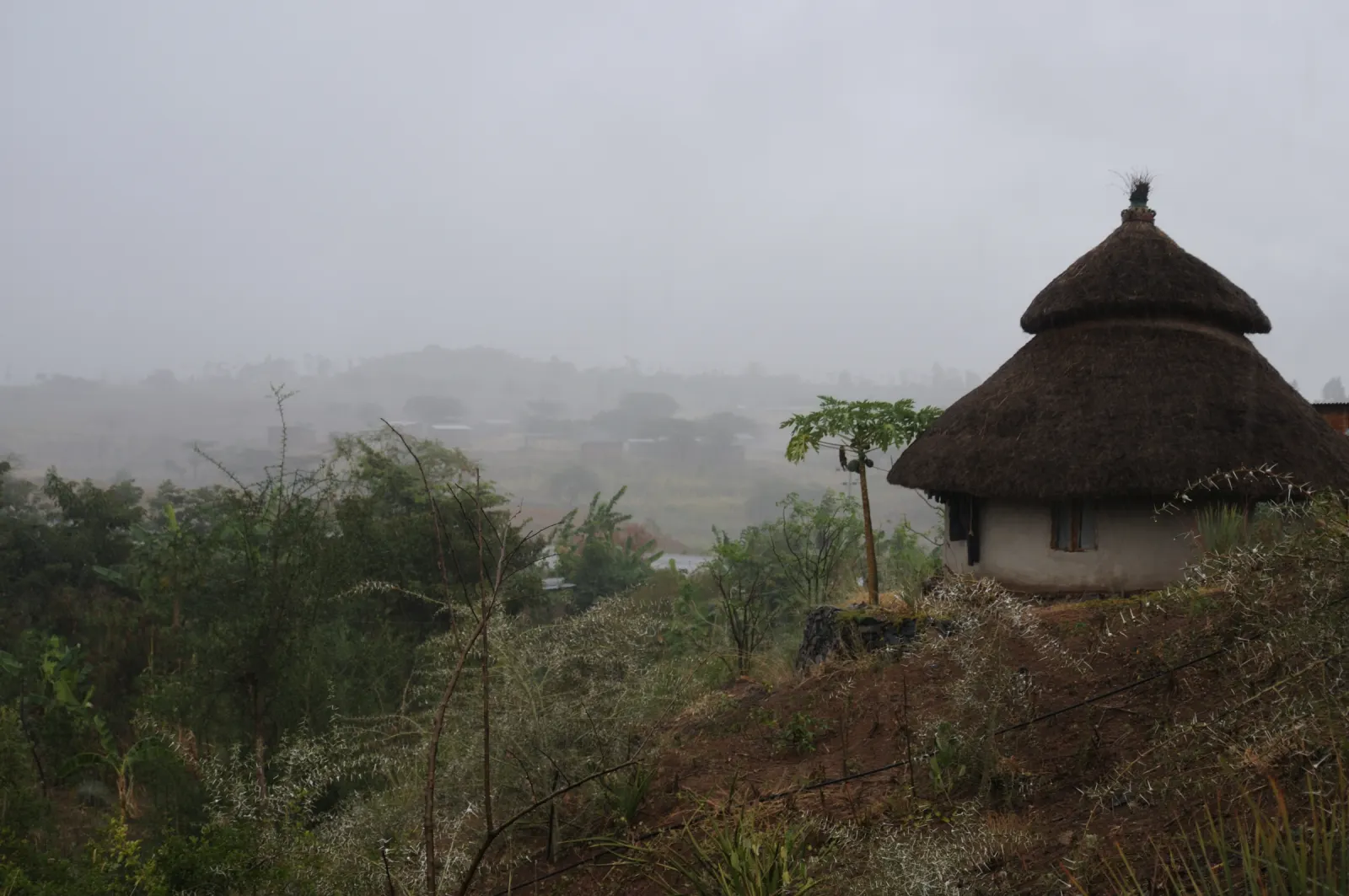
thatched hut on hillside in misty rain

Arba Minch travel guide

What to see, where to stay and the best time to visit Arba Minch, Ethiopia.

Best: Jan, Dec

Photo: JosepMGracia / Wikimedia Commons

Country
Ethiopia
Currency
ETB

About Arba Minch

Arba Minch sits between two Rift Valley lakes, Abaya and Chamo, with the Guge Mountains rising behind it. It's a base for boat trips to see crocodiles and hippos on Lake Chamo, walks in Nechisar National Park, and visits to the Dorze weaving villages up in the hills. The town itself splits into two centres, Shecha on the escarpment and Sikela below, each with a different pace. December and January bring the driest, clearest weather, good for lake trips and the long views from the Bridge of God viewpoint.

How many days do you need in Arba Minch?

Plan on 2 to 3 days. That gives time for a Lake Chamo boat trip, a half-day in Nechisar National Park, and a trip up to Dorze and Chencha market.

Top attractions in Arba Minch

  1. 1Nechisar National Park

    Half a day to a full day

    East of town, between Lake Abaya and Lake Chamo

    The park covers the 'Bridge of God', a forested ridge between the two lakes, and open grassland beyond it. Visitors come to see zebra, gazelle and many birds. A 4x4 vehicle is the usual way to get around.

  2. 2Lake Chamo boat trip

    2–3 hours

    Lake Chamo, Nechisar National Park

    A boat trip on Lake Chamo leads to the 'Crocodile Market', a shoreline where large Nile crocodiles gather. You also often see hippos and many water birds. This is the main reason many travellers stop in Arba Minch.

  3. 3Forty Springs

    1–2 hours

    Groundwater forest below Shecha

    These are the springs that give Arba Minch its name, which means 'forty springs'. They rise in a shady groundwater forest at the foot of the escarpment. A walk here is a cool break from the heat, and monkeys and birds are common.

  4. 4Dorze village

    Half a day

    Guge Mountains, on the road to Chencha

    The Dorze people live in tall huts made of bamboo and false banana leaves, shaped like beehives. Villagers show visitors how they weave cotton cloth and prepare food from the false banana plant. The road climbs into the cooler highlands, with wide views back over the lakes.

  5. 5Chencha market

    2–3 hours

    Chencha

    Chencha is a highland town above Dorze, and its market draws people from the surrounding villages. You can see handwoven cotton shawls and local produce for sale. It pairs well with a visit to Dorze on the same day.

  6. 6Lake Abaya

    1–2 hours

    North of town

    Lake Abaya is the larger of the two lakes and is known for its reddish-brown water, coloured by sediment. Its shore gives a different view from Lake Chamo. Viewpoints on the escarpment show both lakes divided by the Bridge of God.

  7. 7Bridge of God viewpoint

    1 hour

    Shecha, on the escarpment

    From the escarpment edge in the upper town you can see Lake Abaya and Lake Chamo on either side of the forested ridge. It is a good place to understand the area before heading into the park. Late afternoon light is soft here.

  8. 8Arba Minch Crocodile Ranch

    1 hour

    Near Lake Abaya, outside Sikela

    This farm raises Nile crocodiles, and visitors can see animals of different ages up close. It is a simple stop and suits people who will not take the boat trip on Lake Chamo.

  9. 9Sikela market

    1–2 hours

    Sikela (lower town)

    The lower part of town has the main market and most of the daily trade. Walking through it gives a sense of local life in southern Ethiopia. Fruit from the farms around the lakes, such as bananas and mangoes, is often on sale.
Arba Minch by month

Average weather and our month score, from 10 years of climate data.

Weather by month and month scores for Arba Minch
Month High / low Rain days Sunshine Score
Best month: January 29°C / 19°C 3 days (18 mm) 11.1 h/day 7.2/10
February 30°C / 20°C 2 days (14 mm) 11.4 h/day 6.6/10
March 30°C / 21°C 8 days (60 mm) 11.0 h/day 5.4/10
April 27°C / 20°C 18 days (195 mm) 10.0 h/day 5.0/10
May 26°C / 19°C 20 days (162 mm) 10.3 h/day 5.7/10
June 25°C / 19°C 16 days (103 mm) 10.1 h/day 6.0/10
July 25°C / 18°C 17 days (97 mm) 9.5 h/day 6.2/10
August 25°C / 18°C 17 days (105 mm) 10.0 h/day 6.0/10
September 26°C / 19°C 17 days (97 mm) 10.4 h/day 5.6/10
October 26°C / 18°C 20 days (154 mm) 10.7 h/day 5.8/10
November 26°C / 18°C 11 days (105 mm) 11.0 h/day 6.4/10
Best month: December 28°C / 18°C 4 days (30 mm) 11.0 h/day 7.3/10
  1. Jan

    Highs reach 29°C with just 2.7 rain days and 18mm of rain, the driest stretch of the year. Score 7.2, a good month to visit.

  2. Feb

    Hot and dry, highs of 30°C, only 2.4 rain days. Score 6.6, good, though it's the warmest month so pack for heat.

  3. Mar

    Rain picks up: 7.9 rain days and 60mm, with highs still near 30°C. Score 5.4, an ok month as the wet season begins.

  4. Apr

    One of the wettest months, 18 rain days and 195mm of rain, highs drop to 27°C. Score 5, ok, with frequent downpours to plan around.

  5. May

    The wettest month: almost 20 rain days and 162mm of rain, highs around 26°C. Score 5.7, ok, expect regular rain most days.

  6. Jun

    Rain eases slightly to 16 days and 103mm, highs near 25°C, the coolest time of year. Score 6, good despite the frequent showers.

  7. Jul

    Still wet with 16.8 rain days and 97mm, highs of 25°C and the lowest sun hours of the year at 9.5. Score 6.2, good.

  8. Aug

    Similar pattern to July: 16.5 rain days, 105mm of rain, highs around 25°C. Score 6, good, with consistent cloud and showers.

  9. Sep

    Rain stays steady at 16.5 days and 97mm, highs edge up to 26°C. Score 5.6, ok as the wet season continues.

  10. Oct

    Rain rises again to almost 20 days and 154mm, highs of 26°C. Score 5.8, ok, one of the rainier months to plan around.

  11. Nov

    Rain drops off to 11 days and 105mm, highs near 26°C with 11 sun hours. Score 6.4, good as drier weather returns.

  12. Dec

    Dry and sunny, just 4.3 rain days and 30mm, highs of 28°C. Score 7.3, the best-scoring month to visit.

Climate averages 2015–2024 · Best time to visit Ethiopia →

Where to stay in Arba Minch

The best areas to base yourself and who each one suits.

Shecha

Good for first-timers, views, quieter nights

Shecha is the upper town on the ridge. It holds government offices, and many places to stay sit on the escarpment edge with views over Lake Abaya, Lake Chamo and the forest of Nech Sar National Park. It is calmer and greener than the lower town, but it has fewer shops and a smaller market, so you will often take a bajaj down to Sikela.

Sikela

Good for budget travellers, transport links, local life

Sikela is the lower town and the commercial centre. It has the main market, the bus station and many small cafés and eateries. It is the most practical base for early buses to Konso, Jinka or the Dorze highlands, but streets are busy and noisy, and you lose the lake views of the ridge.

Kulfo

Good for nature lovers, park visitors

The area around the Kulfo River lies between the two parts of town, near the groundwater forest and the springs that give Arba Minch its name. It puts you close to the road towards the park and the crocodile ranch, with birdlife and shade around you. It is more spread out and has fewer services, so evenings can feel isolated without your own transport or a bajaj.

Getting to and around Arba Minch

From the airport
Arba Minch has a small airport, but no route data is available here. The usual options are a taxi or a hotel pickup into town; agree on the trip before you set off, since there's no metered system.
Public transport
Arba Minch has little formal public transport. Visitors mostly rely on shared minibuses (line taxis) and tuk-tuks (bajaj) to move between Shecha, Sikela and Kulfo. A practical tip: agree on the fare with a bajaj driver before you get in, as there are no meters.
On foot
The centre is split between Shecha on the upper escarpment and Sikela below, so walking between them is steep and far. Within Shecha, the Bridge of God viewpoint and Forty Springs are close together and walkable.

Food to try in Arba Minch

Fresh fish from the lakes

Arba Minch sits between Lake Abaya and Lake Chamo, so grilled or fried tilapia and Nile perch show up on most local menus, often served whole with bread or injera.

Injera with wat

The spongy sourdough flatbread injera is the base of most meals here, eaten with a spicy stew called wat made from lentils, beef, or chicken.

Shiro

This thick chickpea or broad-bean stew is a common vegetarian option, eaten scooped up with injera, and it's a staple during Ethiopian Orthodox fasting periods.

Kitfo

Minced raw or lightly cooked beef mixed with spiced butter and chili powder, kitfo is a dish for special occasions and is usually found in larger restaurants rather than street stalls.

Coffee ceremony

Ethiopia is the birthplace of coffee, and in Arba Minch households and cafes still roast, grind, and brew it fresh in a traditional ceremony, often shared with popcorn.

More of Ethiopia

Ethiopia travel guide →

Arba Minch: frequently asked questions

Is Arba Minch good to visit in August?

August is rated good, with a score of 6 out of 10. Expect highs around 25.2°C and lows near 18.3°C. It's a wetter month, with about 16.5 rain days and 105mm of rain, plus 10 hours of sun a day, so pack rain gear but don't expect it to rain all day.

When is the best time to visit Arba Minch?

December and January are the best months, scoring 7.3 and 7.2 out of 10. These months are drier, with only 4.3 rain days and 30mm of rain in December, and 2.7 rain days and 18mm in January. Sunshine is also highest then, at 11 hours a day, and daytime highs sit around 28–30°C.

How many days do I need in Arba Minch?

Plan for 2 to 3 days to cover the main sights. A Lake Chamo boat trip takes 2–3 hours, Nechisar National Park needs half a day to a full day, and the Forty Springs, Dorze village and Chencha market each take 1 to 3 hours. This leaves time to see Lake Abaya and the Bridge of God viewpoint too.

Is April or May a wet time to visit Arba Minch?

Yes, both months are wet. April gets 195mm of rain over 18 rain days, and May gets 162mm over nearly 20 rain days, the heaviest rainfall of the year. Sun hours drop to around 10 hours a day, and daytime highs cool slightly to 25–27°C, so this is the green season with lush landscapes but frequent showers.

What is the weather like in Arba Minch in July?

July is one of the cooler, cloudier months, with highs of 24.6°C and lows of 18.3°C. Rain falls on about 16.8 days, totaling 97mm, and sunshine drops to 9.5 hours a day, the lowest of the year. It still scores 6.2 out of 10, rated good, so it remains a reasonable time to visit despite the clouds.