Skip to content
wheretotravel.info
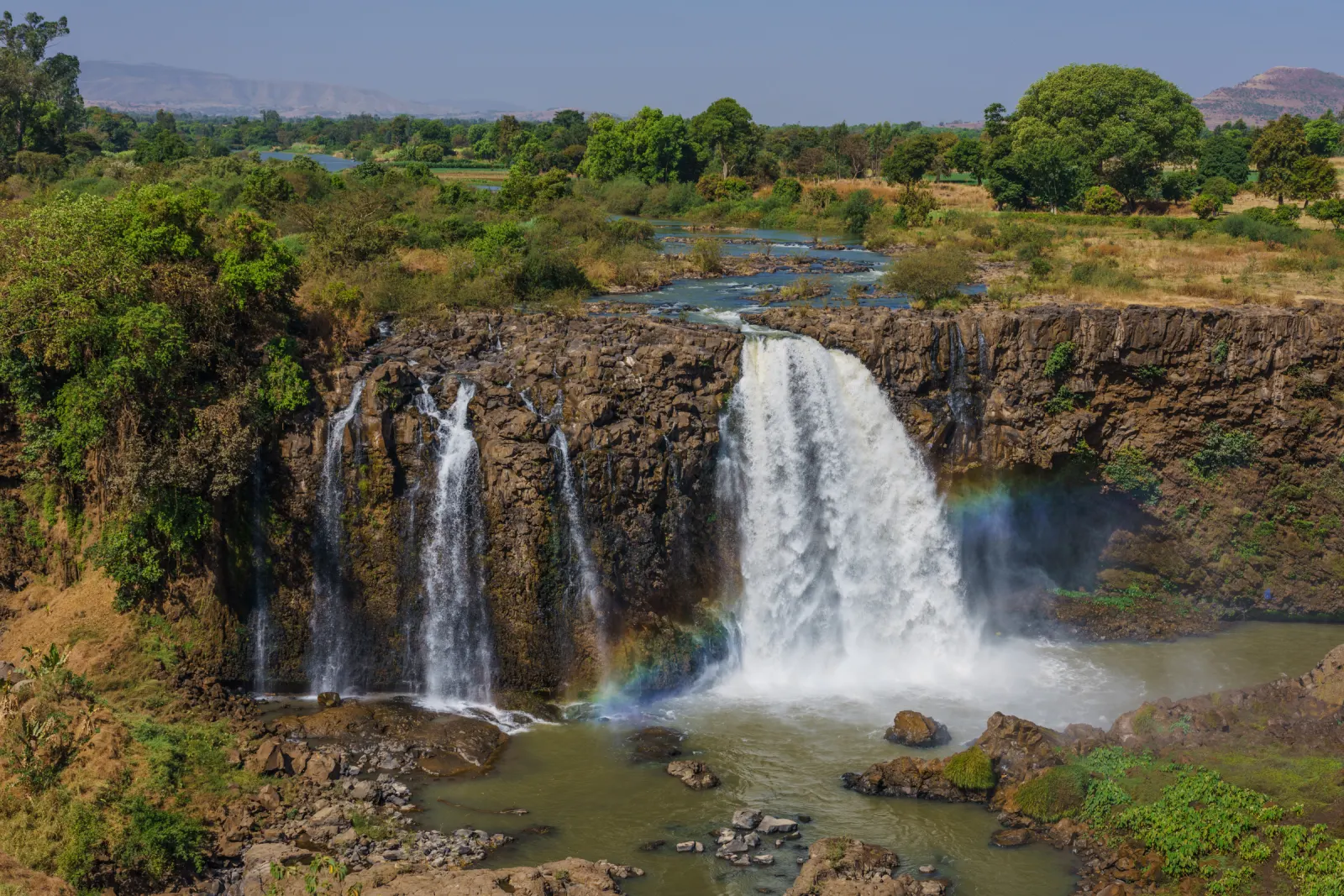
Waterfall cascading over cliff with rainbow

Bahir Dar travel guide

What to see, where to stay and the best time to visit Bahir Dar, Ethiopia.

Best: Jan, Feb, Nov, Dec

Photo: A.Savin / Wikimedia Commons

Country
Ethiopia
Currency
ETB

About Bahir Dar

Bahir Dar sits on the shore of Lake Tana in Ethiopia, home to 243,300 people. It's a relaxed base for exploring monasteries on the lake's islands, watching hippos near the Blue Nile outlet, and visiting the Blue Nile Falls at Tis Abay. The town itself has a lakeside promenade and a busy main market. The best months to visit are December, January, February and November, when conditions are drier and more comfortable for boat trips and walking.

How many days do you need in Bahir Dar?

Plan on 2 to 3 days. That gives you time for a boat trip to the island monasteries, a half-day visit to the Blue Nile Falls, and a look around the town centre and lakeshore.

Top attractions in Bahir Dar

  1. 1Blue Nile Falls

    half a day

    Tis Abay

    Known locally as Tis Issat, 'smoking water', this is where the Blue Nile drops over a wide basalt ledge. A short walk from the village crosses an old stone bridge and leads to viewpoints and a suspension bridge. The flow is much stronger in the rainy season because upstream dams take less water then.

  2. 2Azwa Maryam Monastery

    1–2 hours

    Zege Peninsula

    A short walk from Ura Kidane Mehret, this circular church also has painted walls and a small collection of church treasures. Most boat trips to Zege stop at both.

  3. 3Blue Nile outlet (hippo viewing)

    1–2 hours

    Lake Tana shore

    This is where the Blue Nile flows out of Lake Tana, near the edge of town. Short boat trips often see hippos in the shallow water, along with pelicans and other water birds.

  4. 4Bezawit Hill

    1–2 hours

    East of the town centre

    This hill above the Blue Nile has a former palace of Emperor Haile Selassie on top. You usually cannot go inside the palace, but the hill gives wide views over the river, the lake and the town. Many visitors come late in the day for the sunset.

  5. 5Kebran Gabriel Monastery

    1–2 hours (with boat trip)

    Kebran Island

    This old monastery stands on a small wooded island close to Bahir Dar. Tradition still allows only men to visit, so many groups combine it with other sites.

  6. 6Debre Maryam Monastery

    1–2 hours

    Near the Blue Nile outlet

    This simple monastery sits on an island where the Nile leaves the lake. It is easy to reach from town. It has a quiet setting and a few old manuscripts, and it can be added to a hippo-viewing boat trip.

  7. 7Bahir Dar Main Market

    1–2 hours

    Town centre

    The main market sells local cotton cloth, baskets, spices and food. Farmers come in from the countryside to trade. It is a good place to see everyday life in the Amhara region.

  8. 8Lakeside promenade

    1 hour

    Town centre

    Bahir Dar is known for its wide avenues lined with palm and jacaranda trees. The lakefront paths and cafés are a relaxed place for a walk, a coffee and some birdwatching, especially in the evening.

Bahir Dar by month

Average weather and our month score, from 10 years of climate data.

Weather by month and month scores for Bahir Dar
Month High / low Rain days Sunshine Score
Best month: January 26°C / 13°C 0 days (0 mm) 11.0 h/day 10.0/10
Best month: February 28°C / 15°C 1 day (5 mm) 11.1 h/day 9.0/10
March 29°C / 17°C 1 day (2 mm) 11.2 h/day 8.4/10
April 29°C / 18°C 4 days (16 mm) 11.3 h/day 7.9/10
May 27°C / 17°C 13 days (100 mm) 10.9 h/day 7.0/10
June 24°C / 16°C 21 days (169 mm) 10.2 h/day 7.0/10
July 22°C / 15°C 31 days (413 mm) 7.9 h/day 7.0/10
August 22°C / 15°C 30 days (370 mm) 8.3 h/day 7.0/10
September 23°C / 15°C 24 days (198 mm) 10.0 h/day 7.0/10
October 24°C / 15°C 10 days (51 mm) 10.9 h/day 8.0/10
Best month: November 25°C / 14°C 3 days (16 mm) 11.0 h/day 9.3/10
Best month: December 25°C / 13°C 1 day (3 mm) 11.0 h/day 9.8/10
  1. Jan

    Highs reach 25.9°C with no rain days, giving dry, sunny conditions and 11 hours of sun daily. Score 10, the best month to visit Bahir Dar.

  2. Feb

    Warm at 27.5°C with just 1.2 rain days and 5mm of rain, skies stay mostly clear. Score 9, still rated best.

  3. Mar

    Highs climb to 29°C, the warmest month, with only 0.7 rain days. Score 8.4, best verdict continues.

  4. Apr

    Highs of 28.8°C but rain days rise to 3.6, with 16mm of rain, a sign the wet season is approaching. Score 7.9, still best.

  5. May

    The wet season sets in with 12.8 rain days and 100mm of rain; highs drop slightly to 26.8°C. Score 7, good rather than best.

  6. Jun

    Rain days jump to 21.3 with 169mm of rain, and sun hours fall to 10.2; highs ease to 24.2°C. Score 7, good.

  7. Jul

    The wettest month: 30.6 rain days, 413mm of rain, and sun hours drop to 7.9 as highs fall to 21.9°C. Score 7, good, but tough weather due to heavy, near-daily rain.

  8. Aug

    Still very wet with 30.4 rain days and 370mm of rain; highs stay low at 21.8°C. Score 7, good, with the rainy season still in full force.

  9. Sep

    Rain eases slightly to 23.6 days and 198mm, with highs back up to 22.8°C. Score 7, good as the wet season starts to fade.

  10. Oct

    Rain days drop sharply to 9.9 with 51mm of rain, and highs rise to 23.8°C. Score 8, best, marking the shift back to drier conditions.

  11. Nov

    Dry and pleasant with just 3.3 rain days and 16mm of rain; highs reach 24.6°C. Score 9.3, best.

  12. Dec

    Highs of 25.2°C with only 1 rain day and 3mm of rain give clear, dry skies and 11 hours of sun. Score 9.8, best.

Climate averages 2015–2024 · Best time to visit Ethiopia →

Where to stay in Bahir Dar

The best areas to base yourself and who each one suits.

City Centre

Good for first-timers, budget travellers

The flat grid of palm-lined avenues around the main roundabout and market streets has most banks, cafés, bus links and tour offices within walking distance. It is the easiest base for arranging boat trips and onward travel. Traffic, bajaj horns and early mosque and church calls can make it noisy.

Lake Tana Shore

Good for couples, relaxed stays, birdwatchers

The lakeside strip west and north of the centre has shady gardens, waterfront paths and boat landings for trips to the island monasteries. Sunsets over the water and birdlife are the main draws. It can feel spread out, so you may need a bajaj to reach the market and bus station.

Bezawit Hill

Good for views, quiet, repeat visitors

This hill across the river from town is known for its old imperial palace and wide views over the city, lake and Blue Nile. It suits travellers who want peace and space. It is away from restaurants and services, and the slope makes walking back in the heat tiring.

Zege Peninsula

Good for culture seekers, slow travel

Reached by boat or road across the lake from town, Zege is a forested peninsula with old monasteries and coffee groves. Staying here lets you visit the churches before day-trippers arrive. Facilities are basic and getting in and out of Bahir Dar takes planning.

Getting to and around Bahir Dar

From the airport
No route data is available for getting from Bahir Dar Airport into the centre. The usual options for first-time visitors are a taxi arranged at the airport or a hotel pickup, since there is no train or dedicated airport bus service.
Public transport
Bahir Dar has little formal public transport. Visitors mostly get around by shared minibuses, local taxis, or hired bajaj (tuk-tuks). A practical tip: agree on a price with bajaj or taxi drivers before you set off, since there are no meters.
On foot
The City Centre is walkable, with the Main Market and the lakeside promenade both close by. Sights further out, like Bezawit Hill, Lake Tana shore, and Zege Peninsula, need a taxi, bajaj, or boat trip.

Food to try in Bahir Dar

Injera with doro wat

Injera is a sour, spongy flatbread made from fermented teff flour. Locals in Bahir Dar eat it with doro wat, a spicy chicken stew, often for a main family meal.

Tibs

Tibs is sautéed meat, usually beef or lamb, cooked with onions, peppers, and spices. It is a common choice for lunch or dinner in local restaurants around Lake Tana.

Fresh Lake Tana fish

Bahir Dar sits on the shore of Lake Tana, so grilled or fried fish is a regular local dish. It is often served with injera or bread near the lakeside.

Shiro wat

Shiro is a thick stew made from ground chickpeas or broad beans, spiced and simmered until smooth. It is a budget-friendly staple eaten with injera, especially during fasting periods.

Ethiopian coffee ceremony

Coffee is roasted, ground, and brewed fresh in front of guests in a traditional ceremony. It is a daily social ritual in homes and cafes across Bahir Dar.

More of Ethiopia

Ethiopia travel guide →

Bahir Dar: frequently asked questions

Is Bahir Dar good to visit in August?

August is workable but wet. It's the rainiest stretch of the year, with 30.4 rain days and 370 mm of rain. Sun hours drop to 8.3, and highs sit around 21.8°C. The score for August is 7 out of 10, rated 'good' rather than 'best', so it's fine if you don't mind frequent showers and want to see the Blue Nile Falls at full flow.

When is the best time to visit Bahir Dar?

The best months are December, January, February and November. These score between 9 and 10 out of 10. Rain is minimal: January has 0 rain days, December has 1, and sun hours stay around 11 a day. Highs range from about 24.6°C to 27.5°C across these months, giving dry, bright conditions for sightseeing on Lake Tana.

How many days do I need in Bahir Dar?

Plan on 2 to 3 days. The main sights are short visits: Blue Nile Falls takes half a day, while the monasteries, hippo viewing at the Blue Nile outlet, Bezawit Hill and the market each take 1–2 hours. Two days covers the falls plus a boat trip to the Zege Peninsula and Lake Tana islands, with a third day free for the town centre.

Does it rain a lot in Bahir Dar in July?

Yes, July is the wettest month. It records 30.6 rain days and 413 mm of rain, the highest monthly total in the data. Sun hours fall to 7.9, well below the 10–11 hours seen from October to March. Daytime highs also drop to 21.9°C, the coolest of the year, so expect overcast, humid days with frequent downpours.

Is Bahir Dar good to visit in May or June?

May and June are transition months with a 'good' score of 7 out of 10 each. May has 12.8 rain days and 100 mm of rain, while June jumps to 21.3 rain days and 169 mm. Highs cool from 26.8°C in May to 24.2°C in June. Rain is increasing but hasn't yet reached the peak seen in July and August.