Skip to content
wheretotravel.info
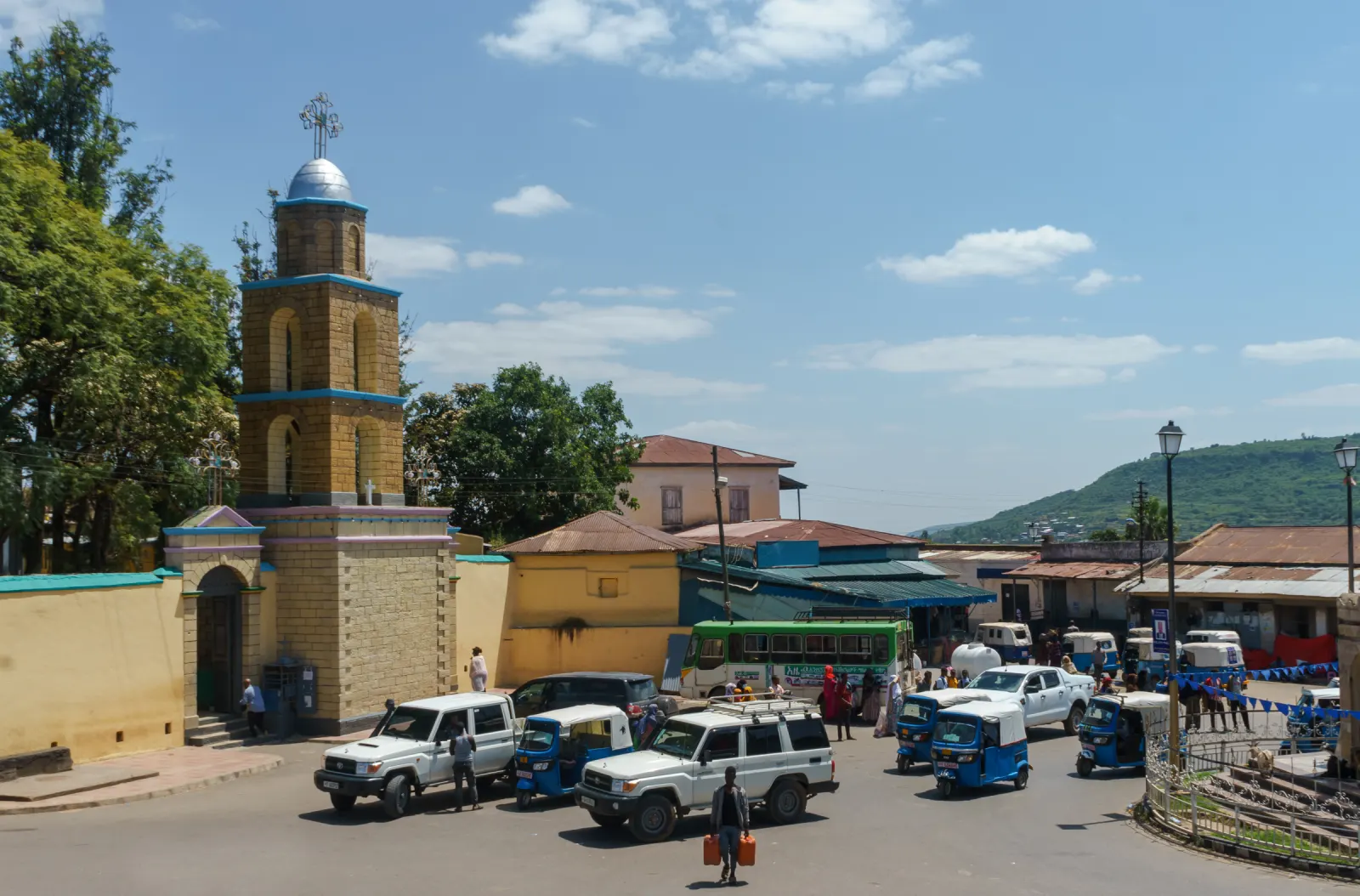
Church tower and street with vehicles in town square

Harar travel guide

What to see, where to stay and the best time to visit Harar, Ethiopia.

Best: Jan, Feb, Nov, Dec

Photo: Ninara31 / Wikimedia Commons

Country
Ethiopia
Currency
ETB

About Harar

Harar is a walled Old Town in eastern Ethiopia, with 157,000 people living inside and around its narrow lanes. It's a city for walking: Jugol's alleys, markets, mosques and old merchant houses reward slow exploring, and the nightly hyena feeding just outside the walls is one of Ethiopia's odder rituals. The best months to visit are November, December, January and February, when conditions are at their most settled for wandering the Old Town on foot.

How many days do you need in Harar?

Harar's attractions are compact but numerous: a full day for Jugol itself, plus several 30-minute to 2-hour stops like the Rimbaud House, museums, mosques, tombs and markets. Two to three days lets you see the main sights without rushing and still catch the hyena feeding.

Top attractions in Harar

  1. 1Jugol (Harar Old Town)

    Full day

    Jugol

    The walled old town is a UNESCO World Heritage Site and the main reason to visit Harar. Its narrow, winding lanes are lined with colourful houses, small mosques, shrines and workshops. A local guide helps you find your way and explains the history.

  2. 2Hyena Feeding

    1 hour

    Outside the city walls

    After dark, local hyena men call wild hyenas out of the night and feed them meat by hand, sometimes from a stick held in their mouth. Visitors can watch from close by and can often try the feeding too. It began as a local tradition and is now Harar's best-known sight.

  3. 3Arthur Rimbaud House

    1 hour

    Jugol

    A large wooden merchant's house with painted ceilings and coloured glass windows, named after the French poet who lived and traded in Harar. Inside are photographs of old Harar and displays about Rimbaud. The upper floors give good views over the old town roofs.

  4. 4Sherif Harar City Museum

    1–2 hours

    Jugol

    A private museum in a restored old house, run by a local family. It holds coins, weapons, manuscripts, jewellery and household objects from Harar's past as a trading city and emirate. It is a good introduction to Harari history before you explore the lanes.

  5. 5Harari Cultural House

    1 hour

    Jugol

    A traditional Harari home (gegar) set up to show how families have lived for generations. Look for the raised seating platforms, the wall niches and the woven baskets hung on the walls. It helps you understand the houses you pass in the old town.

  6. 6Harar Gate (Duke's Gate)

    30 minutes

    Jugol

    The main gate into the old walled city and the busiest entrance today. It is a good starting point for a walk into Jugol. Walking along the outside of the walls also lets you see the other historic gates.

  7. 7Grand Mosque (Jami Mosque)

    30 minutes

    Jugol

    The main mosque of the old town, with tall white minarets visible from many lanes. Harar is an important centre of Islamic learning, and this mosque is at its heart. Non-Muslims usually view it from outside; dress modestly nearby.

  8. 8Emir Nur's Tomb

    30 minutes

    Jugol

    A small, green, dome-shaped tomb of an emir who is linked to the building of Harar's walls. It is one of many shrines in the old town that local people still visit. It is a quiet stop on a walk through Jugol.

  9. 9Ras Tafari's House

    30 minutes–1 hour

    Jugol

    An old house in the Indian style, with a carved wooden balcony, associated with Ras Makonnen and his son Ras Tafari, who later became Emperor Haile Selassie. The building's style shows Harar's old trading links across the Indian Ocean.

  10. 10Old Town Markets

    1–2 hours

    Jugol and around Shoa Gate

    Harar's markets sell spices, coffee, khat, colourful fabric, baskets and everyday goods. Sections such as the meat market draw kites and birds overhead. Mornings are the busiest and most interesting time to walk through.
Harar by month

Average weather and our month score, from 10 years of climate data.

Weather by month and month scores for Harar
Month High / low Rain days Sunshine Score
Best month: January 25°C / 13°C 2 days (5 mm) 11.0 h/day 9.7/10
Best month: February 27°C / 14°C 2 days (4 mm) 11.0 h/day 9.3/10
March 27°C / 15°C 7 days (38 mm) 10.9 h/day 8.1/10
April 25°C / 15°C 17 days (116 mm) 10.7 h/day 7.0/10
May 25°C / 15°C 20 days (124 mm) 10.5 h/day 7.0/10
June 24°C / 14°C 11 days (53 mm) 10.2 h/day 7.8/10
July 23°C / 14°C 16 days (96 mm) 8.2 h/day 7.0/10
August 23°C / 15°C 16 days (86 mm) 9.4 h/day 7.0/10
September 24°C / 15°C 17 days (91 mm) 10.8 h/day 7.0/10
October 25°C / 14°C 10 days (64 mm) 11.0 h/day 8.1/10
Best month: November 24°C / 13°C 5 days (30 mm) 11.0 h/day 8.9/10
Best month: December 24°C / 13°C 1 day (4 mm) 11.3 h/day 9.8/10
  1. Jan

    Highs reach 25°C with only 1.6 rain days, one of the driest months. Score 9.7, rated best for a visit.

  2. Feb

    Warm and dry, highs of 27°C and 1.5 rain days. Score 9.3 keeps it in the best category.

  3. Mar

    Rain picks up to 7 days and 38mm, with highs near 27°C. Still scores 8.1, a best month.

  4. Apr

    Rain days jump to 17.3 and 116mm falls, the start of the wetter season. Score drops to 7, rated good.

  5. May

    The wettest month: 124mm over 20 rain days, highs around 25°C. Score 7, good but wet underfoot.

  6. Jun

    Rain eases to 11.2 days and 53mm, highs near 24°C. Score rises to 7.8, back to best.

  7. Jul

    Cloud cover is heaviest, with sun hours down to 8.2 and 96mm over 16 rain days. Score 7, good.

  8. Aug

    Still rainy with 16 rain days and 86mm, highs around 23°C. Score 7, good.

  9. Sep

    Rain continues at 16.8 days and 91mm, highs near 24°C. Score 7, good.

  10. Oct

    Rain drops to 9.6 days and 64mm as skies clear, highs of 25°C. Score 8.1, a best month.

  11. Nov

    Dry conditions return with 5.4 rain days and 30mm, highs around 24°C. Score 8.9, best.

  12. Dec

    The driest month, just 0.8 rain days and 4mm, highs of 24°C. Top score of 9.8, the best month to visit.

Climate averages 2015–2024 · Best time to visit Ethiopia →

Where to stay in Harar

The best areas to base yourself and who each one suits.

Jugol

Good for first-timers, culture, photographers

This is the old walled city, a maze of narrow lanes, mosques and traditional Harari houses, some of which take in guests. Staying here puts you in the middle of daily life, close to the markets, shrines and the gates where the evening hyena feeding happens. The lanes are steep, uneven and unlit at night, rooms are often simple, and you will hear the call to prayer early in the morning.

Feres Megala

Good for comfort seekers, practical stays

The old horse-market square just outside the main Harar Gate is the modern centre, with cafés, banks and shops along wider streets. It is an easy walk into Jugol but gives you more standard rooms and simpler access by car or bajaj. Traffic and street noise carry on into the evening, and it has less old-city atmosphere.

Shoa Gate

Good for budget travellers, onward transport

The area around this eastern gate of the walls has busy markets and is close to minibus and bus links. It suits travellers on a budget or those arriving late or leaving early. It is crowded and noisy by day, and the streets can feel chaotic, with lots of traffic and touts.

Getting to and around Harar

From the airport
No route data is available for Harar's airport link. The usual options are a taxi or a pre-arranged hotel transfer into town; ask locally about current options since no fixed times or fares are confirmed here.
Public transport
Harar has little formal public transport for visitors. Most people walk inside the walled town or use local taxis and shared minibuses to reach Shoa Gate or spots outside the walls, like the hyena feeding site. Agree on a fare before you ride.
On foot
Jugol, the old walled town, is compact and walkable. Its gates, mosques, museums, and markets all sit close together, so most sights are reachable on foot within the walls.

Food to try in Harar

Harari-style spiced stew

Harar's cooking uses berbere chili paste more heavily than many other Ethiopian regions. Spiced meat or vegetable stews are often eaten with injera, the sour flatbread, for lunch or dinner.

Anafero bread

Anafero is a local flatbread specific to Harar, denser than injera. Families serve it at home with stews or dips, especially at breakfast.

Harar coffee

The region around Harar grows coffee that is sold and roasted locally. Many homes and cafes still perform the traditional coffee ceremony, roasting beans fresh before serving.

Khat chewing

Khat, a mild stimulant leaf, is grown in the hills near Harar and chewed socially in the afternoon. It is part of daily life for many residents rather than a dish, but visitors will see it sold in the market and used at gatherings.

Shiro

Shiro is a spiced chickpea or bean powder stew, common across Ethiopia but a regular feature on Harar tables too. It is usually scooped up with injera or anafero bread.

More of Ethiopia

Ethiopia travel guide →

Harar: frequently asked questions

Is Harar good to visit in August?

August is fine but it's one of the wetter, cloudier months. It scores 7 out of 10. Expect rain on about 16 days, with 86mm falling, and sun drops to 9.4 hours a day. Daytime highs reach 23.3°C. You can still see Jugol and the hyena feeding, just pack a light rain jacket.

When is the best time to visit Harar?

December, January, February and November score highest, all 8.9 or above out of 10. These months are driest, with rain days falling to under 2 in January, February and December. Sun hours climb above 11 a day and highs sit near 24–27°C, making walks through Jugol's narrow streets more comfortable.

How many days do I need in Harar?

One full day covers the main sights. Jugol (Harar Old Town) itself takes a full day to explore properly, and you can add the hyena feeding, Arthur Rimbaud House, Sherif Harar City Museum and the gates and markets in another half day, since most of these take 30 minutes to 2 hours each.

Does it rain a lot in Harar?

Rain is concentrated from March to September. May is the wettest month, with 124mm over 20 rain days, and April follows closely with 116mm over 17.3 days. From November through February, rain nearly disappears, dropping to around 4–5mm and under 2 rain days a month.

Is Harar hot or cold?

Harar stays mild year-round rather than hot. Daytime highs range from 23°C in July to 27°C in March, and lows stay between 12.5°C and 15.3°C across the year. Evenings can feel cool, so a light sweater or jacket is useful even in the warmer months.