Skip to content
wheretotravel.info
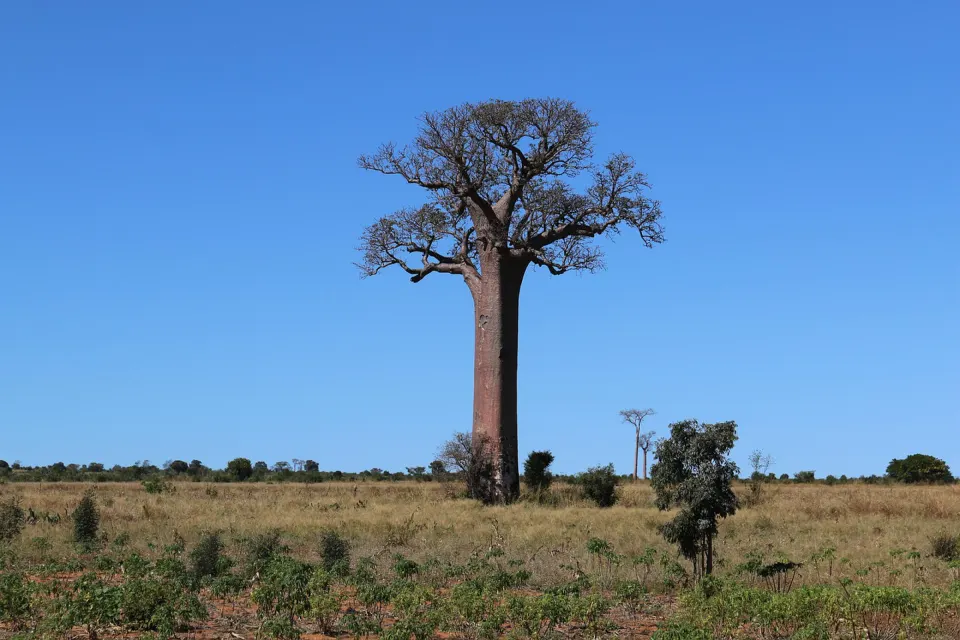
Lone baobab tree in grassland

Madagascar travel guide

An island of lemurs and red earth roads, best explored in the dry season

Best: May, Jul, Aug, Sep

Photo: JeanFiFou / Pixabay

Capital
Antananarivo
Languages
French, Malagasy
Currency
Malagasy ariary
Time zone
UTC+03:00
Plugs
Type C, E, J, K · 220 V / 127 V
Driving
On the right
Emergency
118 / 124 / 117

Why visit Madagascar

Madagascar suits travellers who want wildlife and landscapes found nowhere else, from Antananarivo's highlands to coastal towns like Toamasina and Tôlanaro. May, July, August and September bring drier, cooler weather that makes travel easier across this large island of 587,041 km2. Roads between regions are often long and slow, so journeys need extra time built in.

  • A clear best-travel window

    Our data rates September, July, August and May as the best months to visit Madagascar. If you can, plan your trip for one of these months. The rest of the year scores lower, so check conditions carefully before you book.

  • A big island to explore

    Madagascar covers 587,041 km² and has about 32,658,977 people. There is a lot of ground to cover, so do not try to see everything at once. Pick one region and give yourself time to travel between places.

  • Antananarivo as your base

    The capital, Antananarivo, is the largest city, with 1,275,207 people. It sits inland, away from the coast. Most trips start here, and it links well with Antsirabe, another inland city of 265,018 people.

  • Coastal towns for sea air

    For time by the water, head to coastal cities such as Toamasina (225,116 people), Tôlanaro (67,284 people) or Antsiranana. Each makes a good stop if you want to add the coast to an inland route through Antananarivo or Antsirabe.

  • French helps you get around

    Malagasy and French are the official languages. If you speak some French, you will find it easier to ask for directions and read signs. The local currency is the Malagasy ariary, and traffic drives on the right.

Is Madagascar right for you?

Great for

  • Dry-season trips from May to September, with only 1.2–3.1 rain days a month
  • Walkers who dislike heat: average highs stay between 18.7°C and 25.5°C all year
  • Sun seekers in September to December, with 11.4–11.9 hours of sun a day
  • French speakers, as French is one of the 2 official languages

Less ideal for

  • Trips from January to March, with 20.9–24 rain days and up to 335 mm of rain
  • Travellers who hate cold nights: July lows average 6.9°C, so pack warm layers
  • Short trips hoping to see a lot: the country covers 587041 km²

Madagascar right now: November

7.0/10
Avg high
26°C
Avg low
13°C
Rain days
15

Averages for Madagascar.

Weather by month

This climate data is for Antananarivo. May through September bring highs of 19-24°C, almost no rain (1-3 rain days a month), and up to 11.4 hours of sun, making these the easiest months to travel. January and February are toughest, with 21-24 rain days a month and over 270mm of rainfall, so expect frequent downpours and less sunshine.

Average highs and lows in Madagascar by month January: high 24°C, low 15°C , 24 rain days . February: high 24°C, low 15°C , 21 rain days . March: high 23°C, low 14°C , 21 rain days . April: high 23°C, low 13°C , 10 rain days . May: high 21°C, low 10°C , 3 rain days . June: high 19°C, low 8°C , 3 rain days . July: high 19°C, low 7°C , 1 rain days . August: high 21°C, low 8°C , 1 rain days . September: high 23°C, low 9°C , 1 rain days . October: high 25°C, low 12°C , 7 rain days . November: high 26°C, low 13°C , 15 rain days . December: high 25°C, low 14°C , 19 rain days . 24°C 15°C JAN 24d 24°C 15°C FEB 21d 23°C 14°C MAR 21d 23°C 13°C APR 10d 21°C 10°C MAY 3d 19°C 8°C JUN 3d 19°C 7°C JUL 1d 21°C 8°C AUG 1d 23°C 9°C SEP 1d 25°C 12°C OCT 7d 26°C 13°C NOV 15d 25°C 14°C DEC 19d
Best months Other months (low–high) Nd = rain days

Madagascar (country average) · averages 2015–2024

Best time to visit Madagascar: month-by-month weather →

Sample itineraries

7 days

Highlands to the East Coast

  1. Day 1–3

    Antananarivo

    Settle into Madagascar's capital, home to 1275207 people. Walk the old hillside streets and visit the Rova palace area before heading out of the highlands.

  2. Day 4–5

    Antsirabe

    This highland town of 265018 people is known for its colonial architecture and rickshaw rides. Use it as a base for short trips into the surrounding countryside.

  3. Day 6–7

    Toamasina

    Finish on the coast in Toamasina, a port city of 225116 people. Spend your last two days near the harbour and along the Indian Ocean shoreline.

10 days

Capital, Highlands and the Far North

  1. Day 1–2

    Antananarivo

    Start in the capital, population 1275207, to get oriented and see the central market areas before travelling onward.

  2. Day 3–4

    Antsirabe

    Head to Antsirabe, a highland town of 265018 people, for a slower pace and a look at the thermal spa heritage of the area.

  3. Day 5–7

    Ambanja

    Continue north to Ambanja, a town set among plantations in the northwest, and use it as a stop on the way to the coast.

  4. Day 8–10

    Antsiranana

    End the trip on the coast at Antsiranana in the far north, where you can spend your final days near the bay.

Food to try in Madagascar

Romazava

This is Madagascar's national dish, a beef and leafy greens stew flavored with ginger and tomato. It's usually served with rice and eaten at home or in local restaurants across the island.

Ravitoto

This dish is made from pounded cassava leaves cooked with pork. It's a common everyday meal found in households and small eateries throughout Madagascar.

Vary amin'anana

This rice and greens soup often includes small pieces of meat or zebu. It's a comforting dish eaten for breakfast or as a light meal in many Malagasy homes.

Mofo gasy

These are small, round rice flour cakes, slightly sweet and often eaten for breakfast. Street vendors sell them hot in the morning in towns and cities.

Zebu steak

Zebu is the local humped cattle, and its meat is grilled or used in stews. You'll find zebu steak on menus in restaurants across Madagascar, often served with rice.

Rum arrangé

This is a flavored rum infused with local fruits, spices, or vanilla. It's a popular drink found in bars and markets, especially in coastal and tourist areas.

Know before you go

  • Currency: The currency is the Malagasy ariary. Card payments are not as common as in Europe, so plan to carry cash for most of your trip.
  • Language: French and Malagasy are the official languages. Learning a few basic French phrases helps a lot outside the main tourist areas.
  • Plugs and voltage: Madagascar uses plug types C, E, J and K, with a voltage of 220 V (some sockets run 127 V). Bring an adapter if your home plug is different.
  • Driving side: Traffic drives on the right side of the road in Madagascar.
  • Emergency numbers: Emergency numbers in Madagascar are 118, 124 or 117, depending on the service you need. It's worth saving these before you travel.
  • Calling code: Madagascar's international calling code is +261, useful for setting up a local SIM or calling home.
  • Time zone: Madagascar runs on UTC+03:00 year-round, so there's no seasonal clock change to account for when planning calls or flights.

Madagascar: frequently asked questions

Is Madagascar good to visit in August?

Yes, August is one of the best months, with a score of 9.7 out of 10. Expect a high of 20.8°C, a low of 7.6°C, and only 1.4 rain days with 4 mm of rain. It's dry and sunny, with 10.8 hours of sun a day, though evenings in highland areas like Antananarivo can feel cool.

What is the best month to visit Madagascar?

September scores highest at 9.8 out of 10. It has just 1.2 rain days, 11 mm of rain, 11.4 hours of sun, and a high of 23.4°C. July and August follow closely with similar dry, sunny conditions, making the May to September stretch the most reliable window.

Is Madagascar rainy in January?

Yes, January is the wettest month, with 335 mm of rain over 24 rain days, the highest of the year. Temperatures stay warm, with a high of 23.6°C and a low of 14.7°C, and sun hours drop to 9.6. This falls in the green season, when scenery is lush but travel can be slower.

When is the dry season in Madagascar?

The dry season runs roughly from May to September. Rain days fall as low as 1.2 to 3.1 per month, and rainfall drops to single digits or low double digits in millimetres, for example 6 mm in July and 4 mm in August. This period also lines up with the highest monthly scores, from 9.4 to 9.8.

What is the weather like in Madagascar in December?

December brings a mix of warmth and rain, with a high of 24.8°C, a low of 14°C, and 196 mm of rain over 18.7 rain days. Sun hours reach 11.5, among the highest of the year. The month scores 7 out of 10, rated 'good' rather than 'best'.

Is Madagascar hot or cold?

Madagascar stays mild to warm year-round, but highland nights can be cool. Highs range from 18.7°C in June and July to 25.5°C in November, while lows dip to 6.9°C in July. Coastal cities like Toamasina and Tôlanaro are likely milder at night than inland Antananarivo.

Similar destinations

Countries with a year of weather much like Madagascar.