Skip to content
wheretotravel.info
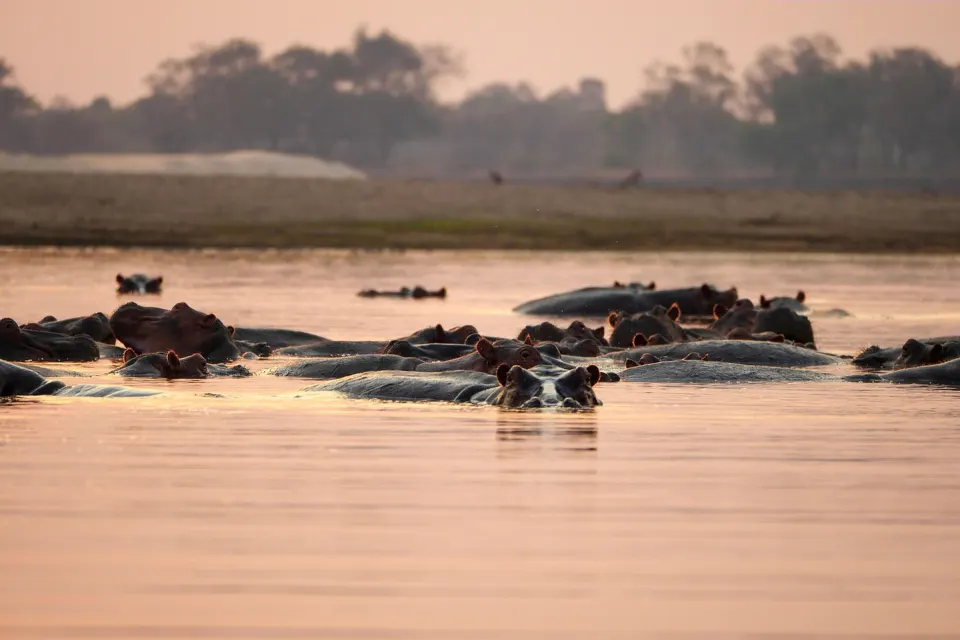
Hippos wading in river at sunset

Zambia travel guide

A large, landlocked country for overland travellers, best visited from May to August

Best: May, Jun, Jul, Aug

Photo: MariLari / Pixabay

Capital
Lusaka
Language
English
Currency
Zambian kwacha
Time zone
UTC+02:00
Plugs
Type C, G · 230 V
Driving
On the left
Emergency
112 / 911 / 999

Why visit Zambia

Zambia suits independent travellers who are happy to spend long days on the road. The country covers 752,612 km², English is the official language, and traffic drives on the left. The best months to go are May, June, July and August. Most trips start in the capital, Lusaka, or in Livingstone. One honest limitation: Zambia is landlocked, and none of its main cities is on the coast. If you want a beach, plan it in another country.

  • A clear best-time window

    May, June, July and August are the best months to visit Zambia. They run back to back, so planning is simple. If your dates fall outside this stretch, check conditions carefully before you book.

  • Lusaka as an easy gateway

    Lusaka is the capital and by far the largest city, with a population of 2467563. For most trips it is the natural place to arrive, sort out cash in Zambian kwacha and plan onward travel.

  • A big country with space

    Zambia covers 752612 km² and has a population of 23003214. Outside the main cities, expect long distances between towns. Give yourself enough time, because trying to see too much in a short trip will mean many hours on the road.

  • Smaller towns beyond the capital

    Ndola, with 528330 people, is the second city. Livingstone (177393) and Chipata (141800) are smaller bases, while Mpulungu has just 29103 residents. Together they show a quieter side of Zambia than Lusaka.

  • Simple practical basics

    English is the language listed for Zambia, which helps independent travellers. Traffic drives on the left. Power is 230 V with plug types C and G, so pack the right adapter before you leave home.

Is Zambia right for you?

Great for

  • Dry-season trips from May to August, with about 1 rain day or fewer each month
  • Travellers who like mild days: June and July highs are near 25°C
  • Sun seekers: 10.5 to 11.6 sun hours a day from May to November
  • English speakers, since English is the official language
  • Self-drivers used to driving on the left

Less ideal for

  • Beach holidays: none of the main cities are on the coast
  • Heat-sensitive travellers in October, when highs reach 34°C
  • Trips in January, with about 24 rain days and 269 mm of rain
  • Travellers wanting warm nights in June and July, when lows drop to about 13°C

Zambia right now: September

7.1/10
Avg high
32°C
Avg low
19°C
Rain days
0

Averages for Zambia.

Weather by month

This data covers Zambia as a whole, not one city, and May to August is best, with about 1 rain day a month, 10–11 sun hours and highs of 25–28°C. Avoid November, when highs reach 33°C and about 10 rain days return, and expect heavy rain from December to February, peaking at 269 mm in January.

Average highs and lows in Zambia by month January: high 27°C, low 20°C , 24 rain days . February: high 28°C, low 21°C , 21 rain days . March: high 27°C, low 20°C , 17 rain days . April: high 27°C, low 18°C , 8 rain days . May: high 26°C, low 16°C , 1 rain days . June: high 25°C, low 14°C , 1 rain days . July: high 25°C, low 13°C , 1 rain days . August: high 28°C, low 15°C , 1 rain days . September: high 32°C, low 19°C , 0 rain days . October: high 34°C, low 21°C , 2 rain days . November: high 33°C, low 22°C , 10 rain days . December: high 30°C, low 21°C , 19 rain days . 27°C 20°C JAN 24d 28°C 21°C FEB 21d 27°C 20°C MAR 17d 27°C 18°C APR 8d 26°C 16°C MAY 1d 25°C 14°C JUN 1d 25°C 13°C JUL 1d 28°C 15°C AUG 1d 32°C 19°C SEP 0d 34°C 21°C OCT 2d 33°C 22°C NOV 10d 30°C 21°C DEC 19d
Best months Other months (low–high) Nd = rain days

Zambia (country average) · averages 2015–2024

Best time to visit Zambia: month-by-month weather →

Sample itineraries

7 days

Lusaka and Livingstone in one week

  1. Day 1–3

    Lusaka

    Start in the capital and largest city. Get Zambian kwacha, buy a local SIM and settle in. English is the official language, so arranging onward transport is straightforward.

  2. Day 4–7

    Livingstone

    Spend the rest of the week in this smaller, calmer town in the south. Use it as a base for day trips and book activities locally once you arrive.

10 days

Capital, east and north across Zambia

  1. Day 1–2

    Lusaka

    Arrive in the capital, change money into kwacha and plan the route ahead. If you hire a car, remember that Zambia drives on the left.

  2. Day 3–5

    Chipata (Fort Jameson)

    Head east to Chipata, once called Fort Jameson. It is a quieter provincial town and a practical base for exploring the eastern part of the country.

  3. Day 6–7

    Ndola

    Travel north to Ndola, one of the larger cities. Use these days to rest, restock supplies and see everyday life away from the capital.

  4. Day 8–10

    Mpulungu

    End in Mpulungu, a small town in the far north. Expect fewer services than in the cities, so bring enough cash and plan your return before you arrive.

Food to try in Zambia

Nshima

Nshima is a thick porridge made from white maize meal and is the everyday staple across Zambia. People usually eat it by hand at lunch and dinner, rolled into a ball and dipped into a relish.

Ifisashi

Ifisashi is green vegetables, such as pumpkin or rape leaves, cooked in a groundnut (peanut) sauce. It is a common relish served with nshima at home and in local eating places.

Kapenta

Kapenta are small freshwater fish, often sold dried and then fried with tomato and onion. They are a cheap, common side dish with nshima, found in markets around the country.

Chikanda

Chikanda, sometimes called African polony, is made from ground orchid tubers, groundnuts and chilli, cooked until firm and served in slices. It is eaten as a snack or side dish.

Munkoyo

Munkoyo is a traditional drink made from maize porridge fermented with the roots of the munkoyo plant. It is mildly sour, low in alcohol or none, and is often sold in markets and made at home.

Mosi lager

Mosi is a widely sold Zambian lager, named after Mosi-oa-Tunya, the local name for Victoria Falls. You will find it in bars, restaurants and lodges across the country.

Know before you go

  • Plugs and voltage: Zambia uses plug types C and G. The supply is 230 V. Bring an adapter for both types. Check that your chargers and devices work at 230 V before you plug them in.
  • Driving side: Traffic drives on the left in Zambia. If you usually drive on the right, take extra care at junctions and roundabouts, especially in your first few days.
  • Emergency numbers: The emergency numbers listed for Zambia are 112, 911 and 999. Save them in your phone before you arrive. Ask your accommodation which number works best in your area.
  • Currency: The local currency is the Zambian kwacha. Plan how you will get kwacha before you travel, and carry some cash for places that may not take cards.
  • Language: English is the official language, so signs, forms and most official business are in English. This makes independent travel easier for English speakers.
  • Time zone: Zambia is on UTC+02:00 all year. Check the time difference from home so you can plan calls and connections.
  • Calling code: The international calling code for Zambia is +260. Use it when you give your number to hotels or tour operators, or when family call you from abroad.

Zambia: frequently asked questions

When is the best time to visit Zambia?

May to August is the best time to visit Zambia. These are the dry months: May, June, July and August each average about 1 rain day or fewer and 2–4 mm of rain. June scores highest at 9.9 out of 10, followed by July at 9.8 and May at 9.7. August still scores 8.9, with 11.2 sun hours a day.

Is Zambia good in November?

No. November is the month to avoid, with a score of only 3.2 out of 10. Daytime highs reach 32.9°C and nights stay warm at 22.2°C. The rains are also returning, with 9.5 rain days and 66 mm of rain. It is hot, sticky and unsettled.

Is October too hot to visit Zambia?

October is possible but hard going for many people. It is the hottest month, with average highs of 34°C and lows of 21.3°C. Rain is still low at 9 mm, but the heat gives it a score of just 4.2 out of 10. September is a better choice: highs of 31.7°C, almost no rain and a score of 7.1.

What is the rainy season like in Zambia?

The rainy season runs from December to March, and January is the wettest month. January averages 269 mm of rain over 23.6 rain days. February has 186 mm and December 182 mm. Temperatures stay pleasant, with highs of 27–30°C. These months still score 6.2–6.4, so a trip is possible if you accept frequent rain.

Does it get cold in Zambia in June and July?

Nights can feel cool, so pack a warm layer. In July the average low is 13.1°C, and in June it is 13.5°C. Days stay mild, with highs of 24.5°C in June and 24.8°C in July. These are also among the sunniest and driest months, with about 10.5 sun hours a day.

What plugs, voltage and other basics should I know for Zambia?

Zambia uses plug types C and G at 230 V. Traffic drives on the left. The time zone is UTC+02:00 and the currency is the Zambian kwacha. English is the official language. The country calling code is +260, and the emergency numbers are 112, 911 and 999.

Similar destinations

Countries with a year of weather much like Zambia.