Skip to content
wheretotravel.info
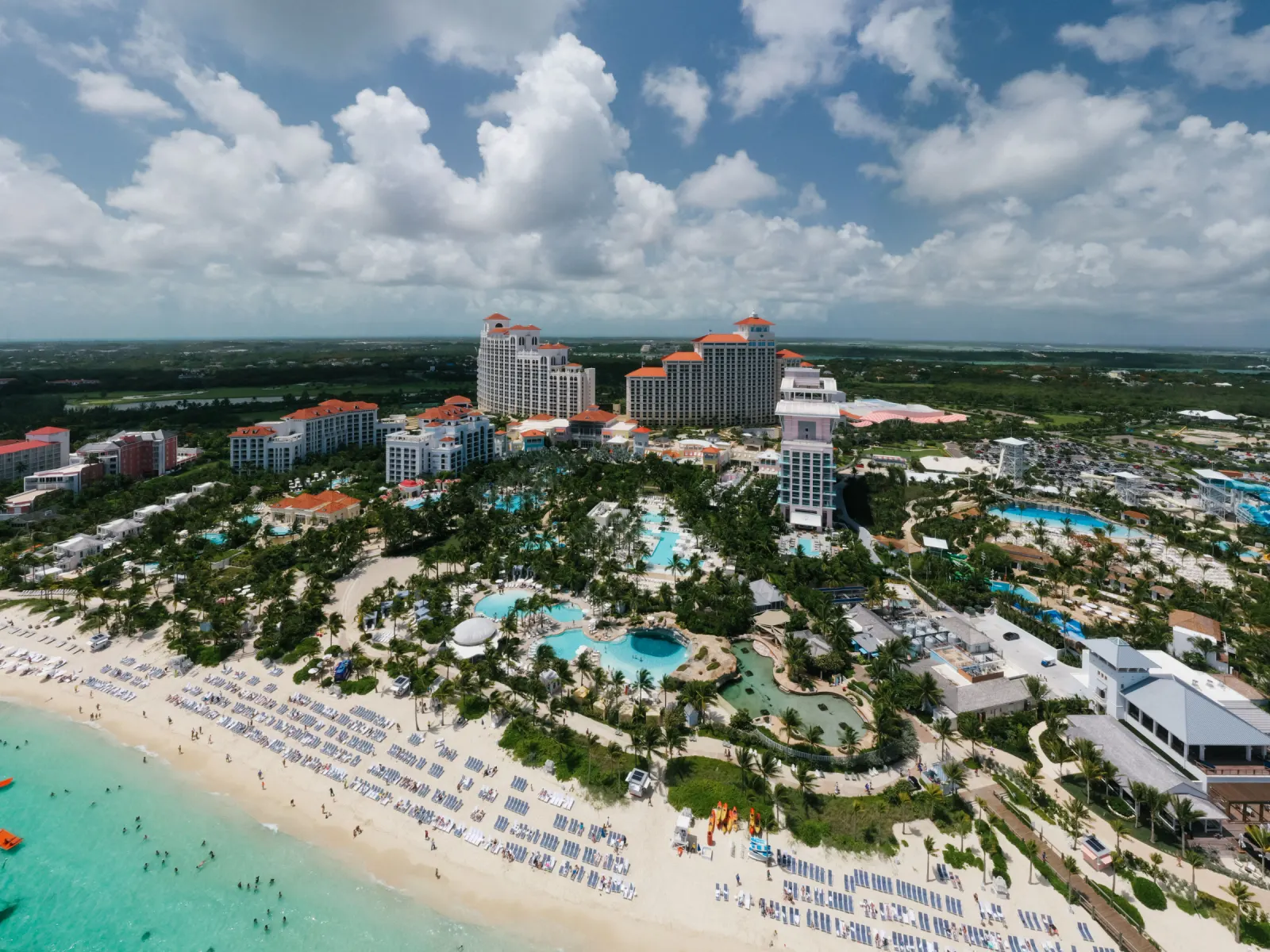
Aerial view of resort and beach

Bahamas travel guide

Island-hopping, beaches and warm water, best from December to March

Best: Feb, Mar, Nov, Dec

Photo: Mikhail Nilov / Pexels

Capital
Nassau
Language
English
Currency
Bahamian dollar (BSD)
Time zone
UTC-05:00
Plugs
Type A, B · 120 V
Driving
On the left
Emergency
919

Why visit Bahamas

The Bahamas suits travellers after beaches, boating and warm sea water rather than cultural sightseeing. November through March brings the driest, most comfortable weather for Nassau, Freeport and Harbour Island alike. The honest limitation: the islands are spread over 13,943 km2, so getting between them often means extra flights or ferries, and the rest of the year runs warmer and wetter.

  • A dry season from November to March

    The best months to visit are November, December, February and March. This is also the window that suits Nassau, Freeport and Harbour Island alike, so you can island-hop without hitting a bad weather gap.

  • Nassau, the capital hub

    With 227,940 people, Nassau is the country's largest city and main entry point. It shares the same best months as the rest of the archipelago, making it an easy base for a short or long stay.

  • Freeport for a shoulder-season trip

    Freeport's best months stretch into April, one month longer than Nassau's. That gives travellers more flexibility if they want milder crowds after the main December-to-March rush.

  • Harbour Island's small-scale pace

    Harbour Island is coastal and far smaller in scale than Nassau or Freeport, with no population figure even logged, hinting at its low-key size. Its peak months match Nassau's: December through March.

  • A compact, single-timezone country

    At 13,943 km2 with a population of 398,165, the Bahamas is small enough to combine a few islands in one trip. It runs on a single UTC-05:00 timezone and uses the Bahamian dollar, simplifying planning for visitors from the US East Coast.

Is Bahamas right for you?

Great for

  • Beach and sea swimmers, with sea temperatures from 24.3°C in February to 30.6°C in August
  • Winter sun seekers, with highs of 24-26°C and under 10 rain days in December-March
  • Travellers who want dry-season weather, since March averages just 7.8 rain days and 33mm of rain
  • Island-hopping trips based around Nassau, Freeport or Harbour Island, all coastal towns
  • Sun worshippers, with sun hours topping 12 in July and staying above 9 nearly all year

Less ideal for

  • Travellers who dislike heat and humidity, as highs reach 30-31°C from July to September
  • Visitors wanting a dry trip in autumn, since October brings 130mm of rain over 18.7 days
  • Budget travellers chasing low-season deals in summer, when rain days run to 17-19 a month from June to September

Bahamas right now: November

8.5/10
Avg high
27°C
Avg low
24°C
Rain days
11
Sea
27°C

Averages for Nassau.

Weather by month

Based on data for Nassau, March to May is the top stretch, with highs of 26-28°C, sea temperatures around 25-28°C, and fewer rain days than later months, plus November, December, January and February also score well with mild, drier conditions. The toughest weather runs from June to October, when highs climb to near 31°C, rain days peak at 17-19, and October alone brings 130mm of rain.

Average highs and lows in Nassau by month January: high 25°C, low 21°C , 10 rain days . February: high 25°C, low 22°C , 9 rain days . March: high 26°C, low 22°C , 8 rain days . April: high 27°C, low 23°C , 12 rain days . May: high 28°C, low 24°C , 16 rain days . June: high 29°C, low 26°C , 19 rain days . July: high 31°C, low 27°C , 18 rain days . August: high 31°C, low 27°C , 19 rain days . September: high 30°C, low 27°C , 17 rain days . October: high 29°C, low 26°C , 19 rain days . November: high 27°C, low 24°C , 11 rain days . December: high 26°C, low 23°C , 10 rain days . 25°C 21°C JAN 10d 25°C 22°C FEB 9d 26°C 22°C MAR 8d 27°C 23°C APR 12d 28°C 24°C MAY 16d 29°C 26°C JUN 19d 31°C 27°C JUL 18d 31°C 27°C AUG 19d 30°C 27°C SEP 17d 29°C 26°C OCT 19d 27°C 24°C NOV 11d 26°C 23°C DEC 10d
Best months Other months (low–high) Nd = rain days

Nassau · averages 2015–2024

Best time to visit Bahamas: month-by-month weather →

Sample itineraries

7 days

Nassau, Freeport and Harbour Island in a Week

  1. Day 1–3

    Nassau

    Spend your first days in the capital. Nassau is coastal and the largest city in the country, with a population of about 227,940, giving you plenty to explore before moving on.

  2. Day 4–5

    Freeport

    Head to Freeport, a smaller coastal city of around 45,945 people. Use these two days to slow down and enjoy a quieter stretch of coastline.

  3. Day 6–7

    Harbour Island

    Finish the week on Harbour Island, a coastal spot best visited in the cooler months. Spend your last two days relaxing by the water before heading home.

10 days

Ten Days Across Nassau, Freeport and Harbour Island

  1. Day 1–4

    Nassau

    Start with four days in Nassau, the Bahamas' capital and biggest city with 227,940 residents. This gives you time to settle in and see the main sights at an easy pace.

  2. Day 5–7

    Freeport

    Move to Freeport for three days. It's a coastal city of about 45,945 people, best visited in March, November, February or April according to local patterns.

  3. Day 8–10

    Harbour Island

    End the trip with three days on Harbour Island, a coastal destination that shares its best months — December through March — with Nassau. Use this time to unwind by the sea.

Food to try in Bahamas

Conch salad

Raw conch is diced and mixed with lime juice, peppers, onion, and tomato. It's a classic snack sold at beach shacks and fish fry stalls across the islands.

Cracked conch

Conch meat is tenderized, breaded, and fried until crisp. It's usually served with peas and rice or fries at local restaurants.

Peas and rice

Pigeon peas are cooked with rice, tomato, and seasonings like thyme. This side dish appears on most Bahamian dinner plates alongside fish or meat.

Johnnycake

This dense, slightly sweet bread is baked or fried and served warm. It's a common breakfast item eaten with butter or alongside stewed fish.

Guava duff

A rolled dough filled with guava is boiled, then topped with a rum-butter sauce. It's a traditional dessert often saved for special meals.

Sky Juice

This drink mixes coconut water, gin, condensed milk, and nutmeg. Vendors sell it at fish fry spots, especially on weekends when locals gather to eat and drink.

Know before you go

  • Currency: The Bahamian dollar (BSD) is the official currency. US dollars are widely accepted at the same value, so you often don't need to exchange money before you arrive.
  • Language: English is the official language, spoken throughout the Bahamas. You won't need to learn any phrases to get around or communicate with locals.
  • Plugs and voltage: The Bahamas uses type A and type B plugs, the same as the US and Canada. Voltage is 120 V, so travellers from the US and Canada won't need a converter.
  • Driving side: Cars drive on the left in the Bahamas, even though most vehicles are imported from the US with the steering wheel on the left side. Take extra care at junctions and roundabouts.
  • Emergency number: Dial 919 for police, fire or medical emergencies anywhere in the Bahamas.
  • Calling code: The Bahamas uses the +1 calling code, shared with the US and Canada. Check your phone plan to see if this counts as a domestic or international call.
  • Time zone: The Bahamas is on UTC-05:00 year-round in terms of standard time, close to US Eastern Time, which makes coordinating with North American contacts straightforward.

Bahamas: frequently asked questions

Is the Bahamas good in August?

August scores 7 out of 10, rated 'good' rather than 'best'. Nassau highs reach 30.8°C with 19 rain days and 87 mm of rain. Sea temperature hits 30.6°C, among the warmest of the year, but humidity and frequent showers make it less comfortable than the cooler months.

When is the best time to visit the Bahamas?

The best months are March, February, December and November, all scoring 8.5 or higher. March leads with 8.9, thanks to warm highs of 25.8°C, lower rainfall at 33 mm, and only 7.8 rain days, plus 10.8 hours of sunshine daily.

What is the weather like in the Bahamas in winter?

Winter in Nassau (December to February) is mild and dry. Highs range from 24.6°C in January to 25.6°C in December, with lows near 21–22.5°C. Rain days drop to 9.2–10.4 per month, making this the driest stretch of the year.

Is the Bahamas rainy in September and October?

Yes, these are the wettest months. October gets 130 mm of rain over 18.7 rain days, the highest monthly total in the data. September isn't far behind with 93 mm over 17.4 rain days. Both still score 7, so sunny spells remain common.

How warm is the sea in the Bahamas?

Sea temperature ranges from 24.3°C in February to 30.6°C in August. It stays above 28°C from June through October, and drops to its coolest in January and February, around 24.3–24.5°C.

What is the emergency number in the Bahamas?

The emergency number is 919. The country uses 120 V electricity with plug types A and B, and the Bahamian dollar (BSD) is the currency. Driving is on the left, and the calling code is +1.

Similar destinations

Countries with a year of weather much like Bahamas.