Skip to content
wheretotravel.info
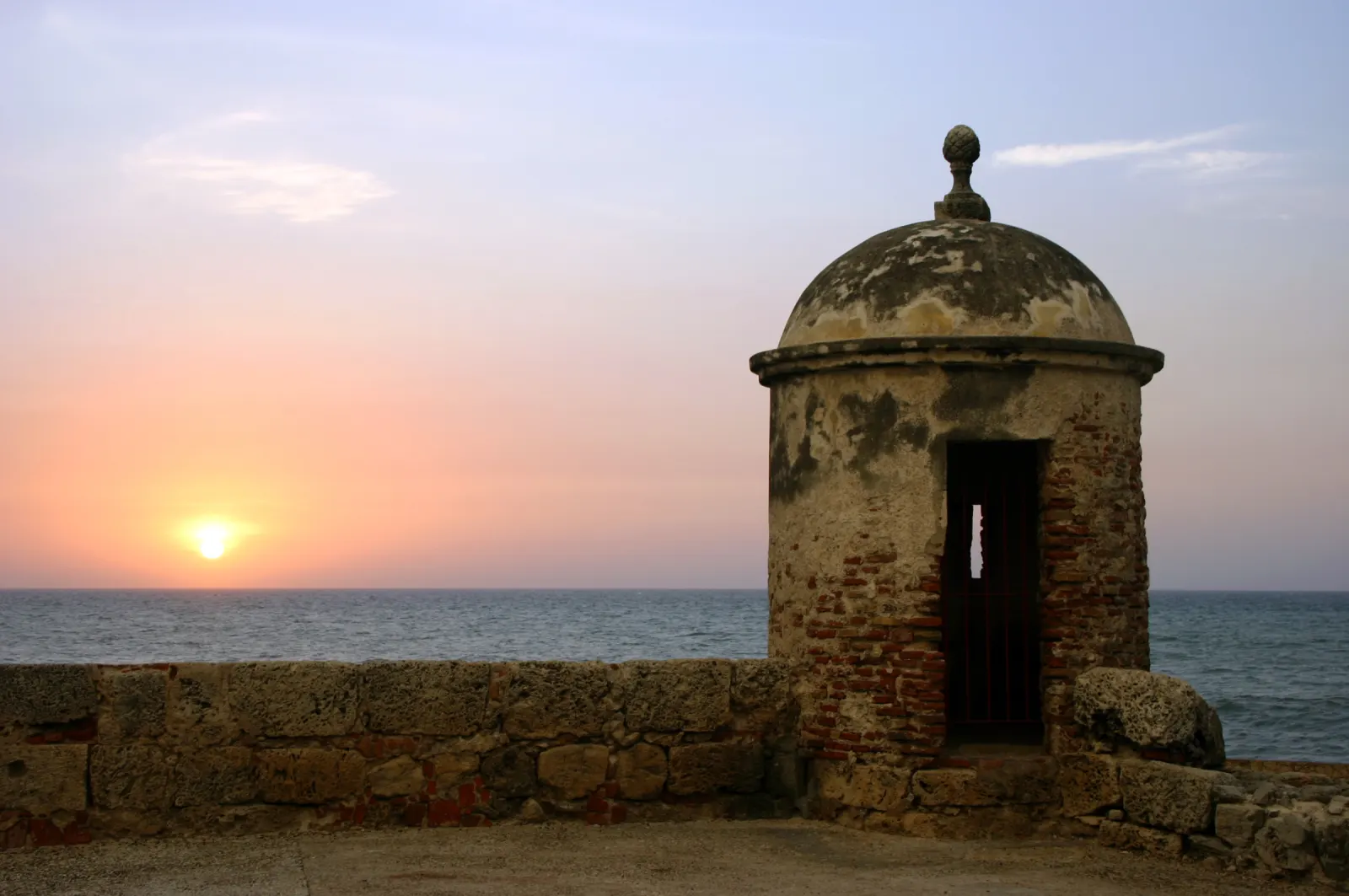
Historic watchtower on city wall at sunset

Cartagena travel guide

What to see, where to stay and the best time to visit Cartagena, Colombia.

Best: Jan, Feb, Mar, Dec

Photo: Igvir Ramirez / Wikimedia Commons

Country
Colombia
Currency
COP

About Cartagena

Cartagena is a walled colonial port city on Colombia's Caribbean coast, with a population of about 914,552. Visitors come for the Old Town's colourful streets, forts, and churches, plus day trips to the Rosario Islands for beach time. The weather is tropical year-round, but the best months are December, January, February, and March, when rainfall is lower and the heat is a bit easier to handle.

How many days do you need in Cartagena?

The main sights in Centro, San Lázaro, and Getsemaní can be covered in a few focused days, with extra time if you add a full day trip to the Rosario Islands.

Top attractions in Cartagena

  1. 1Walled City (Old Town)

    half a day

    Centro

    The colonial core of Cartagena, a UNESCO World Heritage Site, with narrow streets, balconies covered in flowers, churches and shaded plazas. Walking without a fixed plan is the best way to see it. Midday heat is strong, so many visitors explore in the morning and late afternoon.

  2. 2Castillo San Felipe de Barajas

    1–2 hours

    San Lázaro

    The largest Spanish fortress in the Americas, built on a hill to defend the city from attack by land. You can walk its ramparts and some of its narrow tunnels, and the top has wide views over the old town. There is little shade, so bring water and a hat.

  3. 3City Walls (Las Murallas)

    1–2 hours

    Centro

    Thick stone walls that surround most of the old town, with bastions and old cannons along the top. Walking the walls at sunset is a popular local habit, and several bastions have bars facing the sea.

  4. 4Getsemaní

    2–3 hours

    Getsemaní

    A former working-class neighbourhood just outside the main walls, now known for street art, small bars and cheaper places to eat. In the evening, Plaza de la Trinidad fills with locals, street food stalls and music.

  5. 5Palace of the Inquisition

    1–2 hours

    Centro

    A colonial mansion on Plaza de Bolívar that once housed the Spanish Inquisition, now a history museum. It covers the city's past, from colonial times to independence, and displays instruments of torture used during trials.

  6. 6Sanctuary of San Pedro Claver

    1 hour

    Centro

    A church and former monastery named after a Jesuit priest who worked with enslaved Africans arriving in the port. The cloister has a quiet garden, and a small museum tells his story and shows religious and Afro-Colombian art.

  7. 7Gold Museum (Museo del Oro Zenú)

    1 hour

    Centro

    A small museum on Plaza de Bolívar run by Colombia's central bank, showing gold work and pottery made by the Zenú people of the Caribbean region. It has air conditioning, which makes it a good break from the afternoon heat.

  8. 8La Popa Monastery (Convento de la Popa)

    1–2 hours

    Cerro de la Popa

    A colonial monastery on the highest hill in Cartagena, with a calm inner courtyard and a small chapel. The main reason to go is the view over the whole city, the bay and the coast. Most visitors go by taxi or on a tour rather than walking up.

  9. 9Rosario Islands

    full day

    Islas del Rosario

    A group of small coral islands off the coast, reached by boat from the city. People go for clearer water than the city beaches, snorkelling and quiet beach time. Boat trips can be rough when the wind is strong.

  10. 10Las Bóvedas

    30–60 minutes

    Centro

    A long row of vaulted rooms built into the city walls, first used to store weapons and later as a prison. Today they hold craft and souvenir shops, and the walls above give views of the sea.
Cartagena by month

Average weather and our month score, from 10 years of climate data.

Weather by month and month scores for Cartagena
Month High / low Rain days Sunshine Sea temp Score
Best month: January 31°C / 24°C 3 days (12 mm) 11.1 h/day 29°C 8.6/10
Best month: February 31°C / 24°C 2 days (6 mm) 11.3 h/day 28°C 8.8/10
Best month: March 32°C / 24°C 5 days (15 mm) 11.4 h/day 28°C 8.4/10
April 31°C / 25°C 14 days (63 mm) 11.0 h/day 29°C 7.2/10
May 30°C / 25°C 23 days (145 mm) 9.7 h/day 30°C 7.0/10
June 30°C / 25°C 24 days (153 mm) 9.5 h/day 30°C 7.0/10
July 30°C / 25°C 22 days (132 mm) 9.8 h/day 30°C 7.0/10
August 30°C / 25°C 24 days (142 mm) 9.4 h/day 30°C 7.0/10
September 29°C / 25°C 24 days (139 mm) 9.3 h/day 31°C 7.0/10
October 29°C / 24°C 26 days (186 mm) 9.1 h/day 30°C 7.0/10
November 29°C / 24°C 22 days (188 mm) 9.3 h/day 30°C 7.0/10
Best month: December 30°C / 24°C 9 days (32 mm) 10.9 h/day 30°C 7.8/10
  1. Jan

    Highs reach 30.7°C with only 3.3 rain days, making this a best month with a score of 8.6 for dry, sunny conditions.

  2. Feb

    The driest month, with highs of 31.3°C and just 1.6 rain days, earns the top score of 8.8 and a best verdict.

  3. Mar

    Still dry and hot at 31.6°C with 4.6 rain days, March keeps a best rating at 8.4 as rain starts to creep in.

  4. Apr

    Rain days jump to 13.8 and rainfall to 63mm as the wet season begins, dropping the verdict to good with a score of 7.2.

  5. May

    Expect 22.5 rain days and 145mm of rain with highs near 30°C; the green season brings tough, wet weather and a good score of 7.

  6. Jun

    One of the wettest months, with 24.1 rain days and 153mm of rain, though highs stay around 29.6°C; rated good at 7.

  7. Jul

    Rain eases slightly to 21.7 days and 132mm, but it's still frequent; highs of 30.1°C keep the good score at 7.

  8. Aug

    Heavy rain continues with 23.6 rain days and 142mm, alongside warm highs of 29.7°C; scored good at 7.

  9. Sep

    Among the wettest months, with 24.3 rain days and 139mm of rain and highs of 29.3°C; still a good score of 7.

  10. Oct

    The wettest month by rainfall, with 186mm over 26.3 rain days, though highs hold near 28.8°C; rated good at 7, reflecting tough rainy conditions.

  11. Nov

    Rainfall peaks at 188mm with 22 rain days, the wettest total of the year, while highs stay at 28.7°C; still scored good at 7.

  12. Dec

    Rain drops sharply to 8.8 days and 32mm as drier weather returns, with highs of 30.1°C pushing the score back up to a best verdict of 7.8.

Climate averages 2015–2024 · Best time to visit Colombia →

Where to stay in Cartagena

The best areas to base yourself and who each one suits.

Centro Histórico

Good for first-timers, sightseeing, couples

The old walled city has colonial streets, balconies with flowers, plazas, churches and many restaurants, so most sights are a short walk away. It is the easiest base for a first visit. It is also the busiest and most touristy part of town, and street vendors can be persistent.

San Diego

Good for couples, quieter stays, food lovers

This corner of the walled city feels calmer and more residential than the area around the main plazas. It has small squares, cafés and good restaurants, and you can still walk to the main sights. Some evenings bring music from nearby bars.

Getsemaní

Good for nightlife, backpackers, street art

Just outside the walls, this former working-class area has street art, small plazas, hostels and lively bars, especially around Plaza de la Trinidad. It has a local, creative feel and is easy walking distance from the old city. It can be loud late into the night, especially at weekends.

Bocagrande

Good for beach access, families, high-rise hotels

A strip of modern high-rise buildings on a peninsula south of the old city, with city beaches, shopping and supermarkets. It suits people who want a beach on the doorstep and bigger hotel rooms. The beaches are not the clearest in the region, and you will need a taxi to reach the historic centre.

Castillogrande

Good for families, quiet, long stays

A residential area at the tip of the Bocagrande peninsula, with calm streets, apartment buildings and a waterfront walk on the bay. It is quieter and more local than Bocagrande. There is less to do in the evening, and the old city is a taxi ride away.

Manga

Good for long stays, local life, budget-conscious

An island neighbourhood linked by bridges to the centre, with old republican-era houses, a marina and everyday shops. It shows how locals live and is close to Getsemaní. It has few sights or restaurants for visitors, and some walks back at night feel long, so many people take a taxi.

Getting to and around Cartagena

From the airport
No route data is given for Cartagena's airport, but the usual options for visitors are a taxi or an official airport transfer straight to the centre, since the airport sits close to the Centro Histórico and Bocagrande.
Public transport
The fact pack gives no metro, tram or train data for Cartagena, so there's little formal public transport to rely on. Visitors mostly use taxis or ride-hailing apps between neighbourhoods; agree on a fare or use an app before you get in.
On foot
The Centro Histórico is compact and walkable, with the Walled City, City Walls, Palace of the Inquisition, Sanctuary of San Pedro Claver, Gold Museum and Las Bóvedas all within a half-day stroll. Getsemaní is next door, also easy on foot.

Food to try in Cartagena

Arepa de huevo

A deep-fried cornmeal pocket with an egg cooked inside. It's a popular street breakfast in Cartagena, sold from carts near the old town and beaches.

Cazuela de mariscos

A creamy seafood stew made with shrimp, fish and coconut milk. Given the city's coastal location, it's a common lunch dish in restaurants along the waterfront.

Ceviche de camarón

Shrimp marinated in citrus juice, served cold with onions and coriander. It's a popular light meal in the heat of the day, often sold by street vendors near the beach.

Carimañola

A yuca dough roll stuffed with meat or cheese, then fried. Locals eat it as a snack any time of day, bought from street stalls across the city.

Fritanga

A mixed plate of fried foods such as fish, plantain and yuca. It's typically eaten in the evening at informal street food spots.

Coconut rice (arroz con coco)

Rice cooked in coconut milk, giving it a slightly sweet taste. It's a staple side dish served with fish or seafood meals throughout the city.

More of Colombia

Colombia travel guide →

Cartagena: frequently asked questions

Is Cartagena good to visit in August?

Yes, but expect rain. August scores 7 out of 10, rated 'good' rather than 'best'. It has 23.6 rain days and 142mm of rain, with highs of 29.7°C. Sea temperature is a warm 30.2°C, so swimming is pleasant even if afternoon showers interrupt sightseeing.

What is the best month to visit Cartagena?

February scores highest at 8.8 out of 10. It has only 1.6 rain days and 6mm of rain, the driest month on record, plus 11.3 hours of sunshine daily and a high of 31.3°C. January, March and December also rank as 'best' months, all with low rainfall and strong sun hours.

How many days do I need in Cartagena?

Two to three days covers the main sights. The Walled City takes half a day, Getsemaní needs 2–3 hours, and the Castillo San Felipe de Barajas and City Walls each take 1–2 hours. Add a full day if you want to visit the Rosario Islands, which is a full-day trip from the city.

Does it rain a lot in Cartagena?

It depends on the month. October is the wettest, with 26.3 rain days and 188mm of rain, while November brings 188mm too. By contrast, February has just 1.6 rain days and 6mm. The rainy season runs roughly from April through November, with June to October seeing over 130mm of rain each month.

Is the sea warm enough for swimming in Cartagena?

Yes, year-round. Sea temperature stays between 28.2°C in February and 30.5°C in September, never dropping below 28°C. This makes swimming comfortable in any month, whether you visit during the drier January–March window or the wetter season later in the year.