Skip to content
wheretotravel.info
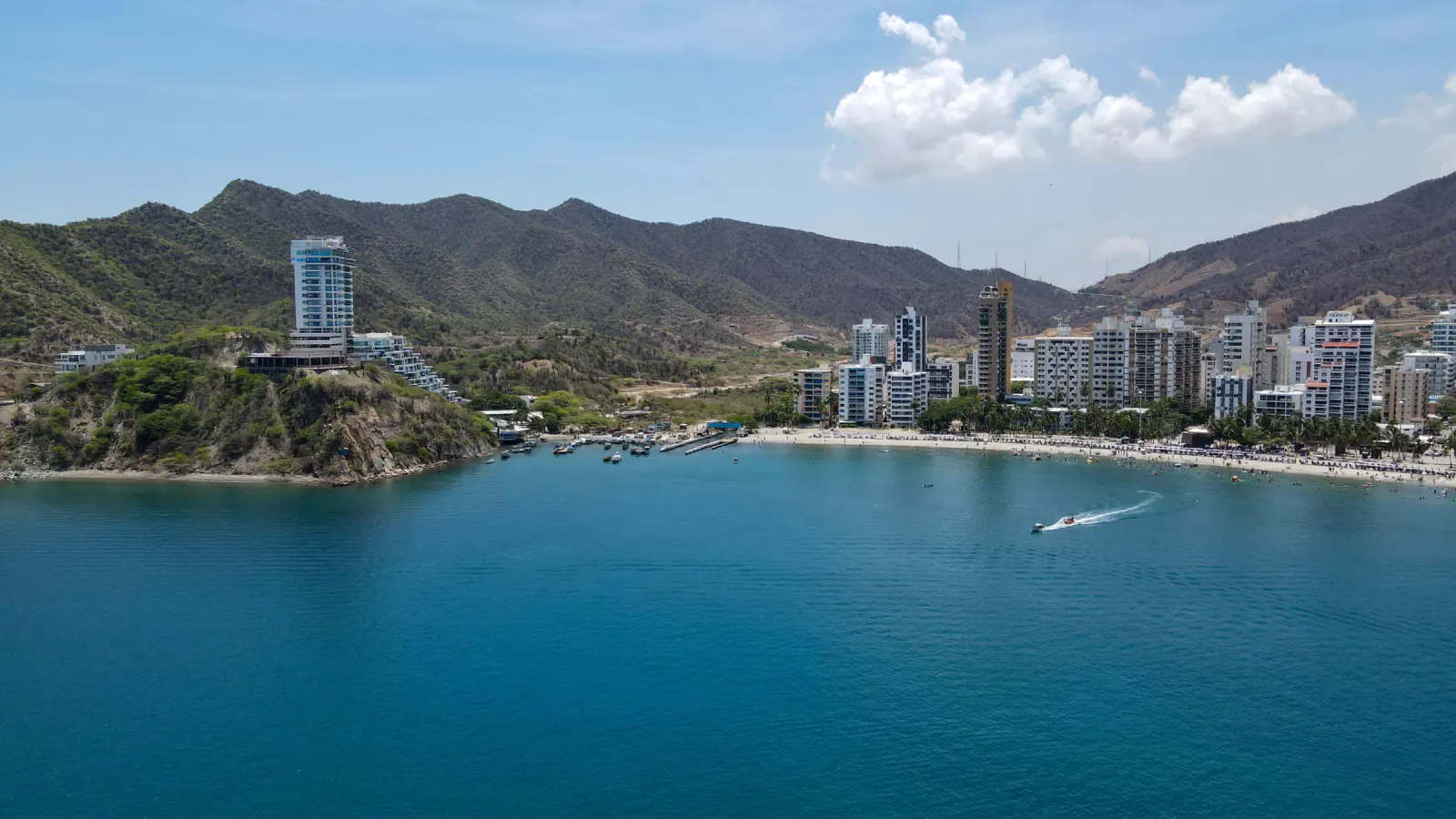
Aerial view of bay, beach and skyscrapers

Santa Marta travel guide

What to see, where to stay and the best time to visit Santa Marta, Colombia.

Best: Jan, Feb, Mar, Dec

Photo: JohnEGo! / Pexels

Country
Colombia
Currency
COP

About Santa Marta

Santa Marta is a coastal city in Colombia with a colonial centre, nearby beaches and the Sierra Nevada mountains at its back. It works as a base for the Lost City trek, for beach time in El Rodadero or Taganga, and for day trips up to Minca. Expect a mix of city streets, sea and jungle within short reach. The best months to visit are December, January, February and March, when drier weather suits walking the historic centre and heading into the mountains.

How many days do you need in Santa Marta?

Plan on 3 to 4 days to cover the historic centre, a beach day and a trip to Minca or Taganga. Add 4 to 6 more days if you want to hike to the Lost City.

Top attractions in Santa Marta

  1. 1Lost City (Ciudad Perdida)

    4–6 days

    Sierra Nevada de Santa Marta

    A multi-day guided trek through rainforest to the stone terraces of an ancient Tayrona settlement, older than Machu Picchu. The walk is hot, humid and muddy, with river crossings. Tours start from Santa Marta.

  2. 2Quinta de San Pedro Alejandrino

    1–2 hours

    Mamatoco

    The country estate where Simón Bolívar spent his last days and died. The site has the old hacienda house, a monument to Bolívar, a modern art museum and shady gardens.

  3. 3Gold Museum Tairona – Casa de la Aduana

    1–2 hours

    Historic Centre

    A colonial customs house, now a museum run by the Banco de la República. It shows gold work and pottery from the Tayrona culture and explains the Indigenous peoples of the Sierra Nevada. It is a good starting point before a trip to the Lost City.

  4. 4Santa Marta Cathedral

    Under 1 hour

    Historic Centre

    A large white colonial cathedral, one of the oldest churches in Colombia. It is an easy stop while you walk through the old town.

  5. 5Minca

    Full day

    Sierra Nevada foothills

    A small mountain village above the city, with cooler air, coffee farms, waterfalls and good birdwatching. Many visitors come for a day trip, while others stay a few nights in the hills.

  6. 6Taganga

    Half a day

    Taganga

    A fishing village in a bay just north of the city, popular for diving and snorkelling courses. Boats leave from its beach to quieter coves nearby.

  7. 7El Rodadero

    Half a day

    El Rodadero

    The city's main beach area, south of the centre, with a long sandy beach lined by hotels and restaurants. It gets busy with Colombian holidaymakers and is the easiest beach to reach from town.

  8. 8Santa Marta Malecón (Paseo de Bastidas)

    1 hour

    Historic Centre

    A seafront promenade along the city's bay, with views of the port and the sunset. It is a popular place for an evening walk when the heat drops.

  9. 9Parque de los Novios

    1 hour

    Historic Centre

    A small square in the old town, surrounded by restaurants and bars. It is the centre of Santa Marta's evening life and a good place to eat out.

Santa Marta by month

Average weather and our month score, from 10 years of climate data.

Weather by month and month scores for Santa Marta
Month High / low Rain days Sunshine Sea temp Score
Best month: January 30°C / 25°C 2 days (8 mm) 11.1 h/day 27°C 8.7/10
Best month: February 30°C / 25°C 2 days (7 mm) 11.4 h/day 26°C 8.8/10
Best month: March 30°C / 25°C 2 days (12 mm) 11.6 h/day 27°C 8.8/10
April 31°C / 26°C 7 days (51 mm) 11.2 h/day 27°C 8.0/10
May 31°C / 26°C 14 days (98 mm) 10.4 h/day 29°C 7.1/10
June 30°C / 26°C 18 days (146 mm) 10.5 h/day 30°C 7.0/10
July 31°C / 26°C 17 days (94 mm) 10.9 h/day 29°C 7.0/10
August 31°C / 26°C 19 days (135 mm) 10.7 h/day 30°C 7.0/10
September 30°C / 26°C 19 days (121 mm) 10.4 h/day 30°C 7.0/10
October 30°C / 25°C 23 days (183 mm) 9.9 h/day 30°C 7.0/10
November 30°C / 25°C 18 days (151 mm) 9.9 h/day 30°C 7.0/10
Best month: December 30°C / 26°C 6 days (28 mm) 10.8 h/day 28°C 8.2/10
  1. Jan

    Highs reach 30°C with just 2.3 rain days, dry and sunny. Score 8.7, one of the best months to visit.

  2. Feb

    Dry season continues: 30°C highs, only 1.7 rain days and 11.4 sun hours. Score 8.8, a best month.

  3. Mar

    Still dry with 30°C highs and 1.5 rain days, the sunniest stretch of the year. Score 8.8, a best month.

  4. Apr

    Rain picks up to 7.2 days and 51mm as the wet season starts, but highs stay near 31°C. Score 8, still rated best.

  5. May

    Rainier now, 14 rain days and 98mm, with sea temp up to 29.1°C. Score drops to 7.1, a good month.

  6. Jun

    One of the wettest months with 18.1 rain days and 146mm of rain, though highs still hit 30°C. Score 7, good.

  7. Jul

    Rain stays frequent at 16.7 days and 94mm, but highs peak at 30.7°C. Score 7, good.

  8. Aug

    Wet weather continues with 18.7 rain days and 135mm, sea temp warm at 29.6°C. Score 7, good.

  9. Sep

    Among the wettest months, 19.3 rain days and 121mm, with sun hours down to 10.4. Score 7, good.

  10. Oct

    The wettest month of the year: 22.9 rain days and 183mm of rain, with sun hours falling to 9.9. Score 7, good.

  11. Nov

    Rain stays heavy at 18.4 days and 151mm, though highs hold near 30°C. Score 7, good.

  12. Dec

    Rain eases sharply to 5.8 days and 28mm as dry season returns, highs at 30.2°C. Score 8.2, back to best.

Climate averages 2015–2024 · Best time to visit Colombia →

Where to stay in Santa Marta

The best areas to base yourself and who each one suits.

Centro Histórico

Good for first-timers, food, nightlife

The old colonial centre has the cathedral, the seafront promenade and most of the city's restaurants and bars, all within walking distance. It is also the easiest base for buses and tours to Tayrona and Minca. Streets can be hot, crowded and noisy at night, and the city beach here is not the best for swimming.

El Rodadero

Good for families, beach time

A resort district south of the centre with a long sandy beach, high-rise apartments and plenty of casual places to eat. It is popular with Colombian holidaymakers and good if you want to swim and relax. It gets very busy in national holiday periods, and you need a taxi or bus to reach the old town.

Taganga

Good for backpackers, divers

A former fishing village in a small bay just north of the city, known for dive schools and boat trips to nearby beaches. The mood is laid-back and budget-friendly. It can feel run-down in places, and some travellers report petty crime, so take care at night.

Bello Horizonte

Good for couples, quiet stays

A calmer beachside area near the airport, south of El Rodadero, with resorts and apartment buildings along the sea. It suits travellers who want space and pools more than city life. It is far from the old town and has few places to walk to in the evening.

Minca

Good for nature lovers, birdwatchers

A small village in the cooler hills of the Sierra Nevada above the city, surrounded by forest, coffee farms, rivers and waterfalls. It is a good escape from the coastal heat and a base for hiking and birdwatching. Roads are steep and rough, and you are far from beaches and city services.

Getting to and around Santa Marta

From the airport
Santa Marta's airport sits a short drive from the centre. No fare or time data is available, so the usual options are a taxi or a pre-booked transfer, which most visitors use to reach Centro Histórico or El Rodadero.
Public transport
Santa Marta has little formal public transport for visitors. Local buses and shared taxis (colectivos) run to Taganga, El Rodadero and Minca, but routes and schedules aren't fixed, so ask locally or confirm with your driver before boarding.
On foot
Centro Histórico is compact and walkable, with the Cathedral, Gold Museum, Malecón and Parque de los Novios all close together, each needing under two hours to see.

Food to try in Santa Marta

Arroz de coco

This is rice cooked in coconut milk until it turns golden brown and slightly sweet. It is a staple side dish along Colombia's Caribbean coast, often served with fried fish at lunch.

Pescado frito con patacón

Whole fried fish, usually a local catch, served with patacones, which are twice-fried green plantain slices. It's a common lunch dish at beachside restaurants in Santa Marta and nearby Taganga.

Cayeye

A breakfast dish of mashed green plantains mixed with cheese, sometimes topped with fried egg or shredded meat. It comes from the Magdalena region and is popular as a morning meal in Santa Marta.

Sancocho de pescado or de gallina

A hearty soup made with fish or chicken, plantain, yuca, and corn. Families often cook it for weekend lunches, and it is also found at local eateries throughout the city.

Arepa de huevo

A deep-fried cornmeal pocket with an egg cooked inside. It is a popular street food snack found at stalls and small shops across the Caribbean coast, including Santa Marta.

Fresh tropical fruit juices

Street vendors and local restaurants sell juices made from fruits like lulo, maracuyá, and guanábana. They are a common way to cool down in the city's warm, coastal climate.

More of Colombia

Colombia travel guide →

Santa Marta: frequently asked questions

Is Santa Marta good in August?

Yes, but it's a wetter month. August scores 7 out of 10, rated 'good' rather than 'best'. Expect rain on about 18.7 days, with 135 mm total rainfall. Highs still reach 30.7°C and sea temperature is a warm 29.6°C, so swimming is fine between showers.

When is the best time to visit Santa Marta?

December to April is best, scoring 8 to 8.8 out of 10. January, February and March are driest, with rain on just 1.5 to 2.3 days a month and under 12 mm of rain. Highs sit around 29.7–30°C with sea temperatures near 26–27°C, giving reliable sunny beach weather.

How many days do I need in Santa Marta?

Plan at least 3 to 4 days for the city and nearby beaches, plus extra time for side trips. The Historic Centre sites (cathedral, museum, malecón) take about 1–2 hours each, while Taganga and El Rodadero are half-day trips and Minca is a full day. The Lost City trek adds 4 to 6 days if included.

Does it rain a lot in Santa Marta?

Rain varies a lot by month. October is wettest, with rain on 22.9 days and 183 mm total, while January is driest with just 2.3 rain days and 8 mm. From May through November, rain days climb above 14 per month, so the second half of the year is consistently wetter than the first.

Is the sea warm enough to swim in Santa Marta?

Yes, year-round. Sea temperature stays between 26.3°C in February and 30.2°C in September, so swimming conditions are good in every month. The warmest sea months, July through October, coincide with higher rainfall, so pick January to March if you also want dry days on the sand.