Skip to content
wheretotravel.info
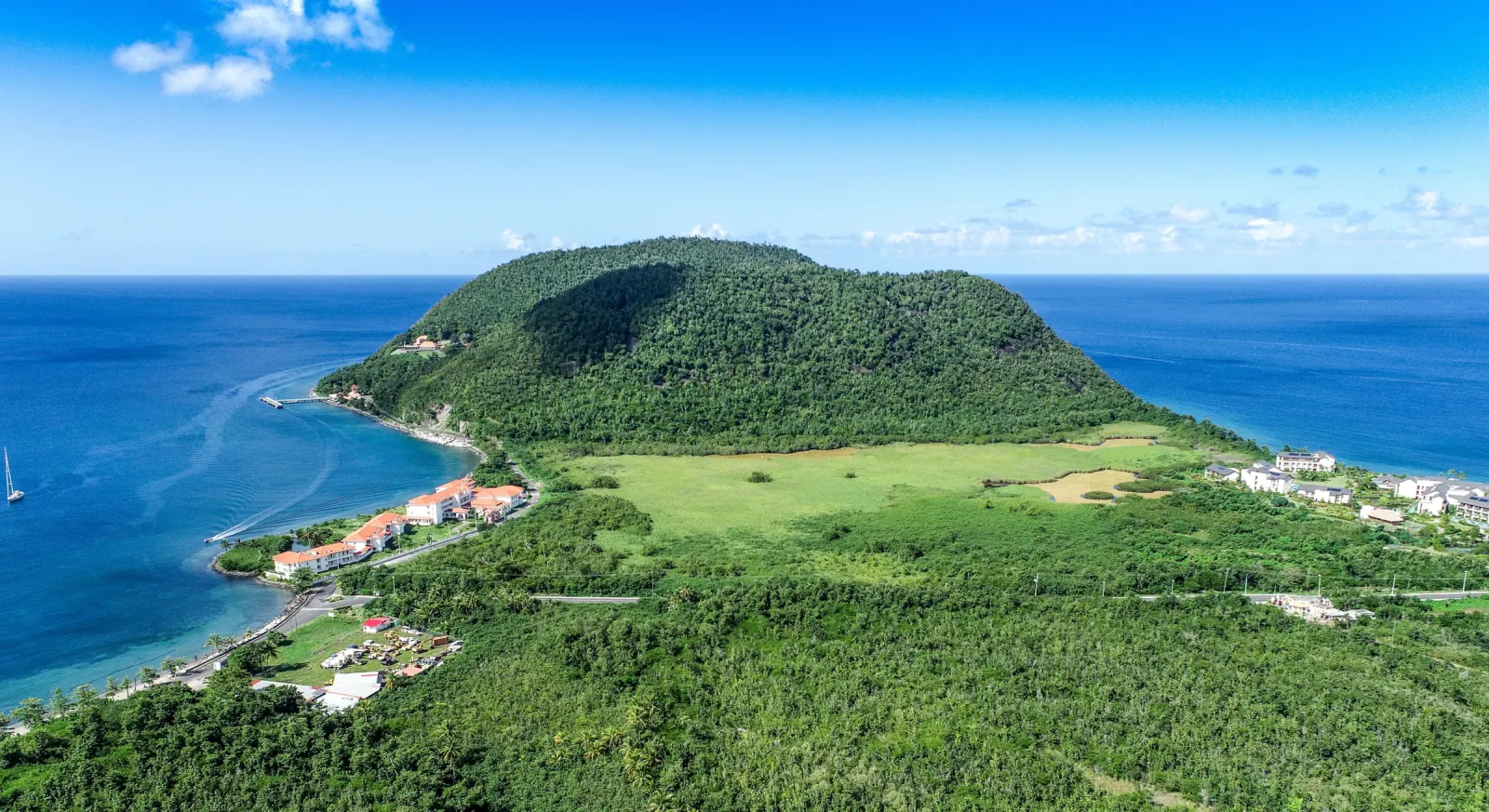
Aerial view of green headland and turquoise coastline

Dominica travel guide

A small, English-speaking Caribbean island of coastal towns, best visited in January and February

Best: Jan, Feb

Photo: Kendell Barrie / Pexels

Capital
Roseau
Language
English
Currency
Eastern Caribbean dollar
Time zone
UTC-04:00
Plugs
Type G · 230 V
Driving
On the left
Emergency
999

Why visit Dominica

Dominica is a small, English-speaking island in the Caribbean. It covers just 751 km² and has about 65,514 people. It suits a slow, independent trip between coastal towns such as Roseau, the capital, Portsmouth and Castle Bruce. The best months to go are January and February. One honest limitation is that there are no big cities. Roseau has about 16,571 people and Portsmouth about 3,633, so expect small-town life, not city life. Cars drive on the left.

  • January and February Travel Window

    January and February are the best months to visit Dominica. If you have a free week early in the year, plan around this window. Book flights and rooms early, because many travellers aim for the same 2 months.

  • A Small Island, Easy to Explore

    Dominica covers just 751 km² and has about 65,514 people. Distances are short, so you can stay in one base and still see much of the island. Remember that cars drive on the left.

  • Roseau, a Compact Coastal Capital

    The capital, Roseau, sits on the coast and has about 16,571 residents. It is small enough to walk around. It also works as a practical first stop for money, supplies and onward transport.

  • Quiet Towns Beyond the Capital

    Portsmouth is a coastal town of about 3,633 people. Castle Bruce is another coastal community. Staying in a smaller town gives you a slower pace than the capital and shows a different side of island life.

  • Simple Logistics for English Speakers

    English is the official language, and the calling code is +1. The time zone is UTC-04:00. You pay in Eastern Caribbean dollars. Sockets are type G at 230 V, so many visitors will need an adapter. The emergency number is 999.

Is Dominica right for you?

Great for

  • Travellers who dislike strong heat: highs stay between 24.1 and 27.3°C all year
  • Winter trips in January and February, the best months, with 87 and 89 mm of rain
  • English speakers, since English is the main language
  • Short, compact trips on a small island of 751 km² and 65514 people
  • Self-drive travellers used to driving on the left

Less ideal for

  • Travellers who want dry days: rain falls on 18.6 to 26.6 days each month
  • Summer beach holidays: July brings 176 mm of rain over 26.6 days
  • Big-city breaks: the capital Roseau has only about 16571 people
  • Autumn sun seekers: September is the wettest month at 178 mm

Dominica right now: October

6.6/10
Avg high
27°C
Avg low
23°C
Rain days
24

Averages for Dominica.

Weather by month

The climate data here is for Dominica as a whole, and January and February are the best months, with highs of 24°C, lows around 20°C and only 87–89 mm of rain. The toughest weather comes from July to September, when rain rises to 172–178 mm and falls on up to 27 days a month, though highs stay near 26–27°C.

Average highs and lows in Dominica by month January: high 24°C, low 20°C , 19 rain days . February: high 24°C, low 20°C , 19 rain days . March: high 25°C, low 20°C , 20 rain days . April: high 25°C, low 21°C , 20 rain days . May: high 26°C, low 22°C , 19 rain days . June: high 26°C, low 23°C , 21 rain days . July: high 26°C, low 22°C , 27 rain days . August: high 27°C, low 23°C , 26 rain days . September: high 27°C, low 23°C , 22 rain days . October: high 27°C, low 23°C , 24 rain days . November: high 26°C, low 22°C , 23 rain days . December: high 25°C, low 21°C , 22 rain days . 24°C 20°C JAN 19d 24°C 20°C FEB 19d 25°C 20°C MAR 20d 25°C 21°C APR 20d 26°C 22°C MAY 19d 26°C 23°C JUN 21d 26°C 22°C JUL 27d 27°C 23°C AUG 26d 27°C 23°C SEP 22d 27°C 23°C OCT 24d 26°C 22°C NOV 23d 25°C 21°C DEC 22d
Best months Other months (low–high) Nd = rain days

Dominica (country average) · averages 2015–2024

Best time to visit Dominica: month-by-month weather →

Sample itineraries

7 days

Dominica in a week: capital and coast

  1. Day 1–3

    Roseau

    Start in Roseau, the capital and largest town, home to about 16571 people. Walk its seafront streets, change money into Eastern Caribbean dollars and settle in before heading out.

  2. Day 4–5

    Castle Bruce

    Move on to Castle Bruce, a small coastal village. Slow down here, walk along the shore and enjoy a quieter pace after the capital.

  3. Day 6–7

    Portsmouth

    End in Portsmouth, a coastal town of about 3633 people. Spend your last days by the sea. If you hire a car, remember Dominica drives on the left.

10 days

Ten days around Dominica's coastal towns

  1. Day 1–3

    Roseau

    Begin in Roseau, the capital, with about 16571 residents. Use these first days to explore the town on foot, get local cash and plan the rest of your trip.

  2. Day 4–6

    Castle Bruce

    Spend 3 nights in Castle Bruce, a small village on the coast. It suits travellers who want quiet days, sea views and time to rest.

  3. Day 7–9

    Portsmouth

    Continue to Portsmouth, a coastal town of about 3633 people. Take your time by the water and explore the surrounding area at an easy pace.

  4. Day 10

    Roseau

    Return to Roseau for your final day. Pick up anything you missed in the capital and pack for the journey home.

Food to try in Dominica

Callaloo soup

A thick green soup made from dasheen leaves, often cooked with coconut milk. It is widely seen as Dominica's national dish and is served at home and in local restaurants.

Titiri accra

Crisp fritters made from titiri, tiny young fish caught where rivers meet the sea. They are a seasonal treat and are usually eaten as a snack or starter.

Bakes and saltfish

Fried dough bakes served with salted cod cooked with onion, pepper and herbs. It is a common breakfast and is easy to find at small roadside food stalls.

Ground provisions

Boiled dasheen, yam, green banana and breadfruit, served as the base of many everyday meals. Expect them next to stewed chicken, fish or a spicy sauce.

Kubuli beer

A light lager brewed on the island and the local beer most people drink. You will find it cold in rum shops, bars and small shops.

Bush rum

Rum infused with local herbs, spices or bark, often homemade and sold in reused bottles. It is strong, so try a small glass first in a rum shop.

Know before you go

  • Plugs and voltage: Dominica uses type G plugs, the three-pin square style also used in the UK. The voltage is 230 V. Bring an adapter, and check that your chargers and devices work at 230 V.
  • Driving side: Traffic drives on the left. If you come from a country that drives on the right, plan for extra care at junctions and on your first few drives.
  • Emergency number: Dial 999 for emergencies. Save it in your phone before you arrive so you do not have to search for it when you need it.
  • Currency: The local currency is the Eastern Caribbean dollar. Check the current exchange rate before you travel so you can judge prices quickly.
  • Language: English is the official language. Signs, menus and everyday conversations are usually easy to follow for English speakers.
  • Time zone: Dominica is on UTC-04:00. Check the difference from your home time zone so you can plan calls and connecting flights.
  • Phone calls: The country calling code is +1, the same code used by the USA and Canada. Ask your provider about roaming charges before you travel, because the shared code does not mean domestic rates apply.

Dominica: frequently asked questions

When is the best time to visit Dominica?

January and February are the best months to visit Dominica. Both score 7 out of 10. They are among the driest months, with 87 mm of rain in January and 89 mm in February. Highs are a mild 24.1°C, and February gets 10.8 sun hours a day. Expect some rain even then: about 19 days in each month have at least some rain.

Is Dominica good in September?

Yes, September is still rated good, but it has the lowest score of the year at 6.4. It is the wettest month, with 178 mm of rain over about 22 rain days. It is also the warmest month, with highs of 27.3°C and lows of 22.8°C. Plan flexible days for outdoor trips, because heavy rain is common.

When is the rainy season in Dominica?

The wettest stretch runs from July to November. Rainfall in these months is between 144 mm and 178 mm, and July has the most rain days at 26.6. From January to May, rain drops to between 81 mm and 100 mm a month. Rain falls often all year, though: even the driest months have about 19 rain days.

How hot is Dominica?

Dominica is warm all year, but rarely very hot. Daytime highs range from 24.1°C in January and February to 27.3°C in September. Nights stay mild, with lows between 20°C and 22.8°C. The temperature changes little through the year, so rain is a bigger factor than heat when you choose a month.

What currency, plugs and language does Dominica use?

Dominica uses the Eastern Caribbean dollar, and English is the language. Power sockets are type G with 230 V, so bring an adapter if your plugs are different. Cars drive on the left. The time zone is UTC-04:00, the calling code is +1, and the emergency number is 999.

Similar destinations

Countries with a year of weather much like Dominica.