Skip to content
wheretotravel.info
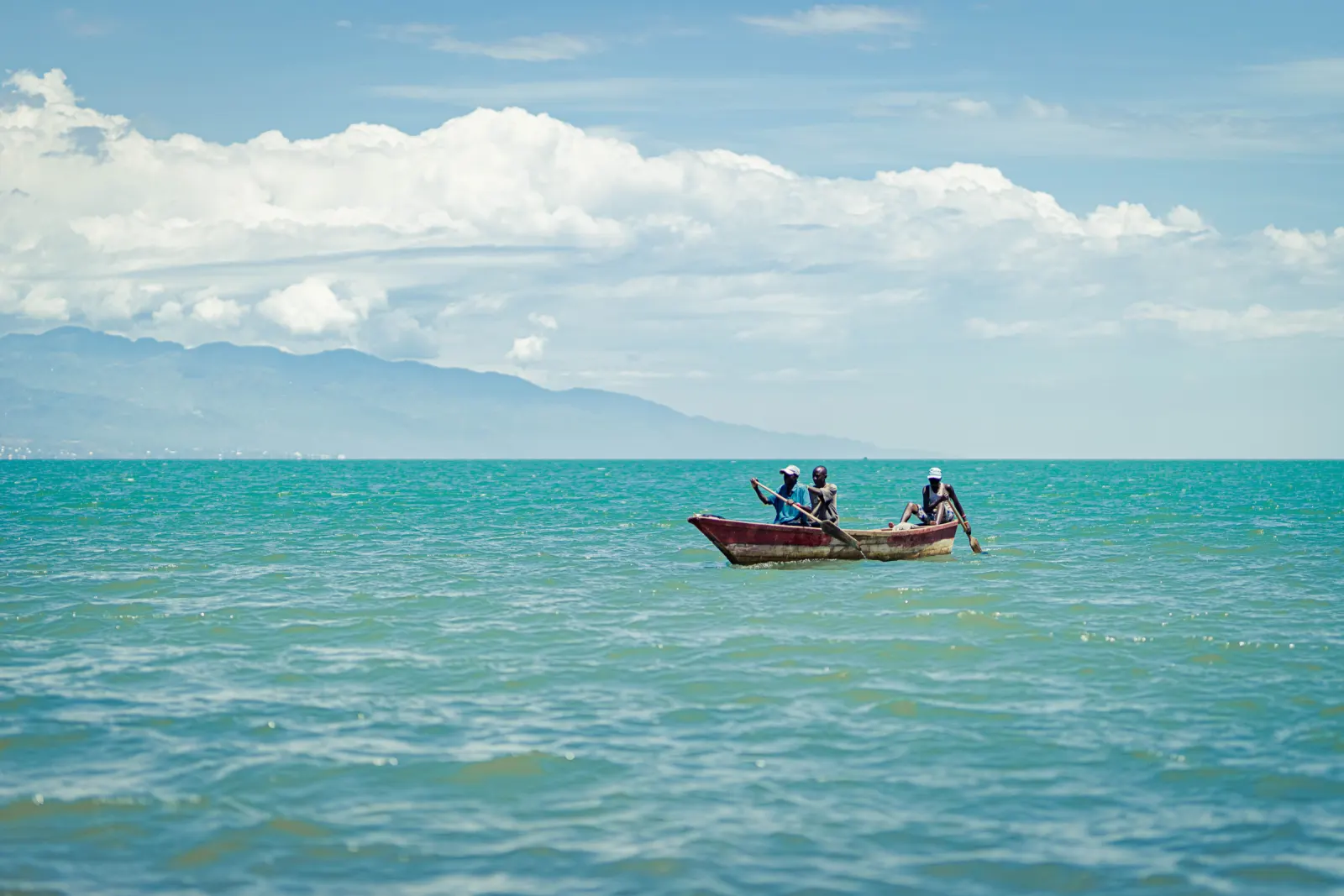
Fishermen in boat on turquoise sea near coast

Port-au-Prince travel guide

What to see, where to stay and the best time to visit Port-au-Prince, Haiti.

Best: Jan, Feb

Photo: Edouard MIHIGO / Pexels

Country
Haiti

About Port-au-Prince

Port-au-Prince is Haiti's capital, a coastal city built on steep hills above the Caribbean Sea. It's not a typical beach-holiday stop: visitors come for art galleries, markets, and viewpoints over the bay, mostly based in the cooler, calmer Pétion-Ville area. Days are warm year-round. January and February bring the most comfortable weather for walking and sightseeing, with less heat and humidity than the rest of the year.

How many days do you need in Port-au-Prince?

Two to three days are enough to see the galleries, markets, and hilltop sights around Pétion-Ville, plus a trip up to Fort Jacques or Boutilliers for the views.

Top attractions in Port-au-Prince

  1. 1Galerie Monnin

    1 hour

    Pétion-Ville

    A long-running gallery showing Haitian painting and sculpture, from naive-style market scenes to modern work. It is one of the best places to understand why Haitian art is collected worldwide. Check the current security situation and whether it is open before you go.

  2. 2Galerie Nader

    1 hour

    Pétion-Ville

    A family-run gallery with a large collection of Haitian paintings by well-known and newer artists. Staff can explain the main styles and schools. Confirm it is open and travel with a trusted local driver.

  3. 3Place Saint-Pierre

    30 minutes–1 hour

    Pétion-Ville

    The main square of Pétion-Ville, with the Saint-Pierre church on one side and street vendors selling paintings nearby. It gives a quick feel for daily life in the hillside district. Go with a local contact, as conditions change quickly.

  4. 4Marché de Pétion-Ville

    1 hour

    Pétion-Ville

    A busy local market selling fruit, vegetables, spices and household goods. It is a real working market, not a tourist stop, so go with someone who knows it.

  5. 5Observatoire de Boutilliers

    1 hour

    Boutilliers, above Pétion-Ville

    A lookout high in the hills with a wide view over the city and the bay. People come for the view, especially in clear morning light. The road up passes through areas affected by insecurity, so ask locally before going.

  6. 6Fort Jacques

    1–2 hours

    Fermathe

    A stone fort built after independence on a ridge in the mountains above the city, with views across the valley. The cooler air and pine slopes make a change from the hot city below. The Kenscoff and Fermathe area has seen gang attacks, so check the situation first.

  7. 7Parc Historique de la Canne à Sucre

    1–2 hours

    Tabarre

    A former sugar estate turned into a museum and park, with old mills, a steam locomotive and gardens. It explains the history of sugar and rum in Haiti. Confirm it is open, as the area has been affected by unrest.

Port-au-Prince by month

Average weather and our month score, from 10 years of climate data.

Weather by month and month scores for Port-au-Prince
Month High / low Rain days Sunshine Sea temp Score
Best month: January 31°C / 22°C 4 days (16 mm) 10.4 h/day 28°C 6.4/10
Best month: February 32°C / 22°C 4 days (30 mm) 11.3 h/day 28°C 6.3/10
March 32°C / 23°C 9 days (58 mm) 11.6 h/day 28°C 5.4/10
April 32°C / 24°C 11 days (74 mm) 11.7 h/day 29°C 3.1/10
May 33°C / 25°C 9 days (79 mm) 11.4 h/day 29°C 3.0/10
June 35°C / 26°C 7 days (33 mm) 11.7 h/day 30°C 2.9/10
July 36°C / 26°C 6 days (33 mm) 11.5 h/day 30°C 2.5/10
August 35°C / 26°C 10 days (79 mm) 11.3 h/day 31°C 2.0/10
September 35°C / 26°C 11 days (63 mm) 10.9 h/day 31°C 2.0/10
October 33°C / 25°C 12 days (87 mm) 10.3 h/day 31°C 2.4/10
November 32°C / 24°C 9 days (52 mm) 10.2 h/day 30°C 5.3/10
December 32°C / 23°C 4 days (18 mm) 10.5 h/day 29°C 6.2/10
  1. Jan

    High near 31.4°C with just 4.3 rain days, this is one of the driest, sunniest months, scoring well for a visit.

  2. Feb

    Similar to January: highs of 31.6°C, only 4.4 rain days, and a solid score make this a good time to visit.

  3. Mar

    Highs reach 31.8°C but rain days jump to 8.6, giving an ok but less reliable month for outdoor plans.

  4. Apr

    Heat builds to 32.2°C with 11.4 rain days, pushing the score down sharply as wetter, hotter conditions set in.

  5. May

    Highs of 33.3°C and 79mm of rain across 9.4 days mark the start of a tough, humid stretch with a low score.

  6. Jun

    Temperatures climb to 34.6°C; rain days ease slightly to 6.6, but heat keeps the score low this month.

  7. Jul

    The hottest month, with highs of 35.5°C and 6.4 rain days, scores poorly mainly because of intense heat, not rain.

  8. Aug

    Still very hot at 35.1°C, with rain back up to 9.7 days and 79mm, giving the lowest score of the year.

  9. Sep

    Highs stay near 34.5°C while rain days rise to 11.4, keeping conditions humid and the score at its lowest point.

  10. Oct

    Rain peaks this month: 87mm over 12.1 days, with highs of 33.3°C, making it the wettest and a low-scoring month.

  11. Nov

    Conditions improve as highs ease to 32°C and rain days drop to 8.6, lifting the month to an ok rating.

  12. Dec

    A return to dry, pleasant weather: 31.9°C highs and only 4.3 rain days bring back a good overall score.

Climate averages 2015–2024 · Best time to visit Haiti →

Where to stay in Port-au-Prince

The best areas to base yourself and who each one suits.

Delmas

Good for business travellers, NGO staff

Delmas is a long commercial corridor between the airport side of the city and Pétion-Ville, with offices, shops and some guesthouses. It is practical if your work or meetings are there. Traffic is heavy, the streets are noisy, and safety varies a lot from one numbered section to the next, so ask locally about each block.

Bourdon

Good for longer stays, quieter evenings

Bourdon is a mostly residential hillside area on the road between central Port-au-Prince and Pétion-Ville. It is calmer than the main commercial streets and has some smaller guesthouses. Steep roads and the distance to most restaurants mean you will need a trusted driver to get around.

Laboule

Good for families, quiet, cooler air

Laboule lies further up the mountain road above Pétion-Ville, with greener surroundings and cooler air than the city below. It feels more like a quiet suburb than a city district. The winding road up can be slow, and getting down to the city takes time, especially in traffic.

Kenscoff

Good for nature lovers, hikers, slow travel

Kenscoff is a mountain town high above the capital, known for farms, pine-covered hills and noticeably cool nights. It suits travellers who want walks and fresh air rather than city life. It is a long drive from the airport and the city, and road access can be affected by both weather and the wider security situation.

Getting to and around Port-au-Prince

From the airport
No route data is available for Port-au-Prince's airport. Visitors usually arrange a pre-booked taxi or a hotel pickup to reach the centre, since there is no public transit link from the terminal.
Public transport
Port-au-Prince has no metro, tram or formal bus network for visitors. Getting around means shared taxis (tap-taps) or private drivers. A practical tip: arrange a trusted driver through your hotel rather than hailing transport on the street.
On foot
The centre itself is not very walkable. In Pétion-Ville, several sights sit close together: Galerie Monnin, Galerie Nader, Place Saint-Pierre and Marché de Pétion-Ville can be covered on foot in that one area.

Food to try in Port-au-Prince

Griot

This is fried pork, cut into chunks and marinated before cooking. Street vendors and small restaurants across Port-au-Prince serve it with rice and pikliz, often at lunchtime.

Soup Joumou

A squash-based soup with beef, pasta, and vegetables. Haitians traditionally eat it on New Year's Day to mark independence, and it's common in home kitchens around the city on that date.

Diri ak Djon Djon

Black rice cooked with dried Haitian mushrooms, giving it a dark color and earthy flavor. It's a staple dish found in homes and local eateries throughout the capital.

Pikliz

A spicy pickled cabbage and carrot relish with Scotch bonnet peppers. It's served as a condiment alongside fried meats like griot and tassot at most food stalls.

Tassot

Fried goat or beef, cut into strips and cooked until crisp on the outside. It's a common lunch or dinner order at local restaurants in Port-au-Prince.

Akra

Fritters made from grated malanga (taro root), fried and often spiced. Street vendors sell these as a quick snack, especially in busy market areas.

More of Haiti

Haiti travel guide →

Port-au-Prince: frequently asked questions

Is Port-au-Prince good to visit in August?

No, August scores 2 out of 10 in our data, a low point for the year. Daytime highs hit 35.1°C and there are 9.7 rain days with 79mm of rain. The heat and frequent rain make August one of the toughest months to visit.

When is the best time to visit Port-au-Prince?

January and February are the best months, scoring 6.4 and 6.3 out of 10. Highs sit around 31.4–31.6°C, rain is light at 16–30mm, and rain days drop to about 4 per month. These are the driest, most comfortable months of the year here.

Does it rain a lot in Port-au-Prince?

Rain varies a lot by month. October is the wettest, with 87mm of rain over 12.1 rain days. January and December are the driest, with just 16–18mm and around 4.3 rain days each. So rainfall roughly doubles between the dry season and the wetter months from April to October.

How many days do you need in Port-au-Prince?

Two to three days covers the main sights. The fact pack lists seven attractions, mostly in Pétion-Ville, each taking 30 minutes to 2 hours, such as Galerie Monnin, Fort Jacques, and the Observatoire de Boutilliers. That's enough time to see the galleries, the market, and a hilltop trip without rushing.

How hot does it get in Port-au-Prince?

It stays hot year-round, with highs never dropping below 31.4°C even in the cooler months. July is the hottest month, with highs of 35.5°C, while January is the coolest at 31.4°C. Sea temperature also stays warm all year, from 27.8°C in February to 31.3°C in September.