Skip to content
wheretotravel.info
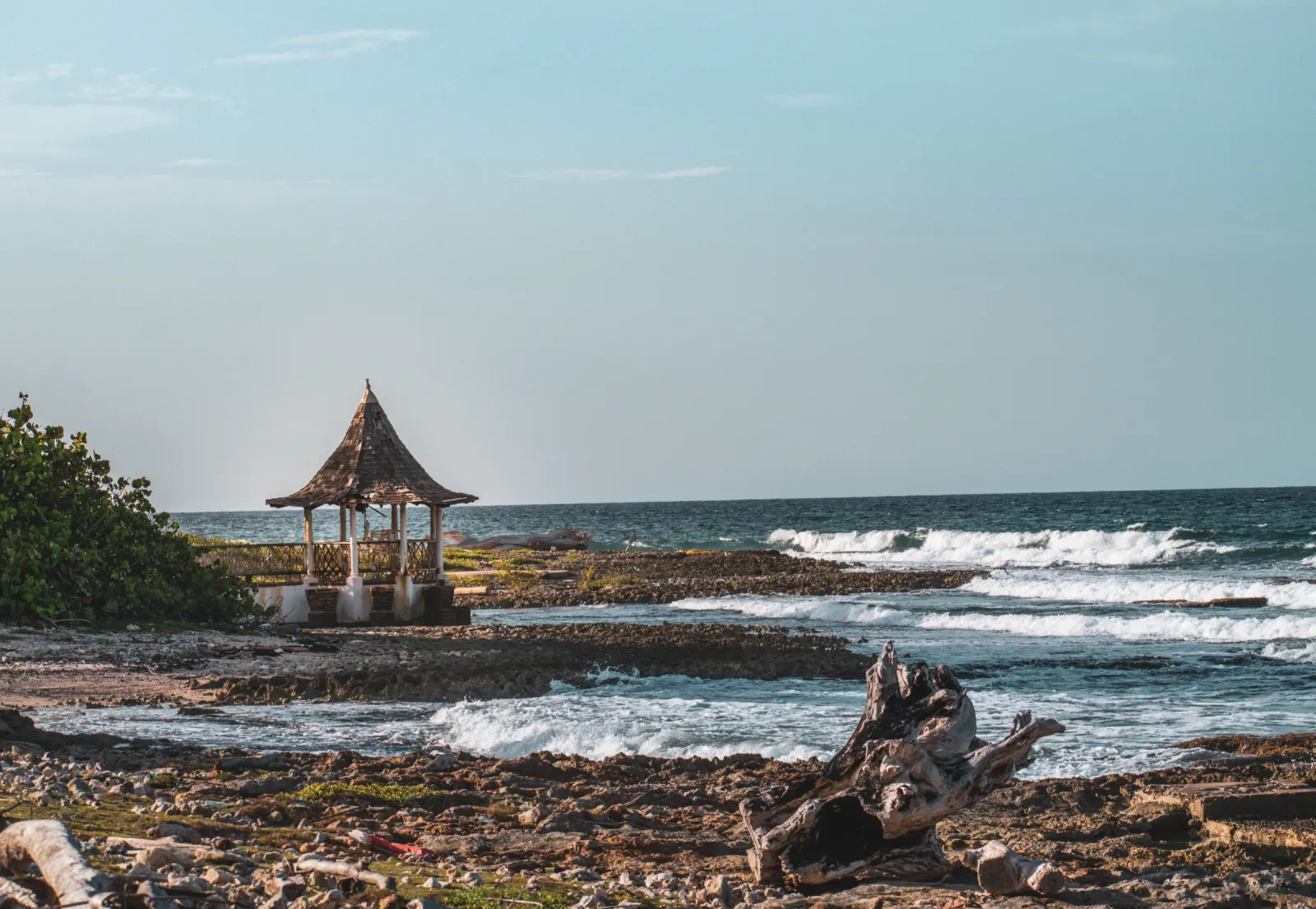
gazebo on rocky shoreline with waves

Jamaica travel guide

Caribbean coastline and reggae culture from Kingston to Negril

Best: Jan, Feb, Dec

Photo: Bergen Davis / Pexels

Capital
Kingston
Languages
English, Jamaican Patois
Currency
Jamaican dollar (JMD)
Time zone
UTC-05:00
Plugs
Type A, B · 116 V
Driving
On the left
Emergency
112 / 911

Why visit Jamaica

Jamaica suits travellers after beach time, music and food in one trip, from Montego Bay's resorts to Port Antonio's quieter coast. The best months are December, January and February, when conditions are most settled. Driving is on the left, and most towns, including the capital Kingston, sit right on the coast, so plan for warm, humid weather most of the year.

  • Dry season from December to February

    Jamaica's best months are December, January and February. These months fall in the drier stretch of the year, which makes them a solid choice for beaches and outdoor plans.

  • Kingston for culture and city life

    The capital, Kingston, is a coastal city with a population of 937,700, making it by far the largest urban center on the island and a hub for music, food and nightlife.

  • A string of smaller coastal towns

    Beyond Kingston, Jamaica has several coastal towns of very different sizes: Montego Bay with 123,994 people, Ocho Rios with 16,671, Port Antonio with 14,816 and Negril with about 4,500. Each gives a different, quieter alternative to the capital.

  • An island built around the coast

    All five of Jamaica's main listed cities sit on the coast, reflecting the island's compact size of 10,991 square kilometers. That makes it easy to combine a base in one town with day trips to others.

  • English-speaking, easy to navigate for many travellers

    English is an official language alongside Jamaican Patois, and the country drives on the left with UTC-05:00 as its timezone, which simplifies logistics for English-speaking visitors planning a trip.

Is Jamaica right for you?

Great for

  • Winter-sun trips in January and February, with about 10 to 11 rain days and highs near 25°C
  • Travellers who find strong heat hard, as highs stay between 25 and 28°C all year
  • English speakers who want easy travel, since English is an official language
  • Coastal trips linking Montego Bay, Ocho Rios, Port Antonio and Negril, which all sit on the coast
  • North American visitors whose devices use plug types A and B at 116 V

Less ideal for

  • Trips in September and October that need dry days, with 24 to 26 rain days a month
  • Travellers who want the most sunshine in November, the month with the fewest sun hours at 9.5
  • Self-drive trips for people not used to driving on the left

Jamaica right now: November

7.0/10
Avg high
25°C
Avg low
19°C
Rain days
19

Averages for Jamaica.

Weather by month

This data is for Jamaica: January, February and December are best, with highs around 24.7–24.8°C, under 12 rain days a month and little rainfall (33–38mm). September and October bring the toughest weather, with 24–26 rain days and 128–132mm of rain, while July and August stay hot (around 28°C) with 18–22 rain days.

Average highs and lows in Jamaica by month January: high 25°C, low 17°C , 11 rain days . February: high 25°C, low 17°C , 10 rain days . March: high 26°C, low 17°C , 16 rain days . April: high 27°C, low 18°C , 19 rain days . May: high 27°C, low 19°C , 21 rain days . June: high 28°C, low 20°C , 17 rain days . July: high 28°C, low 20°C , 19 rain days . August: high 28°C, low 20°C , 22 rain days . September: high 28°C, low 20°C , 24 rain days . October: high 26°C, low 20°C , 26 rain days . November: high 25°C, low 19°C , 19 rain days . December: high 25°C, low 18°C , 12 rain days . 25°C 17°C JAN 11d 25°C 17°C FEB 10d 26°C 17°C MAR 16d 27°C 18°C APR 19d 27°C 19°C MAY 21d 28°C 20°C JUN 17d 28°C 20°C JUL 19d 28°C 20°C AUG 22d 28°C 20°C SEP 24d 26°C 20°C OCT 26d 25°C 19°C NOV 19d 25°C 18°C DEC 12d
Best months Other months (low–high) Nd = rain days

Jamaica (country average) · averages 2015–2024

Best time to visit Jamaica: month-by-month weather →

Sample itineraries

7 days

Capital to Coast: A Week in Jamaica

  1. Day 1–2

    Kingston

    Settle into Jamaica's capital, home to about 937700 people. Spend time exploring its museums and markets before heading toward the north coast.

  2. Day 3–4

    Ocho Rios

    This small coastal town of around 16671 residents is known for waterfalls and cruise-ship day trips. Use it as a base for short excursions along the coast.

  3. Day 5–7

    Montego Bay

    Finish the week in Montego Bay, a coastal city of about 123994 people. Relax on the beaches and enjoy the town's resort atmosphere before departing.

10 days

Ten Days Around Jamaica's Coastline

  1. Day 1–2

    Kingston

    Start in Kingston, the capital with a population of about 937700. Take in the city's culture and history before moving along the coast.

  2. Day 3–4

    Port Antonio

    Travel to Port Antonio, a quiet coastal town of around 14816 people, known for its laid-back pace and lush surroundings.

  3. Day 5–6

    Ocho Rios

    Continue to Ocho Rios, home to about 16671 residents, for waterfalls and coastal scenery.

  4. Day 7–8

    Montego Bay

    Head west to Montego Bay, a coastal city of about 123994 people, for beaches and nightlife.

  5. Day 9–10

    Negril

    End the trip in Negril, a small coastal town of about 4500 people, known for its long stretch of beach and relaxed vibe.

Food to try in Jamaica

Jerk chicken

Chicken marinated in spiced seasoning and slow-cooked over pimento wood. Sold at roadside jerk stands across Jamaica, often with rice and peas on the side.

Ackee and saltfish

Jamaica's national dish combines ackee fruit with salted codfish, onions and peppers. Most commonly eaten at breakfast.

Rice and peas

Rice cooked with kidney beans, coconut milk and spices. It is a standard side dish at lunch and dinner across the country.

Curry goat

Goat meat stewed with curry spices until tender. Served at family gatherings and Sunday meals throughout Jamaica.

Patties

A flaky pastry filled with spiced meat or vegetables. Sold at bakeries and street stalls as a quick snack any time of day.

Blue Mountain coffee

Coffee grown in the Blue Mountains near Kingston. Known for a smooth taste and sold both locally and for export.

Know before you go

  • Plugs and voltage: Jamaica uses type A and B plugs, the flat-pin style also used in North America. The supply is 116 V. Check that your chargers and devices accept this voltage before you plug them in.
  • Driving side: Traffic in Jamaica drives on the left. If you usually drive on the right, take extra care when turning and pulling out, especially in your first few days.
  • Emergency number: For police, fire or ambulance, call 112 or 911. Save both numbers in your phone before you arrive.
  • Currency: The local currency is the Jamaican dollar (JMD). Check the current exchange rate before you travel so you can judge what things cost.
  • Language: English is spoken across Jamaica, so most visitors can get by easily. You will also hear Jamaican Patois, which can be hard to follow at first, even for native English speakers.
  • Time zone: Jamaica is on UTC-05:00. Check the time difference with home before you book calls or plan your first day.
  • Calling code: Jamaica's country calling code is +1. Check with your mobile provider about roaming charges before you travel.

Jamaica: frequently asked questions

When is the best time to visit Jamaica?

January, February and December score highest, each rated 7.7 to 7.9 out of 10. These months have low rainfall, around 33 to 38 mm, and fewer rain days, about 10 to 11.5, plus highs near 24.7 to 24.8°C. It's the driest, sunniest stretch of the year.

Is Jamaica good to visit in August?

August is rated ok, scoring 4.9 out of 10. It's hot, with highs of 28.3°C, and wet, with 22 rain days and 100 mm of rain. Sun hours stay decent at 11.1, but the frequent rain pulls the month down compared to the winter season.

What is the rainiest month in Jamaica?

October has the most rain, with 132 mm falling over 26.1 days, the highest rain-day count of any month. September is close behind with 128 mm over 24 days. Both sit in the Caribbean's wetter second half of the year.

What is the driest month in Jamaica?

January is the driest month, with just 33 mm of rain over 11.1 days. February is almost as dry, with 38 mm over 10.3 days. These low-rain months line up with Jamaica's best-rated travel period.

How hot does it get in Jamaica?

Highs range from 24.7°C in January to 28.4°C in July, the hottest month. Lows stay mild year-round, between 16.7°C in February and 20°C in August. Temperatures don't swing much across the year, so heat is steady rather than seasonal.

Similar destinations

Countries with a year of weather much like Jamaica.