Skip to content
wheretotravel.info
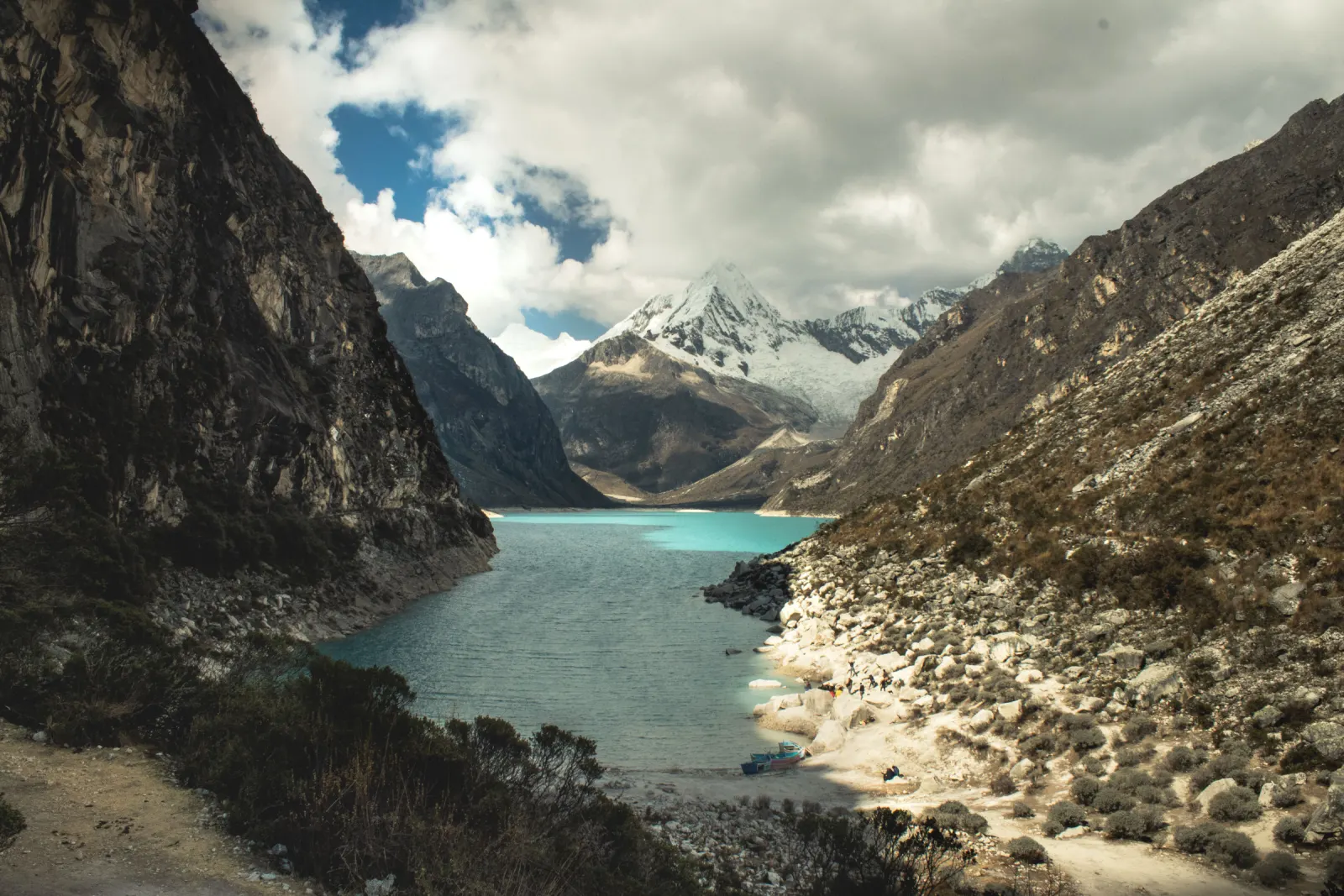
Turquoise lake between mountain valley walls

Huaraz travel guide

What to see, where to stay and the best time to visit Huaraz, Peru.

Best: Jun, Jul, Aug

Photo: Nicky Manosalva / Pexels

Country
Peru

About Huaraz

Huaraz is a Peruvian city of about 118,836 people, and most visitors come for the mountains around it. It is the base for day trips into Huascarán National Park, to lakes such as Laguna 69 and Laguna Parón and to the Pastoruri Glacier. It is also the starting point for multi-day treks in the Cordillera Blanca. Centro is handy for booking tours, while La Soledad is quieter and has mountain views. The best months to visit are June, July and August.

How many days do you need in Huaraz?

Plan several days. Laguna 69, Lagunas Llanganuco, Laguna Parón, Pastoruri Glacier and Chavín de Huántar each take a full day. The Santa Cruz Trek alone takes 3–4 days. Add a few hours in town for Wilcahuaín and the Ancash Archaeological Museum.

Top attractions in Huaraz

  1. 1Laguna 69

    Full day

    Huascarán National Park

    A turquoise glacial lake below the snow-covered Chacraraju peak. It is the most popular day hike from Huaraz. The trail climbs steadily at high altitude, so most people do it after a few days of acclimatisation.

  2. 2Chavín de Huántar

    Full day

    Chavín de Huántar

    A UNESCO World Heritage site and the former religious centre of the ancient Chavín culture. You can walk through stone temples and dark underground galleries, and see the carved heads set into the walls. A small museum next to the site shows more of the original stone carvings.

  3. 3Lagunas Llanganuco

    Full day

    Huascarán National Park

    Two glacial lakes in a deep valley below Huascarán, Peru's highest mountain. Most visitors come on a day tour by road, which often stops in Yungay and Carhuaz on the way. It is a good first trip because it needs little walking.

  4. 4Pastoruri Glacier

    Full day

    Huascarán National Park

    A glacier you can reach with a short but high walk from the road. The glacier is shrinking fast, and the site explains the effects of climate change. On the way you pass Puya raimondii plants, giant plants that grow only in the high Andes.

  5. 5Santa Cruz Trek

    3–4 days

    Cordillera Blanca

    The best-known multi-day trek in the Cordillera Blanca. It crosses a high pass and follows valleys with glacial lakes and views of snow peaks. You can go with a local agency, with donkeys to carry the gear, or on your own.

  6. 6Laguna Parón

    Full day

    Huascarán National Park

    The largest lake in the Cordillera Blanca, surrounded by granite walls and peaks such as Pirámide de Garcilaso. The road from Caraz is rough but reaches the lake shore. A short climb above the lake gives a wider view.

  7. 7Campo Santo de Yungay

    1 hour

    Yungay

    A memorial park on the site of the old town of Yungay, which was buried by a landslide after an earthquake. You can see the remains of the old church and the palm trees that stood in the main square. It is a quiet place, and it helps visitors understand the history of the region.

  8. 8Wilcahuaín

    2–3 hours

    Independencia

    Stone buildings of the Wari culture just outside Huaraz, with dark inner rooms you can enter. The site is small and quiet, and it is an easy half-day trip for acclimatisation. Many people take a colectivo up and walk back down through farm villages.

  9. 9Ancash Archaeological Museum

    1–2 hours

    Huaraz centre

    A museum on the Plaza de Armas with pottery, textiles and mummies from the cultures of the region. Its garden holds a large collection of carved stone figures from the Recuay culture. It is a good choice for a rest day or a rainy afternoon.

Huaraz by month

Average weather and our month score, from 10 years of climate data.

Weather by month and month scores for Huaraz
Month High / low Rain days Sunshine Score
January 19°C / 9°C 27 days (230 mm) 9.7 h/day 6.5/10
February 19°C / 10°C 24 days (202 mm) 9.4 h/day 6.5/10
March 19°C / 10°C 28 days (264 mm) 8.9 h/day 6.5/10
April 20°C / 9°C 24 days (159 mm) 10.5 h/day 6.5/10
May 20°C / 8°C 15 days (58 mm) 11.2 h/day 6.5/10
Best month: June 20°C / 7°C 6 days (19 mm) 11.2 h/day 8.6/10
Best month: July 22°C / 7°C 5 days (16 mm) 11.3 h/day 8.9/10
Best month: August 22°C / 7°C 8 days (30 mm) 11.4 h/day 8.2/10
September 21°C / 8°C 17 days (91 mm) 11.4 h/day 6.5/10
October 20°C / 9°C 24 days (168 mm) 10.9 h/day 6.5/10
November 20°C / 9°C 22 days (144 mm) 10.2 h/day 6.5/10
December 20°C / 9°C 27 days (207 mm) 10.0 h/day 6.5/10
  1. Jan

    High 19°C, low 9°C, rain on 27 days (230 mm). The rainy season is in full swing, yet it scores 6.5 and rates good.

  2. Feb

    High 19.4°C with rain on 24 days and 202 mm. Still the rainy season, so pack waterproofs. Scores 6.5, rated good.

  3. Mar

    The wettest month: rain on 28 days and 264 mm, a 19°C high and the least sun at 8.9 hours a day. Scores 6.5, good.

  4. Apr

    High 19.6°C and rain on 24 days, but the total drops to 159 mm and sun rises to 10.5 hours. Scores 6.5, rated good.

  5. May

    Rain days fall to 15 and rain to 58 mm, with 11.2 hours of sun and a 19.6°C high. A drying month that scores 6.5, good.

  6. Jun

    Dry and sunny: rain on about 6 days (19 mm), 11.2 hours of sun, high 20.4°C. Nights cool to 7.1°C. Scores 8.6, a best month.

  7. Jul

    The top score of 8.9, rated best. Rain on just 4.7 days (16 mm), high 21.5°C, and the coldest nights at 6.7°C.

  8. Aug

    The warmest month at 22°C, with 11.4 hours of sun and rain on 7.7 days (30 mm). Scores 8.2, rated best.

  9. Sep

    Still 11.4 hours of sun and a 21.4°C high, but rain returns on 17 days (91 mm). Scores 6.5, rated good.

  10. Oct

    Rain on 24 days and 168 mm as the wet season comes back. High 20.2°C, 10.9 hours of sun. Scores 6.5, rated good.

  11. Nov

    High 20.2°C and rain on 22 days (144 mm), a little drier than October. Scores 6.5, rated good.

  12. Dec

    Wet again, with rain on 27 days and 207 mm. High 19.7°C, low 9.1°C, 10 hours of sun. Scores 6.5, rated good.

Climate averages 2015–2024 · Best time to visit Peru →

Where to stay in Huaraz

The best areas to base yourself and who each one suits.

Centro

Good for first-timers, trekkers booking tours

The streets around the Plaza de Armas and Avenida Luzuriaga hold most of the tour agencies, gear rental shops, cafés and bus company offices. You can arrange treks and day trips on foot and eat well without going far. Traffic and car horns are loud from early morning, so ask for a room away from the street.

La Soledad

Good for trekkers, quiet, mountain views

This older barrio east of the centre has calm residential streets and many small guesthouses used by climbers. Upper floors and rooftops often look out to the snow peaks of the Cordillera Blanca. The walk back is uphill, and at Huaraz's altitude that feels hard during your first days.

Belén

Good for longer stays, quiet, local life

A residential area just south of the centre, built around its own small plaza and church. It is quieter than Centro but still an easy walk to agencies and restaurants. There are fewer places to eat nearby, and some side streets are poorly lit at night.

Independencia

Good for budget travellers, local feel

This district lies north of the Río Quilcay and feels more like everyday Huaraz, with markets and few other visitors. It suits travellers who want local life over tourist services. Most agencies and cafés are across the river, so you will walk or take a taxi more often.

Getting to and around Huaraz

From the airport
Huaraz has no airport route in our data. Most visitors arrive by long-distance bus and step off close to the centre. If you fly into the region, a taxi or shared colectivo is the usual way into town.
Public transport
There is no metro or tram. Locals use combis (minibuses), colectivos and cheap taxis. Tip: sights like Laguna 69 and Pastoruri Glacier are full-day trips, so most people book a tour in Centro.
On foot
Centro is compact and easy on foot, with the Ancash Archaeological Museum right there. La Soledad and Belén sit next to the centre. Wilcahuaín in Independencia is easier by combi or taxi.

Food to try in Huaraz

Picante de cuy

Guinea pig cooked in a spicy sauce made with ají chilli and peanuts, usually served with boiled potatoes. Locals often eat it at weekend lunches and family celebrations in local picanterías.

Pachamanca

Meats, potatoes, broad beans and herbs cooked slowly under hot stones in an earth oven. It is a dish for gatherings, so look for it at festivals, family events and country restaurants on weekends.

Llunca kashki

A thick, warming soup of crushed wheat and hen, typical of the Áncash region around Huaraz. It is a common dish at local festivities and a filling meal on cold mountain days.

Ceviche de chochos

A meat-free Andean take on ceviche made with tarwi (lupin beans), onion, tomato, chilli and lime. Street vendors and market stalls in Huaraz sell it as a cheap, quick snack.

Trucha frita

Fried trout, usually served with rice, potatoes and salad. Trout from local highland waters is a staple on menus in Huaraz and a popular meal after a day of hiking.

More of Peru

Peru travel guide →

Huaraz: frequently asked questions

What is the best time to visit Huaraz?

June, July and August are the best months to visit Huaraz. This is the dry season. July scores highest at 8.9, with only 4.7 rain days, 16 mm of rain and 11.3 hours of sun a day. June (8.6) and August (8.2) are almost as dry. That means clear views and easier conditions for trips such as Laguna 69 and the Santa Cruz Trek.

Is Huaraz good in August?

Yes, August is one of the best months for Huaraz, with a score of 8.2. It is the warmest month, with highs of 22°C, and nights drop to about 7°C. Rain is low, at 30 mm over 7.7 rain days. You also get 11.4 hours of sun a day, which is good for full-day trips into Huascarán National Park.

What is the rainy season like in Huaraz?

The rainy season runs from October to April, with 21.9 to 28.2 rain days a month. March is the wettest month, with 264 mm of rain, and January gets 230 mm. Daytime highs stay around 19–20°C, and you still get about 9–11 hours of sun a day. These months still score 6.5 ('good'), but expect wet trails and clouds over the mountains.

How cold does Huaraz get at night?

Nights in Huaraz are cool all year, with lows between about 7°C and 10°C. The coldest nights come in the dry season. July has the lowest average at 6.7°C. The mildest nights are in February, at 9.8°C. Daytime highs change little across the year, from 19.2°C to 22°C, so bring layers for early starts and evenings.

How many days do I need in Huaraz?

Plan several days, because most of the main sights take a full day each. Laguna 69, Lagunas Llanganuco, Pastoruri Glacier, Laguna Parón and Chavín de Huántar each need a full day. The Santa Cruz Trek alone takes 3–4 days. Shorter visits include Wilcahuaín (2–3 hours), the Ancash Archaeological Museum (1–2 hours) and Campo Santo de Yungay (1 hour).